


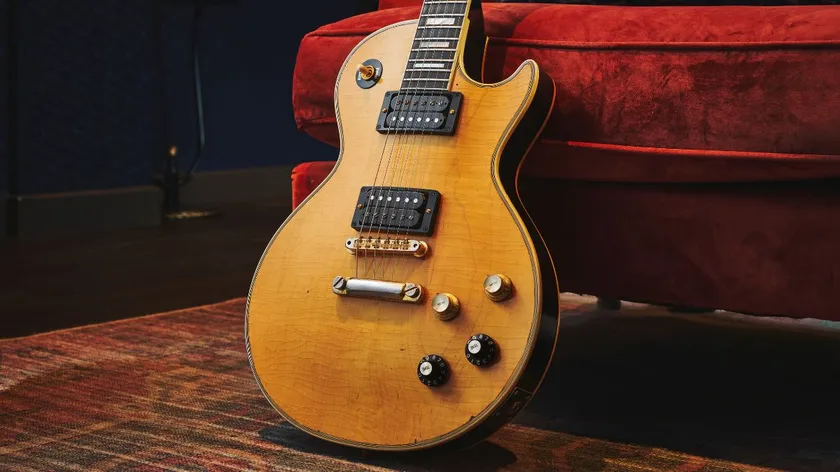


The jangly, chiming sound of acoustic and electric 12-string guitars have played a crucial role in popular music, from blues to rock, pop to folk.
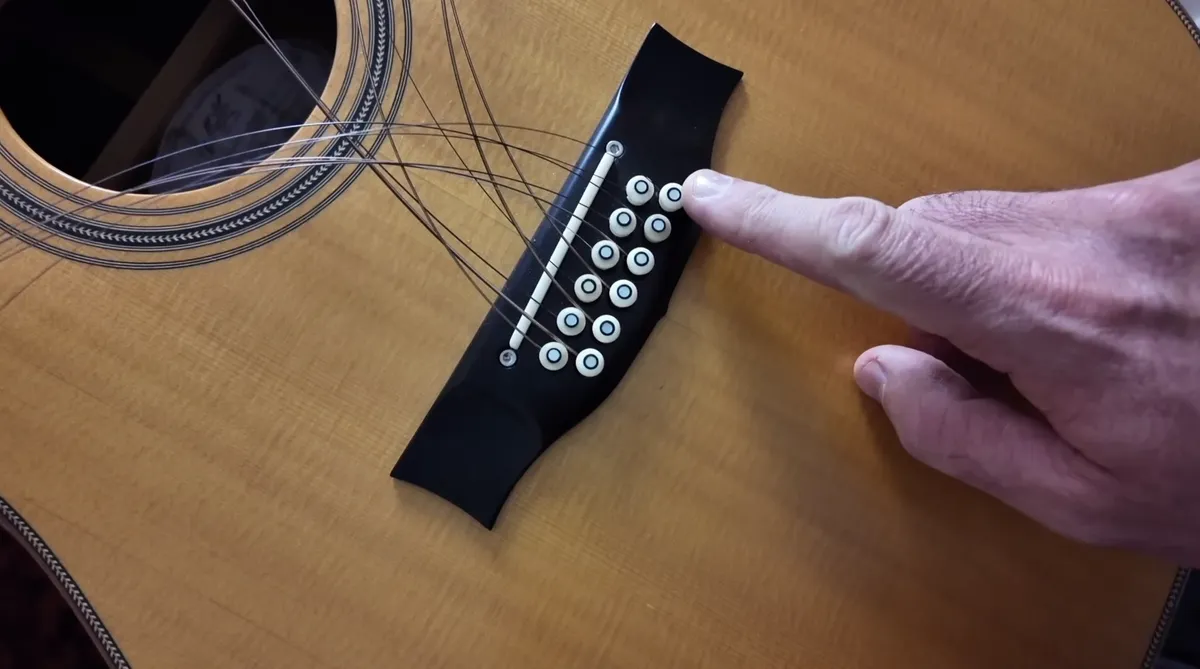
12-string guitars feature six pairs of strings, known as courses, that results in their trademark loud and rich sound. Each string pair is separated by a narrow gap that allows it to be articulated almost like a single string.
They are typically tuned with the highest two courses in unison and the lowest four courses consisting of an octave pair, with the lower octave corresponding to the standard pitches of a 6-string guitar. Natural variations in pitch between the unison strings, along with the addition of octave strings results in a natural chorusing effect.
The added strings often means that 12-string guitars have wider & thicker necks, and the added tuning machines and headstock size can result in a neck heavy feel. Physical differences aside, 12-string guitars have long been used on recordings as a secret sauce to enhance and elevate guitar parts.
Every decade and (almost) every genre has featured this type of guitar. Headliner names would include George Harrison (The Beatles - Ticket To Ride), Roger McGuinn (The Byrds - Mr Tambourine Man), Pete Townshend (The Who - Substitute), Joe Walsh and Don Felder (The Eagles - Hotel California), Brian May (Queen - 39), David Bowie (Space Oddity), Johnny Marr (The Smiths - Bigmouth Strikes Again), Richie Sambora (Bon Jovi - Wanted Dead Or Alive), Tom Scholz (Boston - More Than a Feeling) and John Frusciante (Red Hot Chili Peppers - Breaking The Girl). And that's just for starters!
Restringing and tuning
Watch our video above to see all the detail to restring and tune a 12-string but here are some pointers to help you quickly.


The Playing Examples
Ex 1 - Strumming chords
There’s no simpler way to enjoy a freshly restrung 12-string than strumming some open-position chords. Using a Cadd9 chord in place of the typical open C shape means the fretting hand third finger held in place for the first few bars will make chord changes easier. Pay attention to fingerings that are shared between the G, Em, A and C chords towards the end.

Ex 2 - Arpeggiating chords
Once you're comfortably changing chords and strumming, you can make use of the signature sound of string pairings by arpeggiating the chord progression from Example 1.
Aim to play the arpeggios with all down strokes or alternate picking for consistency of tone. Downstrokes will emphasize the octave strings, while alternate picking will provide contrast and texture between the notes.
You can also experiment with different note selections from each chord. Treat this example as a study piece if you’re a beginner, or as an outline to expand upon if you’re a more experienced player.

Ex 3 - Honing in on the third string and its octave
This example hones in on the most unique aspect of the 12-string guitar - the third string and its octave. It uses a droning G string and some modified CAGED shape arpeggios in the key of E minor.
This works particularly well on an electric 12-string, with some light overdrive and reverb, reminiscent of players like Alex Lifeson of Rush or Chris DeGarmo of Queensryche. The combination of octave strings and drones creates a natural modulation effect that sounds magical when double-tracked in a recording.

Ex 4 - Folk Rock styled cross picking
This is inspired by the seminal 12-string work of Roger McGuinn with The Byrds, and the lead lines and chords used by Jimmy Page and John Butler. It combines droning fourth and third strings with descending melodic lines and partial chords.
Pay careful attention to articulating the fretted notes while allowing the open strings to sustain and ring through. This can be played utilizing all downstrokes, alternate picking or country-style hybrid picking. Focus on the tone of each note and keeping each phrase a consistent volume.

Ex 5 - Using a capo at the 7th fret
Since 12-string guitars are often used as textural tools, combining them with a capo can add depth to a recording and inspire new ways to play common chord progressions.
Inspired by The Eagles, this example uses a capo at the magical 7th fret and revoices the chords from example 3 (Em, C, D and A) using the CAGED shapes for Am, F, G and D.
Since 12-string necks are generally wider and thicker than 6-string necks, several companies manufacture 12-string specific capos. My electric 12-string works with a standard 6-string capo but my acoustic 12-string is too wide!

Ex 6 - Final piece featuring arpeggios, strumming and cross picking
I’ve chosen to combine my favorite elements of bands like The Byrds, Led Zeppelin and The Smiths into this final study piece.
It begins with a breezy open string melodic line in G major (Example 4), before a pre-chorus combining open position chords and arpeggios (Examples 1 and 2), and building into a dramatic set of droning arpeggios in E minor (Examples 3 and 5).
I can safely say that if you can play this, you’ve definitely progressed beyond “beginner” level on the guitar. I’ve chosen to perform it on an electric 12-string, but it also works great as a standalone acoustic piece. Enjoy!


Classic 12-string guitar songs
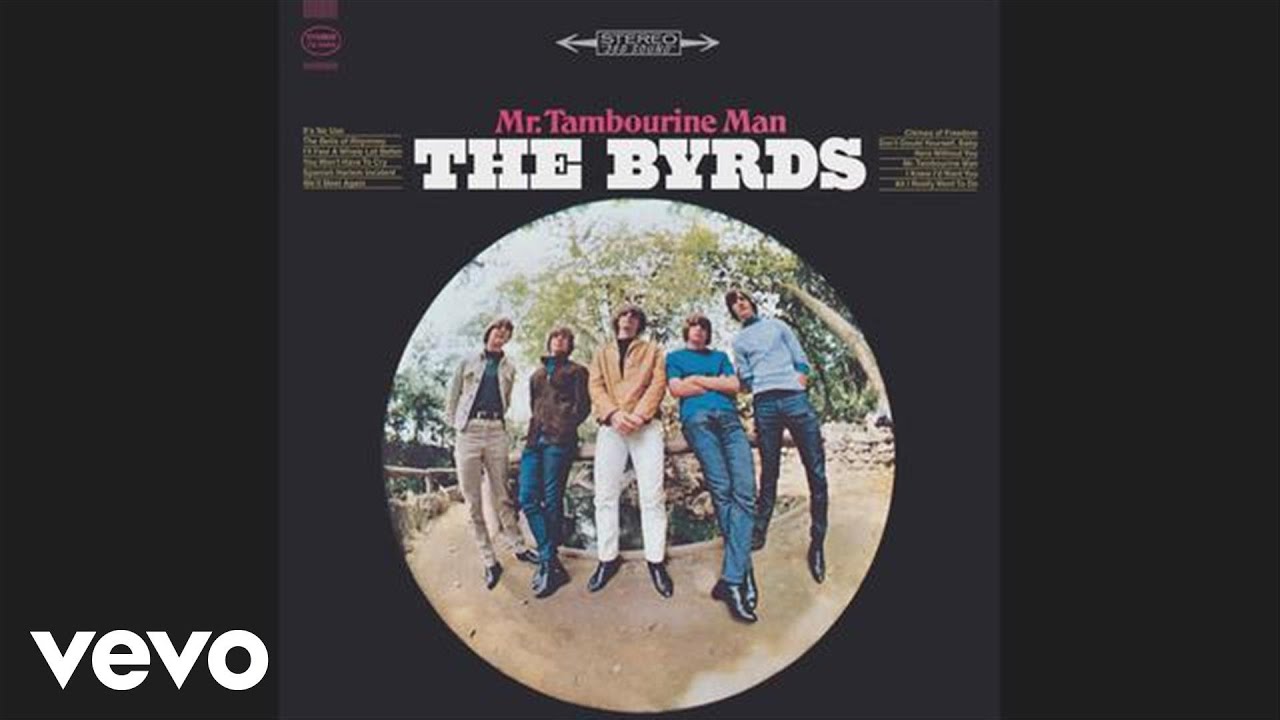
The Byrds - Mr Tambourine Man
Arguably the definitive electric 12-string song, Roger McGuinn’s jangling Rickenbacker 12-string transformed Bob Dylan’s original into a dreamy, soaring pop anthem. McGuinn’s use of droning open strings and Bach inspired melodic lines bring together the seemingly disparate worlds of folk and baroque music.
McGuinn used the 12-string to enhance The Byrds signature vocal harmonies, as well as a textural tool – an approach that still influences guitarists today.
Led Zeppelin - Stairway To Heaven
Is there a more iconic rock and roll image than Jimmy Page wielding a double-neck Gibson EDS-1275, or a more iconic tune than Stairway to Heaven?
While the guitar solo tops many “greatest guitar solos of all time” lists, the intricate 12-string parts (recorded with a Fender Electric XII) showcase Page’s unparalleled arranging and composition skills. Combining open chords, arpeggios and chordal fills, Stairway is still the tune all rock epics measure up against.

John Butler - Ocean
John Butler began busking in Fremantle, Western Australia, before taking the rest of the world by storm with The John Butler Trio. Fusing blues, folk, hard rock and pop, with the unorthodox combination of a 12-string (well, 11-string, actually, with no high G string) acoustic through a Marshall stack, Butler is both a formidable songwriter and guitarist.
Ocean is a virtuosic composition reminiscent of Michael Hedges and Andy McKee, utilizing open tunings, body percussion and tapping that evoke the vast and beautiful scenery of Australia’s south west.


