

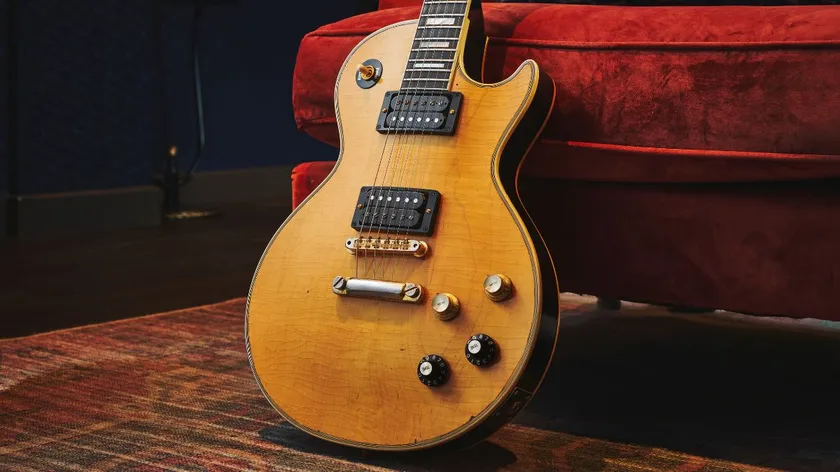


I consider fingerpicking to be essential to my playing, as it’s a technique I have utilized in a variety of ways for many years. When recording, I often use my 1945 Gibson J-45 acoustic guitar. If you’re familiar with this instrument, you know how wonderful it is to play and how great it sounds.
Figure 1 illustrates a very basic fingerpicked pattern: while holding an E chord, my pick-hand thumb basically alternates between the 6th and 4th strings while the index, middle and ring fingers pick the higher strings.
The open low E bass note alternates with the higher notes in an eight-note rhythm. Note that the thumb often catches the next higher string, as demonstrated here.
Years ago, a friend of my dad’s came over and played some beautiful fingerpicking on a Martin D-28 acoustic, and I was blown away. He said, “That’s Mississippi John Hurt.” So I thought, well, I need to listen to more of that!
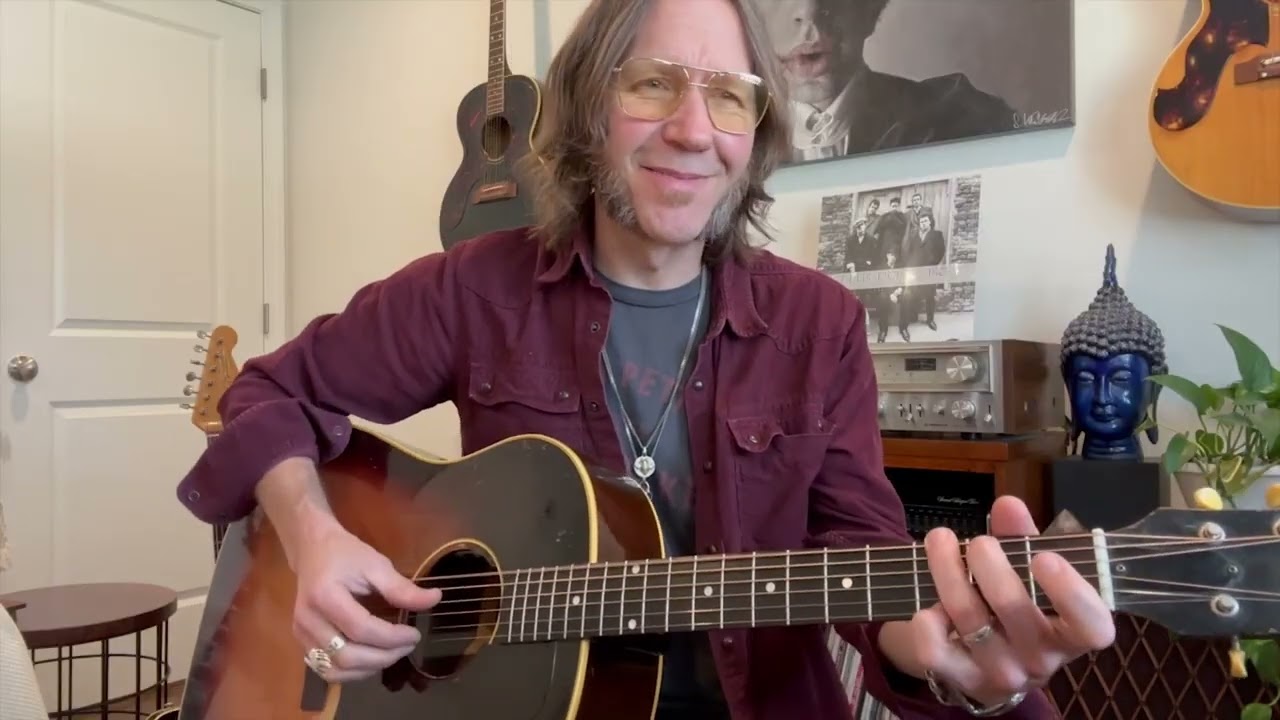
When I got hipped to this music, I discovered that the patterns were rooted in alternating bass notes sounded by the thumb while melodic patterns were fingerpicked on the higher strings in a syncopated rhythm.
Figure 2 offers an example of this style: bars 1 and 2 establish an eighth-note thumbpicking pattern, and in bars 3 and 4 a fingerpicked melody is introduced on the top three strings. As shown in Figure 3, the thumb always keeps the rhythm of the bassline going, in this case in the key of G.

It will take dedicated practice to get the coordination together to execute the low-string/high-string syncopations properly, so start out slowly and focus on how the two parts work together.
The Blackberry Smoke song Ain’t Got the Blues, from our 2012 album,
The Whippoorwill, is built from this style of fingerpicking. As shown in Figure 4, bar 1 establishes an alternating bass pattern on the tonic G chord, and in bar 2 I introduce a melody played on the G and B strings.

In bar 4, I move to C, the IV (four) chord, and the melody is transposed up a 4th and played on the top two strings. In bars 7 and 8, the pattern is played over the V (five) chord, D, and in bars 9 and 10 I return to the tonic, G.
Another good example of this style of fingerpicking is a section I play in our song Holding All the Roses, which is in drop-D tuning (low to high: D, A, D, G, B, E). Figure 5 illustrates the similar manner in which this is played.

I asked my dad’s friend where guitarists like Mississippi John Hurt got the idea to play in this way, and he said. “I think they’re trying to imitate the sound of a player piano on a riverboat.”
I think that’s a good theory, because the type of fingerpicking you hear from the great “Piedmont”-style players, like Blind Blake, Blind Willie McTell and Reverend Gary Davis, does work in the same way as stride piano, with consistently alternating bass notes driving the rhythm and joined by syncopated melodies in a higher octave.
- This article first appeared in Guitar World. Subscribe and save.
