





A common piece of advice given to guitarists is play less. Albert King once advised Gary Moore to “play every other note”, for example.
To be clear, this is not to say having great technique (and flaunting it) is a bad thing – there are few experiences more thrilling than hearing Gary Moore tearing around the fretboard at full speed – but even then it’s true to say the way he plays things is at least as important as what he plays.
Obviously, a lot depends on the kind of music. It would feel strange hearing Yngwie Malmsteen play a minimal emotive blues over a neo-classical backing track, just as we wouldn’t expect David Gilmour to break into lightning speed arpeggios at the end of Comfortably Numb.
The idea of the solo/examples is twofold: to put some solid vocabulary and fresh ideas under the fingers of less experienced players, and to remind the more technically preoccupied player that a bit of light and shade enhances both sides of the spectrum.
Working with slower phrasing (and at a slow tempo) is like putting a magnifying glass to details such as vibrato, pitching bends, rhythm and timing. There’s also the matter of melody, which is surely the most important detail of all. A lot of these ideas are pentatonic-based, but the slow-paced chord changes allow us to (literally) think outside the box.
Another often given but great piece of advice is to record yourself and listen back as objectively as you can. Pushing through any initial discomfort (we all go through that), you’ll learn a lot about playing with intent, rather than allowing habits to run the show.
Surprisingly, what feels good to play isn’t always what we want to hear as a listener. Hope you enjoy and see you next time!
Example 1

Peter Green is a big influence on this first example, following another great piece of advice: steal from the best!
Things to be conscious of here are, first, vibrato; this is one of the more treacherous areas. It’s all too easy to apply vibrato to everything by default, so try to be intentional about where you use it.
Pitching of bends is self explanatory, but it deserves a mention. Some of the bends creep slowly up to pitch, while others are more incidental. Finally, don’t miss the staccato notes and spaces in between phrases.
Example 2

All the same advice applies to this second example, but note that it departs more from the pentatonic box approach. It also takes a few more liberties with timing here and there, usually erring on the side of behind the beat, rather than before.
It’s difficult to notate this precisely, so listen carefully to the audio and watch for the ‘lay back’ markings on the transcription. Having said that, please don’t feel it’s necessary to precisely duplicate this. There are a thousand ways to interpret it that can be equally valid.
Example 3

Switching away from the ‘out of phase’ middle position to the bridge pickup gives a bump up in volume and gain. This could also be achieved by flipping on an overdrive, or leaving a bit of headroom on the guitar’s volume control then maxing it for this part.
There are a few more ideas from outside the pentatonic boxes here. Halfway through bar 1 there’s a bend to F#, which fits nicely over the D major chord, then the bend up to G at the 13th fret starts the phrase over the Bb and F chords.
There is a conspicuous quarter-tone ‘blues bend’ at the end of bar 2, leading ultimately to a couple of D major-based doublestops.
Hear it here
Pink Floyd – The Wall
Okay, we’re going to go for the lowest hanging fruit first… Obviously, the solo in Comfortably Numb has the kind of power and self-assurance many more ‘technical’ players would kill for, but even the faster pentatonic runs maintain their poise.
The two solos from On An Island on Gilmour’s third solo studio album are also a great demonstration of classy pentatonic playing with an awareness of melody. Finally, check out the phrasing towards the end of Cluster One from The Division Bell.
Peter Green – The Complete Blue Horizon Sessions 1967-1969
It would be negligent to omit Peter Green here, as few players attract such universal reverence. Need Your Love So Bad is a clear example of melody and feel as primary considerations. The same can be said of Albatross (also acknowledge Danny Kirwan on harmonies).
Finally, the original version of Black Magic Woman demonstrates that while Peter was more than capable of adding little runs to enhance the melody, his tone, timing and feel were always the priority.
The Beatles – Abbey Road
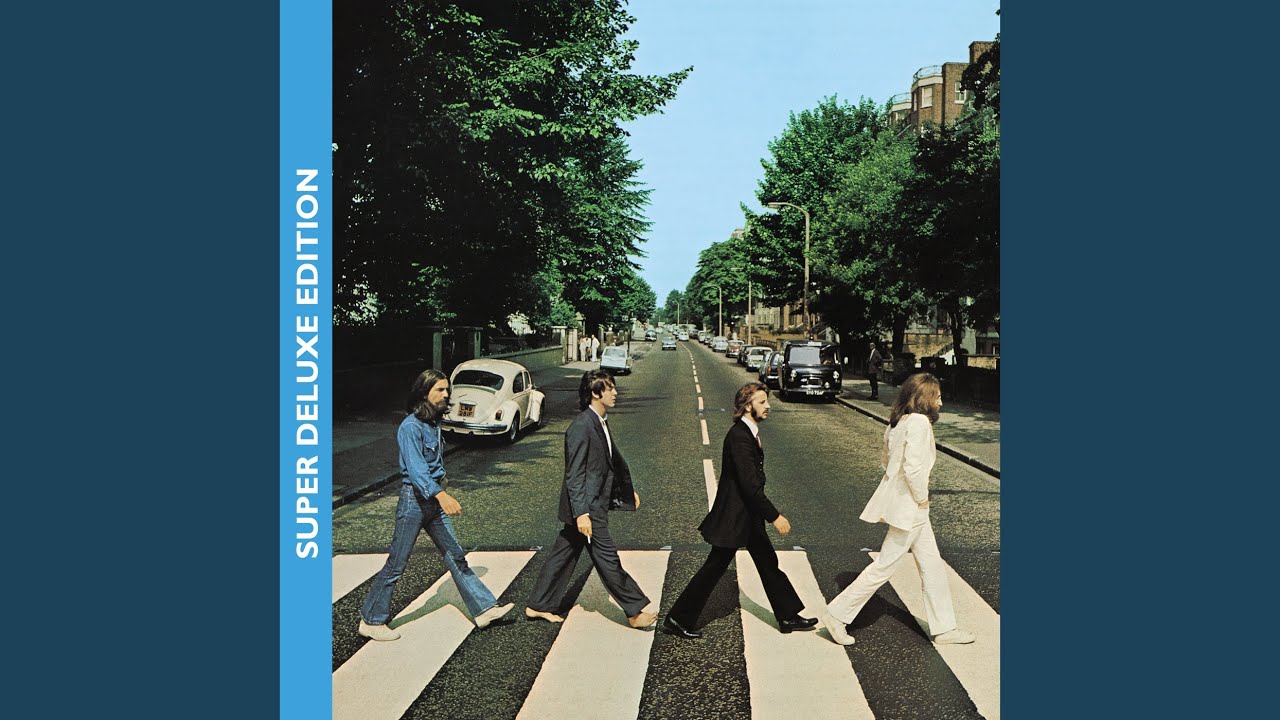
In the context of a band primarily known for their songs, George Harrison’s refined guitar approach (and songwriting) was all too often unacknowledged.
His solo on Something is as memorable as the vocals, with impeccable bends, vibrato and phrasing. Turning the clock back a few years, his Scotty Moore-style break on All My Loving is short but packed with sophisticated ideas.
Finally, his rhythmic soloing in Octopus’s Garden suddenly makes a novelty track sound very cool!
- This article first appeared in Guitarist. Subscribe and save.

