


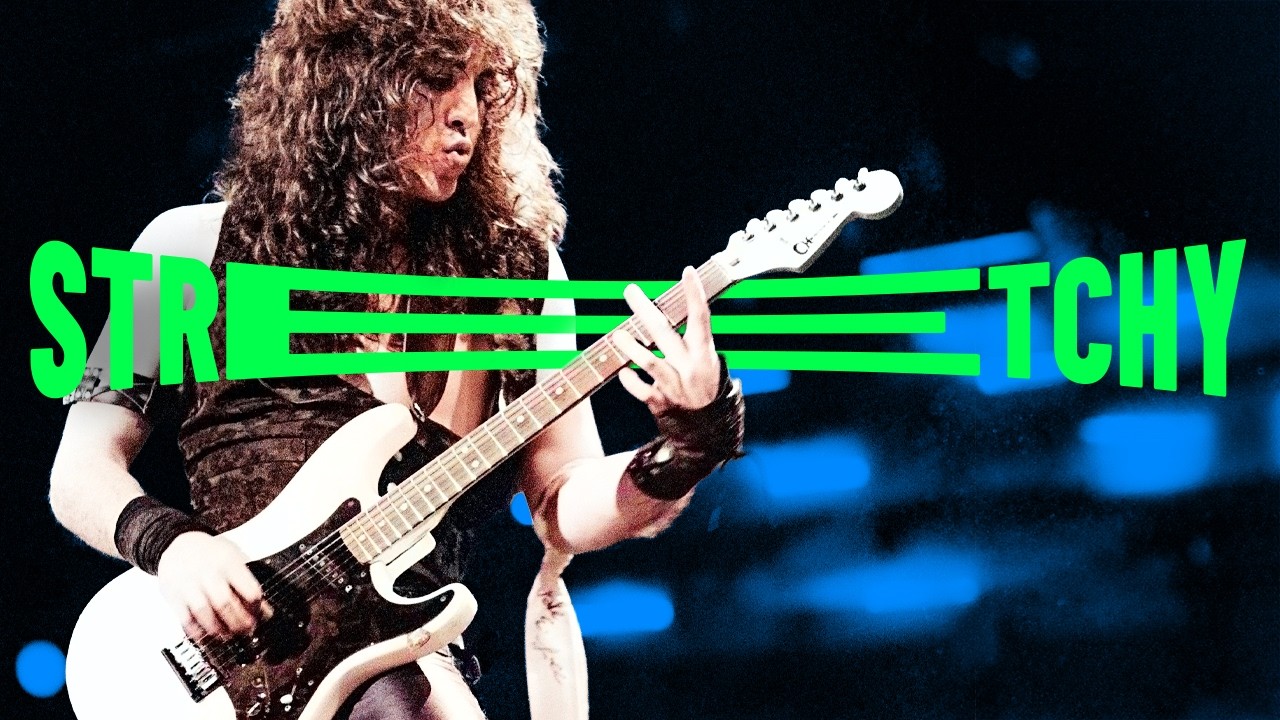
Throughout his playing with Ozzy Osbourne and his own band Badlands, Jake E. Lee created stunning riffs and solos that combined melodic blues-rock licks with fast shredding. But there is one technique that really made him stand out: his fretting hand versatility, which included using his thumb to achieve otherwise impossible stretches with fingers alone.
Using the thumb to play low notes was popularized in the late 1960s by Jimi Hendrix and a decade later by jazzer Pat Metheny, to name two guitar icons. But incorporating the thumb over the fretboard in conjunction with the fretting hand fingers for high strings is a much rarer technique. Using large note intervals and making difficult stretches possible are just two of the applications for this barrier-pushing technique.
The following four examples are inspired by Jake E. Lee’s playing with Ozzy during the mid ’80s. They can be used to increase your fretting hand stretching and stamina, as well as introducing the “thumb over the neck” fretting technique. All are in the key of E minor and make use of the E natural minor scale (E-F#-G-A-B-C-D) with some occasional chromatic passing tones.
These examples should be approached slowly and for short periods at a time. Angle the guitar neck upwards, and place the thumb in line with the second finger. For ideal posture, maintain relaxed and level shoulders to attain these stretches and avoid injury.


MatchMySound: play-along enhancements
For this lesson, we've partnered with MatchMySound, to offer the ability to record yourself and see how close you are. MatchMySound is a great tool to help track your progress.
Click on the word 'options' (lower left, below the tab/notation) to select from 'demo audio track' (just guitar), 'backing track' (just the backing), 'full audio' (backing and real guitar audio) and 'metronome' (just a click to play along to).
Below that, select 'options' for how you can record your performance.
At the upper right, the magnifying glass images let you alter the playback speed for learning and pushing your playing onwards.
Follow the cursor to keep up with the tab/notation accurately on screen.
Lastly, to view the music better by filling your desktop/tablet/phone screen, click on the square brackets at the top right.
The Four Jake E. Lee Examples
Example 1: six-note legato sequence
This starts with a classic six-note legato sequence popular with '80s and '90s shredders. It is phrased in triplets at three notes per click and introduces increasingly larger stretches to avoid a predictable scalar sound and provide a work out for all four fretting hand fingers.
If you are new to this technique, break the exercise down into four separate exercises based on what's played for each bar. After you've built some precision and stamina, aim to double your speed with six notes per click instead of three.
Example 2: two note extended pentatonics
Your second example uses a two note extended pentatonic approach, with stretches that decrease in size and have a distinct feeling of moving inward and relaxing, while also exercising all four fingers.
Pay attention to the notes on the second (B) string as they'e all picked as well as any notes that are played in multiple positions. Also watch where your fretting hand thumb sits on the back of the neck: keep it in line with your second finger for good hand posture.
Example 3: Using the thumb to fret higher strings
Here you are introduced to fretting with the thumb over the neck. Each bar uses a finer rhythmic subdivision so you can become comfortable with the technique. Aim to use the fleshy area adjacent to the outer side of your thumb.
If you've never used this technique before, be mindful that this will be uncomfortable at first as you get used to the posture and develop new thumb calluses. That said, you should notice how easy it is to play stretches over 7 frets (or more!) using this technique. Once you're comfortable with this, experiment with your own ideas.
Example 4: all three techniques used together
To finish, here's a short solo study that utilizes each of the three previous exercises. Choose a combination of techniques and approaches that suits you the best.
Jake E. Lee in action!
Jake's thumb on the fretboard technique
This shows Jake playing the solo for Ozzy's Suicide Solution. Using his thumb on a lower fret, he varies which fingers are used on the higher frets.
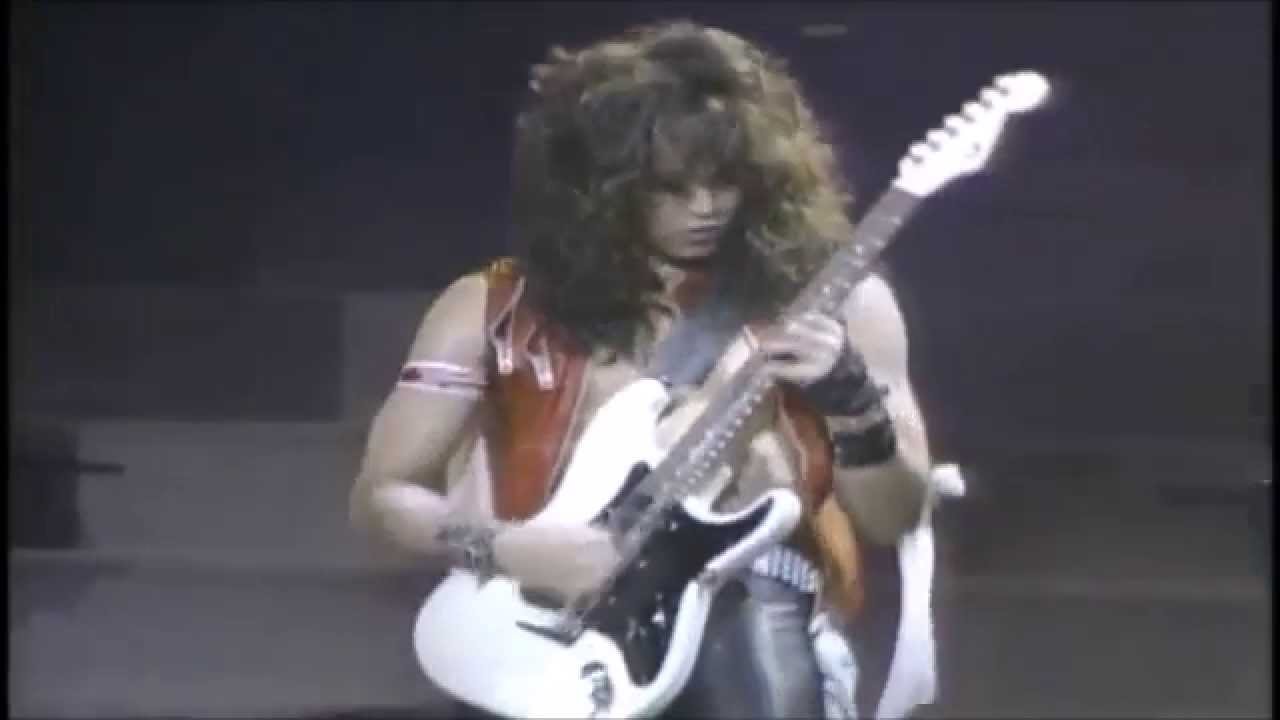
Jake uses his thumb here for chordal playing with a clean tone. This demonstrates how versatile (and freeing) thumb fretting can be.

