
 Access Backstage Pass




Slash might've said it best: "There's no lying with the acoustic guitar. There's something very pure, and very humbling, about it."
A profound statement coming from one of rock 'n' roll's most celebrated electric guitarists.
But strip away all the muck of multi-layered overdubs, rack effects and endless symphonies of tracks, and you separate the dodgers hiding behind studio wizardry and the artists who know a great song only needs six strings and a melody.

Here are 25 of hard-rock's best acoustic rockers. Some are pure acoustic jams, others only start out out that way before ascending into grand opuses. But what makes these songs iconic is their elemental simplicity. In other words, all you need to bring them to life is an acoustic guitar and a little feeling.
And from the looks of these rockers, some gaudy jewelry helps. Note that these songs are not presented in any particular order.
1. Led Zeppelin - Stairway To Heaven (1971)
Led Zeppelin III was largely an unplugged affair, but Stairway to Heaven, from the band's follow-up, wins the prize for acoustic guitar excellence. Jimmy Page's delicately fingerpicked arpeggios made the song Zeppelin's-and-rock's-definitive acoustic moment.
Over the years, Stairway to Heaven has dominated countless 'greatest rock song ever' lists, thanks to its spellbinding mix of lyrical mysticism, compositional and production genius and instrumental virtuosity.
But its most celebrated moment remains Page's unaccompanied intro: whether heard on a radio or played by some pimply kid in a guitar store, all it takes is those first few acoustic guitar notes and you can instantly name that tune.

2. Boston - More Than A Feeling (1976)
Tom Scholz's soaring leads (recorded with an early version of his Rockman amp unit) and crunchy, multi-tracked electric guitar rhythms have more than a little to do with More Than a Feeling becoming one of classic rock's most enduring anthems. But it is the song's lilting, arpeggiated acoustic intro that puts fans in the mood.
Working as something of a one-man band in his basement, Scholz, one of music's first DIY dudes, played all the guitar parts on Feeling. For the arpeggiated intro and verses, he used a Yamaha 12-string; the more fully strummed choruses called for a Guild D-40.
A bit of trivia: Noting the similarities between More Than a Feeling and Smells Like Teen Spirit, Kurt Cobain teased fans at Nirvana's 1992's Reading Festival performance with a few bars of the Boston classic.
3. Kansas - Dust In The Wind (1977)
When Vicci Livgren overheard her husband, Kansas guitarist Kerry, practicing finger exercises on his acoustic one day, she told him she heard a song there and suggested he add some lyrics. He listened, and the result was Dust in the Wind.
A departure from Kansas' characteristic prog-rock bombast, "Dust in the Wind" was a stark, plaintive meditation on the meaning of life. While many assume that the track features a 12-string acoustic, the rich unplugged sound is actually the result of multiple six-strings (a few in Nashville tuning), played by Livgren and co-guitarist Rich Williams.
The song became Kansas' only Top-10 single, charting at Number Six in 1978. In the years since, it has become something of a cultural touchstone, popping up everywhere from TV shows like The Simpsons and Family Guy to movies like Bill & Ted's Excellent Adventure and Old School.
4. The Rolling Stones - Street Fighting Man (1968)
One might assume this rebel yell, released during the tumultuous summer of 1968, would rage with the sound of electric guitars. Not so: with the exception of an electric bass, played by Keith Richards, the track is 100 percent acoustic.
Preparing a demo for the song, Richards mic'd two acoustics and recorded them into a cheap Phillips mono cassette recorder. The guitarist was so enamored of the resulting distortion (the machine had no limiters, causing the signal to overload) he decided to go au naturale and ditch the electrics.

5. The Who - Pinball Wizard (1969)
By 1969, Pete Townshend was known as much for smashing guitars as for playing them. But on the Who's ground breaking Tommy, he demonstrated some astonishing six-string skills.
And with an acoustic in his hands (check out It's a Boy for some deft blues-meets-flamenco work), he was unstoppable. Although electrics bolster the verses and choruses of the album's centerpiece, Pinball Wizard, a 1968 Gibson J-200 acoustic is the dominant instrument throughout.
Townshend's furiously strummed barre chords (which he deemed 'mock baroque'), heard in the intro and breakdown section, provide the kind of power and majesty befitting a genuine rock opera.

6. Bad Company - Feel Like Makin' Love (1975)
As the first band signed to Led Zeppelin's Swan Song label, Bad Company, led by former Free singer Paul Rodgers and former Mott the Hoople guitarist Mick Ralphs, followed their bosses' lead and specialized in sweaty, swaggering blues rock.
Taking another lesson from the Zepmen, Ralphs juxtaposed chiming acoustics with explosive power chords on this Top 10 smash, to wondrous effect.
The bright, jangly acoustics lend a relaxed, down-home country vibe to the verses, while the electric guitars in the chorus scream with big, brash British rock. Presumably, quite a few people felt like doing the nasty after hearing this cut.
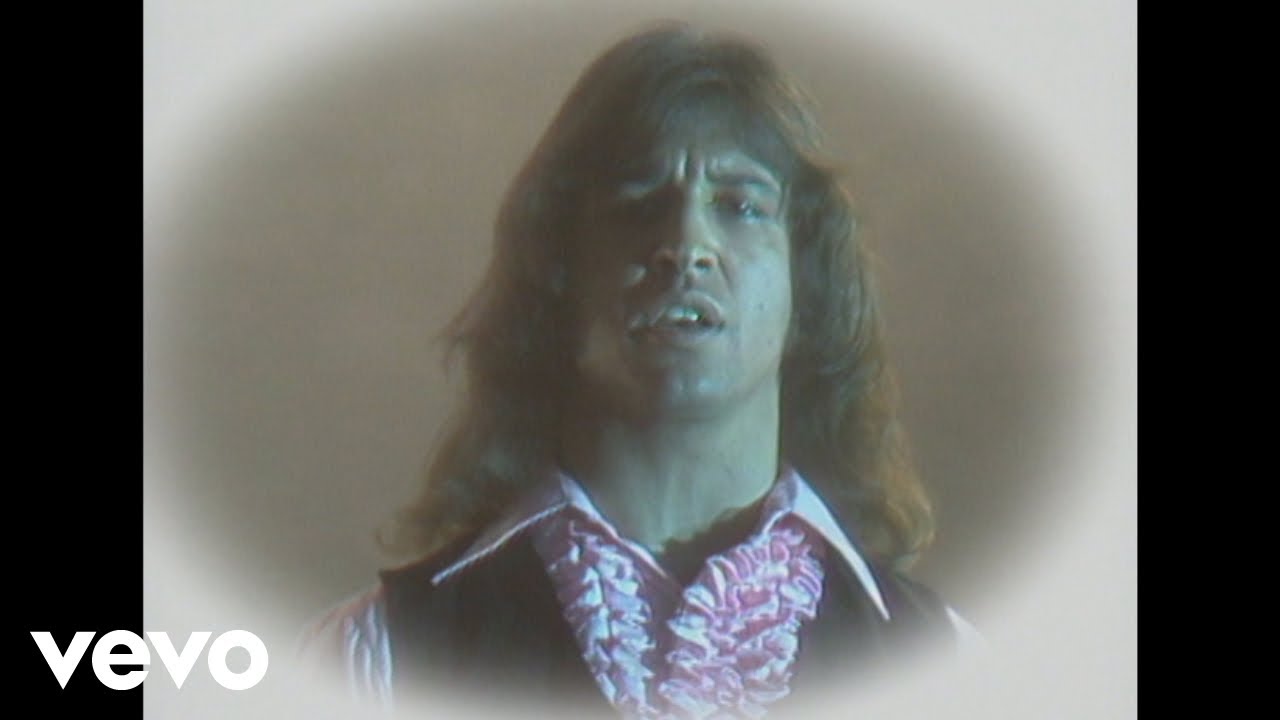
7. Johnny Thunders - So Alone (1978)
As a member of the proto-punk glam-rockers the New York Dolls, and later with his own band, the Heartbreakers, Johnny Thunders knew how to dish out rough-and ragged three-chord rock. And with a Les Paul Junior slung well below his waist, he had 'cool' written all over him.
So it came as a surprise when Thunders, on his debut solo album, issued this poetic acoustic ballad. Tempering his patented pounding style, the singer-songwriter lays out his junkie lifestyle with unflinching candor, practically caressing his guitar strings in the process.
Melancholic and remorseful, the song has come to serve as an elegy of sorts for the troubled Thunders, who died of an apparent drug overdose in 1991. (The song's title, it should be noted, was lifted from a line spoken in an episode of the '50s TV sitcom The Honeymooners. Punk rock, indeed.)
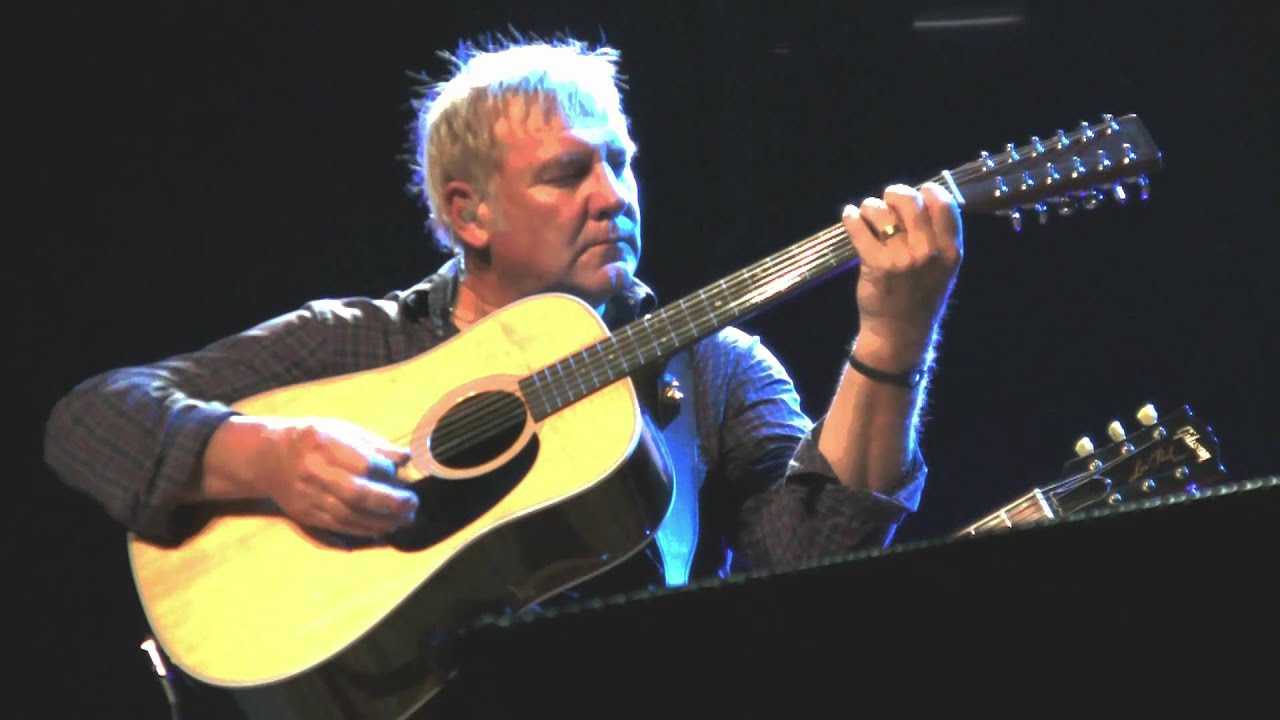
8. Rush - Closer To The Heart (1977)
By 1977, Rush had firmly established themselves as fine purveyors of glorious 20-minute sci-fi opuses that could fill entire album sides. But on this, their fifth studio release, the Canadian prog trio demonstrated their ability to be hooky, concise and, with Closer to the Heart, radio-friendly.
Perhaps the most surprising aspect of the song's gentle, ringing 12-string acoustic guitar intro is that it was written by bassist Geddy Lee, rather than guitarist Alex Lifeson. The same figure is later repeated after a particularly ripping electric guitar solo-only this time the 12-string acoustic is smartly doubled by a six-string electric.
When it comes to Rush, of course, the contributions of drummer extraordinaire Neil Peart can never be overlooked. Here, he adds plenty of bells and whistles throughout. Okay... they're actually chimes.
9. Yes - Roundabout (1971)
Pick up a Martin 00-8 acoustic, pluck octave harmonics at the 12th fret (essentially comprising an Em chord) and voila! - you'll have a whole room of guitar dudes sitting up and taking notice. And with good reason-this simple move is Steve Howe's signature opening line to Roundabout, Yes's breakthrough 1971 hit.
Make it past Howe's harmonic-heavy unaccompanied intro, and you just might have a chance at mastering this intricate prog-rock masterpiece, in which acoustics and electrics, played in classical, jazzy and rocking splendor, weave in, out and 'roundabout'. As for the lyrics, this is prog - you're on your own there.
10. Randy Rhoads - Dee (1980)
With his inventive, neoclassical spin on Eddie Van Halen's already established bag of tricks, Randy Rhoads became the new heavy metal guitar king after fans heard his work on Ozzy Osbourne's 1980 solo debut, Blizzard of Ozz. But while electrified Ozz rockers like Crazy Train and I Don't Know wowed the metal masses, it was the solo classical piece Dee that was Rhoads' true masterpiece.
Rhoads grew up in a musical family - his mother, Delores, runs a music school in North Hollywood, California - so it was only fitting that "Dee," all 49 seconds of it, paid tribute to the woman who inspired and nurtured his dreams. Fingerpicked on a nylon-strong acoustic, the piece is by turns playful, melancholy, heartbreaking and hopeful.
Tragically, Rhoads was killed in a 1982 plane crash, at the age of 25. Five years later, Ozzy Osbourne included an extended, studio outtake version of Dee on his album Tribute, reminding us all of Rhoads' immense and largely untapped talent.
11. Van Halen - Could This Be Magic? (1980)
Eddie Van Halen gave acoustic-shred fetishists much to chew on in 1979 with Spanish Fly, a hummingbird-fast flamenco instrumental from Van Halen II. But guitarists of all stripes found a lot to like in the bluesy-and boozy, slightly off-kilter Could This Be Magic?
The track, which marks the guitarist's first recorded bottleneck moment, finds Eddie's whimsical acoustic slide playing expertly shadowing David Lee Roth's vocal on the verses.
The idea to use a slide came from producer Ted Templeman, and while Eddie was initially leery of trying it, he practiced for a few days and, in typical VH style, pulled off the part with aplomb.
Another first: Could This Be Magic? represents the debut of an outside singer on a Van Halen album. Templeman suggested a different sound for one of the choruses and brought in country singer Nicolette Larson, who was working in a neighboring studio, to lend vocal support. Listen closely following Eddie's slide solo to hear Larson and Diamond Dave make sweet harmonized magic.
12. Bon Jovi - Slippery When Wet (1986)
The story is legend: Jon Bon Jovi and Richie Sambora ride into the 1989 MTV Video Music Awards, do the acoustic-duo thing on Wanted Dead or Alive, and before you can say 'dreadnought', the Unplugged series is born.
The song is no slouch either. On it, Sambora lays down some fancy acoustic finger work, picking out descending arpeggios and bluesy bends as JBJ rolls his fascination with the Old West into a story about the weariness of life on the road.
The result was a smash hit, insuring that Bon Jovi would see a million faces and rock them all for many years to come.
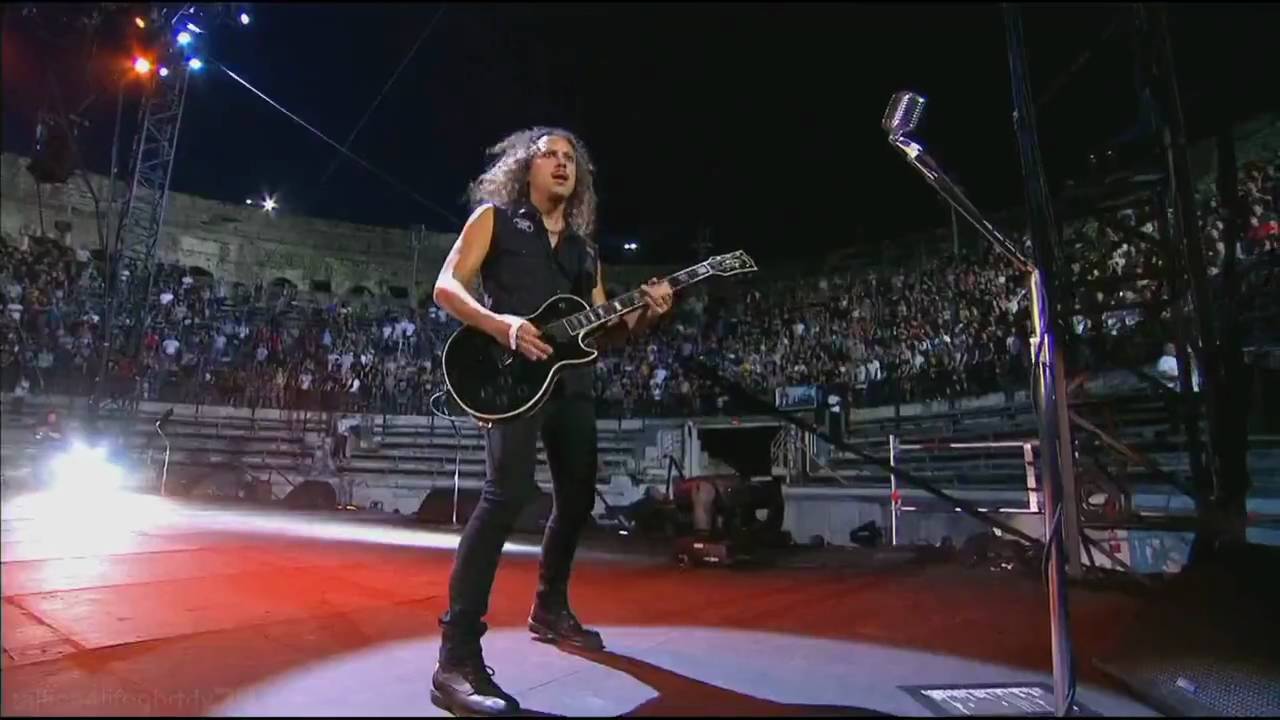
13. Metallica - Fade to Black (1984)
Recorded way back in the early days of thrash, Fade to Black is rightly acknowledged as the genre's first 'power ballad'. A seven-minute rumination on despair and suicide, the song is built around singer and guitarist James Hetfield's mournful, arpeggiated acoustic picking, over which Kirk Hammett adds some beautiful and soaring electric leads.
Of course, this being Metallica, things remain sweet and mellow for only so long. Midway through, the song builds in intensity, shifting rhythms and adding plenty of heavily distorted six-strings, culminating in an extended and explosive Hammett solo.
While hardcore metalheads at the time accused Metallica of selling out by recording a ballad, Fade to Black remains one of the group's most well-known and beloved songs, and it is a concert staple to this day. Besides, as Hetfield has said, "Limiting yourself to please your audience is bullshit."
14. Poison - Every Rose Has Its Thorn (1988)
When you think of '80s power ballads, one song stands head, hair and shoulders above the rest: Every Rose Has Its Thorn.
Penned by singer Bret Michaels after he discovered that his girlfriend had been cheating on him, the 1988 smash hit proved that glam-metal dudes have feelings, too.
While the recorded version features a typically histrionic electric guitar solo from Poison's C.C. DeVille, Michaels' lyrical directness, solid song construction and strong acoustic playing rule the day.
Michaels has said that "People related to the song because I related to the song," and indeed, Every Rose Has Its Thorn, which hit Number One in 1988, has since become a defining tune of the era. As for that girlfriend, she's now a hedge fund investor.
15. Guns N' Roses - Patience (1988)
Although GN'R Lies features a number of acoustic tracks, including the country-ish, darkly comedic Used to Love Her ("but I had to kill her" ... ), it was the lovelorn Patience, a glacial-paced ballad, that marked the most radical left turn for the normally hard-rocking group, and also gave them one of their biggest hits.
The song was recorded in a single take, with guitarists Slash and Izzy Stradlin and bassist Duff McKagan all on acoustics. Axl Rose, for his part, contributes some fine whistling at the intro.
The final two minutes stand as Gn'R's Kumbaya moment, with the whole band cooing the song's title in sweet harmony. Then everybody got in a fight, but that's another story.
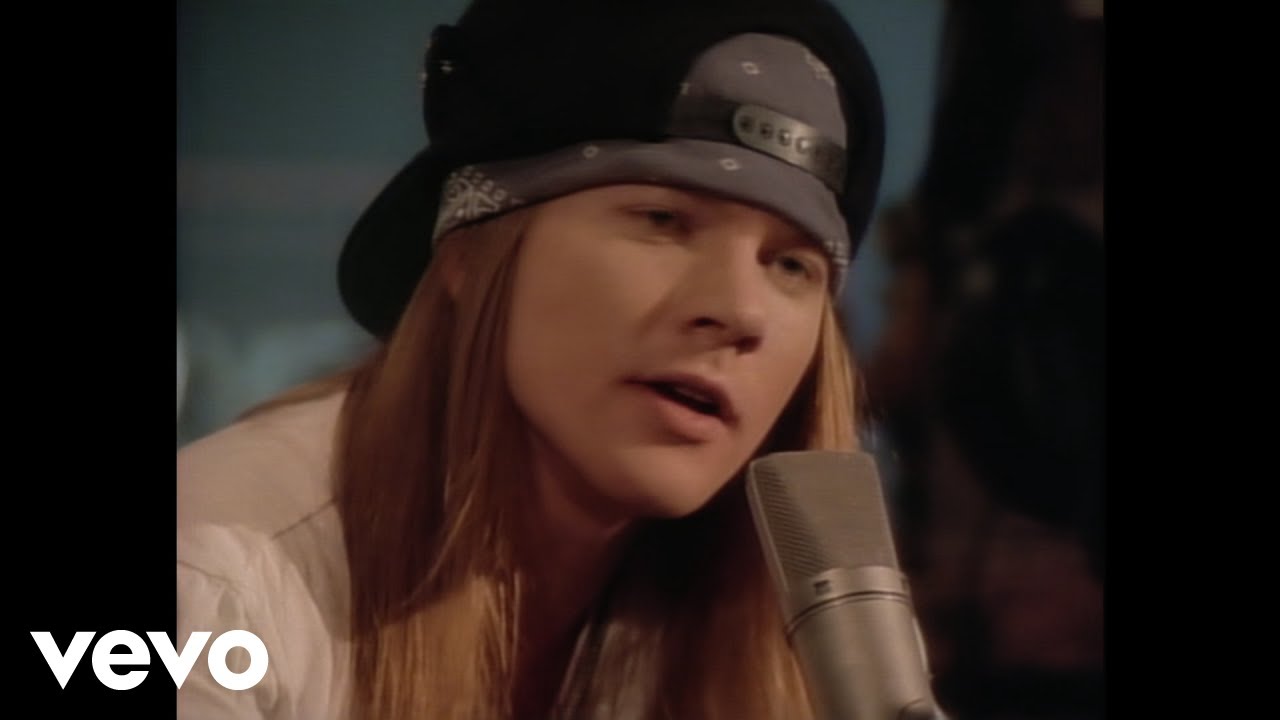
16. Jane's Addiction - Jane Says (1988)
It's five minutes long, features just two chords (G and A) and, with its steel drum ornamentation, sounds like something Jimmy Buffett might have conjured up after a three-day orgy of sponge cake and margaritas. Nonetheless, Jane Says remains one of the L.A. punk-metal band's most enduring songs.
Perhaps its durability can be attributed to the fact that it doesn't fit neatly in the group's canon. In place of frenzied, psychedelic metal dispatched with tectonic force, we get a wistful, straightforward acoustic ditty, tailor-made for campfires and backyard cookouts. Coming from Perry Farrell, Dave Navarro and Co., that's pretty shocking.

17. Extreme - More Than Words (1990)
In the late-'80s, Extreme carved out a niche as the funkiest hard rockers on the block, with a sound that, thanks to guitar hero Nuno Bettencourt, straddled the line between Van Halen shred and Aerosmith strut. And so it was something of a kick in the head when Bettencourt and singer Gary Cherone unleashed the Everly Brothers homage More Than Words.
Aside from a couple of finger snaps, the only accompaniment to Cherone and Bettencourt's harmonizing voices was Bettencourt's fingerpicking on a Washburn acoustic and the percussive knocking of his hand against the guitar's top.
18.The result was a smash hit: More Than Words hit Number One on the Billboard charts in 1991, and led a generation of would-be shred heroes to put down the electric, grab an acoustic, and knock the hell out of it.
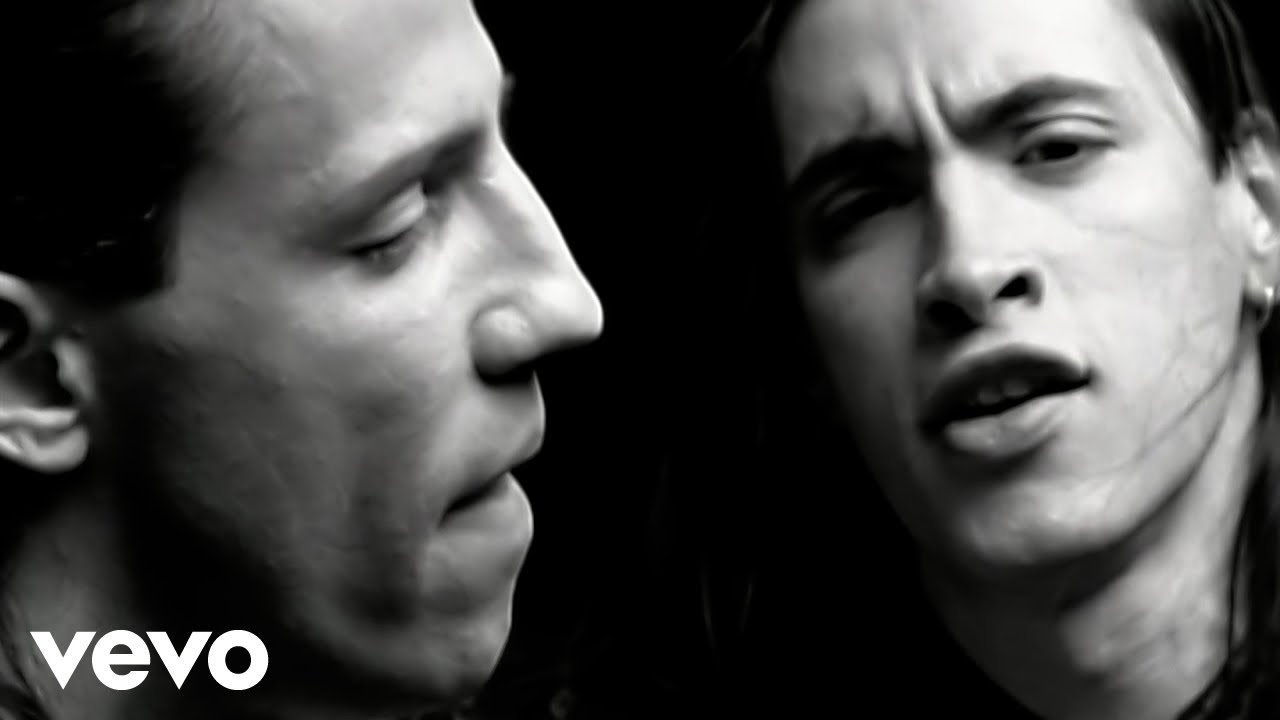
18. The Black Crowes - She Talks To Angels (1990)
Jealous Again, Twice as Hard and Hard to Handle put Atlanta's Black Crowes on the map as a raucous, genuine-article blues-rock ensemble. But it was this soulful acoustic-driven number about the ravages of heroin addiction that put the band over the top-and gave it a Number One song.
For the recording, guitarist Rich Robinson (who wrote the music to the song when he was just 15) played a Martin D-28 in open D tuning. Although he capoed the 2nd fret, effectively giving him an open E tuning, there's a certain feel and texture to his sound that fits the wrenching nature of the track. Add in brother Chris Robinson's soulful, yearning vocal, and you have something truly heavenly.
19. Queensrÿche - Silent Lucidity (1990)
Let's say you're a proggy metal band (from Seattle, of all places), best known for releasing a kitchen-sink concept album (1988's Operation: Mindcrime) about government overthrow... or something like that. What do you do for an encore? If you're Queensrÿche, you whip up a kitchen-sink acoustic song about dream consciousness ... or something like that.
Silent Lucidity features songwriter and Queensrÿche guitarist Chris DeGarmo on Spanish six-string guitar in the intro and verses, playing a sweetly arpeggiated pattern that beautifully mixes fretted notes and open strings.
The song drifts steadily along, adding electrics, voice-overs and swelling orchestration until practically busting at the seams with sound. And yet it ends as it began, with DeGarmo's lone acoustic. And then, silence.
20. Alice In Chains - No Excuses (1994)
With their 1992 mostly acoustic EP, Sap, Alice in Chains served notice that they had more to offer than merely distorted grunge. Melodic and full of somber beauty, Sap set the stage for Jar of Flies, which firmly established AIC as a band of uncommon, if very bleak, depth.
No Excuses marked something of a departure for the band. With its gentle, easygoing pace and hopeful (for Alice in Chains, at least) lyrics about enduring life's hills and valleys, No Excuses is practically toe-tappin' and good-timey.
But the real revelation is guitarist Jerry Cantrell's wide-as-the-Grand-Canyon acoustic sound - full, ringing and droning for days. No excuses needed for that at all.

21. Green Day - Good Riddance (Time Of Your Life) (1997)
When recording what would be the album version of this acoustic ballad, Green Day leader Billie Joe Armstrong flubbed the opening G/D chord - twice - and after the second time deadpanned, "Fuck."
Fortunately, he soldiered on, and, despite the uttered expletive, Good Riddance (Time of Your Life) enjoyed huge crossover success and stands as the band's biggest hit to date. Which was hardly anticipated.
At the time, Green Day were considered little more than snot-nosed, albeit multi-Platinum, Bay Area ruffians, and an acoustic guitar-and-strings ballad wasn't what most people expected to hear from them.
For that reason, bassist Mike Dirnt called the song the 'most punk' thing they could have done. Which just goes to show that even punks can wear their hearts on their sleeves.

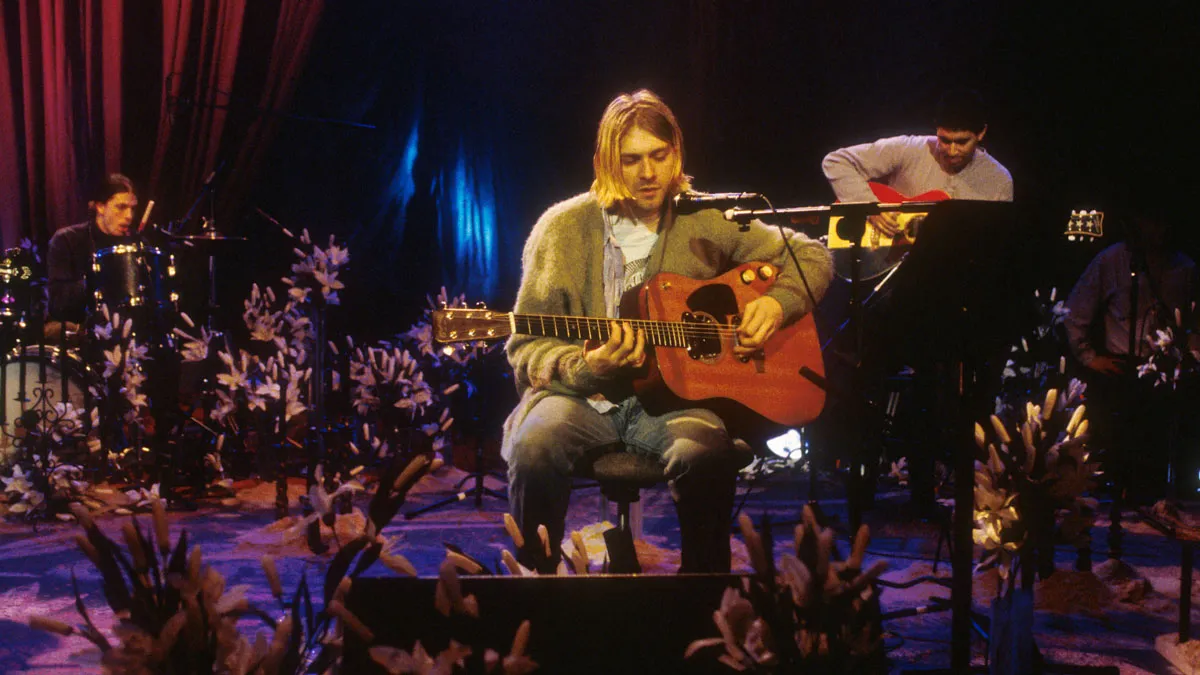
22. Nirvana - Lake Of Fire (1994)
For their appearance on MTV's Unplugged, Nirvana abstained from playing some of their biggest hits (no Smells Like Teen Spirit, for one) in favor of lesser-known material and covers of songs from artists they knew and admired.
One such artist was Arizona's Meat Puppets, a particular favorite of Kurt Cobain's. And so, on the night of November 18, 1993, on a stage decorated with flowers and black candles, Cobain invited the Puppets' Curt and Cris Kirkwood out for, among other tunes, a mellow run-through of their swampy Lake of Fire.
With Krist Novoselic, Dave Grohl and the Kirkwoods holding down the accompaniment, Cobain put aside his guitar to hone in on the vocals, howling his way through the impressionistic lyrics.
The performance became one of the highlights of the show, and to this day the song is as associated with Nirvana as it is with its originators.

23. Foo Fighters - Everlong (acoustic) (2006)
The full-band version of Everlong, that appeared on the Foo Fighters' 1997 album, The Colour and the Shape, was a raging slab of rock that seemed hard to beat. But when Dave Grohl appeared on Howard Stern's radio show later that year and performed an impromptu acoustic version, listeners went wild, and bootlegs soon abounded. (David Letterman would later call Everlong his "favorite song".)
Musically, the composition is positively Townshend-esque, built around a simple, movable progression in a drop-D (D-A-D-G-B-E) tuning. The studio version features Dave Grohl pumping wildly on the drums (Taylor Hawkins had not yet joined the band), but it is his tense, driving solo acoustic reading that truly sets pulses quickening.
24. Staind - Outside (2001)
Sludgy, down-tuned electric guitars bulldoze the choruses of the official recording, but originally this song was an all-acoustic ballad: Staind lead singer Aaron Lewis used to perform a half-finished version of Outside during solo shows.
One night in Biloxi, Mississippi, as Staind were preparing to open for Limp Bizkit on the 1999 Family Values Tour, the singer was asked to do a number with Fred Durst providing backing vocals.
Onstage, Lewis came up with the lyrics to complete the tune he'd been laboring over for months. Radio stations picked up on the live acoustic version and helped build a buzz for Outside months before the official version was released on Break the Cycle. The song - and the album's - success launched a thousand nu-metal power ballads in its wake.
25. Nickelback - Photograph (2005)
It sold more than 1.4 million digital downloads in the U.S., reached Number Two on the Billboard Hot 100 and was voted the fifth 'most annoying song of all time' in a Rolling Stone poll. Such is the case with Nickelback's Photograph: love it or hate it, the tune gets a reaction.
Like many a country-tinged power ballad, electric guitars fire up the song's choruses, but the backbone of Photograph rests in the heartfelt strumming of an unplugged axe. And if it's a formula that Chad Kroeger and Co. have repeated to great success, so have scores of modern rock bands that have followed in the band's wake.
Chances are when a power ballad with big guitars and an even bigger chorus works its way up the charts today, there's a little bit of that Photograph magic in there somewhere.


