


Death Cab for Cutie recently took to the road to celebrate the 20th anniversaries of their Transatlanticism and Plans records. Both tours were huge successes that reinforced those albums’ lofty stature in the ‘oughts rock catalog, though the former was cited in one prominent review as “Peak millennial nostalgia, in the best way.”
Even with that caveat, oof. What to do as a band when people are throwing the “nostalgia” tag at you in headlines?
Emerging from those big celebrations of the past on one end and personal upheaval (Death Cab singer, songwriter, and guitarist Ben Gibbard went through a divorce in 2024) on the other, the band’s eleventh album, I Built You a Tower, sounds amazingly unbothered, in a way. It documents a band that’s comfortable, but never content.
Having labored over 2015’s glossy Kintsugi and 2018’s Thank You For Today, their first album without longtime lead guitarist Chris Walla since their debut, the band turned to veteran producer John Congleton to take the reins for the smoother, more self-assured Asphalt Meadows in 2022. When the material for what would become I Built You a Tower began to take shape, a second dance with Congleton was a no-brainer.
“We were really happy with how Kintsugi and Thank You For Today turned out,” Ben Gibbard tells Guitar World from his home in Seattle. “But, due in large part to the material that was brought in in various stages of completion and arrangement, those records took a long time to make.
“After working with John on Asphalt Meadows and having things move quickly – and given the material that we were bringing in and that I was writing – there weren't as many question marks of how this collection of songs were going to be put together.”
You can really feel that lack of second-guessing. For instance, lead guitarist Dave Depper's feverish, dissonant break on the spiky Punching the Flowers sounds perfectly comfortable next to Pep Talk, a contemplative song that’s all twinkle and jangle ‘til you hit one of those gut-punch Ben Gibbard choruses – the kind that are easy to take for granted after all these years.
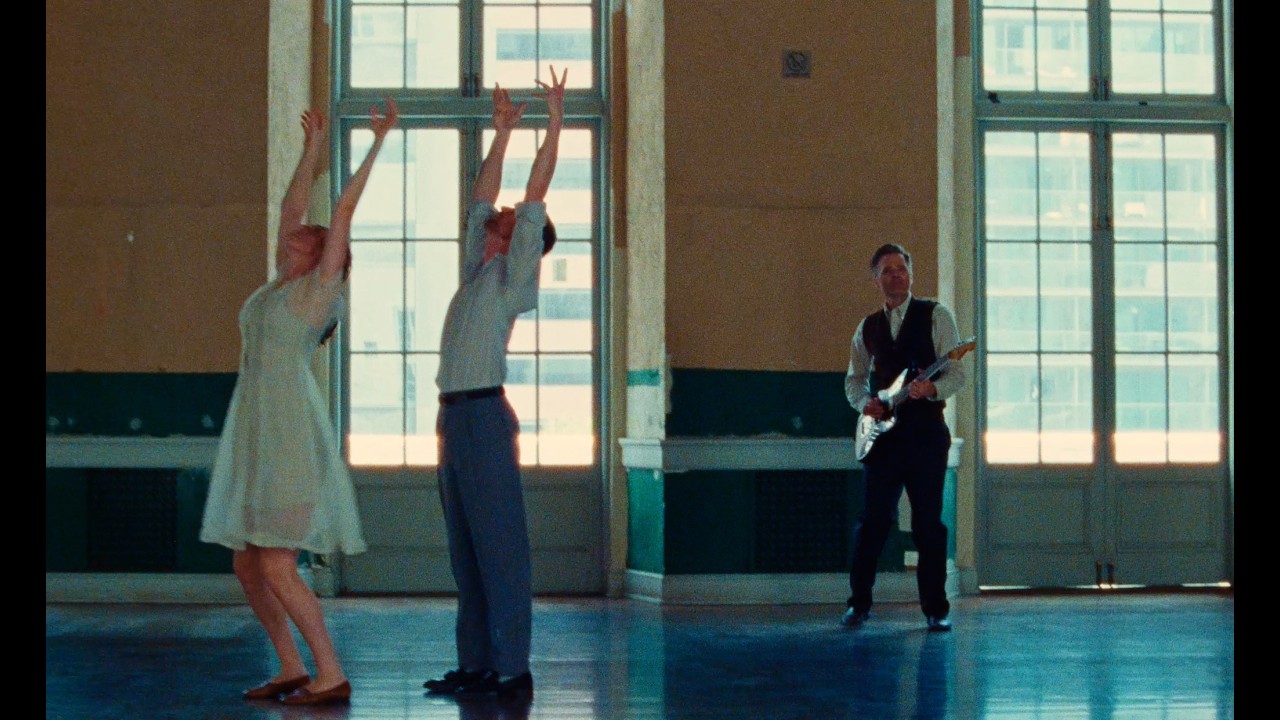
Gibbard tells Guitar World that the process of developing these songs harkened back to the band’s earliest days, but don’t mistake this for some reactionary and defensive “Back To The Basics™️” record.
During our chat, the legendary indie statesman and Dave Depper were all too eager to discuss how I Built You a Tower was borne from new tools, madcap experiments, and – a decade after Chris Walla’s departure brought Depper and keyboardist/guitarist Zac Rae into the fold – an easy six-string chemistry that’s brought this band into their second era.
Ben, when you brought these particular songs to the band, did you have arrangements in mind, or is that something you generally leave to the band when you guys are in the room together?
Gibbard: There were a few things that we wrote in varying stages of together but everything that I had, I brought in kind of a power trio form. There'd be a drum riff, my guitar part, and in most cases a bass part that all kind of linked together.
I loathe writing with traditional chords – strumming an acoustic guitar, writing a song where you're just strumming chords
Ben Gibbard
This album, certainly more than Asphalt Meadows, was more in keeping with how I brought songs in on the band’s first two or three records. For Dave and Zac it was more about light touches and ways to support the song, rather than, “This song desperately needs a guitar part” – for most of them, there was already a riff that made sense.
What’s your favorite track on the record, guitar-wise?
Gibbard: Punching the Flowers is probably my favorite from a guitar perspective, because I feel like my playing on it is very… of me. As I was writing this record I was listening to an egregious amount of Fugazi. I obviously wasn’t trying to do what they do guitar-wise, because no-one can do what they do, but I was really becoming more influenced by dissonance than I had in awhile.
The first notes of the song are a dominant seventh, just an octave and a seven – that's the chordal information. The slidey stuff is very reminiscent of some early Death Cab guitar work, and then I'm doing this weird pull-off riff in the chorus.

It really speaks to my disdain of farmer chords. I loathe writing with traditional chords – strumming an acoustic guitar, writing a song where you're just strumming chords. It's such a wide lane of harmonic information that doesn't leave a lot of room. I just really don't like chords – I don't like playing them. I find music so much more interesting when everybody is playing some kind of weaving harmonic line that creates a wider picture in the stereo field than two people just strumming the same chord.
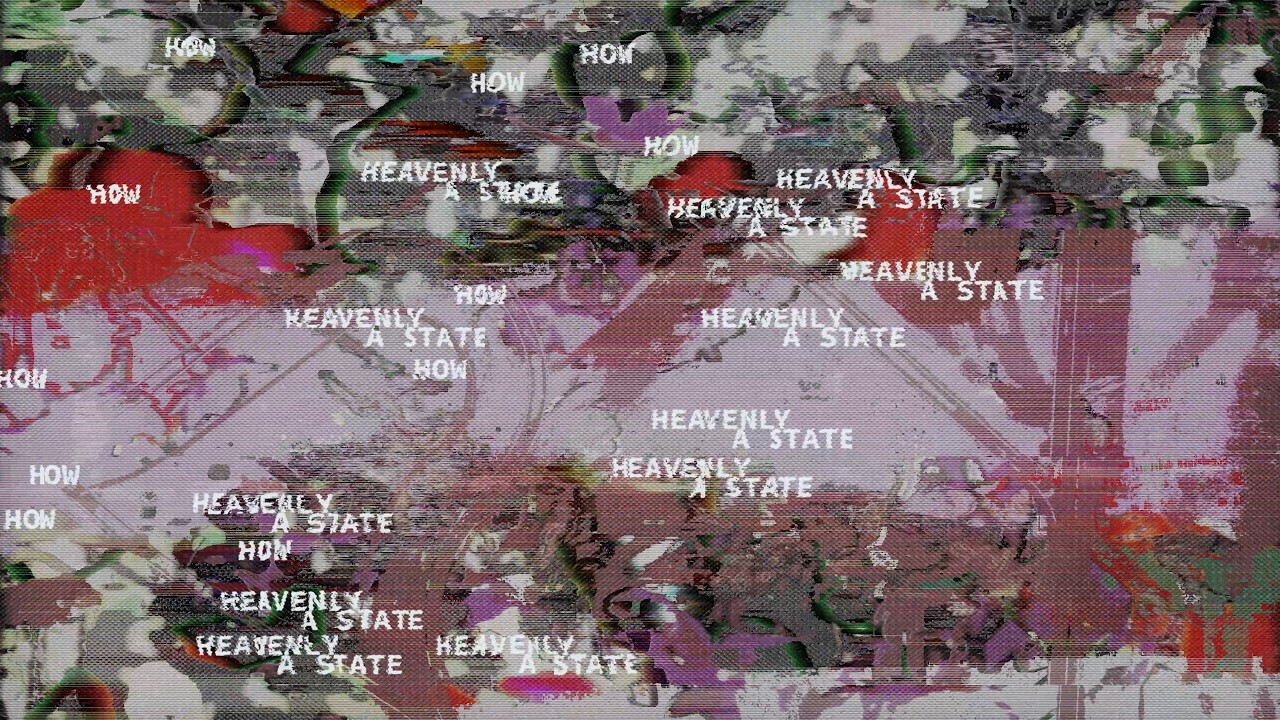
Depper: I love Punching the Flowers too, but I think my own pick would be How Heavenly a State. It was this totally gonzo guitar idea I had. I'd been listening to a bunch of those records by the Smile, and there are several songs of theirs where Jonny Greenwood is using this very particular crazy delay setting, where the delay note is coming in, like, 9 8th notes behind the original note.
It's really difficult to do, but it leads to these really unexpected, kind of orchestrated guitar parts you can play live. So, I decided to see if I could do my own spin on that, with a different delay setting, and I came up with this pretty intricate architecture for a song where I'm just relentlessly doing this thing the whole time – I'm really proud of how it came out. I'm terrified of doing it live, because if you make one mistake, you’re really in the weeds.
Dave, you mostly stick to Fano guitars. What drew you to them?
Depper: My first Fano was the orange one that I still play at every Death Cab show. I'd already been asked to join Death Cab, and was a few months away from my first rehearsal with the band. I went into a guitar shop in Tucson, and that Fano was just sitting there.
I thought it was a totally ridiculous, crazy-looking guitar, and I picked it up. But I think what drew me to it were its Lollar Firebird pickups. I’d never played with Firebird pickups before. I was constantly at war within myself between single-coil chime and humbucker power and I was always frustrated that I couldn't really capture both of those tones with one guitar. And all of a sudden I picked up that guitar and it had both.
You put it on the bridge pickup, it sounds like an awesome humbucker. You put it on the neck pickup, and it’s this beautiful, round, chimey thing. The [look of the] guitar was almost incidental. Like, I like how it looks. I think it's kind of ridiculous and fun, but unique. It has a great neck. But if anything, I'm really just addicted to those Firebird pickups.
I also play a Novo guitar now, which I used a bunch on the record, but I put the same Firebird pickups in it. It sounds essentially identical. But anytime I move away from using those Firebird pickups, I sort of feel like I'm not really expressing myself to the fullest anymore. It's a little bit of a challenge. But when I'm using one of those guitars, my voice just comes through the instrument.
Dave and Zac are real tone craftsmen. And that's just never been a skill set of mine. I've always viewed the guitar as a writing tool, rather than a tool for sonic exploration
Ben Gibbard
Ben, you teamed up with Fender to make a signature Mustang a few years back. What is it about the Mustang that clicked with you?
Gibbard: Well, for a while I was playing G&Ls, and when I started writing songs for [2011’s] Codes and Keys, I found myself not playing a lot of guitar because I just didn't like how my hands felt on the G&Ls. [They had] a full-scale neck, and I've always liked the smaller, three-quarter size neck. That’s why I played Fender Bullets when the band first started. I just like that smaller scale.
I ended up with a Mustang in a trade with a friend, and I just really gravitated towards it and loved it. I ended up writing a lot of the songs on Kintsugi on it, and moving forward, they became my primary touring guitars.

But in my home studio, I try to keep a pretty small arsenal of guitars, maybe three or four, just because I'm kind of a utilitarian – I don't like having a lot of things that I can't use. And one of the guitars I have is this Fender Pro Jaguar – it’s, like, Olive Green, and I believe they only made it for one pass, in 2017 or so. I ended up with one from Fender around that time, and it became my go-to guitar.
I wrote everything on this record on that guitar, which also has a smaller-scale, three-quarter neck. I took some writing trips, and I brought that guitar, a ‘72 Thinline Telecaster, and my signature model down to the studio. Dave, I don't know if you would’ve monitored this to the extent that I did, but I don't think I played another guitar, other than the Pro Jaguar, on anything, if it wasn't an acoustic.
Depper: John had this amazing original 1953 Gibson Les Paul Jr. that I think you played on How Heavenly a State.
Gibbard: You're right, yeah, so the stabs on Heavenly are on that. But I think almost everything else is the Pro Jaguar. I mean, Dave and Zac are real kind of tone craftsmen, and they're really, really good at that. And that's just never been a skill set of mine. I've always viewed the guitar as a writing tool, rather than a tool for sonic exploration.
Were there any pedalboard additions for either of you on this record?
Depper: I had an interesting Chase Bliss pedal called the Onward, which I used for a lot of the more ambient pad stuff. I sort of gave myself a challenge on this record – I didn't want to play any keyboards, because I often play some keyboards, and I thought it'd be fun to try to use guitar if I had something keyboard-y to say. So I used that.
This isn't new to my pedalboard, but I'm a heavy user of the EHX Superego pedal. It’s my secret weapon for eerie, weird melting pad kind of stuff. I use that all over the place. I also used a Meris Polymoon, which I bought when we made Thank You for Today, but hadn't used since.
It’s a very weird pedal. It does all sorts of strange stuff. I haven’t mastered it yet, but it's got a really incredible stereo-izer kind of function. So you go in with your mono guitar sound, and it sounds really great going direct into the board with a hard left and right pan.
I was really interested in playing a lot of direct guitar on this record, especially clean tones, and that pedal was great for that. But it also has this built-in flanger, phase shifter, rhythmic delay thing. Every time you plug it in, it sounds totally different, but it always sounds awesome. So I use that a lot. Other than that, I used my tried and true – a RAT for big distortion, Xotic BB boost for my mid-gain stuff, a compressor pedal, a Strymon El Capistan for delay… that's the meat and potato stuff.
Back in 2019 you revealed that you’d gone digital, to Fractal, is that what you’re still intending to use for this year’s tour?
I just love the consistency of what the Fractal has brought for me, because I can just concentrate on playing and performing and not get lost in the weeds of, “Are my tubes going bad?”
Ben Gibbard
Gibbard: I was the most skeptical of going to modeling over real amps, even though my amp is off-stage, so that it doesn't go into the vocal mic. I mean, all of our amps were off-stage by the time we went to Fractals.
I never thought I’d be a proponent of it, but the number of times that the amp starts sounding weird because the tubes are going bad, or the power is weird in the building, or the speakers are starting to kind of fray… over the course of a tour, you get so locked into the minutiae and the small variances in sound. Those happened often enough to – not throw a whole show for me – but I would definitely start to go, like, “Why is my guitar so weird today? It sounds different than it did yesterday.”
I just love the consistency of what the Fractal has brought for me, because I can just concentrate on playing and performing and not get lost in the weeds of, “Are my tubes going bad?” I respect the people who still want to use amplifiers – I totally get it. It certainly feels awesome to have that much air pushing on stage if you have the amps on stage. But it's just not necessary for me anymore.
Depper: There's just so many reasons those Fractals are great. I mean, even in terms of being able to be more flexible – in terms of what shows you agree to, because you can't fit your entire gear pack into a small radio session or something like that.

We've been using Fractal Axe-Fx II since the Thank You for Today tour, and Zac and I are curious about where the modeling technology has gotten to since then – we've just sort of been in a ‘If it ain't broke, don’t fix it’ kind of mode. But it's coming up on eight or so years of using these things, so I think we’re going to explore the newest Fractals, Tonex, and things like that during these rehearsals, and see if anything can beat it. But honestly, it's just set it and forget it with these things.
Our front-of-house guy loves mixing with them. They're amazing for our monitors. Even if amps never had tubes go, or never had settings bumped, the microphone is still never going to be in the exact spot in the amp, the room is never going to be exactly the same. It's incredible what a consistent show you can put on with these things.
You guys did 20th anniversary tours for both Transatlanticism and Plans. Dave, given that you guys were really presenting these records in their entirety, how faithful did you feel you needed to be to Chris Walla’s parts live?
Depper: The goal was to be as faithful as possible. I love Chris’ parts. I love Chris as an artist, and those choices resulted in those records being what they are, so I’m absolutely going to try and replicate those as closely as possible. There's a few songs from those records that we've been playing almost every night since I've been in the band, so they've sort of organically morphed into my own version of what that song is.
While prepping for those tours, I went back and listened to those records again and kind of compared what I had been doing for the last several years. And there were a few songs where I was like, “Whoa, I've really drifted a bit far away from what Chris was doing. I'm going to try and get back there.”
Those tours were designed to play those albums as closely as possible, and I just wanted to honor those – there's no ego involved about putting my own stamp on anything like that. That wasn't what it was about. So I was happy to do it. And if I didn't get close on some things, that was a personal failing.
Gibbard: Dave understands the assignment. When we initially brought Dave and Zac into the band they were brought in primarily as hired guns. We needed people to help us play this record [Kintsugi] with the hope that over time we would gel enough musically and personally that we could have them join the band properly, which they did, many years ago now.
As a band leader, [I think] Dave and Zac have a very unique perspective and voice musically, but they also – having joined playing Chris's parts – have an understanding of the DNA of what makes this band this band. They've both done a really great job in integrating those two things, bringing their own personal voice and style to the band, while also understanding what it is about the band that makes it the band.
- I Built You a Tower is out now.

