


The Black Crowes are making up for lost time. Thanks to disagreements over ownership, which led to a public feud, there was a mighty 15-year gap between 2009’s Before the Frost…Until the Freeze and their next album of new material, 2024’s Happiness Bastards.
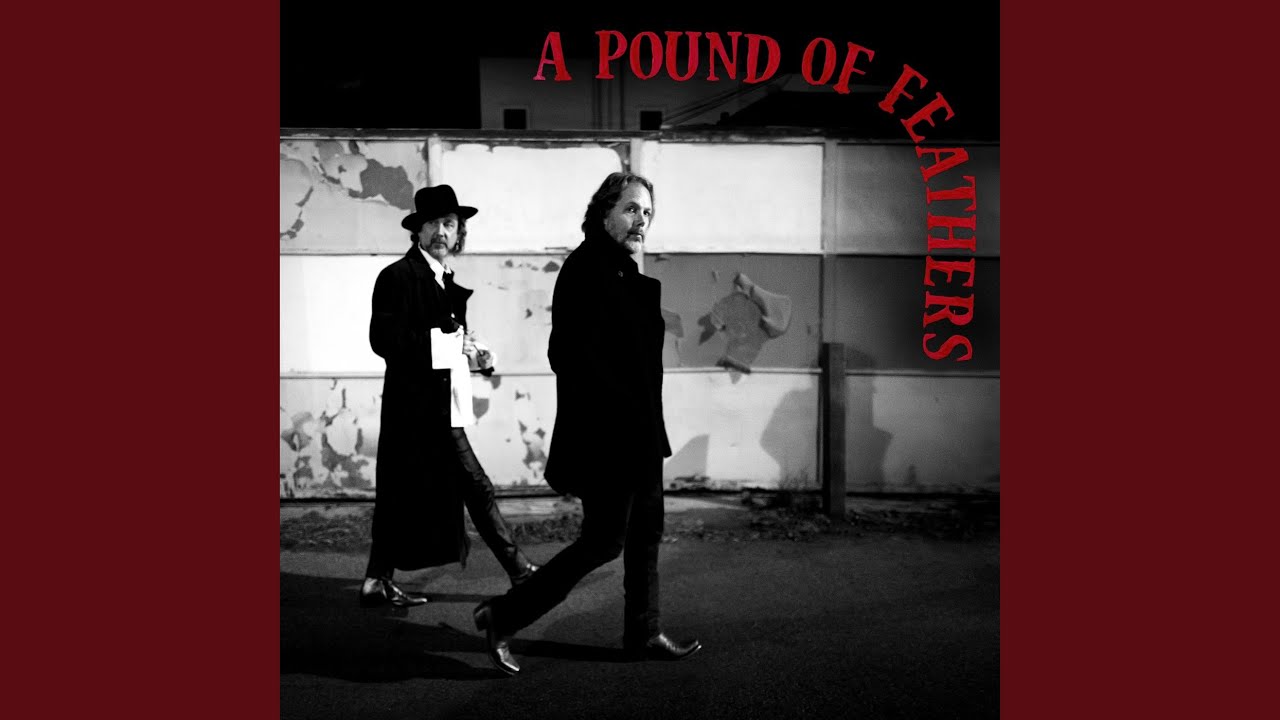
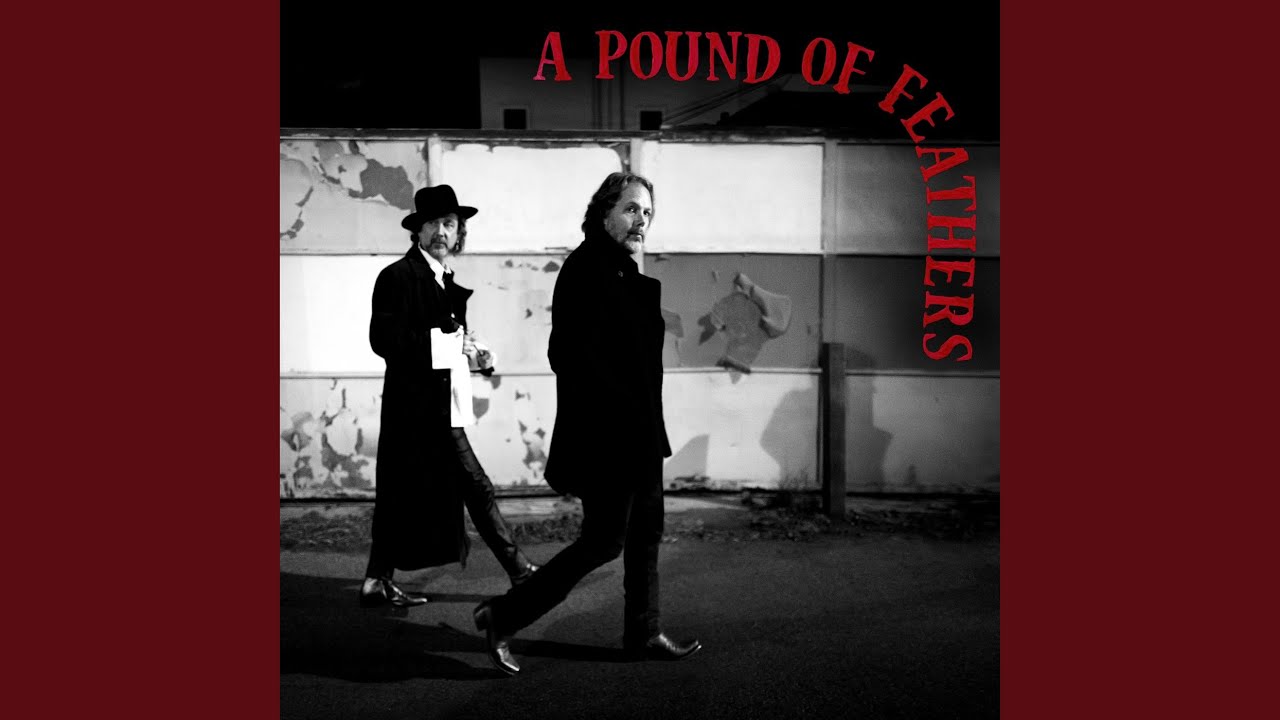
Now, not even a full two years later, the Crowes have returned with A Pound of Feathers. Founding singer Chris Robinson and his guitarist brother, Rich, are obviously choosing to strike while the iron is hot, having lost precious time in the heat of bickering so fervent that even Oasis’s formerly feuding Gallagher brothers once deemed it “intense.”
Despite not having a huge amount in common musically – the Black Crowes best known as Southern rock revivalists and Oasis embodying the essence of Britrock – the two bands famously hit the road together in 2001. With the disputes now firmly put to bed in both camps, one could say the era of sibling rivalry is over and it’s goodwill from here on out.
“It’s the season of brotherly love,” Rich Robinson says with a smile while on a video call with Guitar World from his home studio. “That co-headline run with Oasis was great and actually ended up being one of my favorite tours. Those guys are amazing. Noel comes down to our shows sometimes when we play. Chris went to see them on this reunion tour in New York not long ago and said they sounded great. All of the guys in the band are really cool, from Noel and Liam to Gem Archer and Andy Bell. They’re good people.”
While there’s been no word of new music from Oasis just yet, the Black Crowes have been careful in making sure their creative reunion looks to the future as much as it reflects on their storied past. The overwhelmingly warm reaction to Happiness Bastards certainly put wind in their sails, with Rock and Roll Hall of Fame and Grammy recognition helping the brothers realize they were always going to be stronger together.
“I think the success was a bit surprising for us,” Rich says. “We had a long time to write that record. There was a lot to choose from. We took our time, and it was a good statement to come back with after not being in the studio for however many years. We couldn’t have been happier with the response.”
And now you’re back with A Pound of Feathers. It definitely feels like all systems go.
Yeah. Time can shape a record – with the last one, it was nice to take our time, write stuff and be cool. But there’s also an excitement and instinctual element when you’re moving faster, like we were for this one. I have a studio in my house, so I sent Chris a bunch of stuff.
I wrote most of it while I was at home after a big tour. We eventually decided it would work better to use a studio as a writing place instead. I had sketches, ideas and riffs – just basic arrangements of songs – so we went into this studio and got two or three songs done a day. The whole record was finished in about 10 days.

You’ve told me before that you almost always write on acoustic guitar. Is that still the case?
I actually wrote quite a bit on electric this time round. I used the tones to help write the songs. The sound of things can inspire me. An acoustic sound will pull something out and an electric might find something else. This record definitely had a different approach, though we did work with [producer] Jay Joyce again.
He’s someone we love and have a great working relationship with. But as for the writing, I was just in my studio, messing around, playing with amps, finding sounds and experimenting with tones. That had a lot to do with the overall feeling of the record.
Is there anything on the album that feels new for you as a guitarist?
I used a lot more standard tuning on this record. It’s just something I was feeling, though I still used my go-to open tunings in places. Sometimes I have an urge to try something I don’t try that often, which might be why a lot of the songs were in standard.
Blood Red Regrets is in DADGAD, which is a new tuning for me. I actually found it hard because all the other tunings have a similar chord structure and pattern. DADGAD presented a challenge, which I got around and overcame. The way the strings ring under the notes you’re pressing gives it a specific sound.
I’m really proud of how that song came out. It has this middle section that goes acoustic. I was playing this Mellotron pedal over my acoustic part, and then I added a 12-string acoustic on top, plus some bass. It ended up being a really cool tune.
Maybe the tuning helped give it even more of a Led Zeppelin feel.
For sure. That song ended up being my homage to Jimmy Page, especially with that middle section. The riff came out really cool because of the timing; that’s what I really like about it. Because of the tuning, the chord structure is all different for me. The chord shapes ring out and have this really cool timbre.
There’s this Celtic thing that we were tapping into. Like the Bert Jansch recording of Blackwaterside, which Jimmy covered with Led Zeppelin as Black Mountain Side. DADGAD is such a cool tuning. It pulls these strange things out of me. And then there are all the other people who use that tuning, like Stephen Stills.
It feels like your acoustics are more prominent on this record.
There are definitely more areas of acoustic on this one. It can be quite textural, if you throw in acoustic stuff to create a bigger sound. When recorded properly, acoustics can blend really well with electrics.
On Pharmacy Chronicles you’re hearing my 1964 Gibson J-200. I bought a couple of them. One is blonde and has the nylon bridge pieces, while the other has nickel. The nickel seems to project a little bit more, so that’s probably what we used, but they both sound great. It was my first time using J-200s because I’ve always tended to go with Martin dreadnaughts.
When I heard these ones, I couldn’t believe how much bottom-end they had, but they also covered all the other frequencies really well. Throw that in there with good mics, a great engineer and producer who know what they are doing and you’ll hear everything it can be.

What kind of electric guitars did you end up using?
I used a bunch of different guitars. I bought a 1967 Guild Starfire, which is kinda cool. It’s the same model you see on the cover of that Kinks record [1965’s The Kink Kontroversy]. It’s a single-cutaway in a cherry-stain finish; I ended up putting different pickups inside. I also played my Gibson ES-335s and my 1956 Les Paul Special on some stuff.
When it came to amps, I used my 1968 Marshall Bluesbreaker a bunch. I brought my Harry Joyce amps back; he’s the guy who made the original Hiwatts. I used those on a couple of tracks. I also had this small single-speaker Fifties tweed Fender Vibrolux, which was really ratty-sounding.
There’s another one Fender made called the White amp [Fifties-era tube amp by the Fullerton-based White Instrument Co.], a junior model they originally designed for students – but it sounds fuckin’ great. I was able to get a bunch of different tones using all of that.

You used that 1968 Bluesbreaker as a reference point for your own line of Muswell amps, which you launched in 2023. Are those on the record?
I have a 1964 Rickenbacker Rose Morris with the f-hole instead of the check; it’s the one Pete Townshend used to play, which is pretty rare
I used my main Muswell on about four songs. It’s a great-sounding amp. We found these custom transformers made by some guy in the U.S. I have six Muswells, but this one has the different transformer while others might have different tubes. We mismatched a lot of stuff trying to find the best tone.
I guess Muswell is more of a boutique brand. People will call in and order one, and then it takes a while to build. Right now there’s no infrastructure; it’s just one guy building everything.
I have a couple of people that want in, so we’re getting to a place where we can expand, but I’ve been so busy playing. There hasn’t been a massive launch or any big push with Muswell. I like doing them one at a time.

You’ve built up a sizable collection of vintage guitars. Which are the most rare?
That’s hard to say. I still have my dad’s Martin, which they made the signature out of – a 1953 D-28. I have that TV Yellow 1956 Les Paul Special and a 1959 TV Les Paul Junior. I have my ES-335s from 1961, 1962 and 1968, which have very different tones. I have a 1964 Rickenbacker Rose Morris with the f-hole instead of the check; it’s the one Pete Townshend used to play, which is pretty rare, apparently. I have quite a few from this period.
The opening track, Profane Prophecy, kicks off with some of the classic Rolling Stones triads heard on Start Me Up and Brown Sugar.
The excitement of that intro really got me going when I wrote it. I think it just has this cool, instantaneous sound that grabs you. When I write, I’ll typically have more of a solid foundation for a song before I send it to Chris. But this time was different.
We pushed the ideas quite a bit. Profane Prophecy started out a bit different, and then Chris was hearing it the other way around. He’d be like, “I hear this as the chorus,” and I’d say “No, that’s the verse.” Then he’d say, “But this is the verse,” and I’d say “No, that’s the chorus!”
We had to work it out together. It was a combination of a couple of songs. I had the opening part and the middle bridge in a different song, but I realized it would work better like this. It was pieced together.
Cruel Streak has a standout riff with its mixture of ringing open strings and walking chromatics.
There’s a bunch of stuff in there. Again, that one took a journey. I had it as this thing, and then it evolved. It’s so funny to hear how much it changed. A lot of times when I write these things, I’ll have a pretty specific idea of where I think it’s going to go, and then sometimes it might take this complete left turn.
There’s a song called Do the Parasite! with this middle section that’s almost like an AC/DC breakdown. I love the solo I played
That was really cool. We changed up the drumbeat and the arrangement, because the chorus was originally a bridge, but it was too cool to be just a bridge. It made a lot of sense in the end. But I’m very proud of that main riff and how it sits with the drums, alongside what Chris was bringing to the table.
Another big guitar moment is how you bring down your dynamics and use fingerstyle to interact with the keys on Eros Blues, creating what feels like an improvised conversation between the two instruments.
That was another case of two songs being put together. I had the bridge section and was trying to figure out where to use it. Chris had the idea of changing the dynamic in the verses.
When it gets to that chorus section, it’s pretty amazing. That song is almost like a journey. You start with this one kind of thing and then get into this whole other realm. It’s floaty and ethereal, and then all of a sudden that chorus hook kicks in. I love the juxtaposition.
What’s your favorite solo on the album?
There’s a song called Do the Parasite! with this middle section that’s almost like an AC/DC breakdown. I love the solo I played. There’s the solo I played at the end of Profane Prophecy; I love how it tied everything in. But I’m happy with all of it.
We were going to bring everyone in, but we had about 10 days of working just me, Chris and Cully [Symington], our drummer, just to get the songs to a place. Sometimes, when it’s all working and very organic, it’s best just to carry on as is.
Chris would say, “Throw a bass on there and some more guitars here,” and then I’d do it. Before we knew it, the take would be done. Trying to deconstruct that and bring in more people would’ve been overdoing it. Sometimes when you capture something, when you try to recapture that thing, it doesn’t work. Most of the time, it won’t work.
Maybe that’s why it almost feels more like a jam record in places.
It was a really cool way to make a record. Everything sounds like we’re excited. With all of that, you get drawn in and that all translates into what you are doing.
A lot of these songs were played two or three times and that’s it. I haven’t actually played them since, so I’ll have to relearn a lot of it before we start rehearsing just to figure out which parts I’m going to play and which parts our other guitarist, Nico [Bereciartua], is going to play.
On the album I played everything, all of the acoustics, electrics and slide, but then again I’ve played slide on pretty much every record I’ve made. Our intention was to bring everyone in, but once you start and find yourself with eight or nine songs done in a week, it feels great and you know everything is working well. We didn’t want to fuck with that.
There’s a lot to be said for the chemistry between you and Nico on stage. But for some fans, what you had with Marc Ford was also very special. Could you ever work with him again?
When Marc and I started playing again, everybody was cool and it was all purposeful. But the same patterns came back and it took a wrong turn
I don’t think so; I’d say that time is done. It just went south again. When Marc and I started playing again [in the Magpie Salute], everybody was cool and it was all purposeful. But the same patterns came back and it took a wrong turn.
I didn’t want to deal with that anymore, which was a bummer because I liked our band and everyone else was cool. It got to a point where I was like, “Why should I deal with this?” Nico and I have a great relationship.
What made him fit into the band so easily?
He loves the Black Crowes, including how Marc Ford played, and that’s a good thing. His parts are very true stylistically to what we’re doing. Even though he’s from Argentina, he grew up loving the same stuff. We’ll talk to each other about songs from I’ve Got My Own Album to Do by Ronnie Wood or old Small Faces and Rolling Stones riffs.
We have very similar musical tastes, so it’s a combination of that with his love for the Crowes that helps us play and weave together so well. It’s an artform, having two guitar players get up there and share the stage.
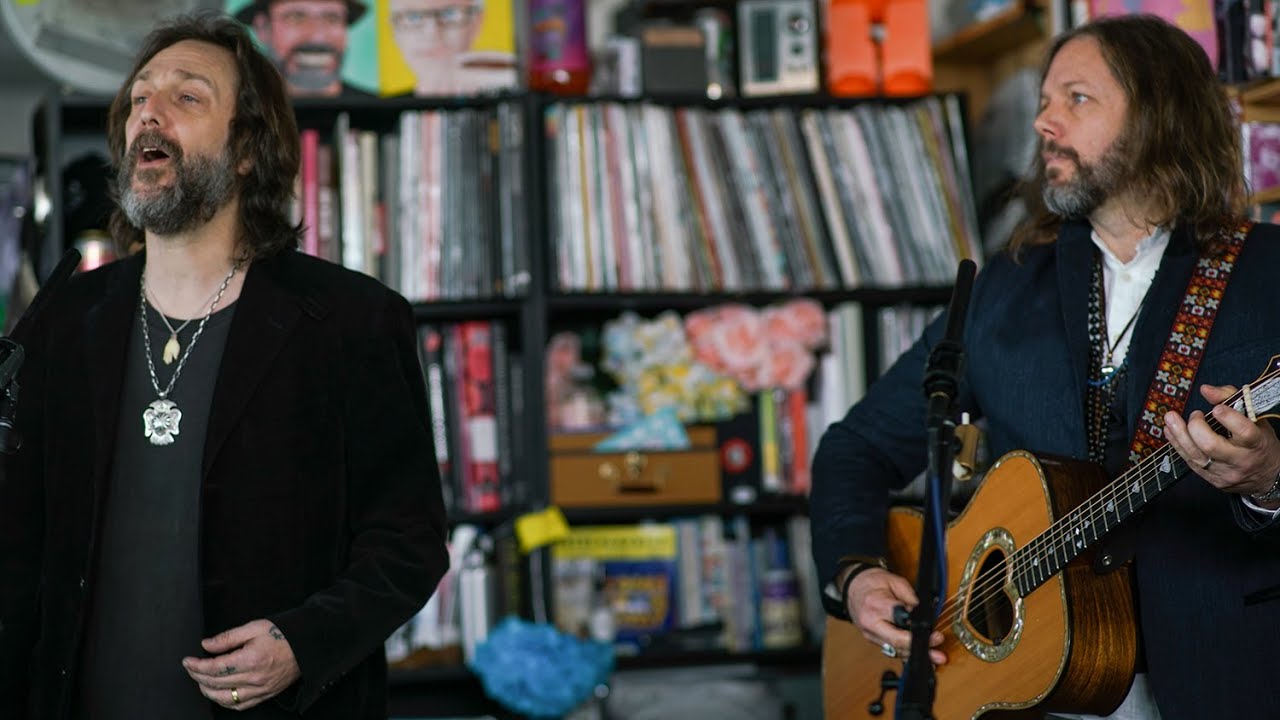
The heavy dose of reverb and tremolo on Doomsday Doggerel could make it one of the most atmospheric tracks you’ve ever recorded.
I put a ton of reverb on it, and the part was going to sit in the background. I kept playing it over and over, and it turned into a song.
I was getting a tone for something else and playing this random riff, just to mess with the tremolo. Chris was like, “What’s that?” and I told him it was nothing, I was just making it up. Then he asked me to write a song around it. He loved what I came up with right away.
Originally I was playing my big Gretsch, the signature Magpie Blue model [Gretsch G6136T-RR Rich Robinson Magpie]. I put a ton of reverb on it, and the part was going to sit in the background. I kept playing it over and over, and it turned into a song.
And you’re right, it’s definitely different, I’ve never done anything like that before. It almost reminds me of the B-52s’ early stuff. That guitar player [Ricky Wilson] was far out, man. He played such cool stuff on an old Mosrite that, I think, only had four strings on it.
His approach to chords was really out there, especially on songs like 52 Girls or Dance This Mess Around from their debut record. He had this really cool thing going on, it was so interesting. People don’t talk about how good he was.
Where did the tremolo and other effects come from?
The only pedals I can remember using were the Guyatone Flip VT-X Vintage Tremolo and the Electro-Harmonix Mel9. I have some Strymon stuff, too. A lot of my solos were just the amp turned up to 10.
Your sound has always been very pure and honest. Even with digital gear getting better and better, we can’t imagine you plugging into a laptop.
They’re getting close, but you can never account for the physics of a room. What’s the humidity like? What’s the oxygen level like? Are you at high altitude or low altitude? What’s the shape of the room? Where is the microphone being placed? All of these things can have a big effect on your sound.
Your tone that comes out will always be what it is, but everything else needs to be taken into consideration. Then there’s the feeling aspect. You have this symbiotic relationship with your amp.
You’re literally connected to it. You’re plugged in and feeling that. It’s vibrating the floor and you’re hearing it, feeling it and playing with it. I think that’s when it becomes like this big oscillation. You’re in it.

And if you didn’t have that, you’d end up playing differently.
Exactly. Personally, I just can’t stand computers. To be able to stand in front of amps and hear the rest of the band play is exciting. The whole purpose of rock ’n’ roll is to [play with] abandon.
It could go off the rails at any time. If everybody is on a computer listening to a click track playing their music around the light show rather than the actual songs, there’s no chance of greatness or failure.
But when you plug in, there’s always a fine line that you are driving toward. That’s the exciting part. You are stretching, like, “Oh shit, I’m gonna go over here and try this!” Sometimes you fail, but if you can pull it off, it’s magic. I think computers suck that out of everyday life. There’s nothing more boring than sitting at a computer.
- A Pound of Feathers is out now via Silver Arrow
- This article first appeared in Guitar World. Subscribe and save.

