


Oceansize took their name from a Jane’s Addiction song. Like Jane’s Addiction, they inspired other bands to greatness. They also imploded spectacularly.
“Either people wanted to fire other people or they were threatening to quit,” says frontman Mike Vennart. “It became a matter of, ‘If you fire him, I'll stay.’ With me in the middle of it going, ‘What the fuck do I do?’”
Prog was a dirty word when five working-class art college students from Manchester formed the band in 1998. Now, it seems like the only term broad enough to capture their mercurial output.
They had three very different guitarists, each with a boatload of pedals, playing on top of some of the most ambitious time signatures this side of Meshuggah.
Their songs regularly stretched to eight minutes, bolting the ugliest grunge riffs to the most achingly beautiful post-rock crescendos, delivered with NWOBHM-raised guitar chops. It was hugely ambitious and sonically explosive, but hard to even comprehend on a first listen.
Yet 15 years on from the band’s demise in 2011, Oceansize now makes more sense than ever. Mainstream success may have eluded them, but their influence has quietly seeped into the DNA of some of the biggest progressive guitar artists on the planet. Heck, they inspired the biggest progressive guitar artist on the planet.
“Sleep Token were very complimentary,” says Vennart, who supported the masked arena-metallers in 2024 with extreme metal side-project Empire State Bastard. “Obviously I didn't know who the fuck they were because no-one knows what they look like. But they knew who I was.”

If there’s any trace of Oceansize in Sleep Token’s broad-church metal it’s in their ‘anything goes as long as it fits the mood’ ethos – a sentiment that can be traced back to cult English odd-rockers Cardiacs and Mike Patton-fronted weirdos Mr. Bungle. They all saw genres as walls to be smashed rather than rules to be obeyed.
“[Frontman] Vessel really respects the artistry of Oceansize, the songcraft,” says producer Adam ‘Nolly’ Getgood, who worked with Sleep Token on 2025’s Even in Arcadia. He describes Oceansize as one of the “most underrated, best bands ever.” For his money, Only Twin, a brooding, polyrhythmic head-fuck of a seven-minute epic from 2007’s Frames, is a candidate for “best song ever written”.

When he shared it with his frequent collaborator – and former bandmate – Misha Mansoor, a lightbulb went off. The Periphery guitarist became so enamored with 2007 album Frames that he began using Oceansize as a kind of shorthand when writing with the rest of the band.
“We’ll refer to certain parts as ‘the Oceansize part,’” he says, citing sections of the band’s 16-minute monster Reptile as a “direct Oceansize ripoff.” “They understand what that means and what I’m going for. It’s a vibe thing. Oceansize are very good at setting a vibe and living in it.”
Origin story

The Oceansize vibe was apparent from the very first time its five members – Vennart, Steve Durose (guitar), Richard ‘Gambler’ Ingram (guitar/keys), Mark Heron (drums) and Jon Ellis (bass) – got in a room. You can thank their sixth, chemical member for that.
“We took mushrooms on the first-ever rehearsal,” Vennart says. “Every practice we ever did, we had a four-track machine running the whole time because we were smoking so much weed back then, we would never have remembered anything that we’d written.”
The group’s three guitarists quickly settled into their roles: Vennart was the oddball riffsmith, pulling from Soundgarden and Pavement. Gambler was the “absolute fucking noise fiend” who wanted Danelectro’s signal-obliterating Fab Tone on at all times. Steve Durose was “basically Slash” but with a penchant for “astral twinkly guitar that sounds like a beautiful constellation.”
“I was always proud of the fact that we were never playing exactly the same thing,” says Vennart. “It was always a 3D image; a sort of mosaic effect.”

Vennart and Durose could shred. But they hid their abilities – and their influences – from the world, under strict orders from drummer Heron.
There were rules. Don’t reference metal bands (unless it’s Meshuggah). Don’t mention any guitarists who you liked as a teenager. And definitely don’t play any classic rock riffs (Vennart says an argument after Durose played a Guns N’ Roses riff at soundcheck “lasted all the way from Manchester to Paris”).
It was a constant barrage of shifting musical sands, and the band’s too-cool outward presentation took its toll internally. But it was all for the good of the music (and the ego).
“Whatever pain and suffering and fucking psychological battery we all endured, the tunes worked out for the best,” Vennart says. “We put ourselves through absolute hell making those records because we all thought we knew better than everybody else in the band, but we also knew that we were better than everybody else in the music industry.”

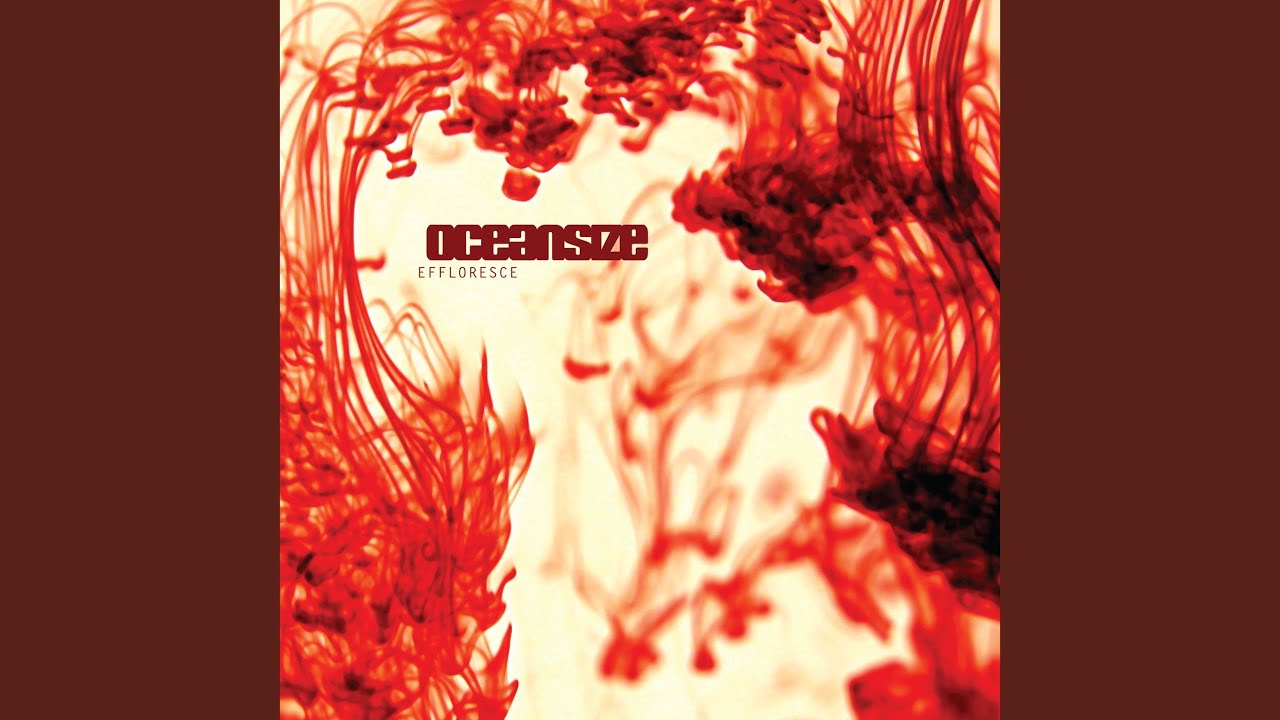
When debut album Effloresce dropped in 2003, it was hailed as a bright new dawn for British rock music. It’s a remarkably confident debut, spanning battering ram riffs (Catalyst) and sweeping guitar orchestras (Women Who Love Men Who Love Drugs). Its tonal language left a major mark on prog guitar hero Yvette Young, who named her band Covet’s debut album after it.
“I was hanging out with a bunch of people who really liked prog,” she recalls. “They were introducing me to Tool, Porcupine Tree and then Oceansize. Some of it didn’t resonate with me, admittedly, but Oceansize did. I love the odd-time feel. The tones are great.
“The epic layering of stuff, and the way that it builds dynamically… I think about things like that sonically now in my own music with Covet.”
There was no great plan when it came to painting Oceansize’s sonic landscape. Vennart used a heavily modified Squier Strat with a DiMarzio Tone Zone humbucker in the bridge. Durose opted for standard-issue Les Pauls, while Gambler played an SG that he made himself. Amps were Marshall and Laney. But pedals were where the band really indulged. Sometimes with frightening results.
“It was the dawn of that period where everybody realized that they needed to fucking bring out their effects,” Vennart says.
“You'd bring out your Big Muff and you bring out your Rat, you bring out a huge delay and a phaser. I had this DOD phaser that would take your guitar sound and make it at least 10 times louder than it had previously been. Using it was actually fucking terrifying. I thought, ‘This thing is going to break my amp. It's going to fucking blow it up.’”
Drop in the ocean

Oceansize were always on the verge of blowing up. But that combustion is what gave rise to so much brilliant, indescribable music.
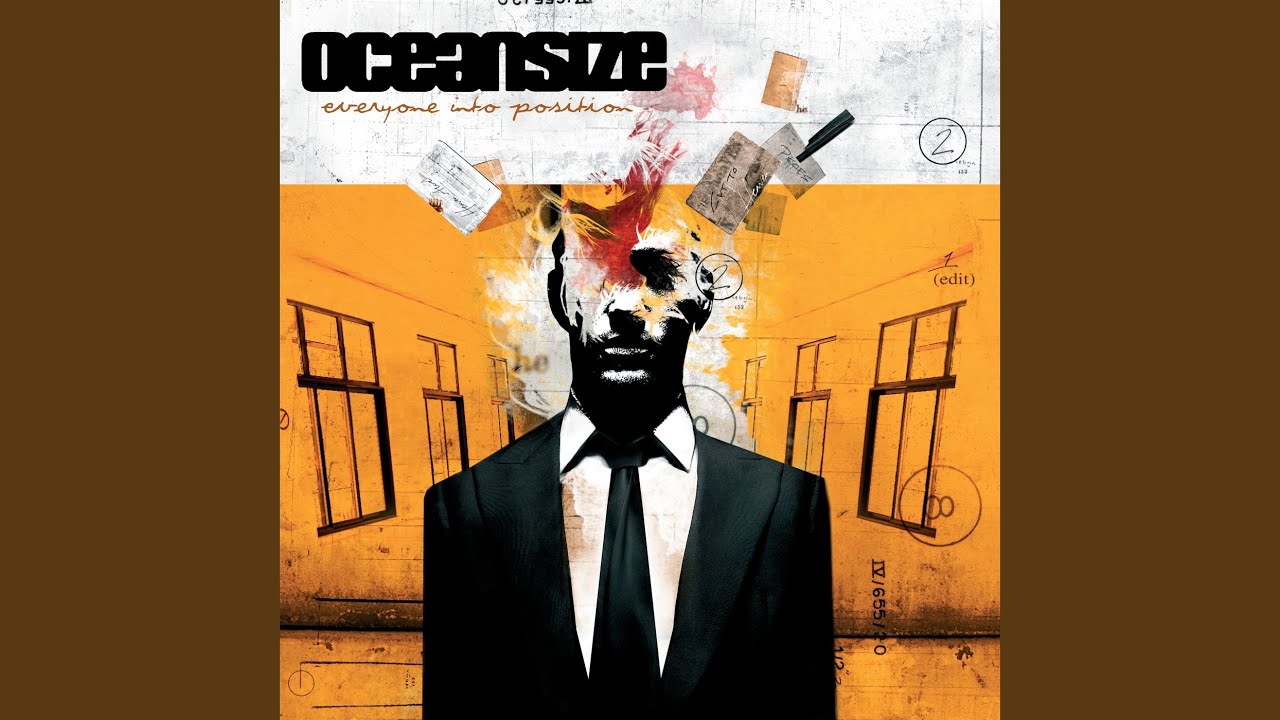
2005’s second effort, the sprawling Everyone into Position, was the closest the band came to success. Songs appeared in commercials for UK mobile network Orange and an episode of The OC.
But the rock climate was changing. It was the era of the great indie renaissance, and Oceansize weren’t exactly a natural pairing on bills with Arctic Monkeys and the Strokes.
“We wanted to be the band that you would go and see at Glastonbury, take a bunch of drugs, and become evangelical about to your friends,” says Vennart. “Unfortunately, the zeitgeist changed and that kind of band was not really welcome anymore at Glastonbury or Reading.”

It spoke to a wider issue: Oceansize were difficult to pigeonhole. The shortest song on their next album, 2007’s Frames, is six and a half minutes. Every song occupies its own knotty sonic universe, bolstered by new bass player, Steven Hodson, recruited from local noise-rockers Kong. To this day it’s not an easy listen, but it remains the band’s high-water mark.
For critics, this eclecticism was their greatest strength, but without the backing of the mainstream music machine, it left them struggling to find the success of their peers, such as former labelmates Biffy Clyro, whose shorter, more accessible songs were seeing them finally break out of the UK’s ‘toilet circuit’ venues.
“Music like this can be very challenging,” says Mansoor. “It's dense, long albums and they're not quick payoffs. You have to be in the right mood and you certainly need time. You can’t just pop on a song and get the payoff in three minutes. I can say from personal experience that tends to make more devoted fans because you're more invested.”
Oceansize certainly have their fair share of evangelical fans. You don’t just like Oceansize. They become an obsession. They get under your skin. They alter your musical DNA. But part of the reason why their influence is hard to decipher is that Oceansize’s sound is so expansive, it’s indescribable.
“I don't quite know what to call it,” says Mansoor. “It's very British-sounding to me, but very adventurous; proggy, but not try-hard prog. It's really hard to describe, but it’s beautiful.”
Everyone I spoke to for this feature loves Oceansize, but none of them have ever learned to play any of their songs. That’s unusual. It speaks to the collaborative, flowing quality of their music. Oceansize was never three guitarists. It was a collective.
“A lot of modern progressive metal feels very... mathematical. This doesn't feel like that,” Getgood says. “I think in part it comes about because they were writing a lot of that stuff when they were stoned and jamming. So much of songwriting now happens in an isolated environment, and people bring their ideas to the rehearsal room. It's hard to create those cohesive statements in the same way.”
Cut down to size
For all the plaudits and the small but dedicated following, eventually something had to give. In 2010, as Oceansize released their final album, Self Preserved While the Bodies Float Up, Vennart joined his friends in Biffy Clyro, now playing arenas, as a second guitar player. It made the problems in his own ranks painfully clear.
“I just realized what a sorry state our affairs were in,” he says. “There was an inherent belief in each other with Biffy Clyro. With Oceansize there was no trust. You couldn't trust people to not get fucked-up before a show.
“When you’re out in the middle of Poland playing a gig and somebody in the band is not able to play because they’re too fucked up, you start questioning what you’re doing with your life.”

For Vennart, the split felt like a bereavement. It took him the best part of five years to stop feeling angry.
In the decade and a half since, he’s released a run of well-received solo records, worked with Slayer’s Dave Lombardo, and toured the world many times over with Biffy.
The things that blew the band apart are still very prevalent and very real
Mike Vennart
The offers for an Oceansize reunion only grow each year. But don’t hold your breath.
“I’d actually quite like to do it because I need to let go of these negative feelings,” he says. “I think everybody in the band needs closure and to be able to look back on the band with an open mind and an open heart and realize that what we did was fucking good.
“Unfortunately, the things that blew the band apart are still very, very, very prevalent, and they are very real, and it all comes down to mental health. That’s the end of it.”
Oceansize may be destined to remain a cult band. But their determination and vision inspired a host of guitar artists determined to escape pigeonholing of their own. And with genre boundaries well and truly demolished by the music streaming wrecking ball, they found their audience. Maybe Oceansize still could.
“You can have a brilliant idea, brilliant music, but it’s not the right place or right time, or you don’t have the right people backing you,” Young says. “But when you make art, it’s there forever.
“Oceansize fans are devoted. If Oceansize were to suddenly release new music 10 years from now, everyone would be like, ‘Holy shit!’ No-one would forget them.”
- The 15th Anniversary vinyl edition of Self Preserved While the Bodies Float Up is out now via Kscope.

