

Having built a career playing bass guitar for some of the biggest names in music, from Gwen Stefani and Shania Twain to Don Felder, life on the road and the Las Vegas Strip has given bassist Derek Frank no shortage of stories.
But Frank is more than just a first-call sideman, and has increasingly made room for his own instrumental project, channelling decades of experience into a distinctive blend of deep grooves and ’70s-inspired funk.
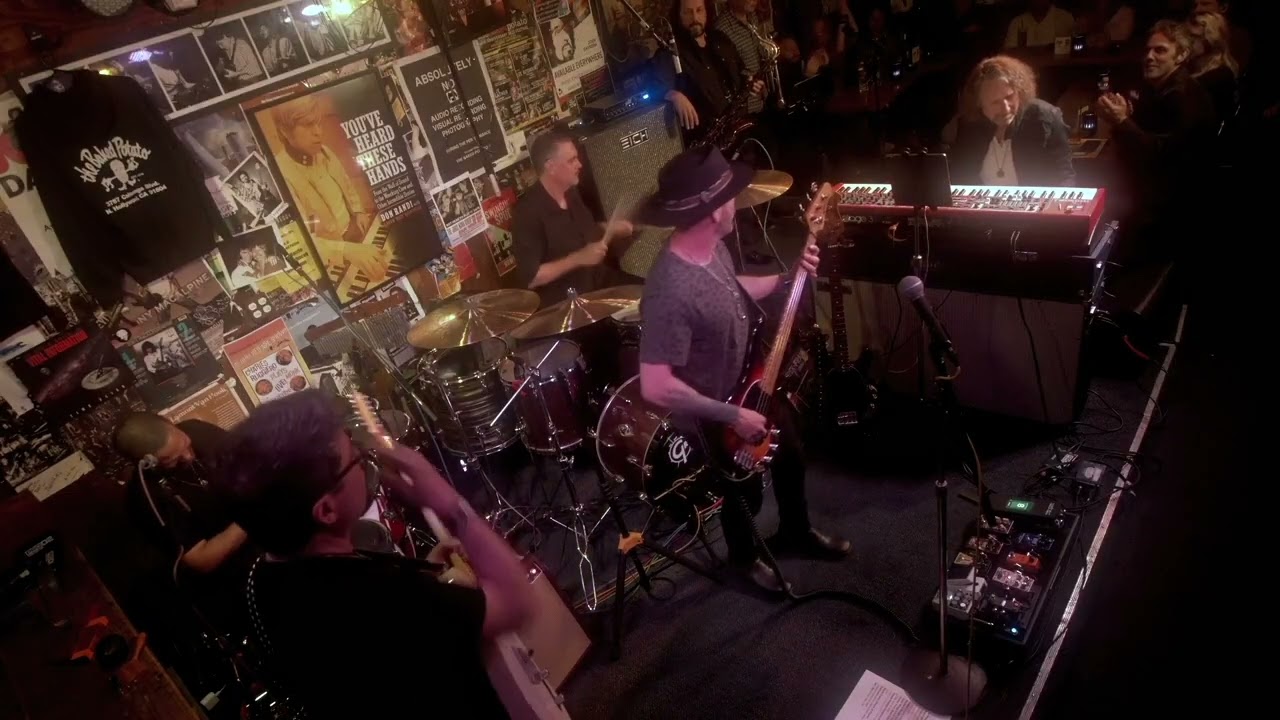
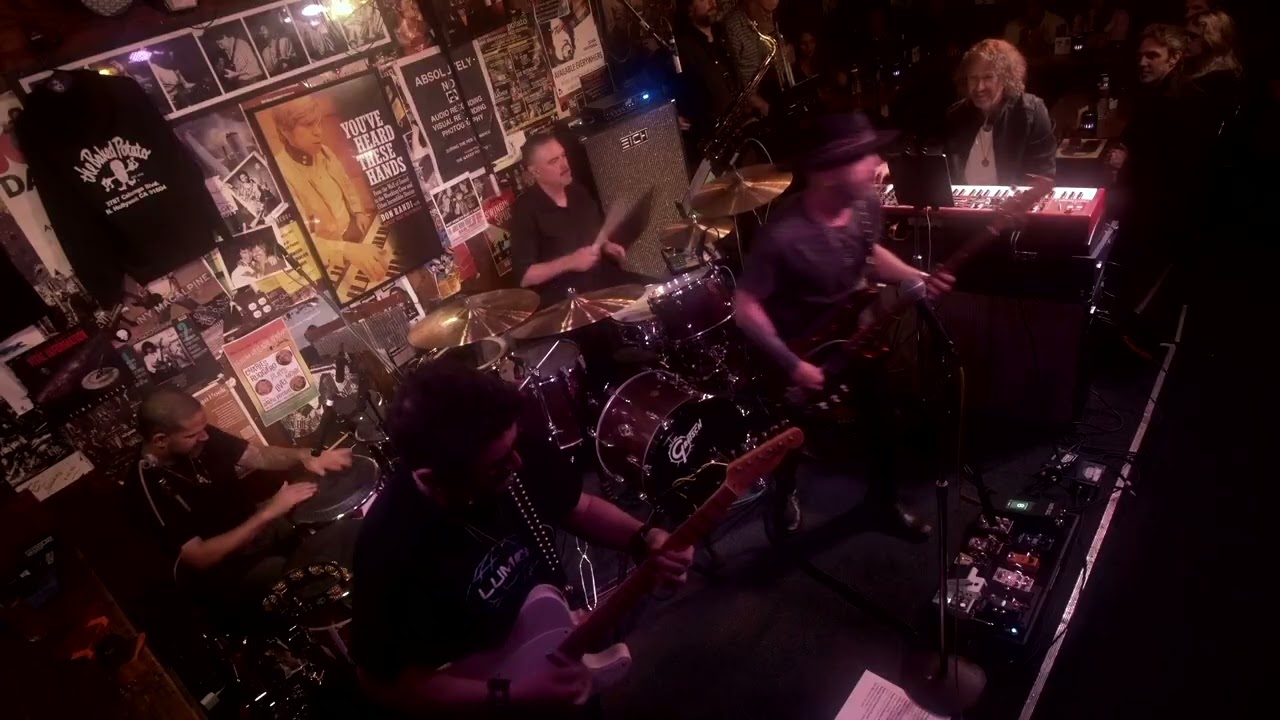
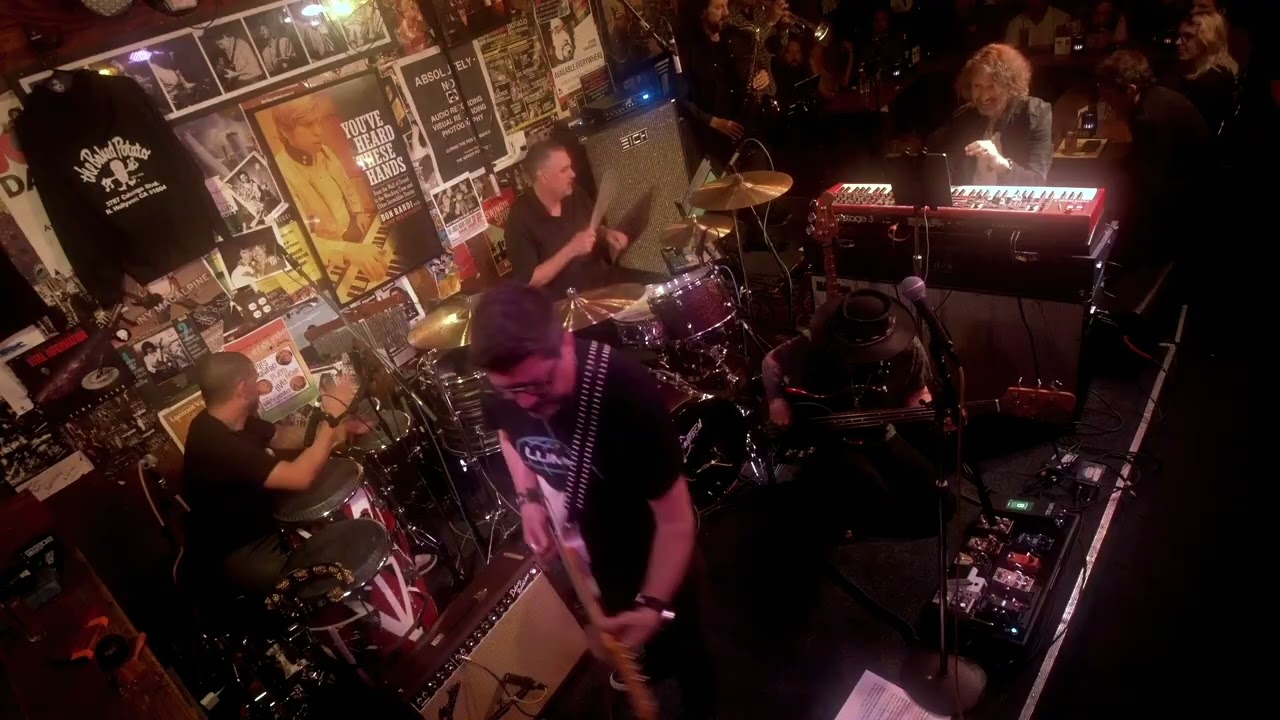
His latest release, In Case You Missed It, Volume 2 – Live at The Baked Potato, captures Frank and his seven-piece band in full flight at the legendary Los Angeles club – despite having had no rehearsal beforehand.
“Rehearsal is overrated,” says Frank. “There’s a certain nervous energy when you get onstage knowing you haven’t played something together before. Everybody has done their homework, but you never know exactly what’s going to happen.”
Frank’s ability to hit the ground running has been a recurring theme of his career. Joining up with singer-songwriter Melissa Etheridge was a case in point. As he explains, preparation and confidence can go a long way.
“My first show with Melissa was at Radio City Music Hall in New York. We ran a couple of songs at soundcheck, but not even half the set. There was no rehearsal, but I’d learned everything beforehand, and I felt good about it.
“Melissa asked what I was comfortable with, and I said, ‘Don’t run anything on account of me. Run what you need to run, and I’ll be fine with everything else.’
“It was the same with Don Felder. We just showed up and played the gig. I had to do my homework, but if you’re a bass player in L.A., that’s just part of the job.”

Where did the desire to make your own music come from?
I enjoy playing with other artists. That’s been my career. But I also need to create my own stuff – to explore techniques and tones that I hear in my head but don’t necessarily get to use on other people’s records.
Have the artists who hire you as a sideman heard your solo material?
When Melissa Etheridge was considering me for her band, she checked out some of my videos. Don Felder also looked into my work after I started playing with him. He said he hadn’t realized I could play like that.
Gwen Stefani still pops up in my Instagram story views all the time. I played with her for about four years, but she never comments on anything, so I’ve no idea what she thinks of my solo stuff!
You joined Gwen Stefani’s band for her Las Vegas residency. How did that opportunity come about?
I was on tour in China when the musical director called and told me Gwen was doing a Vegas residency and rehearsals were starting the following week. So I got back on a Friday night and was in rehearsal with Gwen on Saturday morning.
Eventually, I was juggling Gwen Stefani and Shania Twain, who had residencies in the same theater in Las Vegas. Their schedules didn’t overlap, so I did both, but when Shania went out on tour, I couldn’t continue with Gwen.
I loved the experience, especially getting to play the No Doubt material and dig into Tony Kanal’s basslines.
How did that production compare with playing with Don Felder?
They’re very different kinds of shows. Gwen’s is a huge production where the music is only one part of the experience. You have dancers, video, costume changes and lots of stage direction. You might be on a riser for one song and moving to the front of the stage for another.

With Don, it’s much more about the songs and the guitar solos. We play primarily Eagles material, and there’s no elaborate choreography. You have your microphone and your position onstage, and then you just play rock ’n’ roll.
I enjoy both approaches. With Gwen or Shania, you’re active onstage, running around and putting on a show. With artists like Melissa or Don, things are more subdued. You can stay in one place, focus on the music and concentrate on supporting the songs. Sometimes it’s nice not to have to work quite so hard physically and just let the music do the talking.
But I enjoy all of it. That’s what makes the job so rewarding.
How did your new album come together?
I’d just finished with Melissa Etheridge, and I had two weeks off until I went back out with Don Felder, so I booked a gig at the Baked Potato. We didn’t have time to rehearse, so I charted everything out and sent it over to the guys in the band.

The first set came together brilliantly. Everybody showed up ready to play, and it was a really good gig. The Baked Potato has a great recording setup now, with multiple cameras and multitrack recording, so they capture most of their shows.
When I got the board mix back, I listened to it and thought, ‘Man, this sounds really good. Maybe we should just mix it and put it out.’
The album includes a Tower of Power cover.
Rocco Prestia has always been one of my favorite bass players and a huge influence on me. I play a lot of fingerstyle, muted notes and 16th-note funk, and I love that kind of stuff. When I’m playing pop gigs, I don’t necessarily get to explore it, but I’ve always wanted to play Squib Cakes with a band.
For this gig at The Baked Potato, I wanted to introduce some new material, but the creative juices weren’t really flowing while I was out playing other people’s music. So I decided to put a few covers into the set instead. I found an arrangement of Squib Cakes, wrote up a chart, and we played it.

You got to spend some time with Rocco. What was that experience like?
Toward the end of his life we hung out in Las Vegas. I was doing a residency out there, and our tour manager had worked with Tower of Power for years. He connected us, I got Rocco’s number, and we arranged to meet up.
We spent about an hour in a friend’s studio, playing a little and exchanging ideas. Afterwards, the band I was playing with was going out for dinner, so I invited him along. At the time, he wasn’t comfortable driving at night, so I actually drove him home. I remember thinking, ‘Oh my God, I’m driving my hero home!’
You have quite a bass collection. How many are we talking about?
Somewhere around 30. I suppose I’m an unintentional collector at this point! But I don’t buy basses simply to put them on a wall or hold on to them as investments. Usually, I’ll have my eye on an instrument for a while, but I can’t justify buying it. Then a new tour, gig or record comes along, and I realise it would be useful for that particular job.
Has one instrument surprised you more than any other?
Probably my short-scale Music Man StingRay. I didn’t even know they existed until my friend Philip Bynoe connected me with Music Man. I’ve always been a fan of StingRays and short-scale basses, so I thought it was really cool.
I bought my first StingRay in 1991, when I was about 18, and I’ve loved them ever since. But I hadn’t really considered that a short-scale version might become the defining sound of my band.
If you could keep only one bass from your collection, which would it be?
That’s an easy one. If I could own only one bass and still do everything I do, it would be my 1963 Precision Bass. It’s my prize possession, and it’s also the most expensive bass in my collection.
If you asked which instrument has the most sentimental value, I’d say my 1991 StingRay. That was the bass I learned a lot on and used through an important period of my early career. If I could save two, those would be the ones.

