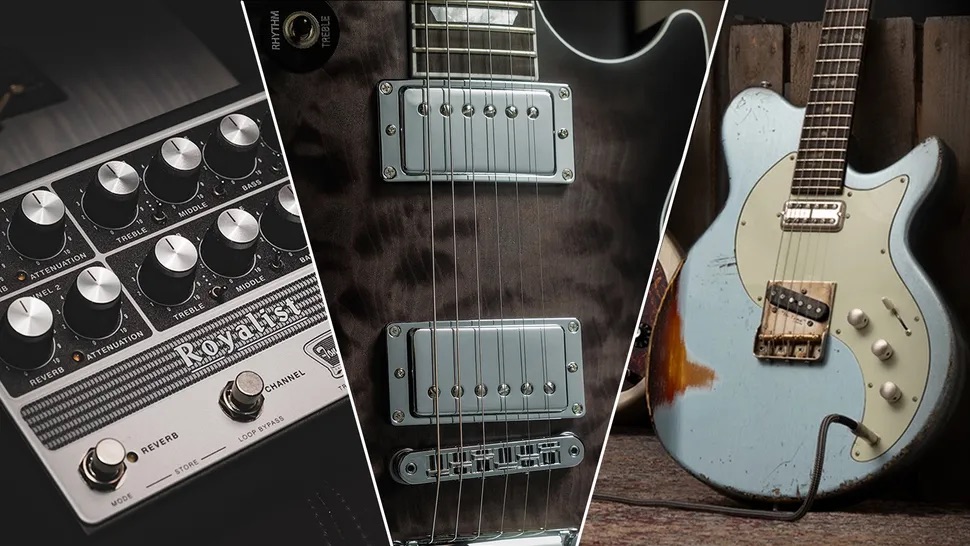


When many of us conjure a mental image of Zakk Wylde, there’s probably an electric guitar somewhere on his person – whether it’s the Gibson Les Paul Customs he swore by for the majority of his career or the Wylde Audio instruments he launched through Schecter a decade ago.
You might envisage a line of amps stacked up behind him, running hot to fully convey the sheer sonic weight of his riffs, as well as overdrives and modulations to add extra muscle and color in the right places. He might be holding his guitar over his head, drenched in sweat and grinning like a Viking at the first sighting of green shores after endless months at sea. This, in many ways, feels like the man’s default setting.
That’s not to say he’s been an exclusively electric player over the years, however. Wylde’s 1994 Pride & Glory album had moments of reprieve from the electrified Southern rock at its core, and Black Label Society cuts like Spoke in the Wheel, The Blessed Hellride and T.A.Z. allowed the guitarist to showcase his talents in more of an unplugged setting with a great degree of success.
Then there are entire albums tailored toward his more acoustic-based writing, from his Book of Shadows solo debut, now celebrating its 30th anniversary, to its 2016 follow-up, as well as Black Label Society’s aptly titled Hangover Music Vol. VI.
On balance, here’s a metal god who has committed himself to the acoustic world more than most of his peers – someone who understands the importance of fragility and vulnerability amid the maelstrom of screaming distortion and hellfire. As he’s said himself time and time again over the years, the loud wouldn’t feel quite so loud without the quiet.
Until now, however, we’ve only seen guitars, pickups, pedals, amps and strings with the official Zakk Wylde seal of approval, so the launch of his very first signature acoustic guitar through Wylde Audio feels like a long time coming. And, as he explains to Guitar World, in the short gap between playing stadiums with Pantera as main support to Metallica and dates with Black Label Society, it’s something he’s been wanting to do for quite some time.
“I’ve been thinking we should start doing acoustics for a while now,” says Zakk, as the steam rises from the fresh cup of coffee in his hands. “For the [July 5, 2025] Back to the Beginning show, I was playing my old Alvarez acoustics. I still have all my Epiphone Masterbilts, which are great guitars, just like the Alvarez ones. They’re all ‘lights out’ guitars as far as I’m concerned.
“We’ve been making all these electrics since 2016, and I thought we should do acoustics as well, using them on the records just like I do with the electrics. We actually used some prototypes on the new BLS record [2026's Engines of Demolition]. This is the sound of Wylde Audio evolving into its next step, and it’s a natural progression.”

You’ve dipped your feet into acoustic tones more than a lot of other metal players. What is it about the unplugged sound that speaks to the human soul?
Acoustics are like this whole other world of guitar, and I absolutely love it. I like to listen to things like Heart of Gold by Neil Young or Angie and Wild Horses by the Rolling Stones, plus loads of Allman Brothers and Eagles. It’s interesting when electric players introduce more of that stuff into the mix.
Look at Jimmy Page on Led Zeppelin’s Babe I’m Gonna Leave You, Gallows Pole or Going to California. The acoustics add this whole other element to those albums. Look at what we did on [Ozzy Osbourne’s] Mama, I’m Coming Home and how it affects what came next on No More Tears.
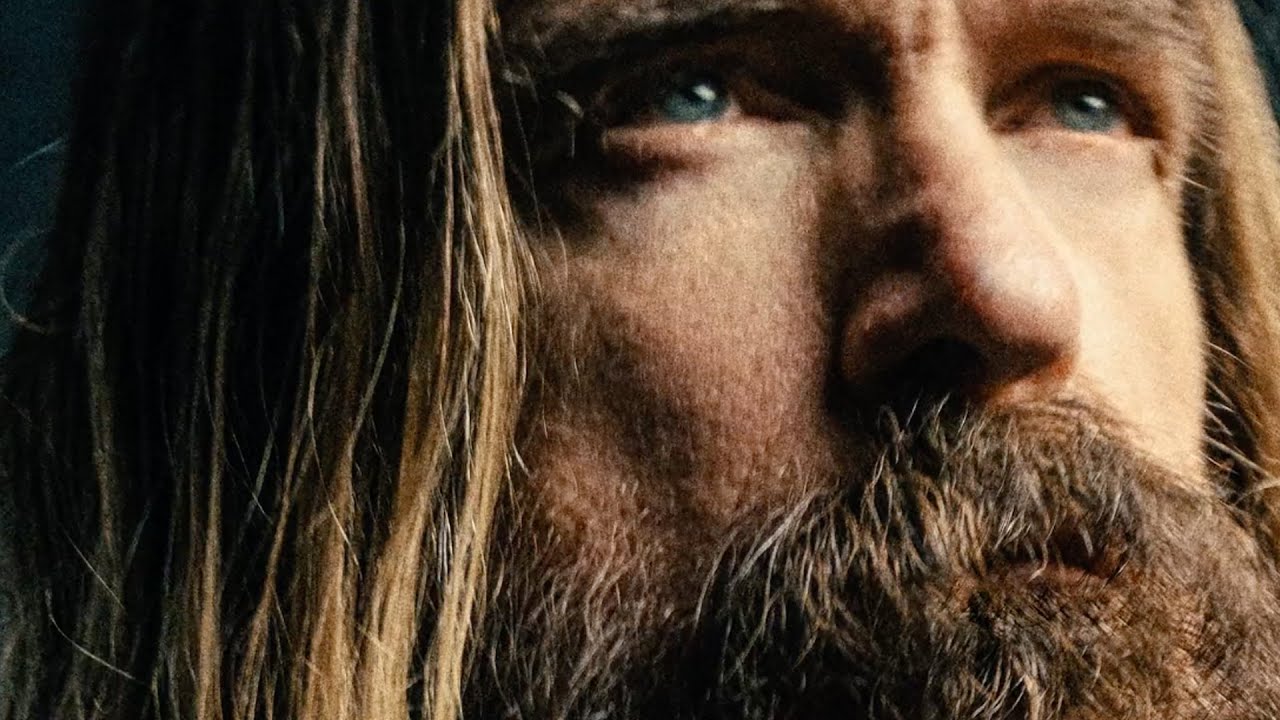
What made you choose mahogany back and sides with a flame maple top for the Wylde Audio Grand Auditorium?
There are tried-and-true woods for guitars, even more so with acoustics than electrics. When I was younger, I remember reading a thing with Yngwie Malmsteen where he was talking about the different tones that come out of Strats made out of different woods.
He also spoke about how he’d change from a maple neck to a rosewood neck and notice how the sound changed. On electrics, your pickups work as a microphone. I saw this one guy who did a test where he took the pickups out of his guitar, put them on a cinder block attached to a neck – and it sounded identical.
It was just to test the theory of how important a pickup is for an electric guitar. That’s where a lot of the tone is coming from – just to disprove all the people who spend their lives arguing about which sounds better out of ash, maple, alder, mahogany or rosewood.
One guy even recorded a microwave with some pickups on it and a guitar neck. And when he A/B’d that against his actual electric, it sounded the same. Like you said, it is pretty hilarious.
The Norse Dragon soundhole rosette is a nice addition to the aesthetics.
If you listen real hard, you’ll be able to hear the difference in tone. My friends come round and say they can’t tell the difference. But they’re not listening hard enough. [Laughs] It just might depend on how many adult beverages you’d had that evening – because I heard that can affect how you hear things!
Which acoustics have you relied on most over the years?
I still have my old Gibsons. There’s a J-200 with the bullseye on it; I’ve always loved that one. I also have some Chet Atkins models, like the nylon-string one I’ve used on a bunch of Black Label things over the years. Then there’s the Chet Atkins steel-string I used on Mama, I’m Coming Home, and there’s the 12-string version that’s also on there.
I’ve had those Alvarez guitars since forever and chose them for the Back to the Beginning show. It’s been mainly about the Gibson and Alvarez acoustics with me. My Epiphone Masterbilts have an EMG pickup. Basically it’s a single-coil, like a Strat. Sometimes people try it and say, “My electric doesn’t even sound this heavy.”
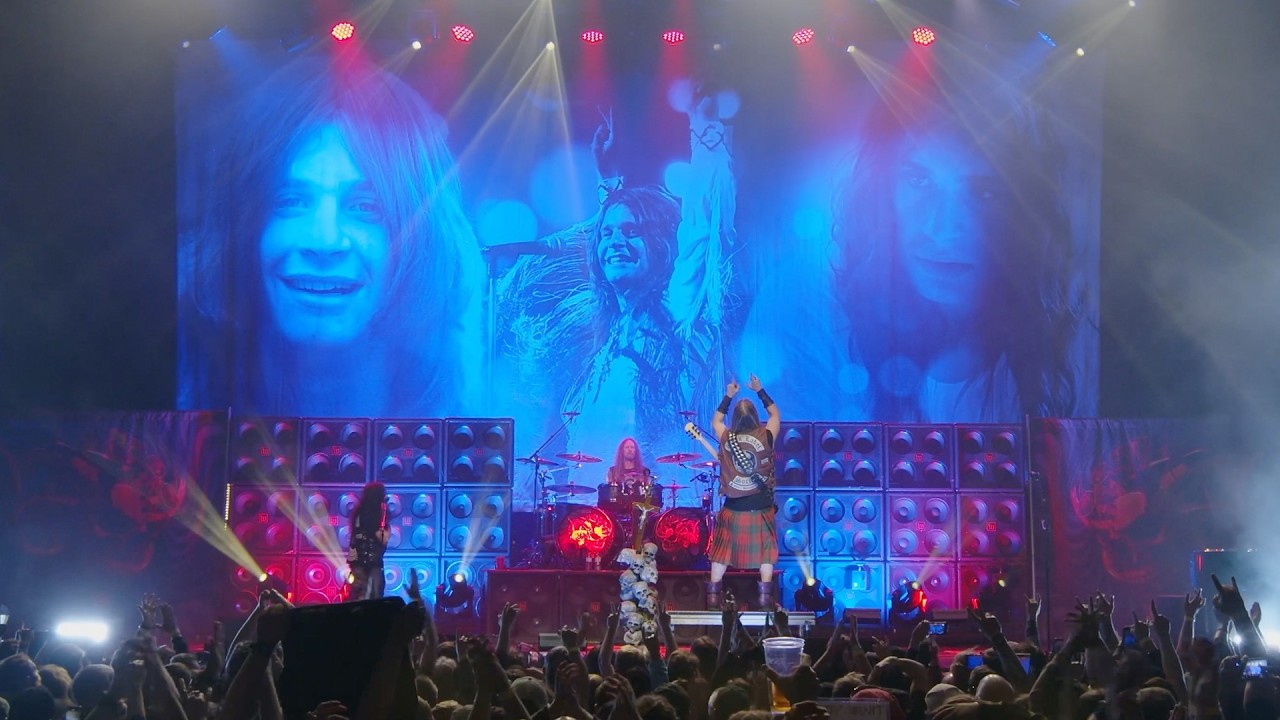
What’s the oldest one in the collection?
I don’t really have an old Martin or anything like that. I don’t have vintage classics or ancient Gibsons from 1927. A lot of my acoustics came from when I was doing Book of Shadows. A Gibson Dove got used on the album. That guitar still sounds great. Finding a good acoustic is like finding a good electric. You don’t plug it in; you just hit a G chord and if it sounds nice, you’re good to go.
Do you think a good electric player makes for a good acoustic player?
It’s a different approach. Some acoustics can be hard to play because of the high action. You might have a rough time shredding because acoustics can be a different sort of beast. If you’re just playing cowboy chords, anything around the bottom of the neck, it’s usually fine. A lot of acoustic rhythm doesn’t go into the higher frets.
I keep the action on my acoustics like my electrics – nice and playable. If it’s five feet off, it doesn’t matter how many years you’ve been practicing with your metronome. I don’t care if you’re John McLaughlin, you’re going to have a rough time with that. You’ll be sitting there wondering, “Why don’t I like myself?” It’ll be torture!

It’s the 30th anniversary of your Book of Shadows solo debut. What made you want to start writing folk-rock songs?
When I was writing that record, we were working on Ozzmosis [1995] with Ozzy in New York City. Right next to where we were staying was this old pub called Brew’s. Every day after tracking I’d head there and hang out until closing.
The jukebox was amazing; it had Neil Young, Bad Company, the Band, the Eagles, the Stones – everything classic rock. I’d drink until 6 a.m., walk back to my room, pick up my guitar and start writing. By the time Ozzmosis was finished, I had Book of Shadows written.
That album has a song you wrote about Shannon Hoon from Blind Melon, who died in 1995. You’ve also written tributes to the late Layne Staley, Dimebag Darrell and, much more recently, Ozzy Osbourne.
I only met Shannon Hoon a few times, but he was the inspiration for Throwin’ It All Away. Sometimes I wake up and think, “I’ve got to stop writing these songs for my friends.” We need everybody to stick around longer. In This River [a tribute to Dimebag Darrell] and Ozzy’s Song are odes to my buddies. They’re both on the setlist every night when we’re out doing headline shows with BLS.

Your solo in Ozzy’s Song begins with this descending theme. The notes feel as emotionally heavy as the words you’re singing.
I’d be interested to see how Randy Rhoads would sit back and write back in the day. Would he have a cassette and work it all out? I tend to sit down with everything. The only thing that was more spontaneous was No More Tears. That was a one-off built out of an improv, apart from the ascending lick at the end.
The majority of that song was just one take, and I think it came out pretty okay. But on Miracle Man and other songs, I would try to work out a beginning, middle and end, as opposed to just blazing through everything.
You want your solo to have parts people will remember. I think that descending line from Ozzy’s Song is one of those. I might just have a practice amp at low volume and keep thinking up ideas until I find something I’m happy with. I’ll crank the reverb to sound like I’m headlining Madison Square Garden. It has to sound great at low volume.
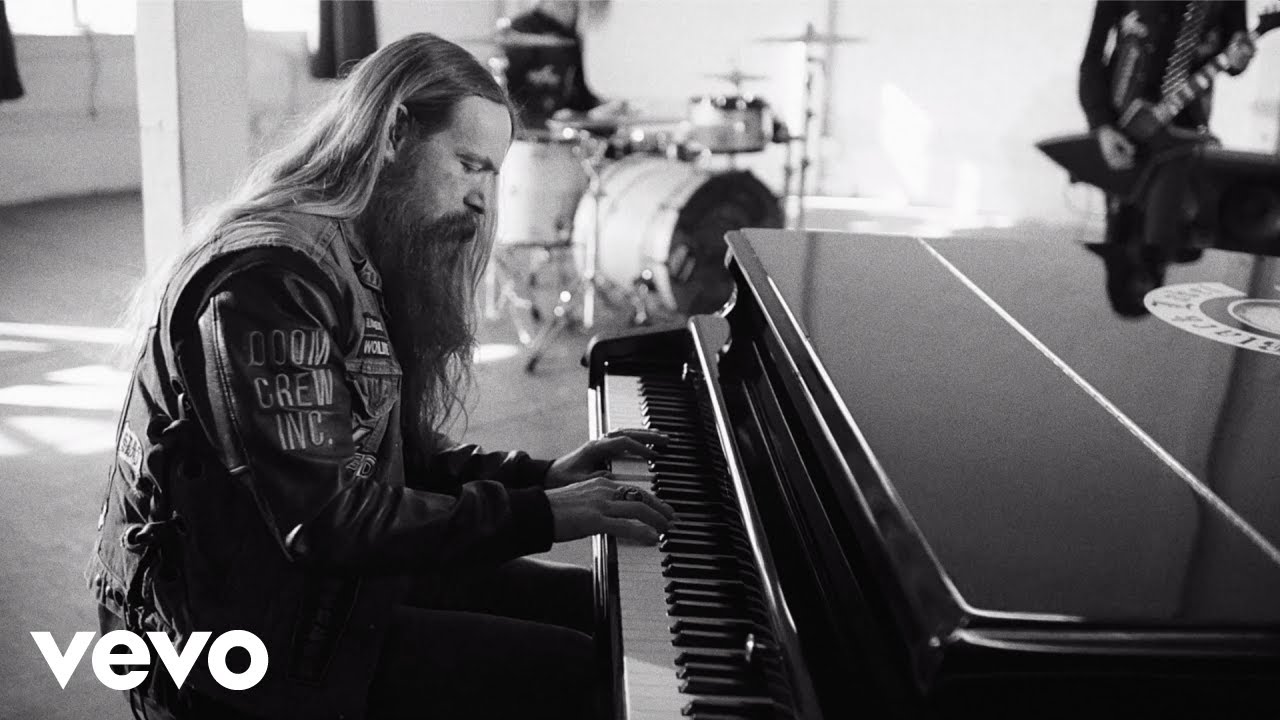
It’s a bit of a cliché, but guitar players can sometimes say more with fewer notes. B.B. King was – and is – the often-cited master of that.
Exactly, and then you have what David Gilmour played on Comfortably Numb. That solo is just tremendous. You could say the same about Stairway to Heaven or Hotel California. Obviously there are still songs that call for more blazing runs, like what Randy played on Mr. Crowley. Dimebag was like that, too.
If you listen to parts of Walk, I’m Broken, This Love or anything like that, Dime worked out melodic lines that would end up becoming a big part of the song.

Sometimes your pentatonic runs sound close to what Eric Johnson, Eric Gales and Joe Bonamassa are known for – rhythmically breaking up the scale into groups of four, five or six.
Later in life I heard Eric Johnson and was like, “Wow!” When the pentatonic scale is played like that, it has a different sound to three notes per-string
Totally. For me, it extends all the way back to John McLaughlin and his work in Mahavishnu Orchestra. You had Jerry Goodman and Jan Hammer playing all these fast ideas with McLaughlin [starts humming riffs high in tempo]. That’s where it all came from.
I had a guitar teacher called Leroy [Wright], and he was hugely into Mahavishnu, Frank Marino and Dixie Dregs. There’s something about those super-fast pentatonic ideas that are, to my ears, complete McLaughlin.
Later in life I heard Eric Johnson and was like, “Wow!” When the pentatonic scale is played like that, it has a different sound to three notes per-string, which is the Al Di Meola and Yngwie style. That’s also awesome but more diatonic. If you break up the pentatonic scale into these short phrases at fast speeds, it completely has its own thing.
You played an acoustic gig at Amoeba Records in Hollywood in February. What kind of gear do you rely on for those kinds of performances? Is there a certain amp or pedal you need?
For that thing, I had my ToneWoodAmp. It fits on the back of your acoustic and it’s a great little device. It has different reverbs, delays, chorus and everything. You attach it to the back of your guitar and it amplifies your acoustic. Whenever I have to do a promotional tour for the album, which might involve stuff like radio and small shows, I will take one of my Epiphones with the ToneWoodAmp. It sounds great.
Sometimes me and Dario [Lorina, Black Label Society co-guitarist] will jam, so we might use a couple of Roland Jazz Chorus amps. As far as clean tones go, those amps sound like magic, just absolutely beautiful. I don’t really change my pedalboard. It’s the same for acoustic shows, Pantera, Ozzy, BLS, Experience Hendrix or Generation Axe. Just a wooden ’board with my Dunlop pedals.
Who are the true masters of acoustic guitar, in your opinion?
I think between the legendary trio Al Di Meola, John McLaughlin and Paco De Lucia, it’s ‘lights out’ right there. You can play Friday Night in San Francisco to anybody, and it will blow their mind. It’s an unbelievably amazing record. That one will stand the test of time for sure.
Then there’s Tony Iommi doing stuff like Laguna Sunrise, Fluff and all that stuff. Those tracks are the perfect setups for the next songs. Randy had Dee, which worked like that, too. Acoustic tracks can act like a prelude into the next heavy song. My favorite acoustic tones on record would be Angie and Heart of Gold.
There’s a lot of crossover between you and Alice in Chains, both musically and personally. Like you, they are masters of combining electrics and acoustics to create music that is that much more detailed, universal and compelling.
You could put Jerry Cantrell up there, too. He’s got a whole batch of amazing songs. Writing stuff like Heaven Beside You is phenomenal. They always had that acoustic element in with the electrics.
Jerry knows how to crush it. He’s all about layering things, and it’s something he does very well. You record the acoustics first and then add all the heavy bits on top of it. If the acoustic wasn’t in those layers, you’d really miss it.
Even if you don’t use acoustics live, they can be really valuable in the studio. I played with [Alice in Chains bassist] Mike Inez in the Ozzy band, including the final gig. When Alice took a break, we asked Mike if he wanted to come out with BLS, so he did, and the comedy continued.

You performed Would? with them in 2023.
I remember hearing Would? for the first time. Back in the day, we would just sit around in a hotel room drinking. Jerry had his guitar and Layne Staley started singing along. It was just one unplugged electric, and somehow it sounded pretty much just like the record. I’d watch their band every night when they played with us, loving all the harmonies. But the amazing thing is those guys could duplicate all of that powerful music just sitting around in a hotel room drinking.
As far as I’m concerned, Jerry is the complete package. He’s great at everything to do with songwriting – he’s an incredible lyricist and singer, then there’s all the melodies and harmonies. He does it all. He’ll probably do your laundry and taxes while cooking up a mean chicken piccata. He’s an all-round great musician, not just a guitar player.
What do you think about the next generation of players? Is there anyone who feels like a cut above the rest?
I’m friends with Richie Faulkner, who I think is the full package. We’ve toured with Judas Priest a bit and he’s a phenomenal player. He also has his own band, Elegant Weapons. He’s got vibrato, technique, tone, everything. I feel that way about Dario from BLS. He’s also in Dark Chapel, where he sings his ass off and plays piano.
Jared James Nichols is awesome. I love hearing younger guys like him and Tyler Bryant playing the blues. They clearly love it and have such an amazing grasp of it.
Tosin Abasi has been doing it for a while now, but he’s phenomenal. I think Tim Henson is insane. My son Hendrix is a huge fan of Polyphia and Tim’s playing. Whenever I hear people saying, “Guitar is dead,” I think, “What are you talking about? What rock do you live under?” Guitar is doing just great. There are so many young players who love the instrument, and they’re really going for it.
Matteo Mancuso definitely feels like a guitar star in the making.
All we’re doing is honoring Dime and Vinnie. Everybody sings the songs and takes a trip down memory lane
Matteo is awesome, too. I just saw a video of him playing with Eric Johnson doing some crazy stuff. And yes, he’s got great technique, but he also keeps it so musical. Seeing someone like him play like that is so inspiring. All you need to do is play what you love and what moves you. At the end of the day, that’s what it all comes down to.
Circling back to Pantera, you’ve clearly proven yourselves by this point. Maybe there were a few raised eyebrows to begin with, but that’s certainly not the case anymore.
It’s an honor getting up there every night. I look at the fellas and know I’m among lions. It’s a powerful feeling. All we’re doing is honoring Dime and Vinnie. Everybody sings the songs and takes a trip down memory lane. Some of them will have seen Pantera playing at a bar in front of five people back in the day.
Younger kids might have only heard of Pantera’s legend through their parents. We’re playing Dime and Vinnie’s music to this awesome community. We make people happy by playing these songs; it’s a beautiful thing. Recently we’ve been doing stuff like 10s and Floods with the mellow sections. The solos in those are always fun to play.

There’s been talk of bringing some of Dime’s demos and ideas to life. Has there been any progress with that?
It all comes down to Phil [Anselmo] and Rex [Brown]. It’s for them to say what’s next. Me and Charlie Benante are there to lend a helping hand. Allied forces over here. I know originally there were talks of unfinished things that Dime had written, maybe just a riff or a full song or something on acoustic.
He had a lot of riffs just laying around, single riffs like the one to I’m Broken as well as some that were finished and structured but never properly recorded. Phil could obviously come up with a melody and write some lyrics around it. We could finish a song that was already written – that kind of thing. But not new stuff.
That was the germ of an idea, looking at it as an unfinished thing. As if Jimi Hendrix recorded Purple Haze but just on acoustic and then gave it to Eric Clapton, who teamed up with Mitch Mitchell and Noel Redding to finish as it had never been recorded properly. It was that kind of idea. Would I like to record something like that? Of course I would.
- Engines of Demolition is out now via MNRK Heavy.
- This article first appeared in Guitar World. Subscribe and save.

