


By the time Ronnie James Dio left Black Sabbath in 1982, he'd already worked with two guitarists indelibly etched on heavy metal’s Mount Rushmore as founding fathers of the genre.
On the same night that he first met Sabbath's Dark Lord of the Riff, Tony Iommi, at LA's infamous Rainbow Bar and Grill in 1979, the two wrote the monolithic Children of the Sea, sparking the potent partnership behind the following year’s classic, Heaven and Hell.
Five years earlier, while opening for Deep Purple as a member of Elf, Dio’s commanding vocal presence prompted Richie Blackmore to recruit him for a projected solo single. As with Sabbath, the collaboration swiftly ignited a songwriting partnership, and by 1976, Rainbow had delivered Rising, a game-changing blend of neoclassical hard rock and dark fantasy imagery.
After quitting Sabbath in 1982, the vocalist’s return under the Dio banner (with fellow Sabbath evacuee Vinny Appice on drums and ex-Rainbow bassist, Jimmy Bain) with Holy Diver upped the ante once again. Fusing the melodies of Rainbow with a shot of Sabbath-style heaviness, the band introduced a succession of hungry young shredders whose playing gave the band a contemporary edge.
And if the pressure of matching the soloing standards set by Ritchie Blackmore and Tony Iommi wasn't enough, any six-stringer who fancied the gig would also have to prove themselves as a worthy songwriting partner for the man who'd co-written Stargazer and Neon Knights.
“At the audition, he didn't say, ‘Play a solo for me,’ the band's '90s guitarist, Tracy G, reveals. “[He said] ‘Give me some song ideas.’” He needed someone who could write for him.”
Each player who passed through the ranks rose to the occasion, expressing their own distinctive styles in the role, both as soloists and collaborators.
Dio’s dedication to traditional heavy metal through the '80s hair band boom – and as grunge, alternative, and nü metal dominated the '90s – meant that certain albums were under-appreciated. With this in mind, let's investigate how each of Dio’s gunslingers helped shape the sound of the band.
Vivian Campbell (1982-1986)
![Dio - Rainbow In The Dark (Official Music Video) [HD] - YouTube](https://img.youtube.com/vi/PrBUjXaRSUQ/maxresdefault.jpg)
Much has been said about the eventual deterioration of the relationship between Ronnie Dio and Campbell, leading to his ouster during the 1986 leg of the tour to support the band’s third album, Sacred Heart (1985).
However, before things went south, Campbell’s contributions were central to 1983’s classic debut, Holy Diver, and its estimable follow up, The Last in Line (1984). He co-wrote the latter album’s titanic title song, and the earworm riff to the former’s MTV hit, Rainbow in the Dark.
Aged just 21 at the time, Campbell had been recommended by Bain, after catching him in action with Sweet Savage, a NWOBHM outfit who’d supported Thin Lizzy, whose former guitarist Gary Moore “... was probably my biggest influence,” as Campbell told this writer in 2013.
Campbell’s performances throughout Holy Diver showcased a ferocious combination of speed and intuitive feel. Highlights such as his vicious pinch harmonics (a trademark of his style), the slicing bends on Stand Up and Shout, and Don't Talk to Strangers' dazzling, masterful extended lead break, immediately established him as one of the era's most exciting new guitar heroes, alongside John Sykes and Jake E Lee.
After stints with Whitesnake, Shadow King, and alongside his ongoing role in Def Leppard, Campbell returned to playing the early Dio material with Last in Line (also featuring Bain and Appice) in 2013.
At the time, he told this writer, “Back in the day, I never knew what I was doing. I've always been a fly-by-the-seat-of-your-pants guitar player. I never rehearsed solos before going into the studio. I just waited until the light went red, then I started playing. It either came out great, or it came out shit. So, it's been challenging for me to relearn my own work, because it was never thought out. But it's been a great challenge, and I've really enjoyed it.”
For his part, personality differences aside, Dio once told Guitar World, “Viv was absolutely perfect. He took chances and played with incredible speed.”
Craig Goldy (1986-1988, 1999-2002, 2003-2010)
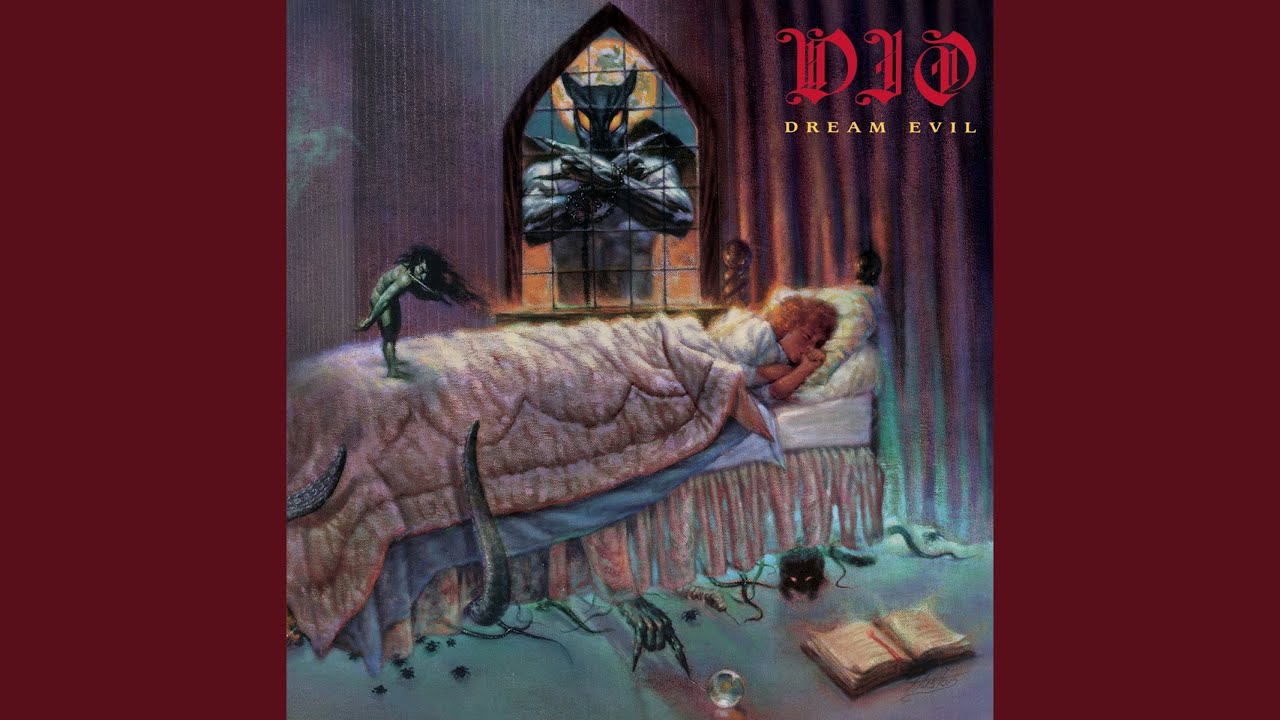
With bandmembers and fans reeling from Campbell's firing, Craig Goldy faced an uphill battle of Everest-like proportions on joining Dio in 1986.
Perhaps due to having previously faced the challenges of replacing Jake E Lee (briefly a member of Dio in 1982) in Rough Cutt (managed by Wendy Dio and mentored by the man himself) in 1982, and opening for Deep Purple on their Perfect Strangers comeback tour while in the band Giuffria, Goldy stuck to his guns and rose to the challenge admirably.
“A couple of times, in the audience, there were guys standing up front flipping me off – ‘Vivian number one,’” he told this writer in 2015. “I would play Blackmore and Viv’s solos about 90 percent note for note, because it would mean something to the audience. They don't want to know my interpretation, it's about giving them what they love and creating a bond. By the end of the night, they were going, ‘Goldy number one!’”
However, in the studio, Goldy was free to express his own distinctive soloing style. Moreover, his familiarity with Ronnie Dio’s catalog led to a long and fruitful collaboration during three separate runs with the band – making him their longest-serving axeman – with significant songwriting contributions on Dream Evil (1997), Magica (2000), Killing the Dragon (2002), and Master of the Moon (2004).
Though overshadowed by blowback from the line-up change, Dream Evil (1987) was arguably the Dio band's best since their debut, with Goldy’s writing freshening up the formula. His solos offered a keen sense of melody and an emotive touch on the sweeping epic, All The Fools Sailed Away, and deadly-accurate shredding on Night People.
During his final stint with the band, Goldy remained with Dio from 2003 until their dissolution after Ronnie Dio’s passing seven years later, and was a part of the all-star Dio Disciples between 2011 and 2018. He continues to work on his own projects.
Asked what lessons he learned from Ronnie Dio by Guitar World in a 2013 interview, Goldy said, “There are so many, but a lot of it is first the music has to feel good. The groove has to be great because a lot of guitar players write for the riff first.”
Rowan Robertson (1989-1991)

Reading of Craig Goldy’s first departure in 1988 in the metal press, 17-year-old British Dio fan Rowan Robertson sent a demo tape to the band's record label. Remarkably, he soon found himself in LA, having passed the audition and landed the gig, a situation he later described to Guitar World as “a fairy tale.”
Of all the band's guitarists, Robertson faced the steepest learning curve of all. Despite never having been in a professional recording studio, and with “... zero experience writing before Dio,” as he told Musikholics Webradio in 2020, he was assured by Ronnie Dio that all would be well.
Thanks to a combination of the frontman’s encouragement and Robertson's burgeoning talent, the young prodigy flourished as a songwriter, co-penning all eleven tracks on 1990’s Lock up the Wolves.
In addition to featuring knockout songs like the Wild One and My Eyes, the record positioned Robertson as a jaw-dropping six-string phenom, as the latter track’s ninja-level legato runs vividly illustrate.
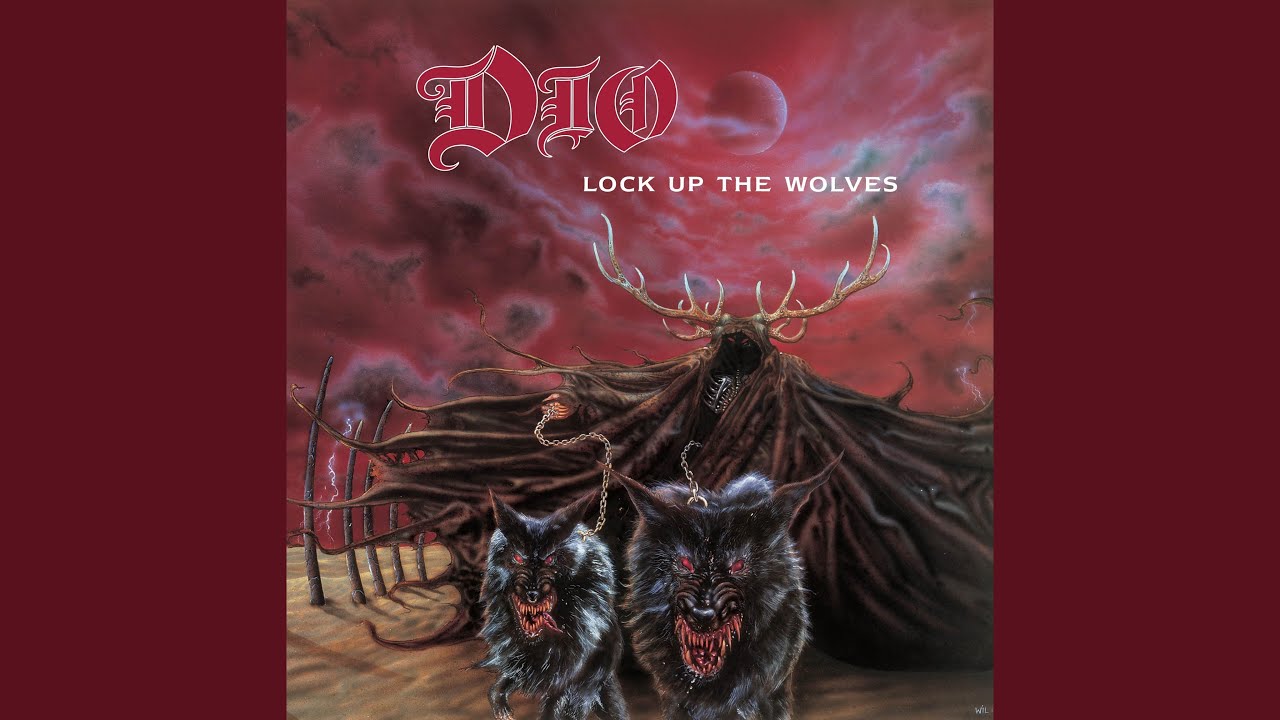
Sadly, Lock Up the Wolves would be somewhat overshadowed by the dominant glam and thrash styles of the era, despite its quality. As Dio and Robertson began working on riffs for a follow up, the vocalist received an invitation to reunite with his Black Sabbath colleagues, and Robertson and his bandmates were put on ice.
Reflecting on the end of his Dio tenure, Robertson told Guitar World, “I definitely had mixed feelings; on one hand, it was upsetting being told the gig was over for the time being, but on the other hand, I did feel a sense of new freedom to do my own thing.”
“I wouldn’t want to speak for Ronnie,” he continued, “but I do think he felt a responsibility toward us as his band because he was supporting us all, and I believe he was a bit pained about it when he rejoined Sabbath.”
Robertson has subsequently enjoyed a long and fruitful career, playing with Violet’s Demise, Wicked Outlaw, DC4, and Bang Tango.
Tracy G (1993-1999)
At the time of his passing, Ronnie Dio had enjoyed a well-deserved victory lap with his Mob Rules-era Black Sabbath bandmates, as Heaven And Hell. Back in 1992, amid the fractious fallout from Sabbath’s post-Dehumanizer split, he and Vinny Appice reactivated Dio, with guitarist Tracy G, formerly a member of World War III (with Appice and Jimmy Bain).
Perhaps the most controversial and misunderstood of Dio’s guitarists, Tracy G was nonetheless the perfect man for the job at the time. His wildly original, idiosyncratic style paired shred chops with screaming whammy bar dives, curveball effects, and a Jeff Beck-inspired injection of chromaticism, microtones, and dissonance, as exemplified on the pounding Jesus, Mary and the Holy Ghost.
“If you don't play like an already-famous guitar player, people think you're not happening,” he told Guitar World in a recent sit-down. “Maybe I'm doing my own thing, though. Maybe I don't care. I mean, Vivian Campbell, Craig Goldy, and Rowan – great guitar players, but I wasn't trying to be any of them.”
Ronnie wanted to try new things... He took a chance on me, and I'm grateful that he did
Tracy G
While some fans may have preferred a more traditional soloing style, Tracy G's unique approach gave Dio a much-needed edge in a musical landscape where grunge, alternative, and industrial sounds had forced more traditional metal underground.
Despite his postmodern approach, Tracy G had ample common ground with Ronnie Dio as a songwriter, having grown up on the sounds of Black Sabbath and early Rainbow.
“You could do something as heavy as Children of the Grave,” he says, “and then play Planet Caravan. That's what I [wanted] to do. It's like colors, if you were painting. I'm stealing from every genre of music; some flamenco, jazz, metal, blues, punk. Just making this collage of stuff, but it still has a common denominator – heavy.”
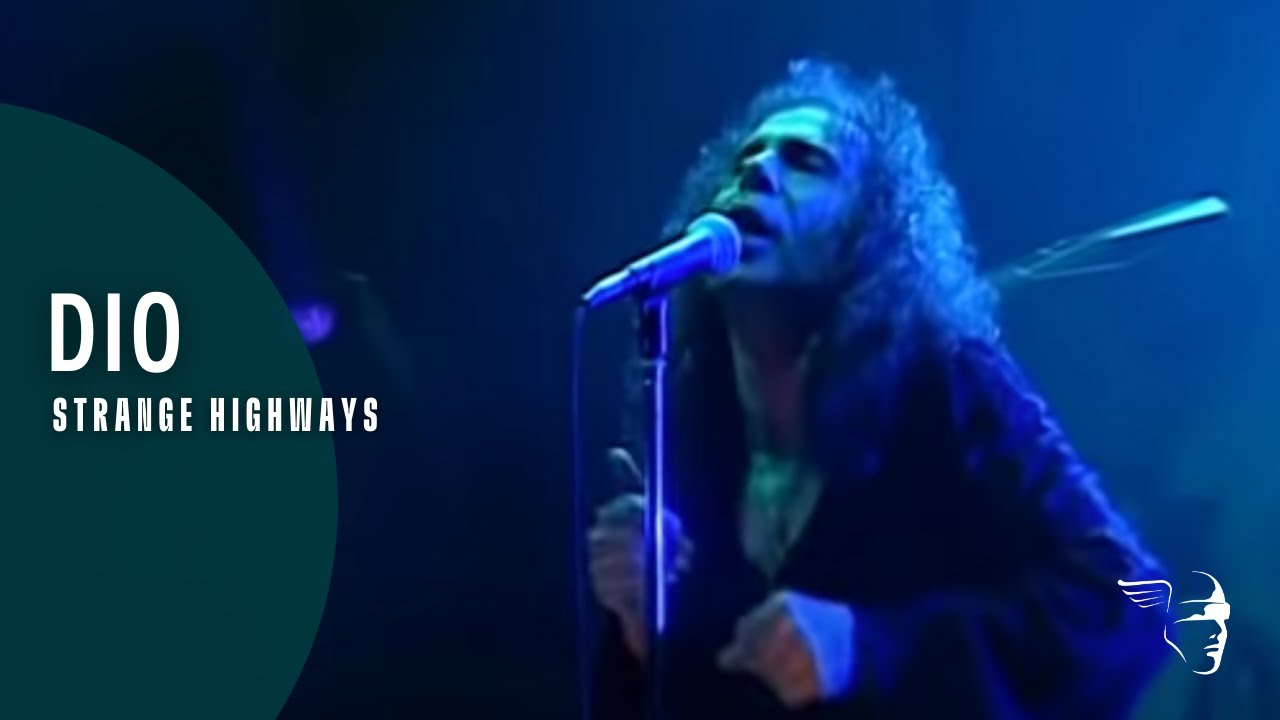
Recalling his audition, he says, “We just jammed on songs, no Dio songs, no singing. Ronnie’s just in the corner, listening. And I'm playing riffs that I already had, and riffs I made up right there on the spot, and it already sounded like a band. I said, ‘I think we could make one of the heaviest Dio records ever.’”
Strange Highways (1993) bravely rebooted Dio’s sound in a barrage of stomping, mutant riffs, and a rage-fuelled performance from the man himself. Your mileage may vary, but for this writer, it's every bit as essential as Holy Diver and Dream Evil.
In 1999, label pressure eventually prompted Ronnie Dio to return to the band’s traditional sound, after Angry Machines (1996). Though the frontman offered him the chance to remain in a two-guitar line-up alongside Craig Goldy, Tracy G opted to follow his own path, and has since released an impressive catalog of music on his own label.
Today, an increasing number of fans have warmed to the adventurous sound of Strange Highways.
“Ronnie wanted to try new things,” Tracy G reflects. “He chose that. It was just so new and different. I'm still getting tons of compliments on it. I'm pretty proud of that record, and everything I did with Ronnie. He had nothing but good things to say about me at the time, and he was a happy man back then. He took a chance on me, and I'm grateful that he did.”
Doug Aldrich (2002-2003, 2005, 2009)

Though his time with the band would be brief, Doug Aldrich made a powerful impression as a member of Dio.
Like Vivian Campbell, Aldrich cited Gary Moore one of his biggest influences. In a 2018 interview with Guitar World, he highlighted how Moore's mix of feel, aggression, fluid legato, tremelo picking, blues, and classical elements found its way into his own fiery signature sound.
When family commitments forced Craig Goldy to leave Dio in 2001 as the recording of Killing the Dragon (2002) began, Aldrich stepped in, in time to co-write Along Came a Spider and Scream, while also proving to be a perfect fit as a soloist across the album.
Demonstrating impressive versatility, he proved to be equally adept when letting rip with a molten facemelter of a lead break on the title track, or while negotiating the shapeshifting chord sequence of Push with a more measured approach.
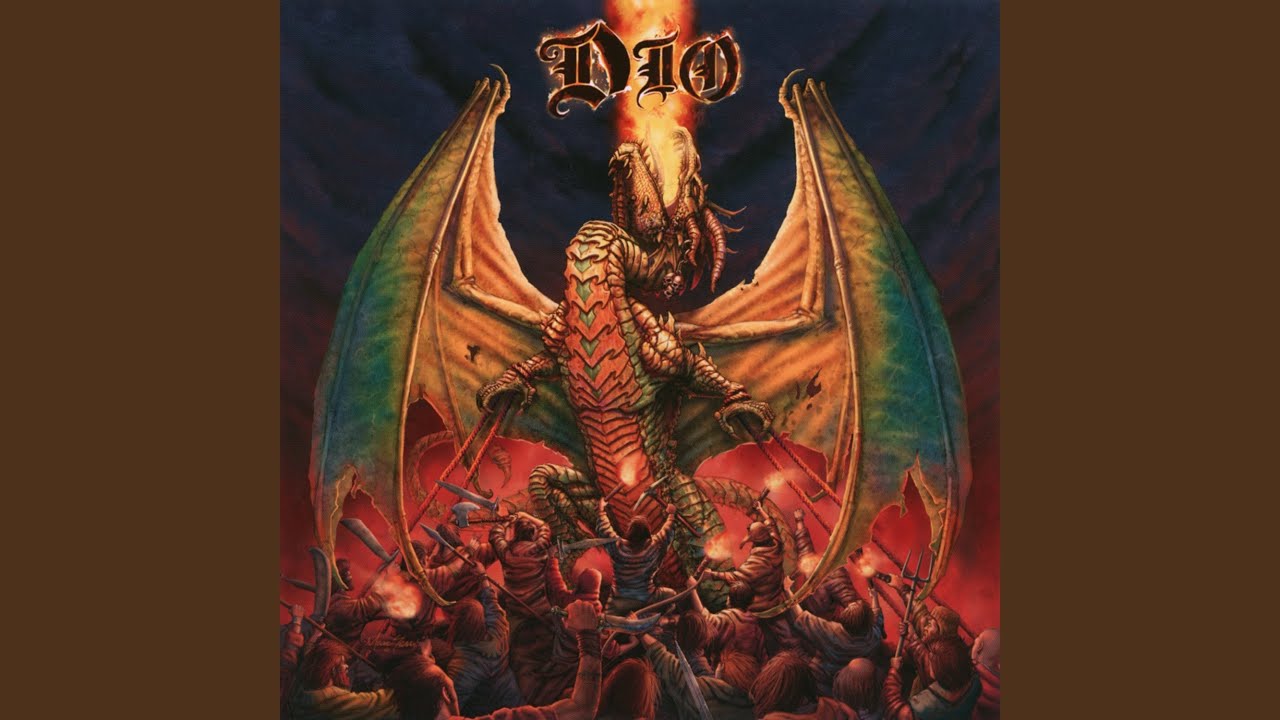
Scheduling conflicts with his other gig in Whitesnake saw Aldrich leave Dio to make way for a returning Craig Goldy in 2003. He would subsequently fill in for Goldy on tours in 2005 and 2009.
Furthermore, his performances on Evil or Divine – Live in New York City (2003) and Holy Diver – Live (2006) give an exemplary object lesson in how to play the signature licks of well-known guitar solos while weaving in your own distinctive flourishes. Aldrich is currently a member of the Dead Daisies.
Just as Ritchie Blackmore brought a relatively unknown Ronnie James Dio the attention of a wider audience in Rainbow, the much-missed vocalist’s own band allowed a diverse array of guitarists to shine.
Although Holy Diver and The Last in Line remain Dio’s most commercially successful albums, Guitar World recommends that readers embark on an Epic Quest for Shred (this is Dio we're talking about, epic quests are entirely appropriate) through the albums listed above. Your journey will be richly rewarded.
