




Steve Morse has looked back on the origins of his decades-spanning partnership with Ernie Ball Music Man, recalling how the collaboration first started thanks to a chance encounter – and a broken volume pedal.
Sometimes, collaborations just aren’t meant to be, and Morse’s failed link-up with Fender is a classic example. But as one door shut, another opened, and the former Deep Purple guitarist later forged a different partnership that’s still going strong today.
Morse was courted by Fender in the mid-1980s. It made sense, seeing as a Frankenstein'd Telecaster was his go-to guitar at the time. But the relationship disintegrated when Fender insisted he used own-brand parts.
As chance wold have it, Morse wouldn't be waiting long for a run-in with his dream collaborator. One broken pedal later, and Morse soon forgot all about Fender.
“More than 40 years ago, I was playing at a NAMM Show. My volume pedal to control the delay in my demo setup failed,” Morse told Guitar World during an interview at NAMM 2026 earlier this year.
“The gear stripped out, and there was no way to fix it. So I went looking for a volume pedal, and the Ernie Ball booth was nearby. I saw they had this really cool pedal that’s basically the same one they still sell.
“I said, ‘That looks rugged. It’s everything I need. Can I buy that?’” he continues. “They said, ‘No, that’s a show thing.’ ‘Can I borrow it to do my demo?’ ‘Well, let me ask Ern.’”

It turned out Morse was talking to David Ball, son of Ernie himself. After the random run-in, one thing lead to another, and before long Morse was gigging with Ball's other two sons, Sherwood and Sterling.
It was a serendipitous start to a powerful partnership, as Morse would later find out.
“I ended up playing gigs with Sherwood and Sterling, and then got to be friends with Ernie, because he made a really warm family vibe out of it,” Morse remembers. “And he was the grumpy older guy who had to tell people, ‘Come on, let’s get to work. What are we doing here?’
“It was literally a family thing. But I felt like part of it. So I became an endorser way back then.”

Ernie Ball was no shrinking violet even back then, but Morse helped propel the company’s status by becoming its first signature artist, pulling off a coup from under Fender’s nose.
“40 years ago, they bought the Music Man line, and they were going to release the StingRay bass,” Morse says of Ernie Ball's early plans. “And they said, ‘Well, you know what? We’d like to get the guitars where they should have been, and we want you to design a signature one.’”
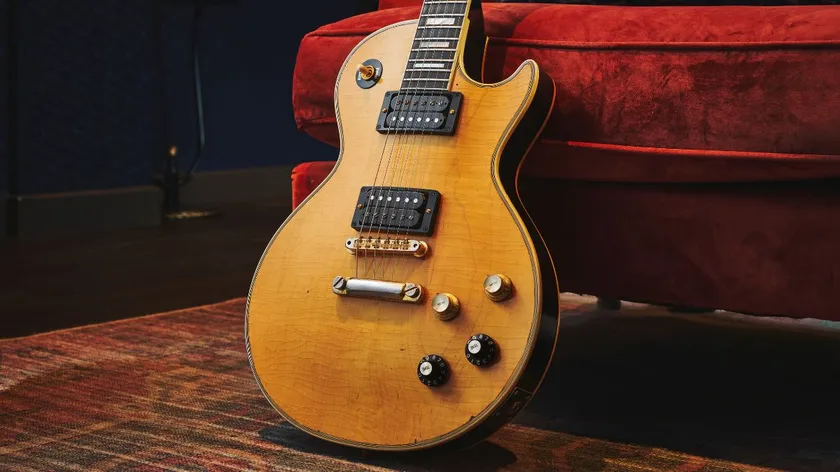
His FrankenTele became the template for his signature guitar, which was designed to Morse's exacting standards and specifications. It's one of the firm's most recognizable and historically significant guitars – and succeeded serving Morse's signature guitar requirements where other bands had previously failed.
“Dudley Gimpel was the luthier at Music Man and he really put in the time, and was very analytical about it," Morse says. “We started with the head stock, which is shorter [on the signature]. And the guitar, when you put it on your leg to practice, you can let go, and it balances perfectly."
That same signature came with him as he replaced Ritchie Blackmore in Deep Purple, subsequently becoming the band's longest-serving guitarist.
Guitar World’s full interview with Steve Morse will be published online in the near future.

