


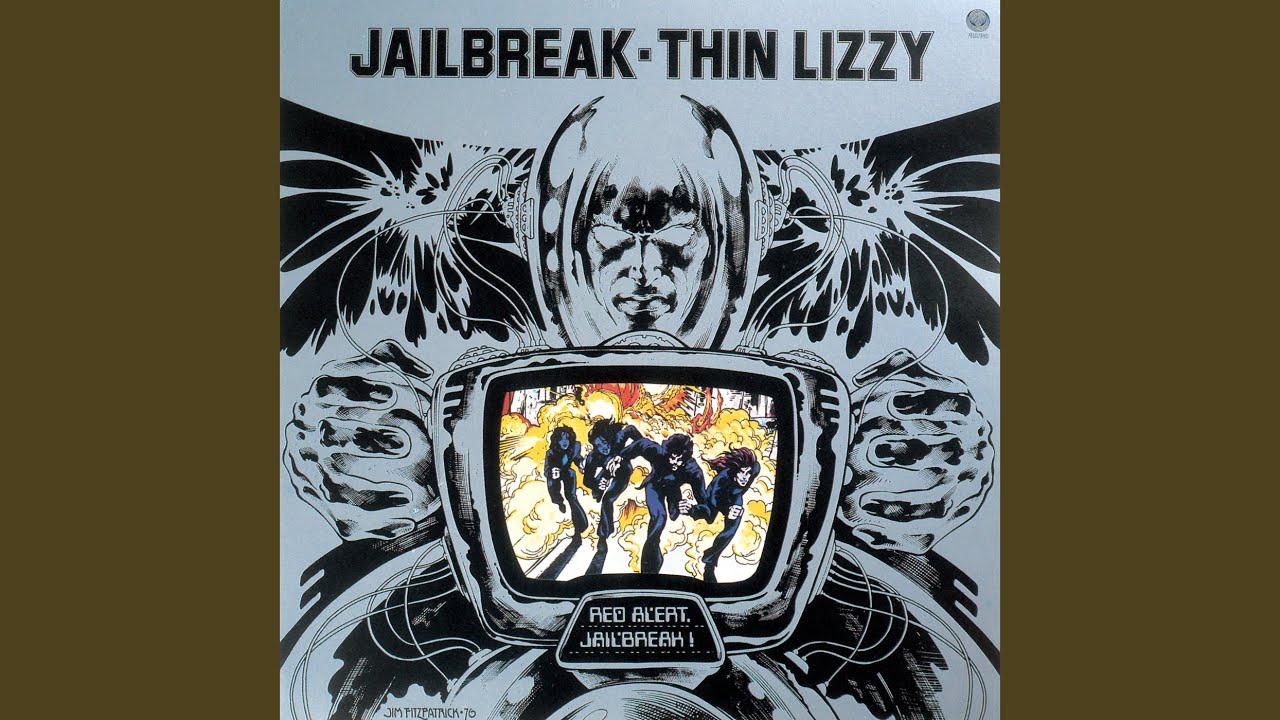
Original Thin Lizzy guitarist Eric Bell had occasionally overdubbed harmonies on the band’s albums. But with the 1974 arrival of Brian Robertson and Scott Gorham – after a brief stint with Gary Moore and a short-lived lineup featuring Andy Gee and John Du Cann – the sound of two Les Pauls blazing away in unison became synonymous with Phil Lynott’s outfit.
In addition to being a prodigiously talented lead guitarist, 18-year-old Glaswegian Robertson was responsible for writing the hookline harmonies which came to define his partnership with Gorham.
Today the combination of Lynott, Robertson, Gorham, and drummer Brian Downey is regarded as Lizzy’s definitive aggregation. After reaching an incendiary peak with 1978’s Live and Dangerous, the dream team fragmented, with Robertson replaced by the returning Moore.
Robertson’s status had been in flux since November 1976 after he sustained a hand injury on the eve of an American tour. He’d been defending his friend, blues rock singer Frankie Miller, from an assailant with a broken bottle at London’s Speakeasy Club. Assuming he’d been fired, Robertson began assembling Wild Horses with former Rainbow bassist Jimmy Bain.
Robertson was recalled to Lizzy as a session guitarist for 1977’s Bad Reputation, but recently told this writer there was never a discussion about him returning permanently. After two albums with Wild Horses (remixed for box set Standing Our Ground – Complete Recordings 1978-1981), and a brief run with Motörhead, he began a long stint in Miller’s band, which continued until the singer’s aneurysm in 1994.
Robertson spent the '90s and 00s working predominantly as a session musician and producer, before releasing the solo album Diamonds and Dirt in 2011. Today he’s happily retired and relaxes by customizing Les Pauls in his workshop.
In the wake of the recent Lizzy box set 74-75 and the Wild Horses collection, his solo record is to be reissued as Diamonds and Dirt Redux, with a previously unreleased instrumental set showcasing his style across a range of genres.
You were a fan of Lizzy’s Vagabonds of the Western World, and could play the songs before you auditioned. What did you like about Eric Bell’s guitar playing?
There was a bit of Hendrix about it, but there was that Celtic lilt to it as well. He gave a direction to Phil’s writing at that point. Phil would bring very basic things to you; the end product was always influenced by whoever was playing with him. In the case of Vagabonds it’s very much Eric.
Peter Green is one of your main influences. What appealed to you?
Widdlers were never for me. It was to do with the spacing and the feel – what a gap of nothing can mean to the next note you're going to play. Filling up the spaces takes away from the dynamic of the next note.

For a lot of guitar players, the minute somebody says “solo,” that’s what it is – solo. Everybody else disappears. But Peter’s listening to the vocals, the drums, taking in all of the song. Fleetwood Mac’s Blues Jam at Chess is my favorite album. It’s improvisation. That’s what really sets me off.
I’m resto-modding the Kirk Hammett Les Pauls and calling my versions ‘Peter’s Greeny!’
Did you work out any of his licks?
There's some stuff I can play you note for note! Watch Out on Blues Jam at Chess and Greeny (from John Mayall’s Thru the Years). I play those two live now. I flutter around the way Peter did them; but then, because it’s blues, you can carry it on on your own.
Like Peter, you’re well known for playing Les Pauls. Did he inspire you to try them?
Totally, because of Blues Jam at Chess and that specific guitar. It’s become ingrained in my psyche! There’s so many photographs on the inside of the album with the Les Paul. I’ve used those photographs to recreate my own Les Pauls now – even down to the little chips on the headstock.
That’s what I’m doing with the Robertson Resto mods: taking it back to ‘69, when that album came out. I’m resto-modding the Kirk Hammett Les Pauls and calling my versions “Peter’s Greeny!”

Did you ever meet Peter?
Yes – I got invited to a gig in Hackney and I met him backstage. I met him later as well, when I was living in Richmond. I went up to his house a couple of times. Lovely man; a real gentleman. It was a big thing for me. It was sad to see his cognizance was not 100 percent, but the soul of the man was still there.
Gary Moore famously bought Greeny from Peter. Did you ever get to try it?
Yeah – we did a lot of shows with Coliseum II in Europe and Gary was using that Les Paul, so I got to play it. It was quite difficult because Gary liked a high action and strings like telegraph poles. It was unplayable to me! Gary had big, big fingers.
You were introduced to Thin Lizzy by their roadie Big Charlie McLennan. You joined after Charlie tipped you off about auditions. Last year Scott Gorham recalled his own audition, saying: “Phil goes, ‘Everybody, this is Scott,’ and Robbo and Brian Downey just go, ‘Yeah, yeah.’ I didn’t know they’d already auditioned 24 guitarists, and here comes number 25. I guess they didn’t want to get too friendly.”
What do you remember about those other guitarists and Scott’s audition?
They were all unsuitable. I think Scott's recollection of it would be tainted by the fact that he was nervous. He was made perfectly welcome. Neither Brian nor I would treat anybody like that.

We probably showed him The Rocker, because it’s fairly simple. That was the only Lizzy song we used. When you audition a guitar player, you haven’t got time to teach songs. You play some stock stuff – slow blues in minor, shuffle blues in major. His rhythm playing was on the case. But you’re playing a minor blues and say, “Take a solo,” and he played it in major. He was perfectly capable of playing the major and minor chords in the right place, but not the lead.
In certain situations, it would work. Sha-La-La, on our first album, is minor, but he played the solo in major. It sounded great to me because it’s so off the wall – Beck-ish. He didn’t like it, but I said, “No, man, leave that. It sounds great!” In certain situations it would work.
My teacher would slap me on the wrist because I’d got all the notes right, but the fingering was all wrong… The technical side of classical music had no value
Scott said you had the knowledge of scales used for Lizzy’s signature guitar harmonies as a result of your musical background. Did that knowledge come from playing classical piano as a child?
No! Nobody taught me how to play the guitar. My classical teacher used to get pissed off because I wouldn’t read the notes on the paper. I’d ask him to run through the piece I had to learn for the next week, watch his fingers, and listen.
The minute he left I went, “Right!” [Mimes playing piano] And then I didn’t have to practice for the rest of the week. The next week, he would slap me on the wrist with a ruler because I’d got all the notes right, but the fingering was all wrong. I was playing by ear! I wouldn’t go, “That’s a fifth or a seventh or a ninth.” I’d just go, “That sounds right,” and instinctively go to the fret. The technical side of classical music had no value.
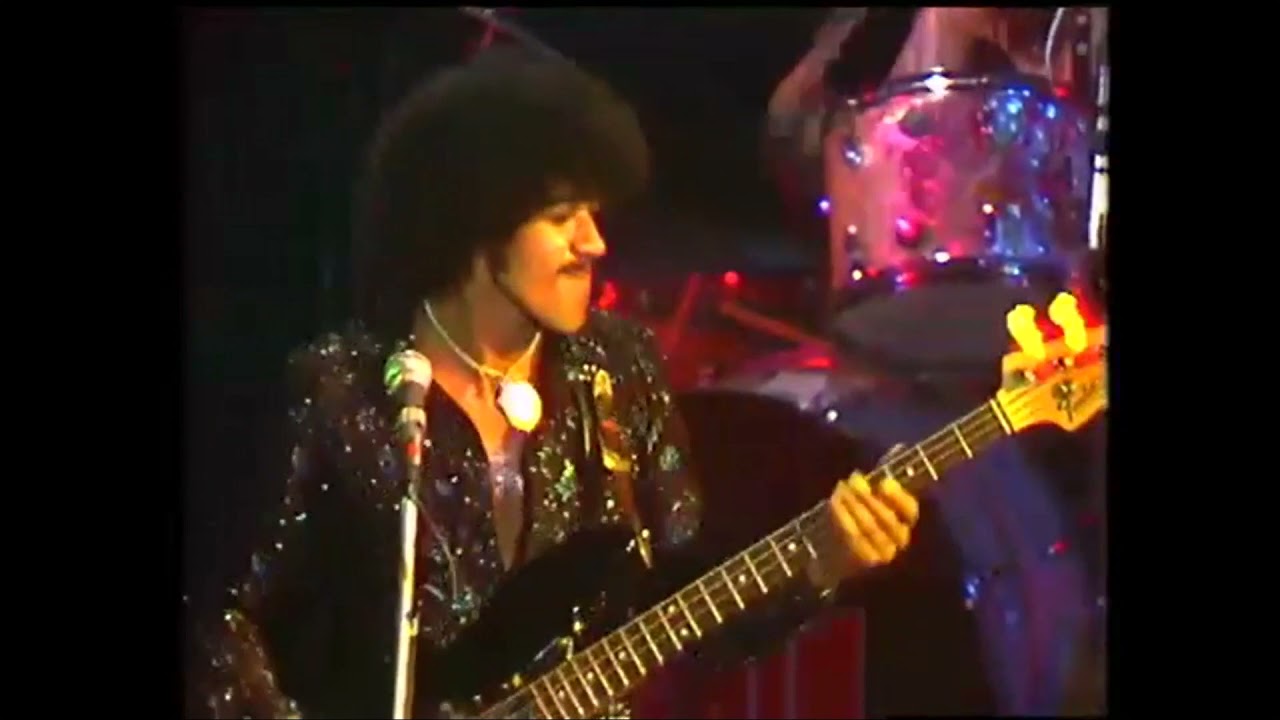
You were responsible for writing the guitar harmonies during your time with Lizzy.
Yeah. I’d write the parts, the basic melody. I’d show Scott the easiest part or the part that suited him best, then I’d put the other part on top.
Some of the band’s biggest hits would have been significantly different without you.
Don’t Believe a Word wouldn't have had that riff. The Boys are Back in Town wouldn’t have had those guitar harmonies and augmented chords. Those chords appear on other songs like Dancing in the Moonlight, and it's all my playing.
There were no harmonies; it was all just Scott’s guitar. It wasn’t, ‘We’ll leave this for Robbo.’ Nobody had bothered to fill the space
Scott said he wanted you back in the band for Bad Reputation and he’d left space for you to play solos. You made it clear you only went back on a session basis. But your input on the was far greater than anyone realized.
I went out as a session player because I’d already put wheels in motion for Wild Horses. When I got there, there was a basic structure to everything – it was all very rough but there were sparks. There were no harmonies; it was all just Scott’s guitar. It wasn’t, “We’ll leave this for Robbo.” Nobody had bothered to fill the space.
Was it more difficult to add the harmonies at a later stage like that?
Not really; I knew how to go about it. A lot of those riffs were written before. I went out with the mindset of just getting the work done. I was pretty focused on that one, and a bit pissed off about the way it was handled – the album cover and all that nonsense.

Scott and Phil were a bit taken aback that I wouldn’t party with them. I stayed in my room at the hotel. I got to the studio on time when I was asked to do something. I was trying to make a point. I played everything straight.
You stayed with the band for the Bad Reputation tour and subsequent Live and Dangerous dates, then left in July 1978. Scott told Guitar World he thought your departure came as a result of conflict with Phil.
There was no big blow-up. It might have been a build-up of little things! It just fizzled out and it was time to go back to Wild Horses. It was never arguments for argument’s sake with Phil – it was always to do with the music. He had definite ideas about how he wanted to do certain songs, and I’m similar, so we clashed.
Gary Moore replaced you for the Black Rose album. But you’d played Waiting for an Alibi and S&M live, and there’s video of you playing the title track with the band in March 1978, complete with the medley of traditional folk songs.
Yeah – it was already in place. Gary put the fast bit in at the end. I probably put the harmony to Waiting for an Alibi.
You maintained a close friendship with Phil until the end of his life. He and Gary guested with Wild Horses, and Phil and Scott had writing credits on the band's first album. So things remained amicable?
Yeah, exactly.
Fans consider your partnership with Scott to be the definitive Lizzy guitar team. What do you think the combination of you and Scott had that made it so distinctive?
My sound was a fat, clean sound – clean, but it cuts. Scott had a phaser on everything, and consequently the sound is very thin. The two sounds together is the sound of Lizzy. It was a happy accident. I think that’s what went missing when I left. The sound was smaller.
- Wild Horses’ Standing Our Ground box set is on sale now.
