


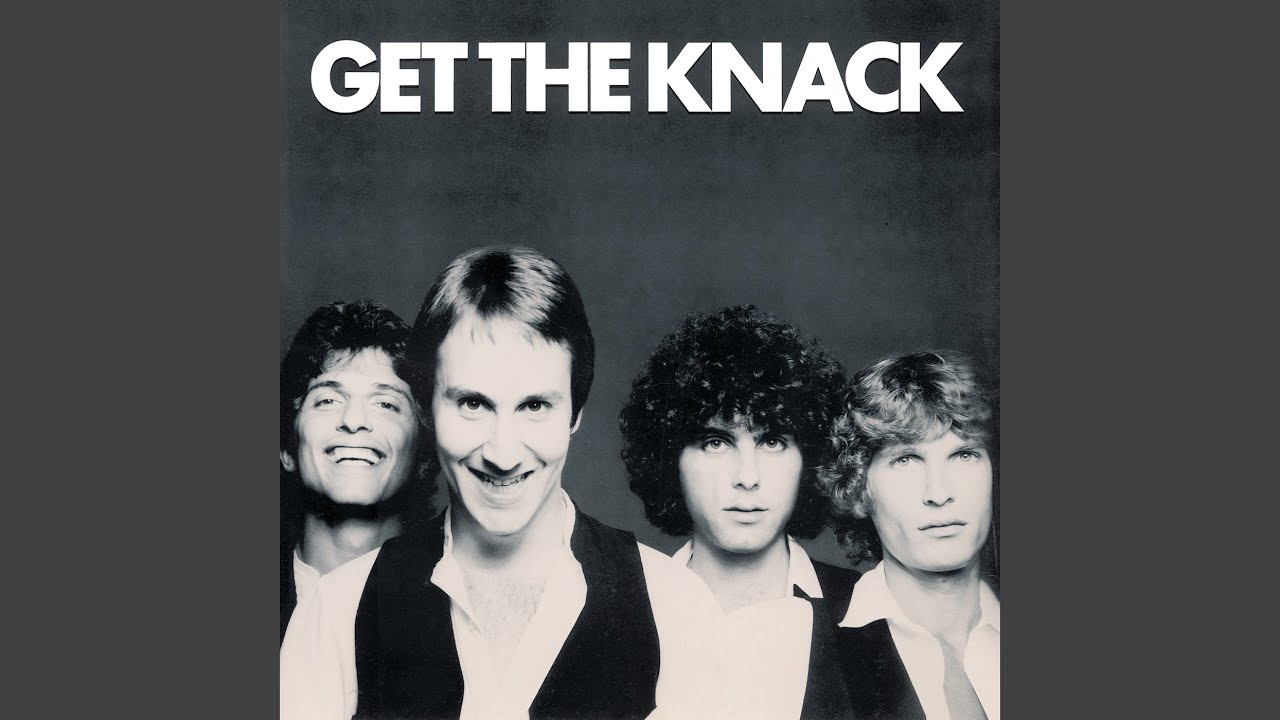
For the last six months of the 1970s, the Knack had it made. The Los Angeles-based power pop quartet consisting of singer-guitarist Doug Fieger, lead guitarist Berton Averre, bassist Prescott Niles, and drummer Bruce Gary saw their debut album, Get the Knack, blast to the top of the charts, thanks to its high-energy, irresistibly catchy lead single, My Sharona.
The speed of which it all happened took the record industry by surprise. At the time of the album’s release in June 1979, few people outside of L.A. had heard of the band; within months, Get the Knack was selling 300,000 copies a week, becoming Capitol Records’ fastest-selling debut album since 1964’s Meet the Beatles!
“We had the right song at the right time with My Sharona,” Averre says. “All over the radio, it went to Number 1 – Cincinnati, Detroit, Cleveland, Tampa, everywhere. We were getting gold records from countries around the world. I had a DJ tell me that when he put the song on for the first time, the phones lit up after 20 seconds. It was crazy.”
He laughs. “Mind you, I didn’t think we would fail, but I certainly didn’t think it would go that big. I couldn’t have dreamed it.”
If anybody could have dreamed it, it was Doug Fieger. “He had the ambition it took to make it,” Averre says. “I met Doug when we played together in a pickup band. He had already been a bandleader in Detroit, and he’d had some success. He liked the way I played and said he was looking for somebody to write songs with. Our skill sets fit perfectly; Doug was strong on lyrics, and I would come up with musical ideas. We formed a really good partnership.”
Very quickly, Averre realized Fieger had it all mapped out. “He had a vision for where he wanted to go,” he says. “I won’t say he saw us as the Beatles, but he used the Beatles as a template, like, ‘This is how good we can be.’ He was just so driven. Doug was the kind of guy who would knock down doors.”
Capitol’s brilliant and aggressive marketing campaign portrayed the Knack as New Wave updates of the Beatles (Get the Knack’s black-and-white front cover echoed Meet the Beatles!, while the album’s back cover was a not-so-subtle nod to the Beatles on The Ed Sullivan Show). It all worked like a charm… until it didn’t.
The albums’ bright and bouncy second single, Good Girls Don’t, reached a respectable Number 11 on Billboard’s Hot 100, but by the fall of 1979, critics, already at odds with the band’s overtly sexual lyrics, had grown weary of the hype, to say nothing of Fieger’s increasingly cocky, combative behavior.
We crashed and burned after that second album. It was just a snowball effect because Doug had alienated a certain number of people, and he just gave them the ammunition to shoot back at us
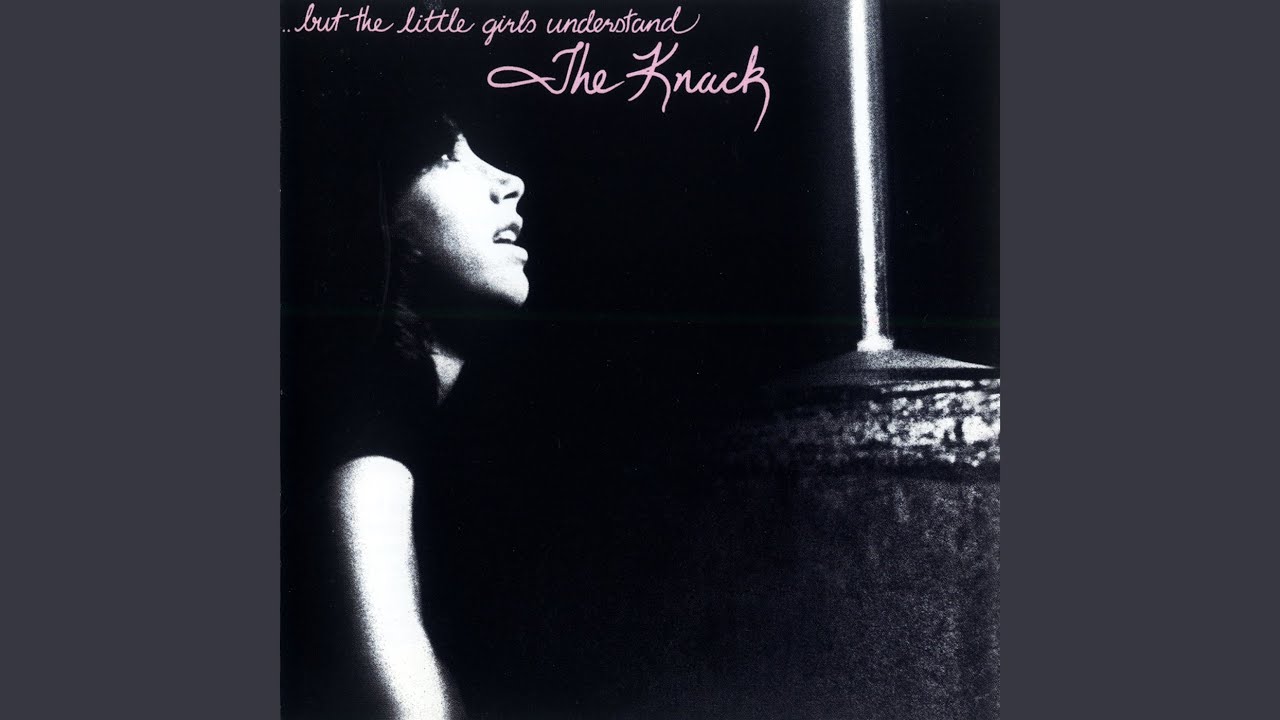
A San Francisco-based “Knuke the Knack” campaign took off nationwide, and by the time the group rush-released their second album, 1980’s …But the Little Girls Understand, the tide had already turned.
“We crashed and burned after that second album,” Averre says. “It was just a snowball effect because Doug had alienated a certain number of people, and he just gave them the ammunition to shoot back at us.”
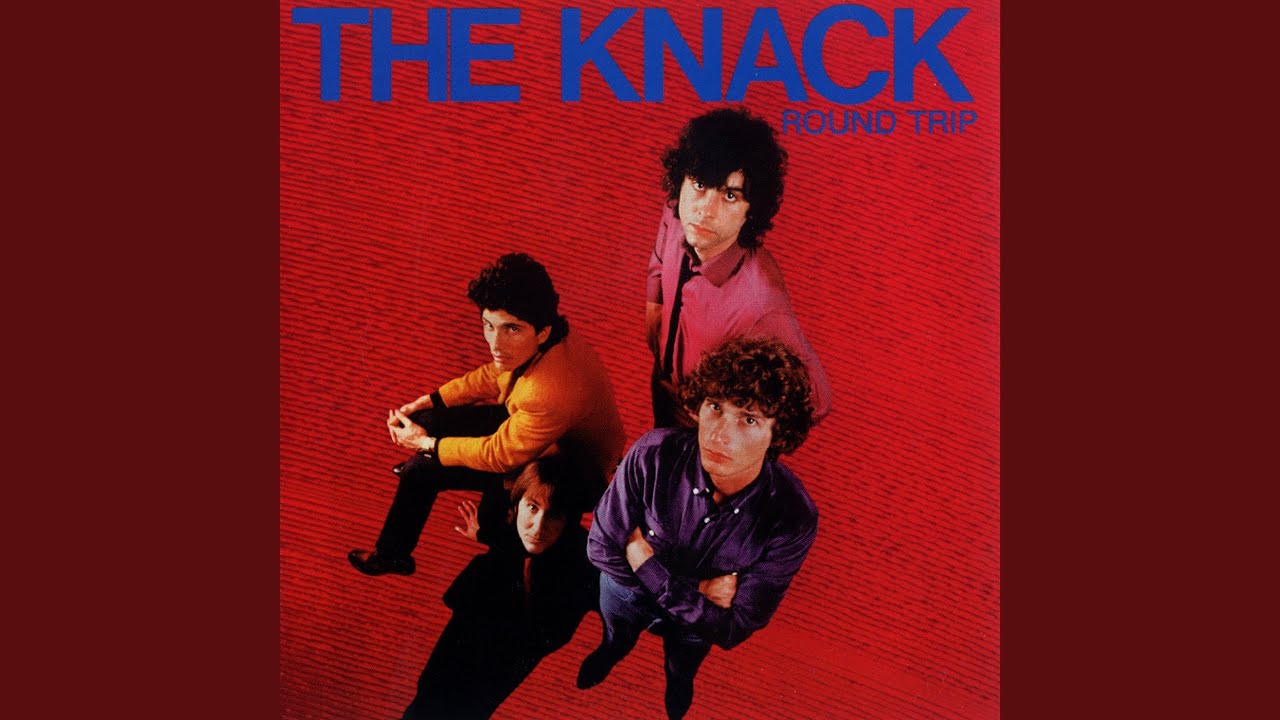
The band took over a year off, hoping that the dust had settled and that their musically rich third album, 1981’s Round Trip, would be judged on its merits. The record failed to chart, and just months after its release, the group broke up. Over the years, there were reunions and a series of albums that featured Fieger, Averre, and Niles – Bruce Gary was now an in-demand session and touring drummer – but nothing came close to matching the heyday of 1979.
Any chances of a full-fledged reunion of the original Knack ended in 2006 when Gary died of Non-Hodgkin lymphoma. Four years later, Fieger passed away after a long battle with cancer.
Today, Averre is of the mind that the Knack have finally earned something they sorely craved for so long – respect.
“People remember My Sharona, of course, but there are many fans who remember a lot of the other songs, too,” he says.
“There are these reaction videos on YouTube – the people who make them weren’t even born when My Sharona came out, and the song isn’t in their wheelhouse. On a lot of the videos they play the whole solo, and the people are freaking out, like, ‘Damn, this is good!’” He laughs. “Of course, they get my name wrong. They go, ‘It’s this Berton Avery guy.’ That’s okay.”
Knack songs always had great riffs. Who came up with them – Doug or you?
I was the riff guy. Occasionally Doug would come up with kind of a riff, a rhythmic chord progression or something like that, but I was the riff guy. I would work out the harmonies and bring in more complicated chord progressions instead of straight-ahead things. I was enamored with what we call the “Carole King chord.” It’s A over B – you play the A chord but add a B on the bass. You can hear that on Lucinda.
Riff-wise, it doesn’t get any better than My Sharona. That was yours?
Yeah. My favorite [song] at the time was Elvis Costello’s Pump It Up, that staccato start-and-stop and that pent-up energy. It really moved me. One day I picked up a guitar and started playing that octave riff. It was simple and staccato. I played the riff and the chord breaks, and I thought, “This is good.”
I brought it into rehearsal – this was really early in the band – and I started playing the riff. I told Bruce, “This isn’t like straight-time, hi-hat, snare and kick. It’s more about following the riff on the toms and snare.” I gave him that general description, and he came up with this great drum pattern.
While Bruce did that, Prescott started playing the riff with me. Doug went, “Whoa, that’s great,” and he started scat singing over it. After a while, we stopped playing and Doug said, “Let’s go home and write it.” We wrote the song the way you always write a song; we came up with the opening statement of the verse, and then it had to go somewhere.
Doug looked at me like, “Where’s a different place to go?” I went up a third and then up with a fourth, then brought it down to the root. Basically, I added suspension to chords instead of playing straight chords.
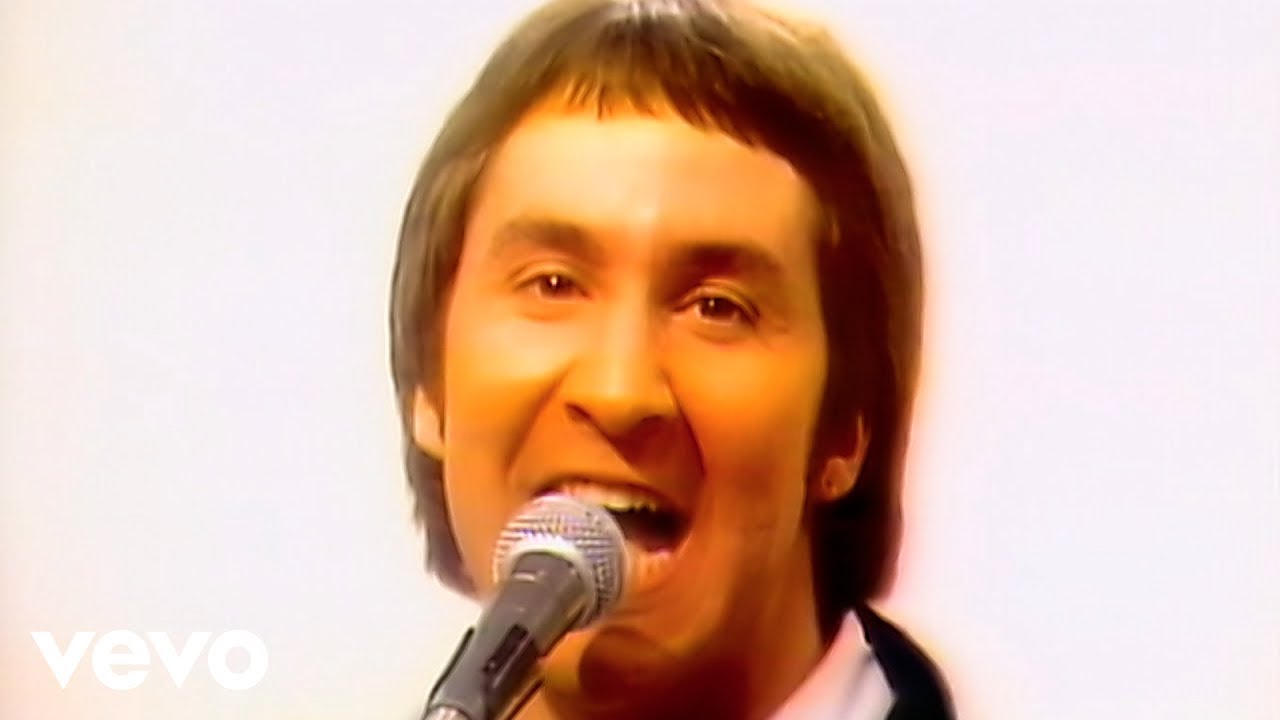
Did Doug immediately write it about the girl who wasn’t yet his girlfriend but whom he was enamored with – Sharona Alperin?
He instinctively started singing that. It came into his head, “It’s this kind of a song.” The thing is, he was singing “my Sharona” while he’s cohabitating with his girlfriend in this apartment. She was in the next room!
The thing is, he was singing “my Sharona” while he’s cohabitating with his girlfriend in this apartment. She was in the next room!
Did he say that his then-girlfriend’s name wouldn’t fit the rhythm of the song?
No, no. He just grabbed Sharona [the name], and that was the end of it. It sounded great, so we went with it.
What was it like the first time you played the song live?
The first time we played it, we put it last in the set. Huge reaction; we never got that kind of reaction before.
You guys created quite a stir pretty quickly. Celebrities like Bruce Springsteen came on stage and jammed with you.
Bruce was the first celebrity to jam with us. Ray Manzarek from the Doors played with us. So did Stephen Stills and Eddie Money. It only took a few months for that stuff to happen. It was surreal.

Did the band spark a bidding war among record labels?
It wasn’t a bidding war, but labels were interested in us. Warner was asking about us, and so was CBS – the big labels. Capitol wasn’t a mega label at the time, but they had a young A&R guy who loved the band and showed up as a fan. We related to Capitol because of that personal connection. It was also a pragmatic decision.
I don’t care how much of a young phenom band you are, if they’ve got the biggest names in the business, you are going to be, at best, their seventh or eighth consideration
With big, big labels like CBS and Warners, they’ve got a roster as long as your arm. I don’t care how much of a young phenom band you are, if they’ve got the biggest names in the business, you are going to be, at best, their seventh or eighth consideration.
Mike Chapman was already a hot producer in 1979. Did you decide to work with him on his reputation alone?
A lot of serious producers were interested in us. We had this big rehearsal room that had a stage. Roy Thomas Baker would come to see us play, and on his way out he would pass another big producer who was coming in. Mike Chapman came to see us, and what he said was music to our ears: “My idea is to get you in the studio, turn on the mics, and you play like you’re in a club.” He knew we didn’t need a lot of overdubs.
But you did overdub some parts.
We overdubbed the lead singing and the background [vocals], and there were a couple harmony guitar parts we added. Other than those things, there were damn few overdubs.
You played a Les Paul throughout, correct?
I was always a Les Paul guy. Doug played a Strat. I always liked that blend, the humbucker and the single-coil.
My Sharona has a pretty long guitar solo. Did anybody say, “Maybe we should cut that”?
There was an edit for the Top 40 stations. I still have fans who go, “I just hated that edit.” They would listen for the long solo. I get a lot of recognition for it. It’s hard to think of big hit songs that have extended solos. The only one that comes to mind is Stairway to Heaven.
I assume you had the solo plotted out when you recorded it.
We were so well rehearsed that I knew – well, I didn’t know exactly what I was going to play, but I had a template. I had basically thought, “It goes from here to this part to this kind of thing.” I knew there would be a big build and I’d do the triplet figures. Bruce was so amazing. If you listen, he’s doing it with me.
There was a distinct “new Beatles” angle to the way the band was marketed. Did that make you uncomfortable?
Only when people started to gripe about it and make a big thing out of it. If anything, it was all very tongue in cheek. If there was a statement at all, it was, “Can you imagine how stupid a band would be to try to act like they’re the Beatles?”
From the beginning, there were detractors – for some reason, some people didn’t like us. The critic from the Los Angeles Times would find the most pejorative way of saying we were good. He described our set as “playing with military precision…”
But the crowds ate it up.
Crowds don’t care about critics.
Get the Knack was a tough act to follow.
There weren’t that many new songs written for the second album. Doug was just grabbing up everything we’d already written that didn’t make the first album. We should have taken time off to write, but Doug thought we had to rush a second album out. He came up with Baby Talks Dirty, and I did my best to play along with it and come up with parts. In my opinion, the material just wasn’t there.
Doug’s hubris started to turn people against the band. Did anybody in the band take him aside and ask him to tone it down?
Doug wasn’t good with criticism, and at one point he actually said, “We’re going to take everything they hate about us and do it twice as much. Jam it down their throats and make ’em like it.” That’s not a good approach. He wasn’t a person who would hear reason if he believed something was right. It was a control thing. If you challenged him, you’d end up dragged along with the tide…
The third album, Round Trip, was really solid. By then, though, the pendulum had swung the other way.
Some of our best songs are on that album. It’s the record we should have made after Get the Knack. There’s a truism in this business – what your fans like when they’re 17 they might not like when they’re 19. They feel differently, they mature.
Our second record should have had Africa on it or any of the great songs on Round Trip. My favorite Doug song is Sweet Dreams, this creepy little thing. I ended up playing marimba on it.
The band broke up soon after, and a decade later you reformed for Serious Fun. Did you think you had a chance to recapture the glory of ’79?
Doug got in touch with me and basically did as close to a mea culpa as he could. I thought, “Okay, if he means it, yeah.” We got the band together again, but worldly success we did not have after that first album.
There were a few more Knack albums until Doug fell ill. Had he made peace with things in his final months?
He had a brave, dignified passing.
That’s good to hear. It seems as if he was the type of guy who couldn’t always enjoy his success.
Oh, in our heyday, he enjoyed the hell out of it. But at the end… [he pauses] I’m sorry, I’m getting choked up. The last time I saw him, he said to me, “Berty, we did a great thing.”
- This article first appeared in Guitar World. Subscribe and save.

