


In the ’90s, guitarist and songwriter Greg Camp developed the loungy alt-surf guitar style that manifested hit songs for Smash Mouth including Walkin’ on the Sun, Then the Morning Comes and All Star.
“Some of my favorite guitar players are Dick Dale, East Bay Ray, Andrés Segovia and Angus and Malcom Young,” Camp says. “I don’t really have any favorite guitarists from the ’90s. I wasn’t following those trends.
“I listened to a lot of Burt Bacharach, bachelor pad records from the ’60s, and old reggae. I incorporated those things into my chord choices and rhythms, probably by default.”
Smash Mouth’s debut, 1997’s Fush Yu Mang, showed the group’s mettle. But it was 1999’s Astro Lounge that skyrocketed them to fame.
“I just wanted to outdo the first album,” Camp says. “And our producer Eric Valentine and I were having a blast in the studio. We all knew we were making something we loved. When it did well, that was an added bonus.”
The band’s star waned after that as for Camp left and returned several times before quitting for the final time in 2019. Vocalist Steve Harwell died in 2023. But when Camp looks back, the focus is on the good time.
“It was the A Team when we were firing on all cylinders. Eric Valentine realized the sound, and we were all the best of pals. We won!”
What are your earliest memories of music in your life?
It began with drums, actually – not real drums, but pots and pans and wooden spoons in the kitchen. One of my uncles had a drum kit and gave me a floor tom he wasn’t using. Then my dad bought me a snare drum and some hi-hats. I never had a kick drum, so I kind of stood up, playing the kick parts with my right hand on the tom and the hi hat and snare with my left.
When did the guitar enter the picture?
We moved in with my stepfather, who worked at home, so drums were out of the question. My mother bought me a classical nylon-string guitar to try to replace them. It was a slow transition between drums and guitar.
When I heard Eddie Van Halen for the first time, I knew what I wanted to do. I also realized that I could take my guitar with me anywhere – school, vacation, to the park, so it was going to be easier than drums.

How did you meet Steve Harwell, and what led to the formation of Smash Mouth?
I played in a cover band a few nights a week in the bar scene in San Jose, California. Steve and a bunch of his friends, including our original drummer, Kevin Coleman, were regulars at one of the bars in Campbell, California.
He told me they were starting a band called Smash Mouth and they needed a guitarist/songwriter. Steve was a rapper at the time, in a group called FOS. I didn’t really know what was going to happen or what it would sound like, but I was very much into hip-hop at the time, so I gave it a shot. Turned out he wanted it to be an alternative rock band, so we went in that direction.
I agreed to join as long as I could bring my friend Paul De Lisle with us. Paul and I were both into punk rock and ’60s and ’70s pop; that’s how the band developed its style.
What was the vision for Smash Mouth, and how did the guitar fit?
The vision was to get a record deal and get on the radio. It kind of went the other way – we got on the radio and then got a record deal! We met a young Carson Daly, who worked at the local radio station KOME.

He had the night shift, and he’d sneak us on in the middle of the night, but nobody really heard it. Then he moved to the five o’clock spot and he had a thing called Carson’s Pick of the Day. The perfect spot for a young, upcoming local band to get some airplay.
Then he moved to KROQ in LA and took our music with him. When he played us on his show, the phones started ringing, and one of those callers was Jimmy Iovine. We were signed to Interscope Records shortly after.
What gear were you working with?
When we turned the album in the label weren’t quite feeling it, so I wrote All Star and Then the Morning Comes
I was working in my bedroom with a Tascam 8-track cassette recorder. I used a drum machine and a turntable setup to lift hits and breakbeats. My guitar setup was a 1964 Mosrite Ventures II guitar, a Marshall JCM900 with a 4x12 cab, and a Fender Showman Reverb with a 2x12 cab. And I had a bass and an SM58 microphone.
How did you come up with Walkin’ on the Sun, the hit that seemed to define Smash Mouth’s template for success?
I wrote it for the band I was in before Smash Mouth, called Lackadaddy. The band decided not to do that song, so it lived on a cassette in a shoebox until a year and a half later, when I met Steve and Kevin.

I gave the shoebox of tapes to Kevin to go through. We’d already started recording what was to become our first album when Walkin’ on the Sun was added to the repertoire.
Eric Valentine and I enjoyed a lot of music from the ’60s and decided that that was the direction for the song. We gave it a real tribal surf beat and ran my guitar through a broken Fuzz Face pedal.
It was the first single, but it wasn’t representative of the rest of the album, so we ran into a little bit of trouble there. Some fans wanted the raw, in-your-face pop punk, but most wanted more of the groovy ’60s vibe of Walkin’ on the Sun.
Smash Mouth’s second record, Astro Lounge, was a massive success. How did All Star and Then the Morning Comes come about?
It was in response to the record label “not hearing a single.” When we turned the album in they weren’t quite feeling it, so I wrote two more songs, All Star and Then the Morning Comes, which became the first and second singles. Later, All Star was placed in Shrek, which catapulted it even further.
I started playing a Fender Jazzmaster and added Vox AC30s to my live setup. I found a late ’60s Fender Reverb tank as well as a Roland Space Echo, and started to really nerd out on my tone.
How did life change once All Star and Then the Morning Comes became hits?
Those songs helped us to tour comfortably and pay the bills, for sure. I was recognized as a legitimate songwriter, which helped me later in my career. I also started to produce more seriously after sitting next to Eric for thousands of hours, watching and learning.
Smash Mouth did what it was supposed to do in its time. Those were very exciting years
What led you to leave Smash Mouth, come back, and eventually leave again?
The band was making some musical changes that I wasn’t on board with. I felt we had a brand that I largely helped create, and I could no longer protect it. Steve was moving in a direction that I wasn’t interested in, and he didn’t want to stay on the course we were on.
There were some other issues within the organization, but I won’t bore you. They tried to find the right fit guitarist-wise but they couldn’t. I went back for a short time a few times, but it was time to move on – and at the time, it was mutual. We’ve remained friends over the years.
Did you keep in touch with Steve Harwell before he passed? He seemed to be struggling heavily at the end.
Someone told me, “If you were close to Steve, then you most certainly had a falling out with him – probably more than once.” Steve had a huge personality and a huge heart; he took up quite a bit of space in your life if you knew him well.
We all loved him very much. He was the funniest person I’ll ever know. He was also very difficult to be friends with at times. But when you’re in a relationship with someone socially as well as a business partner, and you’re also creative together, it’s not always gonna run smoothly.
Did you get to talk with him before he passed?
Unfortunately, we had one of our falling outs, and we hadn’t spoken in a while, and then he was gone.
If you could go back, would you change anything?
Smash Mouth did what it was supposed to do in its time, so I don’t think I would change anything. Those were very exciting years, and we did things on our own terms. I got to play music with a few of my best friends.

Paul DeLisle is the best bass player I’ve ever played with. Michael Urbano is an incredible drummer. Kevin Coleman helped to get us to where we were in 1997. Michael Klooster is an amazing keyboardist. We had Mark Cervantes on percussion and Steve steering the boat.
As for Steve – he had a strong will to do what he wanted, and nobody was ever successful in slowing him down in any way.
You’ve embarked on a solo career and also formed The Defiant. What’s the latest on those projects?
I wouldn’t say I’m a country songwriter, but I bring my own brand of writing into the mix
I have a couple of local bands I play with in Nashville, where I’ve lived since 2021. One is a surf-ska band called Defektor, which is sort of odd for this town. The other band is more rocking. Both are original bands playing songs I’ve written over the years. Our drummer, Pete Parada from The Offspring, also writes songs.
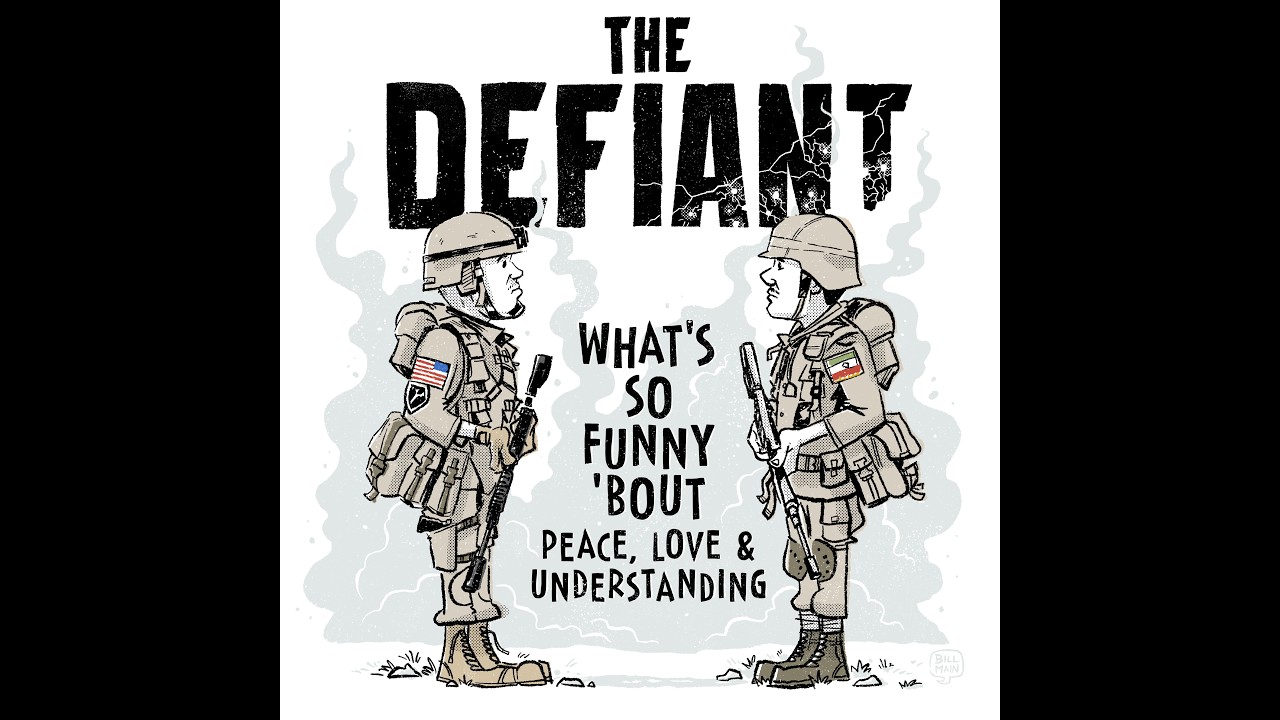
Pete and I are also in the punk rock supergroup The Defiant, with Dicky Barrett from the Mighty Mighty Bosstones, Joey LaRocca from The Briggs and Johnny Rioux from Street Dogs. We’re just finishing up our second album. Everyone lives in a different state, so record-making is kind of like passing a hot potato.
We pass ideas around, and everyone puts their parts down at their respective home studios. I assemble everything, do the production, and a basic mix until everyone’s happy. Then we send it to the amazing TJ Rivera, who works with Tim Armstrong from Rancid, among others, for the real mix.
How would you describe the evolution of your playing?
Since moving to Nashville, I’ve gotten more into the roots of American music. I listen to bluegrass on Wednesday nights at the American Legion, and I go to open mics and listen to young singer/songwriters. I’ve been writing with country artists and songwriters for the last couple of years.
I wouldn’t say I’m a country songwriter, but I bring my own brand of writing into the mix. I play guitar much more often these days – I’ve even added mandolin and banjo to my collection.
Looking back, why do you think Smash Mouth is so beloved, yet experienced so much hate at the same time?
Smash Mouth represents a time in people’s memories, like a lot of music from the past. It’s a snapshot of their younger days when things were good and simple. We had fun in the sun as America’s party band. “Hate” is a big word – if you’re talking about haters, that’s a whole psychological study. And that’s above my pay grade!

