




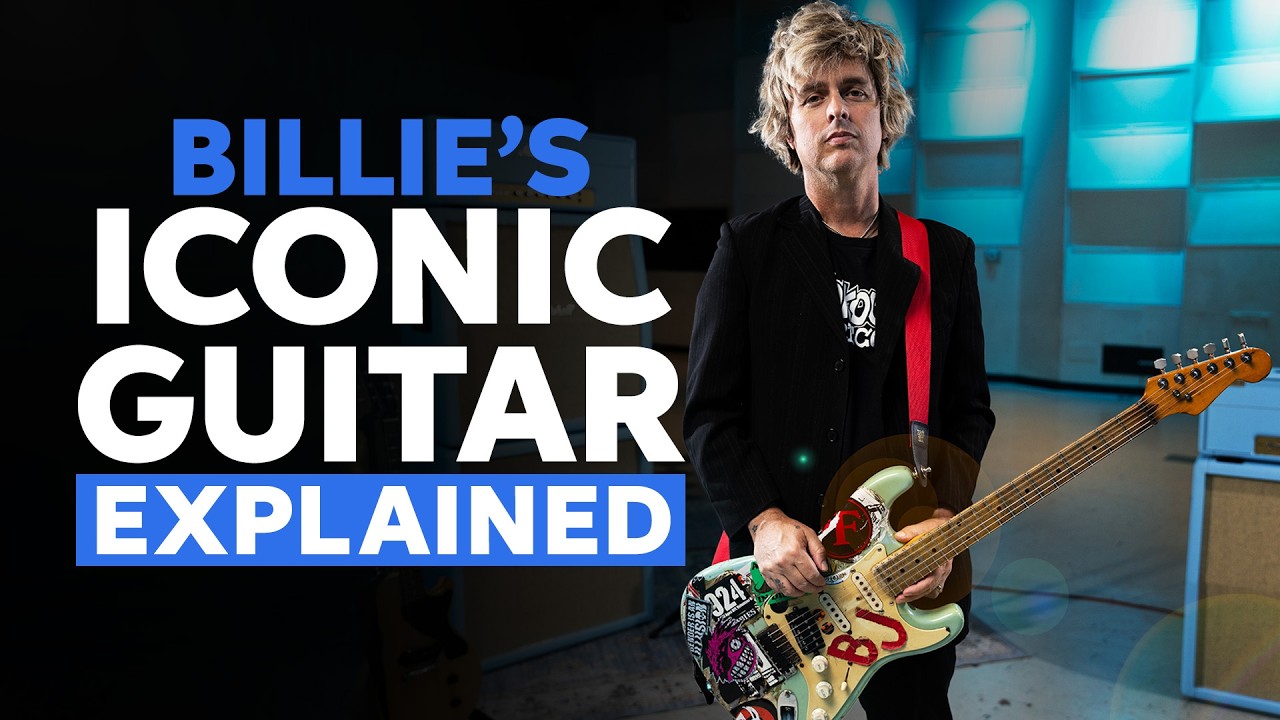
Billie Joe Armstrong’s heavily modified Fernandes S-style, “Blue,” is as synonymous with Green Day as timeless hits like Basket Case, American Idiot, or Boulevard of Broken Dreams.
“Blue” goes way back to pre-fame Armstrong. Specifically, it was his gateway into the world of guitars… and all that it’s brought with it.
“When we're playing some of the older songs, as soon as I bring it out, people identify immediately what's about to come,” Armstrong reminisces in an interview with Sweetwater.
“I've had this guitar [since] I was about 12 years old. My mom bought it for me and bought it off my guitar teacher, George Cole, back in 1985 or something like that.”
Armstrong explains that he initially wanted a Stratocaster but ended up with a cheap, light blue Fernandes copy that would become the stuff of legend.
“It was a sound that I always needed to hold on to,” he says matter-of-factly. The guitar is personalized to a tee. It even has a photo of a 13-year-old Armstrong attached to the back of the body, doing his “best Mick Mars impression.”
More customization comes by way of an assortment of stickers… and photos. “I think there's a couple of ex-girlfriends' pictures inside of here and stuff like that. So [it’s] the ultimate punk rock guitar.”
“Blue” was also a core part of Green Day’s 1994 major label debut, Dookie. “I was really adamant about playing Blue because I just felt like it was such a part of my sound for my whole life,” he says, an ethos he stuck to for the first “four-and-a-half” albums.
“I think I could have played a different guitar, but there was something about this that just had, at that time, that deep distortion that sort of created something that's unique. Because I think a lot of people have a distortion sound, but nothing that kind of comes across as like something instantly identifiable.
“And I think that that's what my ‘Blue’ guitar and the [modified Marshall 100w] Plexis really come across.”
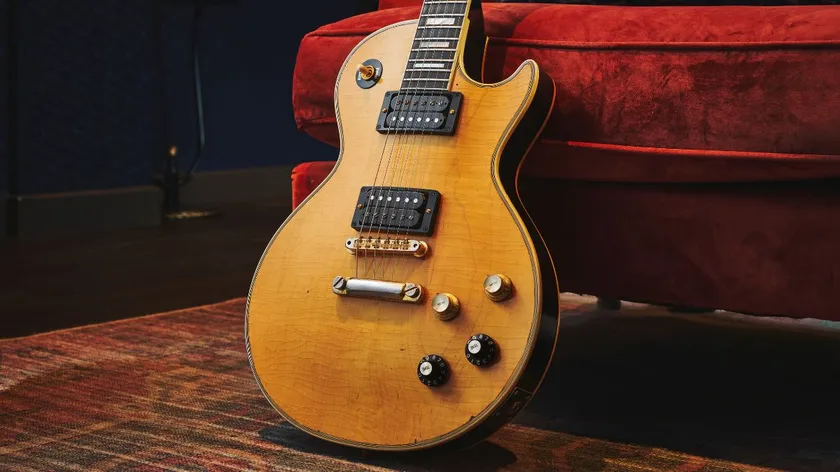
And while Armstrong eventually moved on to more expensive weapons – namely, Gibson Les Pauls and Les Paul Juniors – by the time the band recorded 1997’s Nimrod, “Blue” is still close to Armstrong's heart, even to this day.
“It's weird to have a bond with a wooden instrument. It reminds me of my past, and it's something that I look at, and I can remember where I was the first Green Day gig that we had ever played, and I was playing ‘Blue’ until the last stadium show.”
The Green Day frontman even goes so far as to refer to “Blue” as “like a ghost that never leaves.”
“I'm a big guitar collector nerd. I have a lot of guitars. Maybe subconsciously, like I try to run away from ‘Blue’, but ‘Blue’ just happens to show up everywhere I go.”

