


Bruce Watson is standing in what used to be Kenny’s Music in Dunfermline, one of a chain of music shops across Scotland until it closed in October last year.
Today, the shop floor is a hive of industry again. There are guitars everywhere – too many for one guitar shop – and we’re adding to the chaos, with the guitars of Big Country founding member Watson being set up in the corner for Guitarist’s photoshoot.
“I’ve been coming here practically every month since, fuckin’ hell, 1973, I think,” says Bruce. “Apart from when I’ve been on the road.”
Watson has a studio downstairs in the same building. “It’s part of my life,” he says. “And we thought we were going to lose it.” The current activity is down to new owners who bought the stock after Kenny’s went under, and are reopening soon as Mo’s Music. “And that’s why they’ve got four shops’-worth of gear in here,” says Bruce. “The internet – it’s killing guitar shops everywhere.”
The building used to be studios, rehearsal rooms and a venue. Joe Cocker once played here. Stuart Adamson’s first band, the Skids, rehearsed in the corner that now houses walls of Fenders, Squiers and Jacksons.
Before Stuart asked him to join what would become Big Country, Bruce’s band Eurosect recorded demos there, including a song called Forbidden Whispers. It was that song that made Stuart Adamson think that he and Bruce could work together. It became Angle Park, the first song they wrote together.
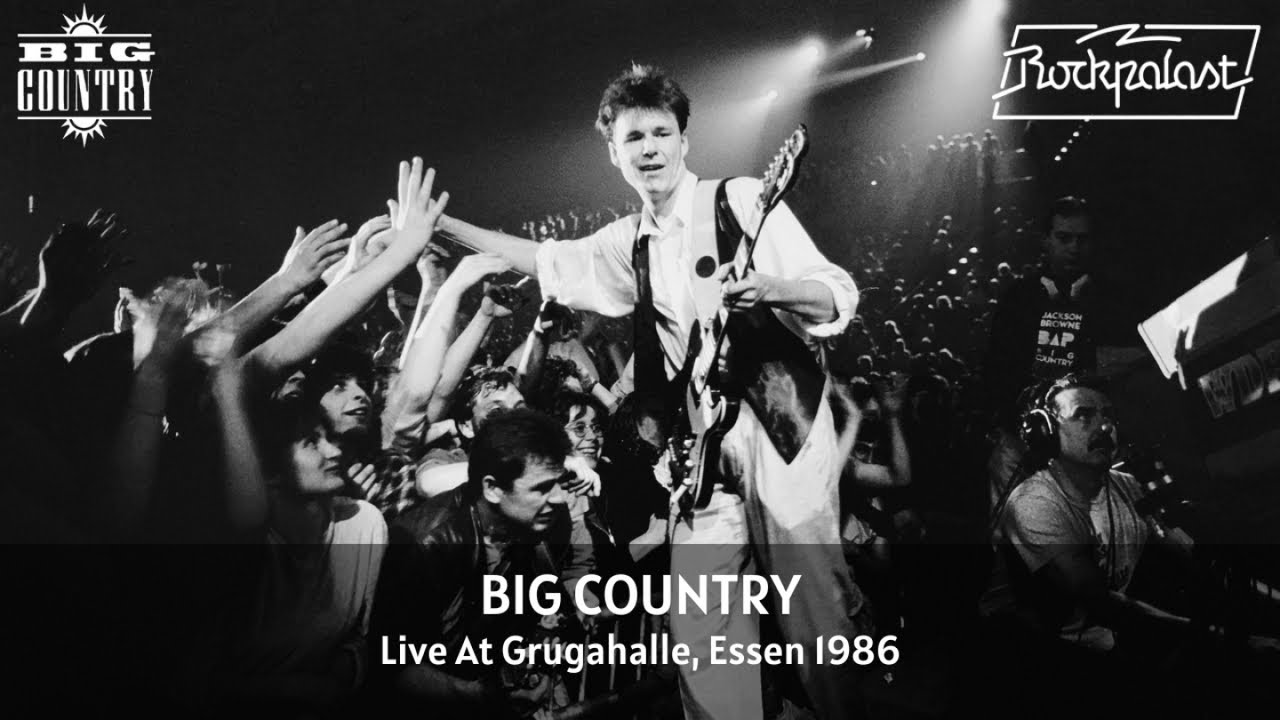
Stuart Adamson died by suicide 25 years ago this year, after succumbing to the alcoholism and demons that plagued him at various points in his life.
For the first time, Bruce and his former bandmates – bassist Tony Butler and drummer Mark Brzezicki – as well as Adamson’s family, and former bandmates in his first band the Skids, have opened up about the life of the man John Peel once called “Scotland’s answer to Jimi Hendrix”. There’s an authorised biography, Stay Alive, a new Stuart Adamson website, and a forthcoming documentary.
Bruce Watson has been celebrating the music he and Adamson made together since 2007, in a reactivated Big Country that initially included all the surviving members, with the late Mike Peters, singer of the Alarm, on vocals and Watson’s son Jamie on guitar. When Tony Butler left in 2012 and Mike Peters soon followed, the band continued with a revolving cast, with Bruce and Brzezicki at its core.
It was when the drummer left last year that Watson decided it was time to make a change: the band – now fronted by Tommie Paxton of Big Country tribute band Restless Natives – has been rebranded as Big Country Redux. “Stuart’s words, music and presence were at the heart of Big Country,” said Bruce. “Without him, it can never truly be what it once was.”
But the mission remains the same: to do justice to the music and memory of Stuart Adamson.
Starting Out

When he was 12 years old, Bruce Watson went with his parents to see That’ll Be The Day, the rock ’n’ roll coming-of-age movie starring David Essex. At the end of the film, Essex’s character is transfixed by a red guitar in a shop window, a sign of what he has to do next: buy a guitar and join a band. It had the same impact on the young Bruce. “The movie ends on that and it was like, ‘Fuckin’ hell! I want one of them!’”
You could get these Carlsbro Stingray amps, but you never saw Marshalls – you just couldnae get them, so it was always Yamahas and HH amps
The guitarist for Scottish rockers Nazareth, Manny Charlton, was another inspiration. Charlton lived a couple of doors up from Bruce in Dunfermline and Bruce would see him pull up in a white BMW, dressed in platform shoes and a fur jacket, with a woman on his arm, and think, “I want some of that!”
He got a part-time job and bought a guitar and an amp from Woolworths: “It was called a Top 20 guitar, with an amplifier called Edition 30,” says Bruce. He was listening to Be Bop Deluxe, the Sensational Alex Harvey Band and Led Zeppelin, but they seemed impossible to play on guitar. And then punk came along.
“Punk was easy to play,” he says. “Not so much the rhythm and blues of Dr Feelgood or Eddie and the Hot Rods, but when I listened to The Clash, I thought, ‘I can play that! I’m never going to be able to play like [Be Bop Deluxe’s] Bill Nelson or Zal [Cleminson, guitarist for SAHB], but this I can do.’”
When he turned 16, he got a job at the dockyard and started earning some money. He bought a Yamaha SG-85 from a guy he knew from the docks. The first new guitar he bought hung in the window of Sandy Muir’s Record shop in town – a red Yamaha SG-500. It was his David Essex red-guitar-in-the-window moment.
“It was a real guitar,” he says. “You couldn’t get Strats or Gibsons anywhere at that time, even in the late ’70s. Up here, apart from maybe [legendary Glasgow guitar shop] McCormack’s, you never saw Les Pauls. You could get these Carlsbro Stingray amps, but you never saw Marshalls – you just couldnae get them, so it was always Yamahas and HH amps.” He pronounces this last brand as “Itch and Itch”.
“I think it was the same in Manchester,” he says. “I was talking to [Cult guitarist] Billy Duffy and they had Itch and Itches, too. The Buzzcocks were using Itch and Itches and the Gibson Marauder, and that’s what Stuart used with the Skids on their first album.”

Bruce formed a band with his pal Raymond Davidson. Raymond’s sister Sandra was Stuart Adamson’s then-girlfriend and later wife, so he got to see Adamson’s rise with the Skids up close.
He even went to an early rehearsal. “Stuart had a Gibson Marauder,” says Bruce, “and an Itch and Itch amp that was sitting on its side, with what looked like a homemade speaker cabinet. It wasnae plugged in – just to sit the amp on. It was the first time I’d seen a band play live. They were so fucking loud.”
When Stuart realised that Bruce was a guitarist, he offered him his guitar. “But I couldn’t play it. It was uncontrollable, it was so loud. Just feedback. He had the distortion all cranked up and the valve sound in the amp – it was like heavy metal. I’m trying to control it and it’s like, ‘WHEEEEEEE!’ I’m like, ‘How do you make it STOAP?!’”
The Skids’ fourth single, In To The Valley, catapulted the band into the Top 10, and for the next few years Adamson was on a hectic schedule of tours and recording. In 1979 alone, the Skids released two full-length albums. By the time of the band’s third and most accomplished album, The Absolute Game, Adamson was beginning to plan his exit.
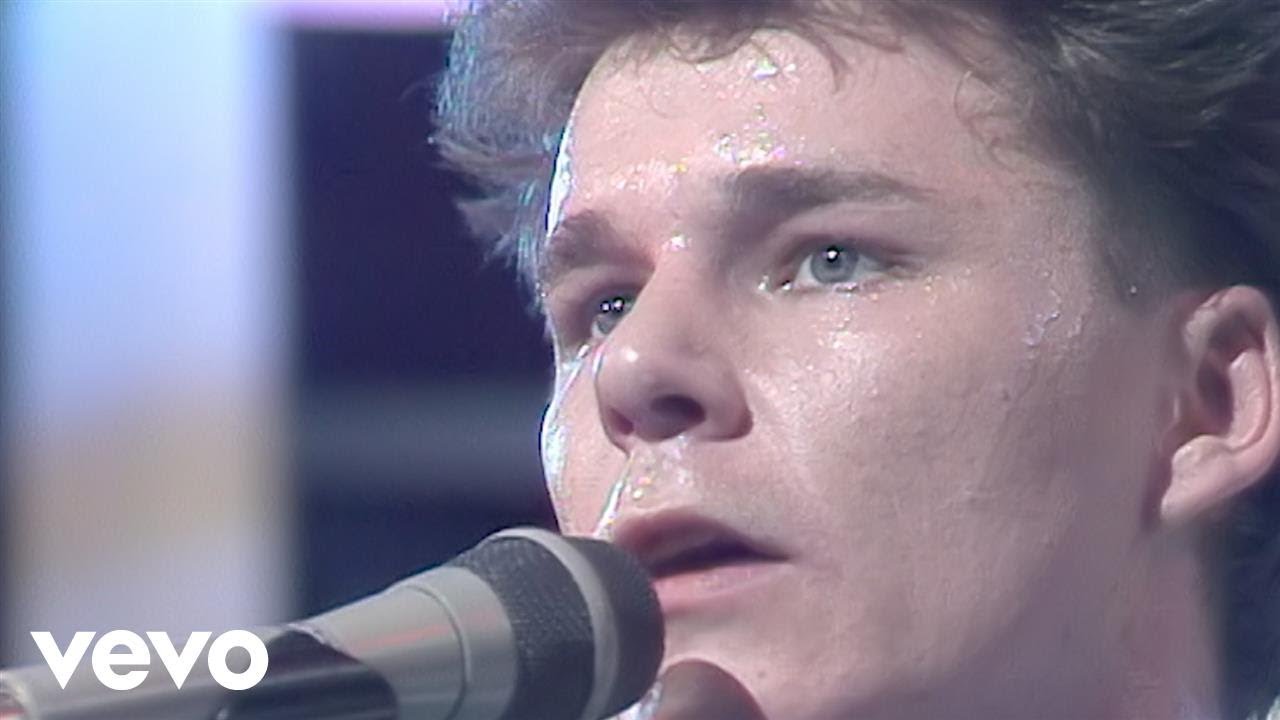
Bruce had given Stuart the demo of Forbidden Whispers, and Stuart was impressed. “It would be great to do something in the future,” he told him. “I quite fancy a two-guitar kindae thing.”
Bruce was flattered, but he didn’t take it seriously. A year later, Adamson turned up at his house: he’d left the Skids and wanted to know if Bruce fancied forming a band. “There was no master plan apart from the fact that we didn’t want to do the Thin Lizzy/Status Quo thing,” says Bruce. “We didn’t want to do that blues bendy kind of thing.”
Thin Lizzy’s twin harmony guitars and Phil Lynott’s Celtic influence seemed like an obvious precursor. “If you were to pick a song, it would be Whiskey In The Jar,” says Bruce.
“That one would fit alongside Fields Of Fire or something. But it’s more of a sound thing – the reverb on the guitars and a melody. There’s a lot of melody in what [Thin Lizzy guitarist] Eric Bell’s doing, but there’s a bit of string bending and we didnae do that.”
They made a rule: “Instead of bending, we’ll just play the note. We’ll slide up to the note, play that note and we’ll no’ bend up tae it, ’cos automatically you go into blues when you do that.”
The punk-rock guitar players – Mick Jones, Johnny Thunders, Steve Jones – had actually been pretty traditionalist. There was always a guitar solo, string bending, a love of Keith Richards-style rock ’n’ roll.
“We didnae want to do that,” says Bruce. They were anti-solo. “Guitar solos are meant to be almost free-form – you wouldnae play the same thing twice – and we wanted to keep everything exactly the same, so that when you played it live, it would be the same as how you recorded it. There was none of this, ‘I’ll just do a solo and busk it…’
“Sound-wise, we didn’t do a clean sound and a dirty sound, either. Both of our sounds were quite similar because we were both using similar amps. I had a Carlsbro at the time and Stuart had the pitch transposer that gives you all the different harmonies.”
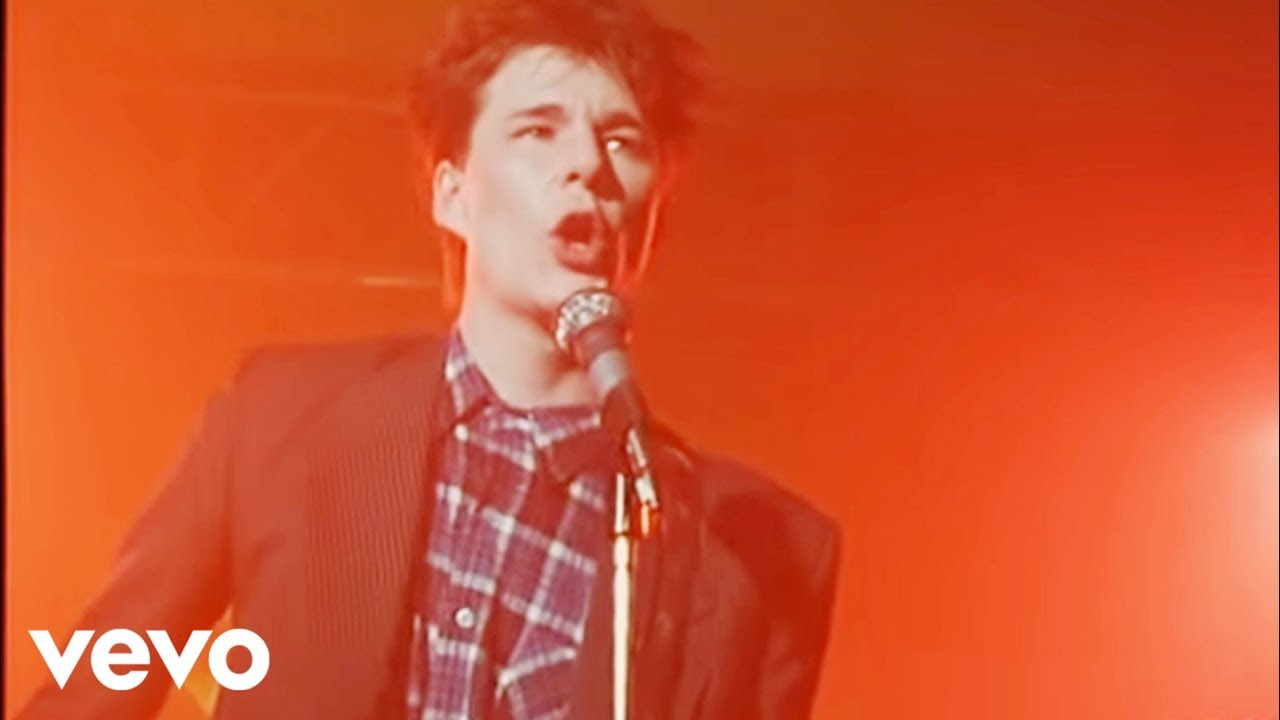
Adamson used an MXR M-129 Analogue Pitch Transposer. Intended as a rack-mounted studio unit, it became one of the key elements of what became known as Big Country’s ‘bagpipe guitar sound’.
Producers John Leckie and Mick Glossop remember Adamson experimenting with it at various points with the Skids. “He had this blue rack-mounted thing, which gave it the chorus,” says Leckie. “The bagpipe sound came from that harmoniser.”
“It was absolutely the Big Country sound,” says Glossop. “You could do octaves with it as well as slightly detune. He was really into it.”
“He had a pedal built so that you could use the presets live,” says Bruce, who still has one of the units today. “I was more into the echo thing, like Dave Gilmour and The Edge. So I was using more of the echo thing and he was using the harmoniser.”

The bagpipe sound came more from how they played: Stuart had used drone strings in his time with the Skids, leaving a lower string open and unfretted but hitting it consistently so that it rings out.
As Bruce points out, Jimmy Page was famous for using it in Led Zeppelin, but it’s also a feature of bagpipe playing. Bagpipes have at least one pipe that is not played and sounds one consistent note throughout, with melodies played over the top.
Another element was the EBow. Be Bop Deluxe’s Bill Nelson had been a huge influence on Stuart’s playing, and had produced the Skids. During one of the sessions, he’d given Stuart an EBow, a hand-held effects unit that worked on the guitar like an electronic bow.
You held it with your picking hand over the strings of an electric guitar and it reacted with the pickups, creating a field of magnetic energy and causing the strings to vibrate. With no picking involved, the notes sounded like they were being bowed.
Big Country Lives On

All of these things combined created the Big Country guitar sound. It was rock music, but not the rock music of Led Zep, AC/DC or the Stones. It was modern, with guitar tones and effects that you’d find on records by U2 and New Order, but also harmonised guitar parts that evoked Thin Lizzy and Wishbone Ash, each song packed with cool licks and counter melodies and inventive rhythm playing.
Their debut album, The Crossing, went platinum on its release in 1983, and the band was catapulted into the kind of fame and gruelling schedule that Adamson was not prepared for. He struggled for the rest of the 20th century to reconcile his desire to live the life of an ordinary family man with the demands of the music business.
25 years after his death, the music he created with Bruce Watson still inspires passion. In 2024, readers of The Scotsman newspaper voted The Crossing the greatest Scottish album of all time, and Bruce’s band play to sold-out audiences across the UK, with people singing along to every word. The sound they created – with those Yamahas and those ‘Itch and Itches’ – resonates still.
- Stay Alive: The Life and Death of Stuart Adamson is out now via New Modern.
- This article first appeared in Guitarist. Subscribe and save.

