


Billy Corgan doesn’t often get a chance to talk guitar tone. But capturing that elusive sound in his head has driven him throughout his career. He’s spent his life in pursuit of it. “I don’t know if I ever have found my sound,” he says. “That’s the funny part. I’m always chasing something.”
The Smashing Pumpkins leader has never suffered fools and never been afraid to speak his mind. Accordingly, we’ve heard plenty about the band’s ’90s heyday and the interpersonal dramas that ensued. When I mention that I sent off an audition for the band, Corgan laughs. “Oh, wow. You might have dodged a bullet there!”
His quest for tonal refinement is as much a part of the Pumpkins story as the combative studio sessions and era-defining songwriting. It was Corgan’s discovery of the op amp Big Muff that propelled Siamese Dream to new high-gain planes. The explosive riffs of Mellon Collie and the Infinite Sadness were shaped by his tireless preamp and power amp matching, tube swapping, Lace Sensor pickup switching.
And he hasn’t stopped – not just to satisfy his own desires, but also to be part of the changing face of guitars in modern rock.
“The midrange became the focus for guitar music in the 21st century,” he says. “I grew up listening to Hetfield and the scooped tone, and I love that sound. But listen to Metallica’s 2025 guitar sound. The scoop is gone. I don’t love a lot of midrange on guitar, but I’ve had to adjust my ear to make it happen.”
Which brings us to the Supergrace, his pedal amp with British veterans Laney. The two-channel 60W amp in a stompbox was born from his desire to revamp the company’s ubiquitous Supergroup for the 21st century. He suggested they link up with Brian Carstens, builder of Corgan’s signature Grace head, and possessor of “a savant-level understanding of gain and power.”
The resultant Supergrace delivers precision-engineered high-gain sounds alongside woodier vintage tones, essentially bottling Corgan’s live tone in one pedal. He was so confident in the sound that its first road test was in front of 60,000 people in a headline-grabbing guest spot with My Chemical Romance.
“With My Chem, they’re all playing modelers, and they sound great. Having a full rig was complicated. I think that extols the virtue of the pedal.”
This could be just the beginning of a signature relationship with Laney. There’s talk of full-blown tube head collaborations with Carstens down the line. It’s a passion point for the guitarist, who hails the legacy of the family-run company.
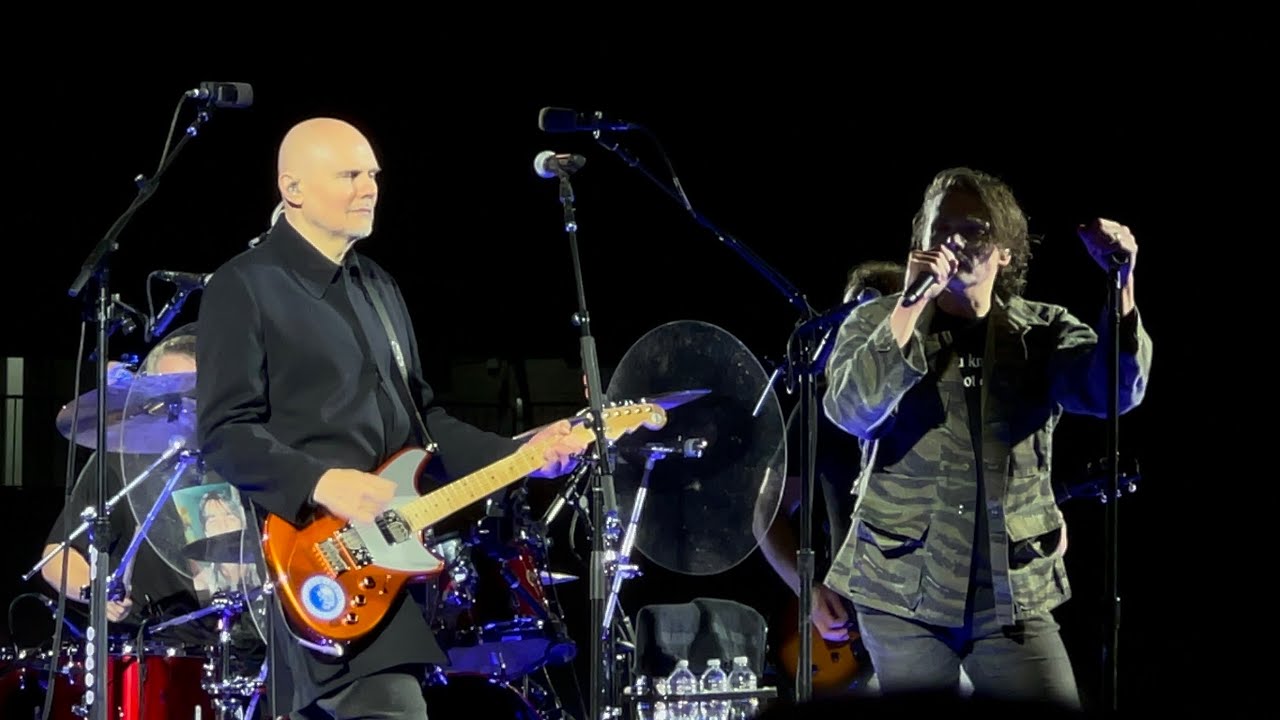
“As someone who grew up listening to and being so inspired by this amp, and the man who played it, Tony Iommi, is there anything I can do out of loyalty to help them?”
Testament to his commitment to the brand, Corgan is very giving with his time. We discuss the changing role of tone in rock music, his memories of Ozzy Osbourne’s final show, and why he’s the most excited to make a guitar record in decades.
Like your Reverend and Fender signature guitars, the Supergrace is reasonably priced. Why is making gear affordable to guitar players important to you?
Pretty simple: the guitar that changed my life. I walked into a Guitar Center one day and off the wall I bought an Eric Clapton model ’57 reissue Strat with Lace Sensor pickups. It was affordable enough for me as a touring musician, and that became the main guitar for Siamese and Mellon Collie, and launched 1,000 ships of people chasing that sound.
[Editor’s note: The Lace Sensor pickups on that guitar, which became known as the Bat Strat, were not stock on ’57 reissues of the day. It may have been pre-modded in store. As Corgan recalls, Guitar Center was using Clapton, who used Lace Sensors at the time, to promote the model.]

I didn’t go out and buy some $4,500 boutique guitar. I bought a production-model guitar, and it became super-valuable in my life. So every time I work with a guitar or amp manufacturer, I always say the same thing: I don’t want this to be out of the price range of anybody.
And in that spirit, the Reverends I play on stage are all production models. I don’t have a special one only for Billy – you know, special neck, special pickup – nothing. They are literally off-the-wall Reverends.
You’ve been meticulous about your tone over the years, and it shows. Can you remember the moment you felt you’d found your sound?
If you’re going to play a lead in 2026, what are you trying to say? No-one’s going to care that you can play good
The first revelatory moment was when Jimmy Chamberlin sold me what became known as the Gish Strat, the one that was stolen and later returned. And it wasn’t until I played a Strat through a Marshall that I thought, “Okay, I’m in the neighborhood.” That was the first time I thought, “The way I play, expressed through this instrument and this amp, is close to what I’m chasing – what I want to feel like when I play.”
But as soon as I got there, because I was using a JCM800, there was not enough gain. And that started this whole other thing that led to multiple gain stages and jacking the signal in through the low input and KT88 tubes, and this cabinet and this wiring, and anything to just get more gain, including using shorter cabling.
How important is tone when it comes to guitar playing?
The most important thing with any guitar player is how they attack the guitar, physically. Tony Iommi’s attack vector on a guitar is far different than, say, Eddie Van Halen’s or Brian May’s, but that’s what makes them them. Only they play like that. You can imitate, but you’re never going to replicate.
And then tone: even Eddie went from that “brown sound,” that Marshall Plexi. When I was in 5150 I asked him about it, and there in the corner was the amp. There was the amp I spent thousands of hours in my bedroom trying to replicate – not realizing I’m not Eddie Van Halen! It’s never going to work.
But even he had to update his sound. And every time he would do a new amp collab, it got more modern in terms of gain. I was recently watching a YouTube clip of when Van Halen last toured Japan. I saw some fan was complaining about the sound, saying it’s not what it used to be.
And I thought, “Yes, but I don’t think you understand that Ed was under the same pressure we all were, which is, ‘I can play my old shit, but it sounds old.’

You get put in this weird spot where somebody might sound more exciting with tone, even though you’re a better guitar player. And I think that’s always been the case. Clapton used line drivers. Ritchie Blackmore used line drivers. Tony did. They had to brighten up those dark British amps.
Last time I saw the Pumpkins, I was struck by the fact you were using more modulation on your guitar leads. Does that play into your tonal evolution?
Well, I like the way things animate against each other. I can’t say I love it. I just don’t have a better solution to get that movement behind the notes, especially for lead playing. I don’t play that many leads live anymore, so if I’m only going to play two or three leads live, I’ve got to make my point fairly quickly.
I’m 58 years old, and the kineticism of a lead is what I’m interested in. The notes are less important to me. And that might sound strange, but that’s just the way I feel.
In essence, if you’re going to play a lead in an alternative rock band in 2026, what are you trying to say? No-one’s going to care that you can play good, because there are 50 10-year-olds playing Eruption on YouTube.
There’s nothing actually that impressive about somebody being able to play the guitar at a decently high level anymore. So I think it’s the expressive quality that makes it interesting. I’m more interested in creating a feeling than showing off.
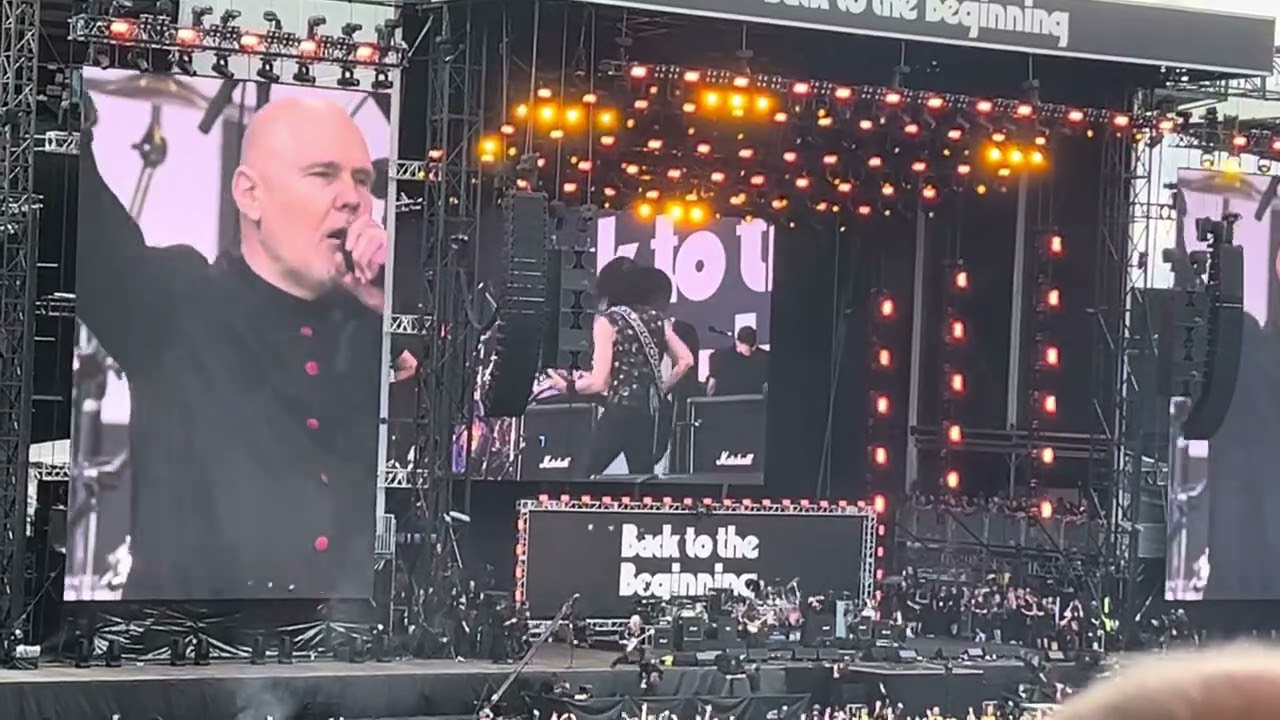
We’re talking about Laney, founded in Birmingham, where Ozzy Osbourne’s farewell show took place. What did it mean to you to perform at that show?
It was honestly one of the greatest experiences I’ve had. The music, and being there in support of the band and Ozzy, meant a lot to me as a fan and as somebody who knows the Osbournes a bit personally.
What if Clapton had just been a guitar influencer and hadn’t been in John Mayall and Cream and Derek and the Dominos?
I think it’ll go down as one of the great days in rock history. Just to be part of that lineup was insane, but it was that incredible moment where so many people pulled together in a common cause to celebrate the band and Oz, and everybody was so graceful about it, the vibe, the performances, the generosity.
I noticed when you got up with your fellow Chicago “metal Yardbirds”, Adam Jones and Tom Morello, you didn’t play guitar. Why not?
[Laughs] Well, originally I was going to play guitar, and then Tom wrote me and said, “Are you cool with us having K.K. up?” And I was like, “I’m getting out of the way on that one!”
I’m a huge K.K. Downing fan. In fact, I own his old number one amp and his pedalboard from the ’70s and ’80s. He put them up for auction. I saw him play that amp and that pedalboard and that V at a racetrack here in Chicago in 1982 when they were on the Screaming for Vengeance tour.

I’m not sure K.K. knows who I am at this point. I tried to talk to him about the gear, and he seemed a bit bewildered, like, “Who’s the fan that wandered in off the street?” But to stand there in Birmingham and play, not only with that great lineup on stage, but also with K.K.
It was deafening on stage. I do prize my hearing, but when he was soloing during Snowblind, I went out of my way to stand in front of that cabinet to just listen to pure K.K. with the wah and the V. And it was like an out-of-body experience.
We’ve spoken about keeping up with guitar trends. When Kiki Wong joined Smashing Pumpkins, you said you were already familiar with her on Instagram. Are there any other social media guitarists you’re a fan of?
I burned out on it, I think. And I don’t mean this as criticism – there are some unbelievable guitar players on social media. Where I get a little lost is I don’t see where a lot of that great playing is converting into popular music, whether it’s in popular metal bands or popular alternative rock bands.
Maybe I’m wrong. Maybe there are guitar players that I wouldn’t know that got super-popular on Instagram and now they’re in the biggest metal band in Finland or something.

I guess I’m old-school. I want to see those people on stage. I want to see them making the Metallica songs of tomorrow, or Megadeth or Slayer or something. I want to see that crowd of guitar players convert those incredible abilities into the popular culture.
What if Clapton had just been a guitar influencer and hadn’t been in John Mayall and Cream and Derek and the Dominos? The reason everybody knows Eric Clapton’s name is not because he’s a great guitar player. It’s because he made some of the most popular music of the 20th century – and, oh, by the way, it has incredible guitar.
The last Smashing Pumpkins record, Aghori Mhori Mei, had a great reception. Do you see yourself continuing down a heavier path on your next release?
I’m working on music, and I’m very focused on guitar music. It’s the most motivated I have been to make a guitar record in 20-25 years. Part of that is shoegaze music has really come back in the culture, which we’re commonly associated with.
There came a point in the mid-2000s where it seemed like guitar was totally out of vogue. I’m not a Luddite – if people are not interested in guitar, that’s cool by me, and I’ll try to come at it a different way. But guitar is the thing I understand the most, and where I’ve had the most influence.

So I’m excited to once more dive into the sea of pedals and amps and guitars and see if I can come up with something new to say. And I think, in a good way, the bar is very high right now.
There’s a lot of very interesting guitar bands coming on the scene, and they’re saying lots of new things. Some are familiar – I think, “Well, you’ve definitely listened to me and Swervedriver,” but that’s cool, because we stole from everybody.
We made Melon Collie thinking, ‘That’s the end of this. There’s no chapter beyond this’
It’s just that young people are listening to guitar music, and the young guitar players of today have something new to say. It inspires me to get back on the horse one more time.
What will you change about your playing and your sounds to say something new with the instrument?
That’s a really good question, because I just did the operatic interpretation of Mellon Collie in Chicago at the Lyric Opera. And a lot of the parts that the orchestra was playing were the guitar parts, and they translated quite beautifully. In the band – and I’m not making this up – we used to call it orchestral arranging.
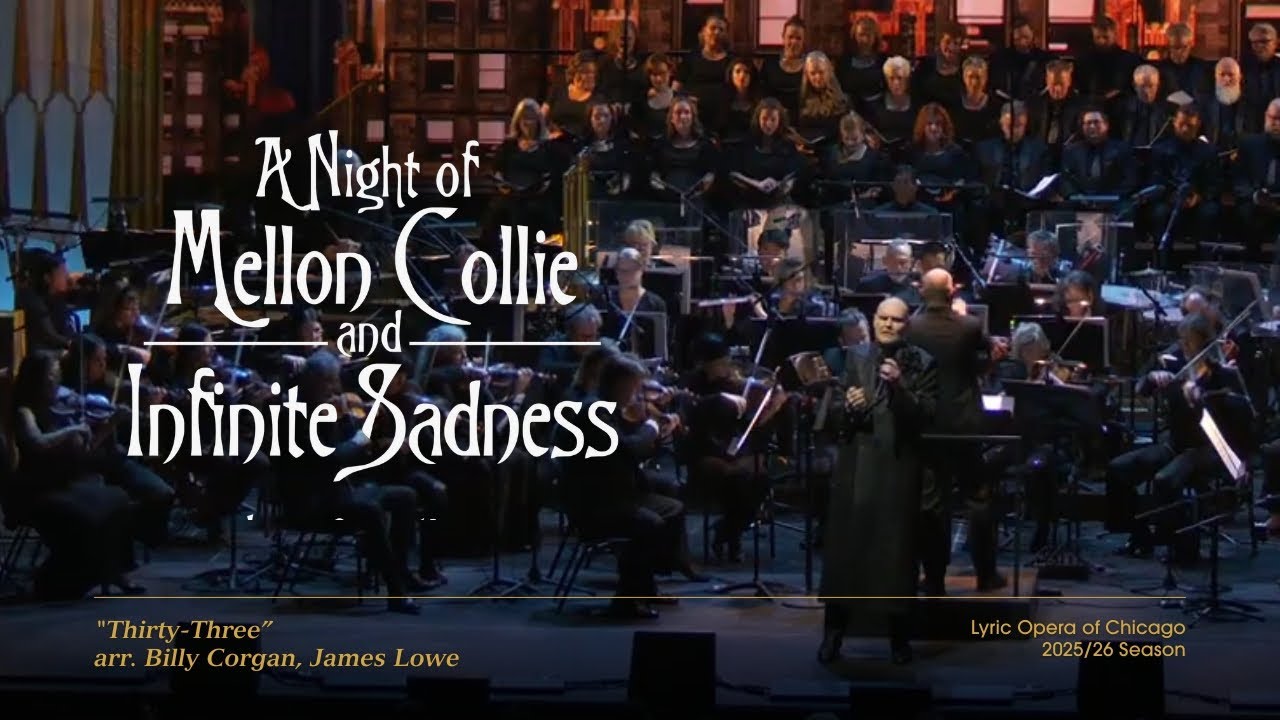
We would look at the wall of guitars as if, “This is the oboe and this is the violin.” So, I’m inspired to go back and once more operatically arrange the way I hear the music, and then use new technology and new approaches to guitar to achieve the polyphony that I would be interested in.
Mellon Collie was the peak of a lot of years of experimentation. But we also made that album thinking, “OK, that’s the end of this. There’s no chapter beyond this. We’ve taken this as far as we can go.” Hence, 46 guitars on Thru the Eyes of Ruby, Jelly Belly – all those crazy overdubs.
So I would like to come at it now down the road, because if Mellon Collie was the summit, Machina [/The Machines of God] was the deconstruction of that approach.
I haven’t really done that Siamese guitar stacking since Oceania in 2012. But I did it knowing I wasn’t that into it. It was like, “I’m getting all this pressure to do this again.” So rather than run away from it or shut my ears, I’ll approach it from the standpoint of, “I’m not sure I have anything new to say, but I’ll try.”

How has your relationship with the guitar changed from the ’90s to now?
I’ve always been fairly rewarded for my guitar playing. But it was not the main thrust of my thing. And I think this is the reason a lot of the guitar magazines went off me in the 2000s – because I was being critical of the guitar. I wasn’t doing like, “The guitar is great and I love my guitar.” I was actually saying something more artistic, which is: “Look, the guitar needs to innovate.”
People now understand what I did, what I’ve actually contributed, and I don’t need to play any game about it
The guitar needs to be moved forward in terms of technical and mechanical innovation. If you look at the major companies, the Fenders and the Gibsons, they’re basically running museums half the time; their main focus is not innovation. This is why I’m in a relationship with Reverend, because the focus is innovation.
I used to write guitar advice columns for Guitar World. I was totally in that community, and then they just booted me out, because I wasn’t saying the right kind of political things anymore. And what’s even weirder is because of that, those 15-20 years where I wasn’t part of “guitar world,” a lot of young guitar players don’t even know I’m the one playing the guitar! They think it’s James [Iha], because they assume I’m the singer and James is the guitar player.

So even just getting back into the conversation about guitars is a relatively recent thing, and obviously part of it is me making guitar music again. But also I think it’s just I’ve always come at it from a different perspective.
By the time I was 17/18, I could play lightning-fast. And for whatever reason, I just hit the wall. I focused more on innovation and bringing something new to the table, and getting out of the gunslinger wars, and realizing I was never going to be better than Steve Vai or Zakk Wylde – and that was OK.
I feel like I’ve come full circle, where people now understand what I did, what I’ve actually contributed, and I don’t need to play any game about it. I can talk about what I love: the guitar. And I think you can see my passion for the instrument.
- The Laney Supergrace Loudpedal is out now. Head to Laney for more info.

