“I like to plug straight into the amp,” says Parlor Greens guitarist Jimmy James. “When I first started playing, I didn’t have effects, so I got used to hearing my guitar right into the amp. It makes my ears feel happy. It’s like I can make the music flow from my soul into my fingers.”
James’ clean, unadulterated tones, along with his astute, deceptively simple playing style – economical, soulful lead lines and tight, drop-dead funk rhythms – are indispensable elements of Parlor Greens.
Drawing inspiration from the Meters and Booker T. and the MGs, the trio, which also includes organist Adam Scone and drummer Tim Carman, made waves with their 2024 debut, In Green We Dream, an irresistible set of psychedelic funk-soul instrumentals highlighted by the stirring original West Memphis and a delightfully inventive take on George Harrison’s My Sweet Lord.
The group came together from various outfits; the Seattle-based James plays with the funk-soul band True Loves (and you might remember him from the Delvon Lamarr Organ Trio), Scone is known for his work with Miami’s Scone Cash Players and the Sugarman 3, while Carman is the former drummer for Boston blues stars GA-20 – but with Parlor Greens they’re a musical dream team.
They don’t burden their songs with unnecessary bouts of instrumental excess. They jam, but they don’t noodle. This is an intuitive, sophisticated bunch that knows when to leave space between the notes. With Scone’s righteous melodies leading the way, James and Carman provide groove-filled fuel, and the music takes flight.
“For me, it all comes from James Jamerson, the great Motown bass legend,” James says. “I watched the movie Standing in the Shadows of Motown, and Jamerson’s son quoted his father as saying, ‘If you don’t feel it, don’t play it.’ That stuck with me. I think that’s how the band approaches our music. When we first got together, we played what we felt, and if we didn’t feel it, we didn’t play it. We didn’t even have to discuss it.”
![Parlor Greens - Jolene [LIVE AT PORTAGE LOUNGE] - YouTube](https://img.youtube.com/vi/mGz4fHCdWWw/maxresdefault.jpg)
Touring tightened them to a dangerous degree, and they came off the road ready to track their new album with gusto. Produced by their Colemine label owner, Terry Cole, Emeralds sees Parlor Greens working their way through 11 impeccable jams that take no time at all to get going. Lion’s Mane is slinky and sensual, while Letter to Brother Ben is a fun and frisky shuffle update.
James gets into a frenzied, single-string situation on the upbeat dance gem Eat Your Dreams, and cool as can be, he tucks a snaky new riff inside their perky cover of Dolly Parton’s Jolene.
“On the first record, we were getting to know one another,” James says. “Now we have all this experience together, so we made this record with a different perspective. We took more chances – ‘Let’s try this’ or ‘Let’s try that.’ We got experimental, but we always had the song in mind. When you can get to that place where things are loose but tight, it’s a beautiful thing. It’s like we can shoot out into the stratosphere and go to the cosmos.”

One doesn’t have to think too hard to hear a lot of Steve Cropper in your playing.
Oh, I'm a huge Steve Cropper fan, of course – rest in peace. I actually got to talk to him on a podcast. I didn't get to meet him in person, but we talked on the podcast. I was really excited. I started playing some of his riffs to him and told him how much Soul Man influenced our song West Memphis.
He giggled and was very tickled by that. He was such a big influence on me – not only the stuff he did with Booker T., but also Walking the Dog with Rufus Thomas or Who’s Making Love with Johnny Taylor.
I was really grateful to talk to him because I consider him to be the last of that bunch. I didn’t get a chance to talk to Jimmy Johnson from Muscle Shoals. I didn’t get a chance to talk to Joe Messina or Eddie Willis from the Funk Brothers. They all passed before I could talk to them, but I did speak with Steve Cropper, and I’ll forever hold that dear.
Was he encouraging about what you were doing?
He was very encouraging. I sat there listening to what he had to say, because you know, he was in the thick of it. He was like, “You keep doing what you’re doing.” I said, “Thank you, Mr. Cropper. I'll take that and I'll savor that.”
The band is already distinguishing itself for its creative way with covers. First came My Sweet Lord, and now you’re having your way with Jolene. Have you tried any covers that you couldn’t get anywhere with?
No, that hasn't happened yet. Yeah, we got into the country roots, which I don’t get to play very often. It was great to do Jolene by Miss Dolly Parton. The whole thing was crazy. We put it out before the album, and I said, “I wonder if anybody will recognize this.” When we were doing it, it started out with a gospel intro, and then we hit that groove and I was like, ‘Wait, what song is this?’
When the melody hit, I was going, ‘Whoa, whoa, this is Jolene!’ The band was like, “It is Jolene!” We didn’t know it could be done like that. But like I said, I wanted to visit the country roots and do a groove take on it. My mother listened to country records when I was growing up – Loretta Lynn, Patsy Cline.
![Parlor Greens [from left] Keyboardist Adam Scone, guitarist Jimmy James, and drummer Tim Carman](https://cdn.mos.cms.futurecdn.net/gqxFaH4DnfXjemaWrjnkuA-1200-80.jpg.webp)
Are you still playing your ’64 Silvertone?
Yep. I had a Harmony Rocket awhile back. I’m not really big on hollow bodies, but the Rockets have this raw, jagged sound that I liked. You always want to find something that fits who you are on the inside. I was a teenager and something happened with that guitar – something went haywire – and I could never find a guitar that sounded like it.
I called around to vintage guitar shops, and shouted out to Mike Hitt and Chris Lomba at Georgetown Music. They had this guitar sitting there that they’d worked on. They said, “We’ve got a Silvertone here. Maybe you can check it out.”
I picked it up and fell in love with it instantly. It was like I was 15 years old all over again. It had that thing, you know? I was like, “Okay, this is meant to be.” I didn’t know if I could afford it, but then I said to myself, “You only live once.”
You made the right call.
Yeah, and the funny thing is, that guitar was on its way to the dump. They rescued it.
How about your amps? Are you still using a Sixties Ampeg Gemini II G-15?
Only for the recording sessions. The Gemini belongs to Terry Cole and his studio. I’d like to take it on the road, but you can’t find any replacements. For my own amps, I have a Peavey Delta Blues 115 and a Fender Hot Rod Deluxe. I take the Hot Rod on the road; the Delta stays in the studio.
![Parlor Greens - Eat Your Greens [LIVE AT PORTAGE LOUNGE] - YouTube](https://img.youtube.com/vi/pEKKnfLzYB0/maxresdefault.jpg)
And, of course, no pedals.
I don’t use pedals. I mean, sometimes if there's a certain amp I have to use and I need to boost the signal, I might put something in front of it. Most of the time, though, everything is straight in.

How long did it take to record the new album?
We didn’t take long, maybe two or three days. We didn’t really have distractions; it was cold and snowy outside. There was nothing much to do other than keep warm, so we just decided to stay in the studio. We probably could have taken longer to work on things, but we kept it live and fresh. There were no overdubs.
Was every song born out of a jam?
Not everything. There’s one song called Parlor Change that started when we were in Austin. The melody came about because we saw a barbecue joint with this sign: “You don’t need no teeth to eat my beef.” [Ed. note: The establishment is Sam’s Bar-B-Que]
Somehow a melody rang out. We were in the car singing, and I sang it into my phone. We recorded the melody and it became a groove.
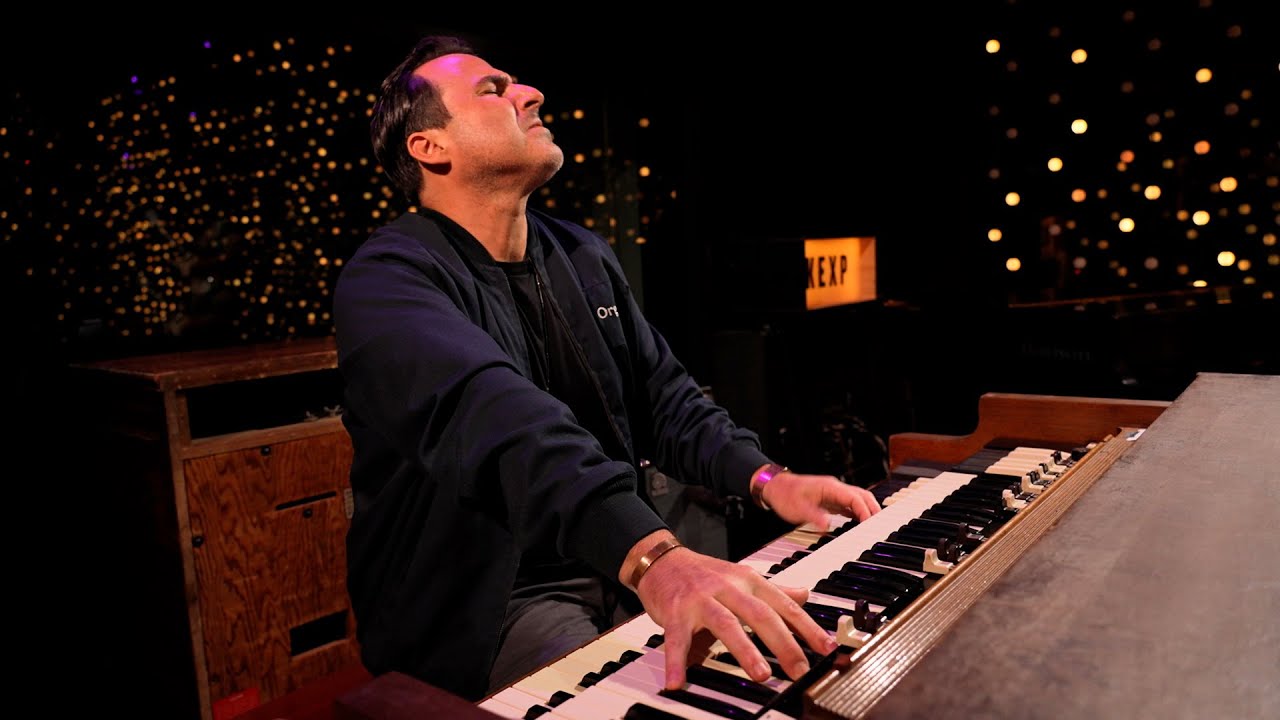
Let’s talk about a few more songs on the new record. Your guitar takes somewhat of a backseat to the organ on Eat Your Greens, but there’s a section where it jumps out and you do a wicked single-string workout. It’s not really a solo; it’s more like a percussive thing.
Honestly, I never even think about what I’m playing. I just play what I hear. Whatever I’m doing there was just the first thing I did, and it felt right at the moment. It’s like this flow happens.
Everything is spontaneous. I don't ever work it out. It is just what I feel at the moment for the content of the song
You get a little abstract in Lion’s Mane. There’s this passage where you play these way-out bends that border on the atonal. I’m assuming that’s spontaneous?
Everything is spontaneous. I don't ever work it out. It is just what I feel at the moment for the content of the song. I hear things as I hear them.
Your playing on Letter to Brother Ben is so energetic. You sound like you really enjoy playing a shuffle.
Oh yeah! Tim is playing a mean shuffle on that one. I don't get to play shuffles very often, so I had a lot of fun playing that groove. It was a total dream.
You dedicated the album closer, Queen of My Heart, to your late mother. It’s such a gorgeous ballad.
Thank you. That’s actually my mother’s voice you hear at the end of the track.
![Parlor Greens - Queen Of My Heart [OFFICIAL AUDIO] - YouTube](https://img.youtube.com/vi/HvD0r5SYS-Q/maxresdefault.jpg)
That’s right. It’s so touching.
That was one of the hardest songs I ever wrote. I brought my guitar to her grave, and I just started playing. I recorded what I played and kept it in my back pocket. I didn’t think we’d ever record it. Then one night I had a dream about my mother, and she kind of gave me a wink like, “Go for it.”
We went into the studio, learned the song in about 15 minutes and recorded it in two takes. The first time was a bit of a false start, but the second take flowed smoothly. I couldn’t listen to it once we’d laid it down. I had to go outside and let it all out.
I’m sure. What a powerful moment – writing a song at your mother’s grave.
Absolutely. I brought my little battery powered amp, and it just flowed. [Pauses] It’s still the hardest song to listen to on this record.
I have to ask – are you going to play it live?
I don’t know. I don’t know if I could make it through. If we played it, I’d be spent. It’s the most emotional tune I’ve ever had to do. Without my mother, I wouldn't be who I am. I miss her every day. It's going on four years in April, and it’s still hard. It’s good to hear her voice, and I want the world to hear it. It’s beautiful.
- Emeralds is out now via Colemine Records
- This article first appeared in Guitar World. Subscribe and save.