




Growing up with a Broadway-singer father, whose musician friends were frequent visitors to the family home, meant a strong foundation for Eric Bibb’s eventual musical path.
The road ahead was a done deal when a school friend introduced him to influential artists such as Junior Wells, Buddy Guy, Leadbelly, Howlin’ Wolf and Muddy Waters, and soon Eric was on course to become one of the most celebrated country blues artists around today.
Three times Grammy-nominated, Eric’s albums are a masterclass in how the country blues genre can glide smoothly over to a modern audience. With velvet vocals and enviable fingerstyle, his music has become celebrated worldwide.
Recently, his enthusiasm for seeking out new instruments to play on stage has led Eric to discover the rebirth of an old acoustic guitar brand, and an instrument he’s keen to share with us.
Tell us about your new acoustic guitar.
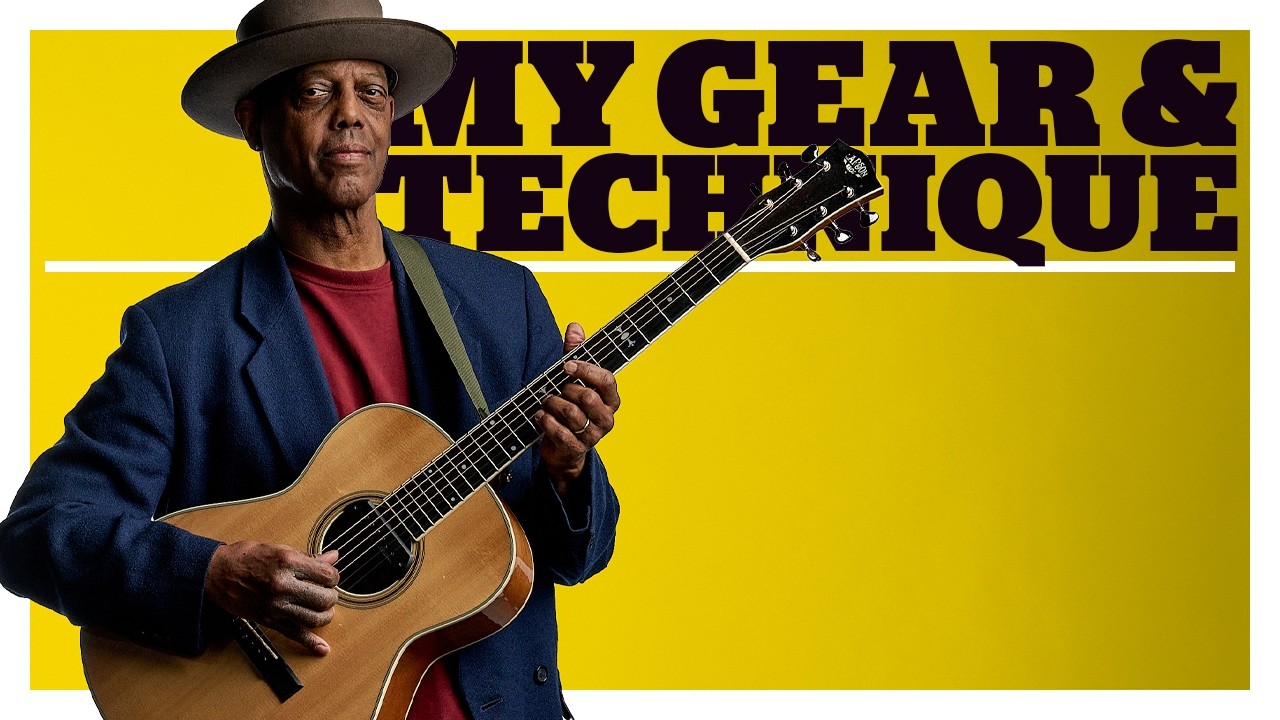
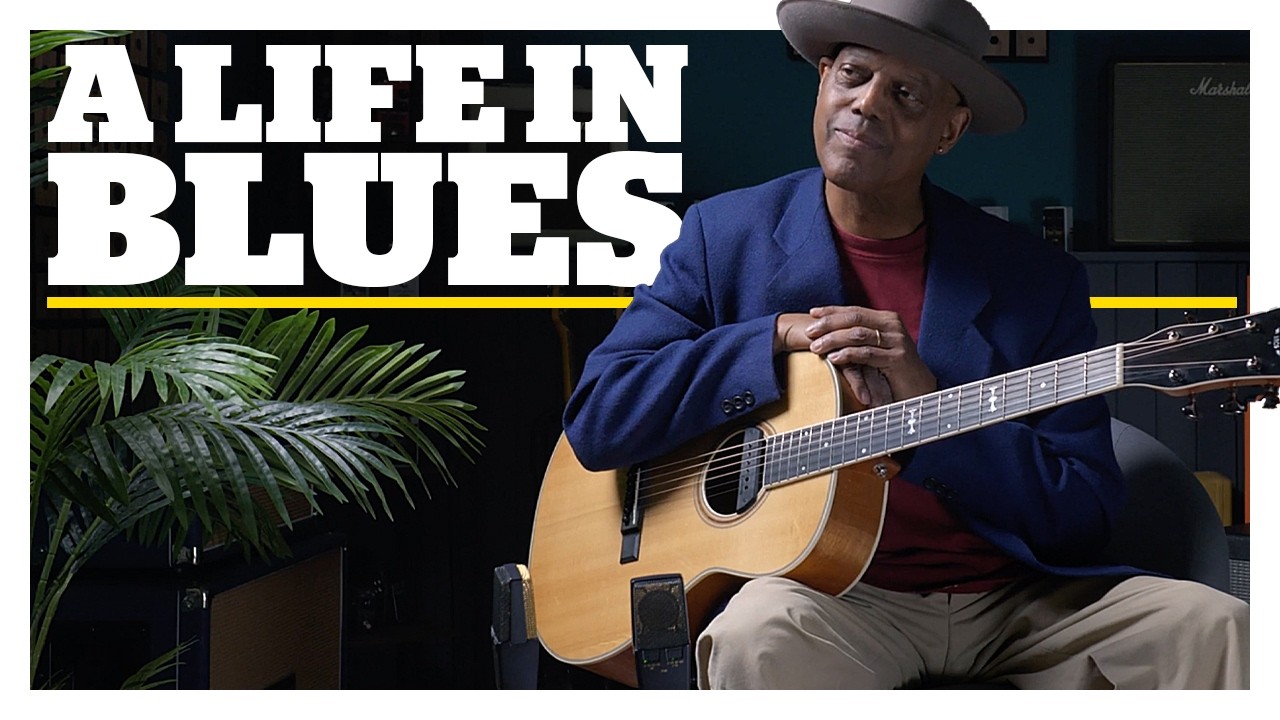
This is a fairly new friend that’s come into the family. It’s a Larson Brothers OM model. The Larson brothers were two Swedish brothers [Carl and August] who immigrated to the States in the late 1800s. They made great guitars – I think Stefan Grossman might have one or two of theirs, they’re hard to find these days.
But not so long ago, I think a company based in Germany acquired the rights to use the Larson Brothers logo and they [iMusicnetwork, founded by Toni Götz, together with Nikolaus ‘Klaus’ Eilken, founder of Thomas Guitars] are making really high-end guitars, and this is one of my favourite guitars to tour with. I have another model that’s all mahogany, but this is a spruce top. Just a lovely, lovely instrument.
How did you discover the Larson Brothers’ guitars?
Well, I was in Paris looking around for guitars and I spotted a Larson Brothers – the old mahogany one that I mentioned – in a shop window and the look of it just drew me in. I went in, I played it and I bought it. Then they got in contact and said, ‘Wow, we’re really pleased that you’re enchanted with our instruments.’
That first one was made by a known luthier, his name is Maurice Dupont. He makes mostly Maccaferri-type guitars, but he made that flat-top guitar and I loved it. The Larson Brothers company knows what I like. They sent me this guitar and I didn’t send it back.
Is the OM a good body size for you?
Yes, I’m not really a dreadnought type of guy; I like smaller body guitars. OM is a good size for me, or parlour guitars, you know? But this is about perfect for me.

What other instruments do you have on tour?
It’s always a challenge deciding what to bring. I have a lot of guitars. I have guitars I’ve toured with, guitars that are really precious, and I’m a little reticent about taking on the road because they go through a lot. I have the other Larson Brothers guitar, the all-mahogany one, which is tuned down a half step, so E is Eb.
I also have a thin hollowbody Takamine, another interesting guitar, which is tuned down a whole tone – this is just to accommodate my changing vocals. So, you know, songs I play in the 1st position, if I find my voice has dropped, then I need a guitar that’s a whole tone lower.
So I have one guitar in standard or drop D, I have another one half a tone down, and I have another one a whole tone down. Those three guitars more or less take care of what I need.
Do you have an amp on stage or do you go direct into the PA?
I go through a DI. In the past I’ve used – as my own kind of side monitor – a Roland Jazz Chorus amplifier. My sound guy prefers the direct signal because then he can do what he wants with it out front. It was a bit of a crutch leaning on that amplifier by my side, but I just discovered that, actually, if the monitors are proper, then I don’t really need it. It’s enough to have just two wedges in front of me and a direct DI.
What pickup do you have in the Larson Brothers OM?
I’m using the Blackstack by Fishman. I’ve had all kinds of soundhole pickups through the years, the Sunrise kind of started out as being the de rigueur option. It’s a heavy pickup and I found that even though the sound quality was great, the independent standalone power box was difficult for changing batteries.
I prefer a pickup where I don’t have to think about battery changes; you don’t want to be in the middle of a tune and it dies on you. So this is passive and it works.

I’m not really after a pure acoustic sound. Everybody’s wanting to find the pickup, either bridge pickup or soundhole pickup, that really gives you the true sound of an acoustic guitar.
I find, if I want that, I’ll just stick a great microphone in front of the guitar, you know? But in a situation where I’m with a band on stage with a drummer, that is challenging, so you want a pickup that’s going to break through all of that.
This is the best solution I have. And with a magnetic pickup there’s a kind of liquid sound that you get when it’s through the DI; it’s a little bit more fluid than just the sound you would get from a microphone, and that seems to suit my own stage sound. But in the studio I’ll often just have great microphones in front of the guitar.

Do you use any outboard effects on stage?
I used to. I used to use some chorus stuff and tremolo. But I’m really not a gear-oriented guitar player, so I had the most simple pedalboard with my Boss tuner. Maybe I’ll have an A/B switcher if I feel like I need to do something like that. But, lately, I like a really stripped-down situation where I don’t have to think about it.
And I have a great sound guy out front, so I trust him. I usually have another guitarist with me in the band and they have pedalboards to die for. I don’t know how they keep up with all this stuff, but I guess if that’s your thing, you figure out a way. But they’re like a ballet dancer, you know?

You had classical guitar lessons when you were young. How do you think that might have influenced your acoustic guitar technique?
What it told me right from the start was that the guitar really can be an orchestra, and if you use your thumb and three fingers on your right hand, you can arpeggiate and you can create all kinds of different sounds and textures.
It really helped me when I started discovering fingerpicking – you know, [Mississippi] John Hurt kind of stuff. I started out with Carcassi [Matteo Carcassi, 1792 to 1853, author of arpeggio studies still in use today], so all of that stuff sort of came together at a certain point.
When I really focused on my own style of playing, I knew I wanted to fingerpick, I knew I wanted to arpeggiate. So all of that has come into my technique. I tried fingerpicks at one point, and thumbpicks, but they’d fly off. I’d get excited and sweaty, and they’d just fly off.

But Ry Cooder once said there is really no better tool for the guitar than your right hand. There are so many ways you can approach the guitar with just your bare hands. I do have acrylic nail enhancement on three nails of my right hand because I found that, without it, I’m risking breaking a nail and then things get kind of complicated.
I discovered the hard way that if I chipped a nail in the middle of a show, it was really going to affect my playing in a negative way. And you can cover your nails with hard polish, but I find that the best thing for me is the acrylic. I’m not sure it’s really great for your health, but you sacrifice all for art.
I’m on tour at the moment with Robbie McIntosh, who’s a master. He not only has the whole country blues vocabulary of bottleneck guitar and slide, he’s just so lyrical, he’s so fluid and melodic
Have you ever experimented with slide?
I love the textures that you can get and the sound, especially if you’re into country blues like I am. The slide sound is a part of the vocabulary, but I’ve never been one to dive deep into that. It’s almost like a separate universe. But I’ve always had guitarists close to me from very early days who were proficient at slide and bottleneck playing.
I’m on tour at the moment with Robbie McIntosh, who’s a master. He not only has the whole country blues vocabulary of bottleneck guitar and slide, he’s just so lyrical, he’s so fluid and melodic. There are a few players who have mastered it to that level. He’s one of them, but there are not that many.
He’s exceptional as a slide player and a player in general. I tend to be happiest when I have a really fine second guitarist in the band who has a huge understanding of blues first of all, but who is also familiar with other harmonies, jazz harmonies and that kind of thing.
Do you ever play electric guitars or hollowbody jazz instruments?
I do love older jazz big-body guitars. If I had an Epiphone Emperor, that big, beautiful blonde guitar that they made in the ’30s, I’d hold on to that
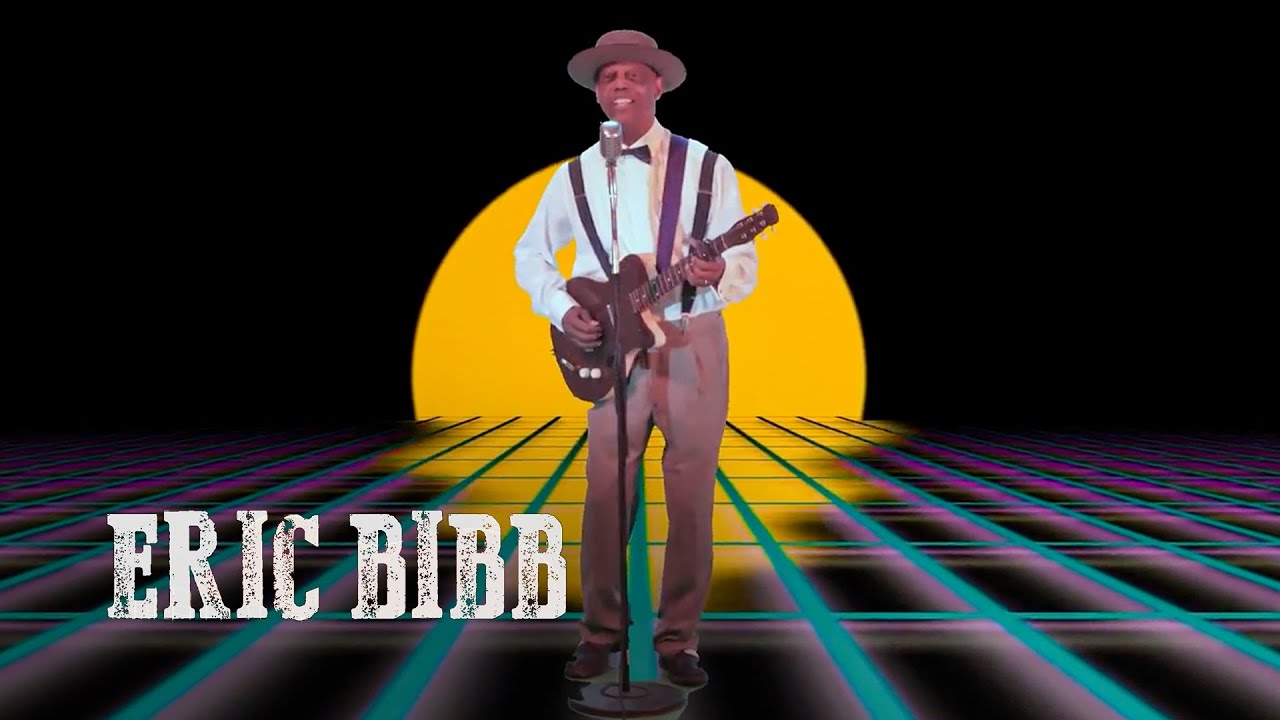
Well, I’m really not an electric guitar player. I find that the electric guitar is almost a separate species, you know? I have an old Danelectro solidbody that Hubert Sumlin signed the back of, so I love that guitar. I did a video of a song called This One Don’t and you can see that guitar. It was given to me by a wonderful bass player, Dave Bronze, as a birthday gift long ago.
But I play electric guitars like I play my acoustic guitars, I fingerpick them. I’ve never played with a plectrum, you know? I’ve never really mastered or even really been attracted to that style of playing, although I have band members who are wonderful players on electric guitar and who play with their fingers but also are masters of the pick.
I do love older jazz big-body guitars. If I had an Epiphone Emperor, that big, beautiful blonde guitar that they made in the ’30s, I’d hold on to that. But, yeah, a great acoustic guitar is the way to go for me.
- One Mississippi is out now via Repute Records.
- This article first appeared in Guitarist. Subscribe and save.

