


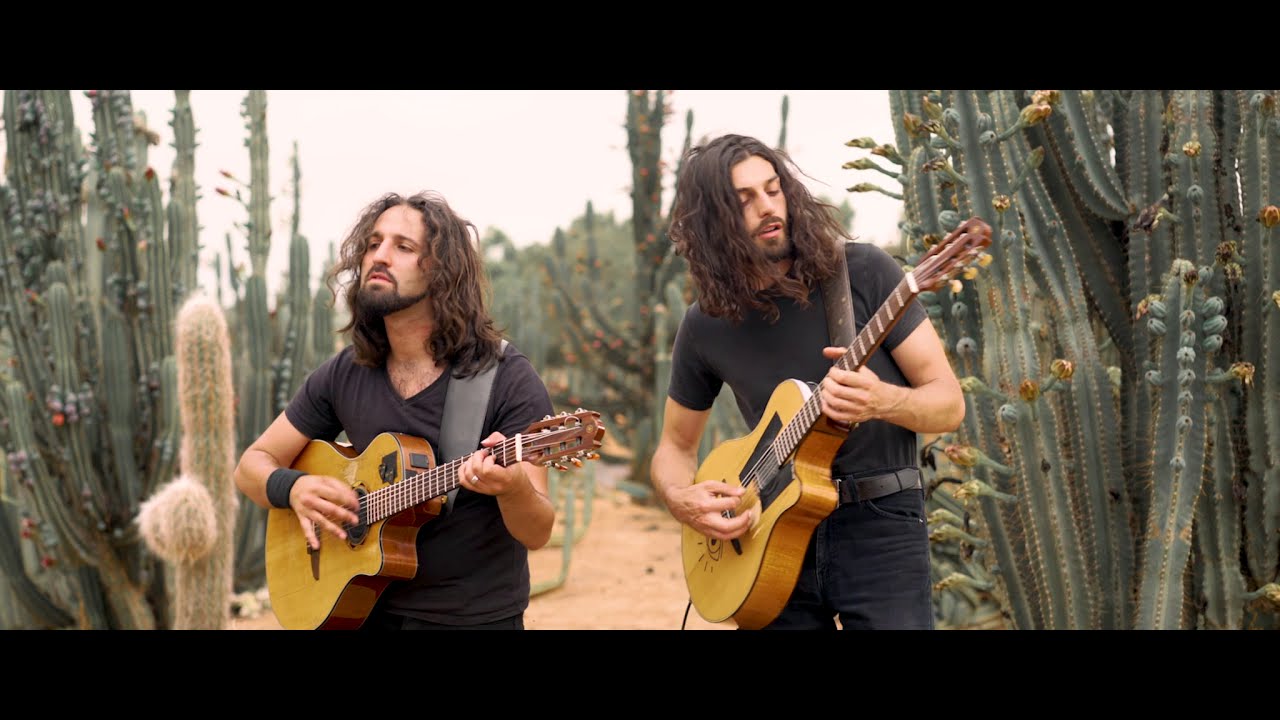
Australian duo Opal Ocean have steadily been making a name for themselves in the world of acoustic guitar since 2015.
The pair have gathered momentum online with videos of their busking gigs, and have also received time in the spotlight with thrilling stage performances including at the Abu Dhabi Grand Prix in 2021.
Having enamoured crowds on their inaugural UK tour earlier this year, Alex Champ and Nadav Tabak continue to deliver the pace with their latest album, Temple Of The Stars.
Written and recorded at home in Melbourne, the tracks feature a kaleidoscopic blend of traditional and contemporary playing, bringing instrumental flamenco virtuosity into the modern age. And it all stems from Alex and Nadav’s love of players such as Al Di Meola, Paco de Lucía and other more eclectic influences.
All Styles Welcome
The pair cite Mexican duo Rodrigo y Gabriela as a source of inspiration, along with heavier bands such as Dream Theater and Opeth.
“We love how Rodrigo y Gabriela blend styles and techniques like rumba flamenca and rasgueado strumming with rock and even metal influences,” says Nadav. “We try to fuse our own influences from Gojira to Daft Punk, using those percussive guitar techniques to build a rhythmic foundation. You can essentially create a full rhythm section on the guitar.
“You’ve got a kick, snare, and even hi-hat elements just from how you strike the guitar. Using nylon-string guitars also adds a natural distortion on the lower strings when you dig in, which really enhances the sound and speaks to what we love.”

Godin To Go
Alex and Nadav recently signed a deal with Godin guitars, which led to the development of their Opalburst and Oceanburst signatures, fitted with a custom-voiced LR Baggs system.
“They’re perfect for touring – lightweight, durable and great-sounding,” says Nadav. “Since we travel a lot by plane, one of the biggest advantages is the bolt-on neck design.
“Godin added machine inserts especially for us so we can remove the neck and pack the guitar safely into a Mono case along with our Quad Cortex, and take everything in the cabin. That makes travelling so much easier. For strings, we use D’Addario, as they hold up really well on tour and maintain a great tone.”
Voice Of Reason
The Opal Ocean approach to writing a good instrumental track is to treat your melodies more like a vocal line.
“While we love riff-based instrumental music, when it comes to choruses or key themes, we aim to make them memorable and singable,” say Nadav. “The idea is not to overcomplicate things because if you think of your favourite songs, you can usually hum them. A lot of virtuosic players these days write music that most people would struggle to sing back.
“Our writing balances more complex, riff-driven sections with melodic parts that feel like a voice. That contrast is really important to us. But we still take a lot of inspiration from fast players such as Al di Meola, particularly in the precision and alternate picking. Ultimately, our style comes from a mix of everything we grew up listening to.”
Midnight Tango
The harmonic minor scale plays a big part in flamenco music. For the duo, it all started with jamming over flamenco chord progressions and figuring out which notes worked best and when.
“It’s a very distinctive scale, but once your ear and fingers get used to it, it starts to feel very natural,” says Nadav.
“In fact, when we first got into it, we used it a lot. It’s quite addictive and some of the stretches on the fingers are pretty fun. If you’re used to the pentatonic scale, it’s a nice change. Repetition and exploration are key. The more you immerse yourself in those progressions, the more intuitive it becomes.”
The God of Flamenco: Why Paco De Lucía sits at the top of the list for Opal Ocean
“Paco De Lucía is the king of the genre,” says Nadav. “He had an incredible ability to push the genre forward while maintaining deep musicality and emotion. His technique, especially his picado, was phenomenal but what really stands out is the passion and intensity in his playing.
“If you watch his live performances, you can feel how present and committed he was in every moment. He was doing those crazy runs on Friday Night In San Francisco without breaking a sweat, all with just his fingers.”
- Temple of the Stars is out now.
- This article first appeared in Guitarist. Subscribe and save.

