


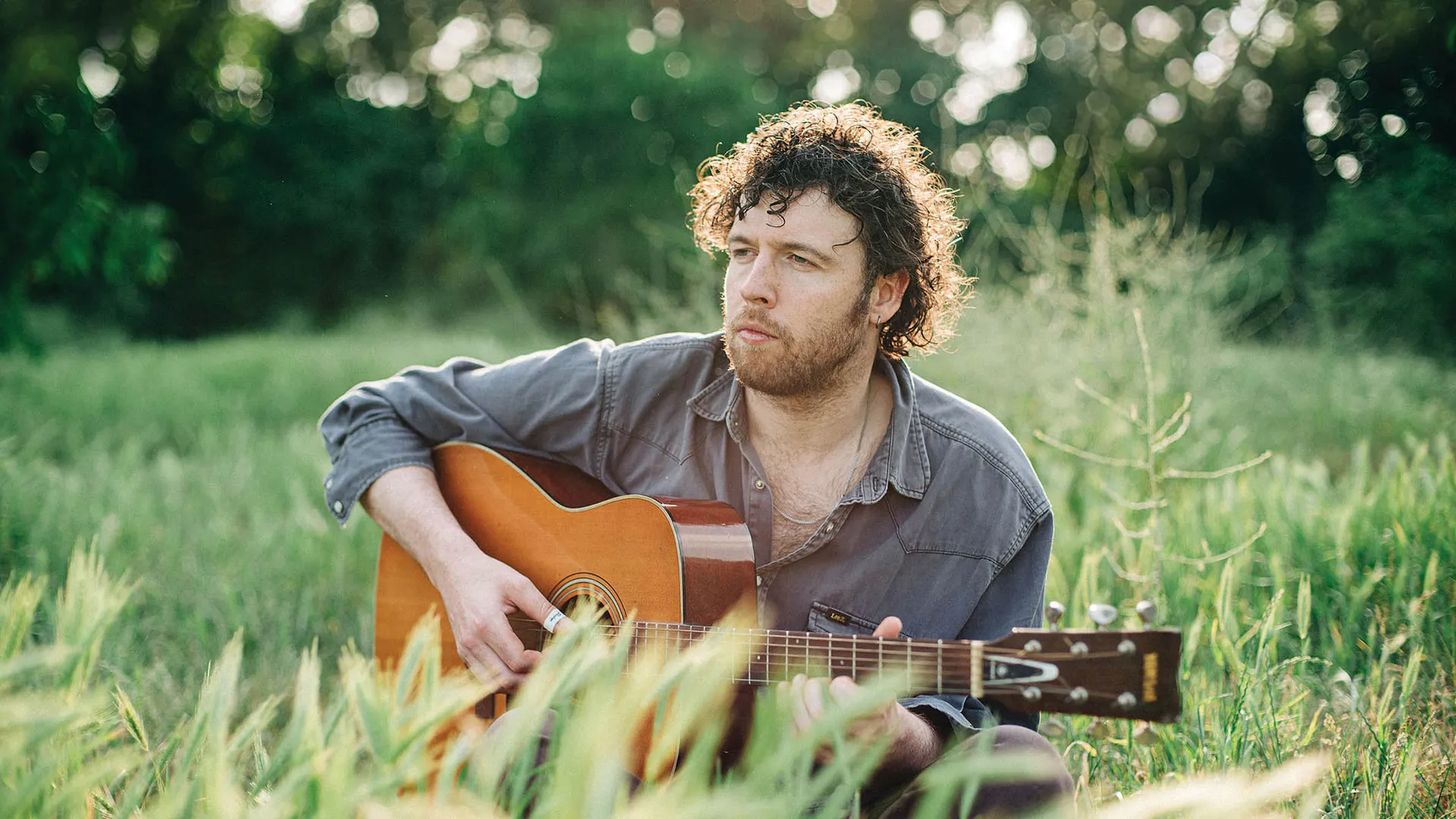
Anyone looking for a natural inheritor to Bert Jansch and John Renbourn should pay serious attention to rising Scottish guitarist Sam Grassie.
Grassie grew up around traditional folk music in Glasgow, and his deft, melodic guitar playing was shaped by the influence of British players including Dick Gaughan, Dave Goulder and the aforementioned Jansch and Renbourn. His blending of folk and trad, with complex yet expressive playing, has seen him share stages with Robert Plant, Martin Carthy and Gwenifer Raymond.
Having played with Scottish trio Avocet, Grassie moved to London in 2022 and immersed himself in the folk community, playing in ‘travelling folk club’ Les Caravanes and London collective The Broadside Hacks.
He has now released his solo debut, Where Two Hawks Fly, 11 tracks featuring both traditional and Grassie-penned arrangements, with a host of collaborators. When he spoke to Guitarist, Sam seemed happy with how the guest-filled LP translated to the live stage.
“I toured with Alfie Jones [grandson of Wizz Jones] on electric guitar, which really works well depending on the venue,” Grassie explains.
“It was great to have lots of people involved on the album, but the nice thing about acoustic guitar playing in the vein that we’re chasing is that if you’re on stage, feeling calm and your fingers are working, the guitar can do a fair amount of talking.
You’ve played in various line-ups on the British folk scene. Why did now feel like the right time for your solo debut?
I love collaborating and probably never want to do this alone, but I’ve wanted to create my own album for as long as I’ve been recording anything. When Avocet came to an end, I tried to work on my singing, but chronic fatigue meant I’d get dizzy. It was hard to practise as I was so ill. In some ways it happened as early as it could.
My Sandwood EP [2024] did better than I expected, so I wanted to build on that. Luckily, on that day I actually managed to play in time! Going from trying to play technical guitar that was above me and too fast, I realised that all the greats are just playing in time, and that’s why it sounds so bloody good.
I sent the tune that became Abhail’s to Alfie Jones [Wizz Jones’s grandson]. He added some lap steel, and that little bit of alchemy on a bare guitar track made me think that could be the sound of the album. I went for it and ran off to Berlin to record it as quickly as I could.
What did you learn from the recording process?
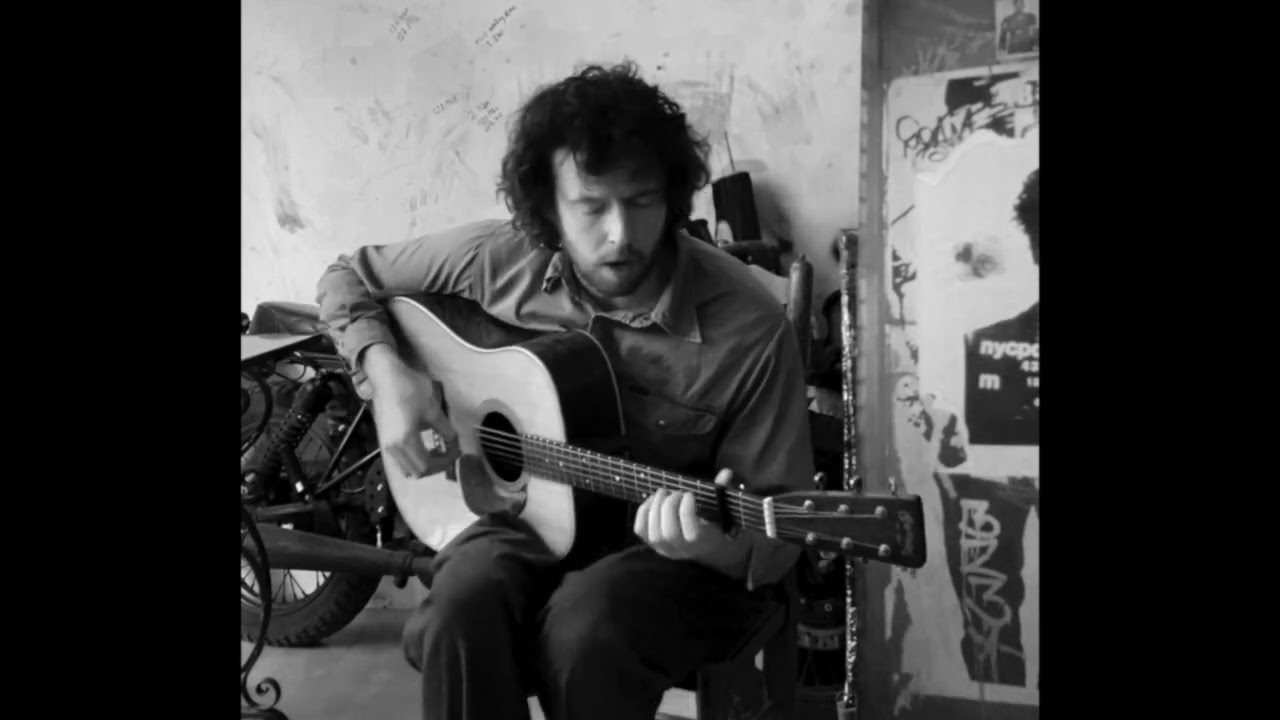
There was enough material to create something fairly coherent, but I was a bit slapdash when I went to Berlin and the guitar I recorded on was a nightmare! My friend Herbie Loening, who played double bass on the record, is a trad strummer and lent me his Yamaha FG-110: small body, high action, not good for fingerstyle.
There’s so much reverb on the track [so] the guitar sounded like a metallic Transformer walking down the road!
[Another thing I learned was] just be way more ready than you think you need to be. Because every time you sit down, you make loads of mistakes and you’ve spent £300 per day!
You often cite Bert Jansch as a major influence. How has your relationship to his music changed over time?
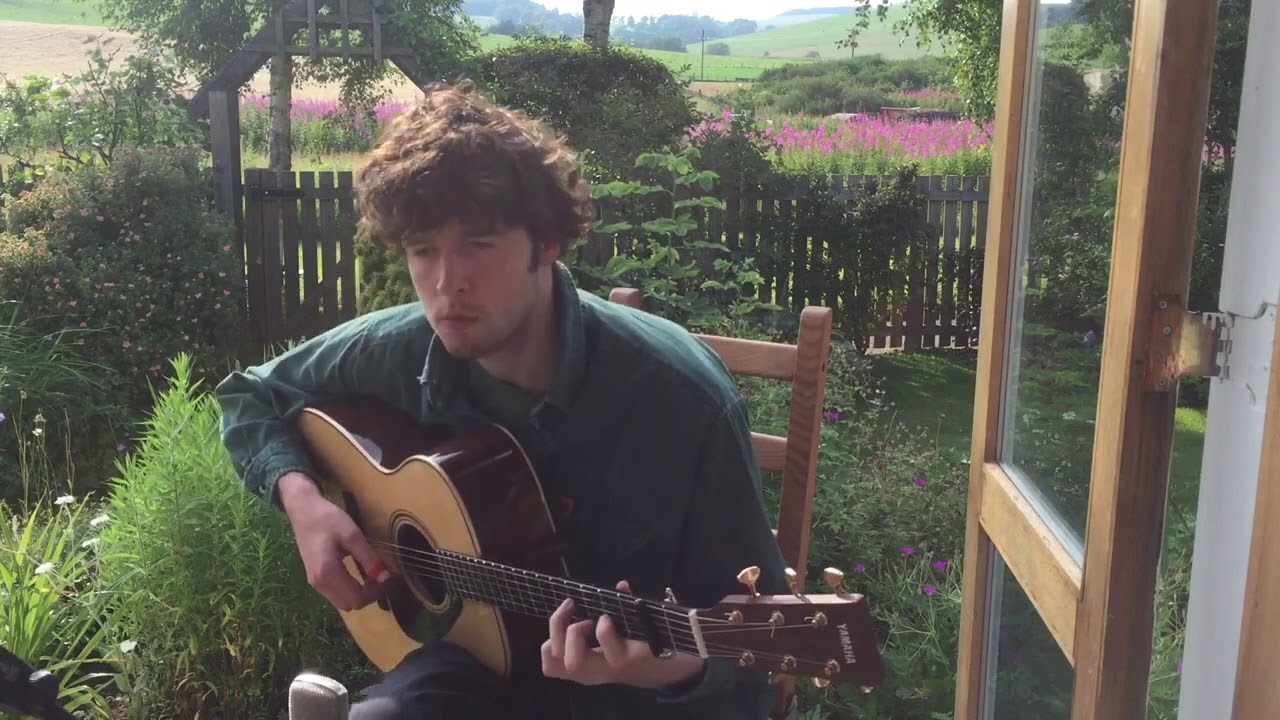
“I like that it hasn’t [changed]; it’s a constant. The deeper I go, the more admiration I have. It’s an asymptotical relationship – I’ll never be able to do what he was doing, but it’s that freedom I chase, his dexterity and fluidity. When I started getting into guitar and writing my own stuff, I thought he was the GOAT, and if I could ever do anything like that it’d be fun.
I still come back to tunes like Come Back Baby from the really early days and just think, “Fuck, that’s it.” For me, it doesn’t really get any better – it’s raw, rugged, gritty, stubborn, dark but free.
Production-wise, it’s interesting to see how the pressures of being a proper recording artist affected his later work, but I’m lucky that I’m unsuccessful enough that those pressures won’t be on me! But he always stayed true to what he wanted to do.
Your 2025 EP, Jarabi, Winter Has Gone, blended Celtic trad with Malian blues. What drew you to that crossover?
What’s cool in London at the moment is quite gritty, while in Scotland, everyone is playing super-fast and technical; it’s light and breezy with electric guitar, synth and a token gesture towards dance music with the thumping bass. But that lighter aspect isn’t raw. So there’s dark folk that’s raw, but the light folk is very clean, and something that’s trying to be light doesn’t need to be clean.
Martyn Bennett took Scottish trad music and fused it with drum and bass and jungle – his albums will knock your socks off – so when all these bands take light folk and add all this soft stuff, it’s like, “Surely, you’re all aware of this guy?” He managed that, and we should all be striving for the same.
I came across Malian music by attending gigs at the Fringe, like banjo player Jayme Stone with kora player Mansa Sissoko playing Africa To Appalachia. Malian music is the closest you can get to the sound of life and the natural world. It’s so free, fluctuating, fluid and absolutely beautiful. I’d love to find a collaborator to do more of that, but I don’t know if I have the tekkers!

You’ve had the chance to play Bert Jansch’s and Jackson C Frank’s guitars – and you recently performed a set for Turnstone Guitars with a Select Series TG model. Do you have a preference between vintage or modern instruments?
I love vintage guitars, but the Turnstone guitar [made from katalox and Swiss moon spruce] knocked me out, to be fair. I love playing beautiful modern boutique luthier guitars, and some aspects are better than vintage for live, especially unamplified. That Turnstone guitar echoed through the room, it was like playing a harp.
For recording, I really prefer vintage. Modern guitars have so much to say, so there isn’t much space left for giving it what you want to. You have to do what the guitar tells you to do – modern guitars are all light and amazing and everything is ‘Wow!’ But what if the song is sad? It’s different tools for different jobs.
I’ve literally just been to the [New Kings Road] Vintage Guitar Emporium to play a 000-28 from 1967. It was fucking amazing! But for gigging I use a modern Martin that I’ve set up myself to sound twangy and old. I’ve got a 1968 000-28; I love playing it, but I don’t have enough money to risk taking it around the place.

I have Bert’s Yamaha [LL11e] from the ’90s. It’s strange playing that because if you’re a big fan you’re thinking of the Blue Album [self-titled debut] when he had a Martin. Yamahas are great, but for me [they] don’t stand up to a high-end Martin. I’ve had nice moments sitting with it, thinking, “Shit this is Bert Jansch’s guitar and I’m lucky to hold it,” but, playing-wise, it’s not super-inspiring.
However, Jackson’s guitar was a [1948] Brazilian rosewood D-28 and it’s probably the best guitar I’ve ever played, like a whole other thing, and speaks to the fact it was there. It was inspiring to play that, and felt like there are songs still in there.
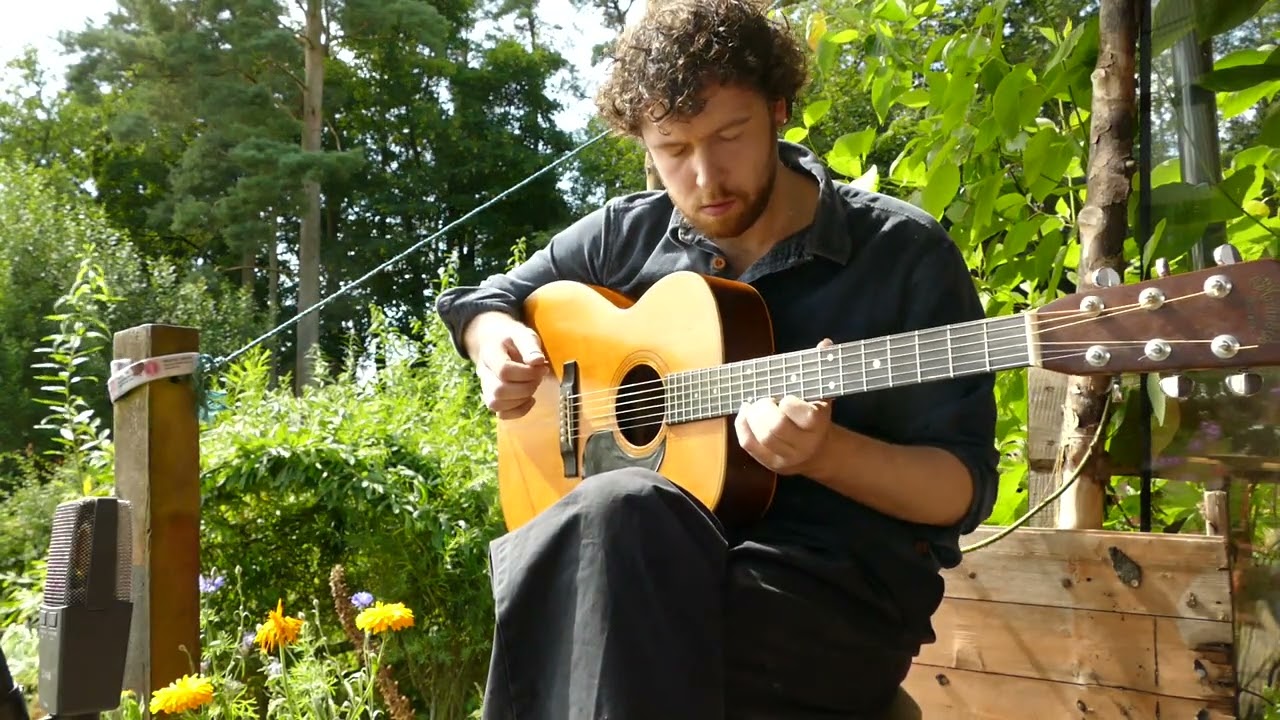
In a recent interview, you talked about coming from a rich folk tradition that’s being chipped away by TikTok. How do you think social media has shaped your playing?
One of reasons I’ve stuck with the guitar is that it’s like a torch to follow
Hopefully it hasn’t! The more you engage with it, the more you’re vulnerable and likely to be malleable to it. It’s like an alternate reality that we believe to be the same as our own. For me, the guitar is opposite to all that.
There are all these things in life that try to compartmentalise and distract and atomise, but when you’re playing guitar – and if you manage to get to that nice spot – you’re in a nice state of flow. If anything, it’s decreased the frequency and ease with which I can get there, but what I’m making isn’t tailored to that at all.
One of reasons I’ve stuck with the guitar is that it’s like a torch to follow; the ‘me’ when I’m playing guitar in the way that I want to play it, or [am] trying to, is a better person than me outside of that. I can learn from that self. If I could take a leaf out of the ‘guitar Sam’ book and apply it to other things, that’d be good – and one of those things is fuck social media changing how I do this thing.
What have you got planned next?
I’m going to get a dreadnought Martin, as I’ve missed that. And it’d be really cool to record the next album live. I want to get the funds together to get everyone in the room and capture that moment over a few days or weeks. Giving tracks to people to work on at home is not the same as working together in the room; people can inhabit the songs and find their space within it.
- Where Two Hawks Fly is out now via Broadside Hacks Recordings.
- This article first appeared in Guitarist. Subscribe and save.

