


It all started with a video uploaded onto YouTube on February 5, which set off a chain of events nobody – not even Nostradamus himself – could have predicted.
Within the space of just a few months, mysterious Canadian unknowns Angine de Poitrine had somehow become the most talked-about band on the planet – the ultimate gateway drug into the weird and wonderful world of microtonal math rock.
As fate would have it, Seattle radio station KEXP were the ones responsible for documenting and sharing the duo’s now-legendary live session, which took place in December 2025 as part of the annual Trans Musicales festival in the French city of Rennes.
The band were showcasing a handful of tracks from their then-upcoming second studio album, 2026’s Vol. II, alongside a choice offering from their 2024 debut. Once public, the footage quickly took the world by storm, dominating headlines and comment sections across the globe.
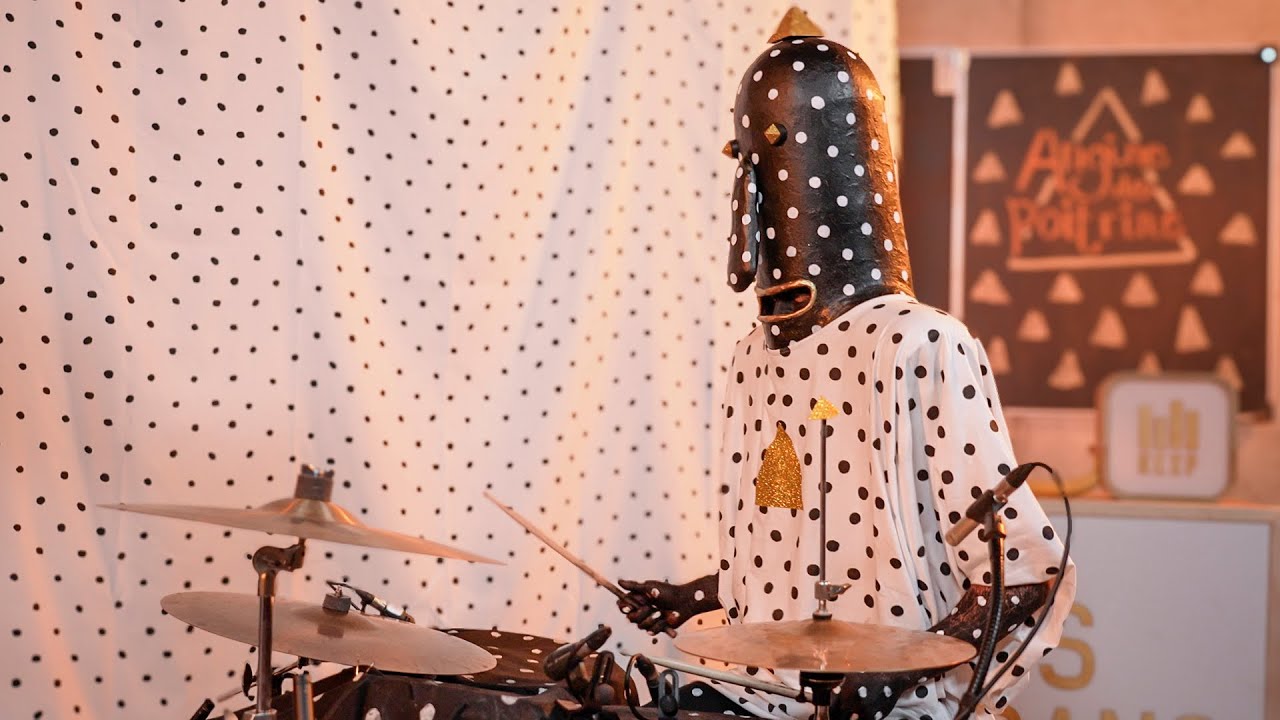
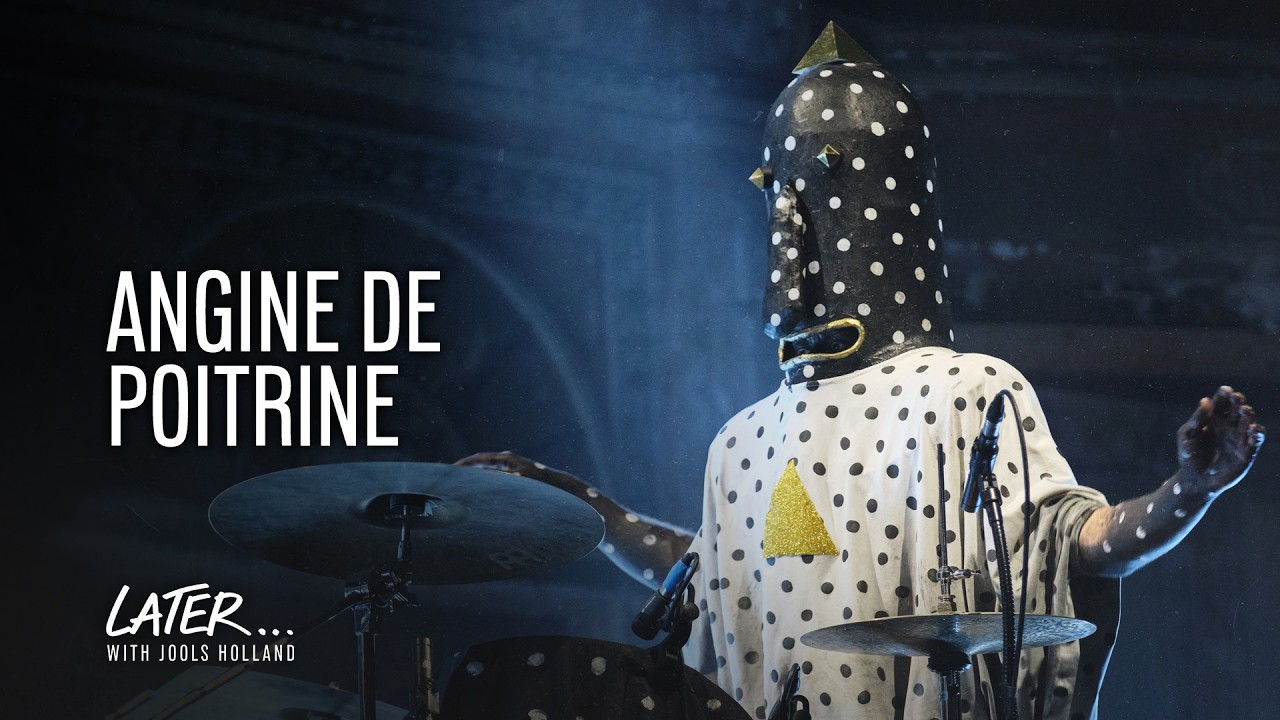
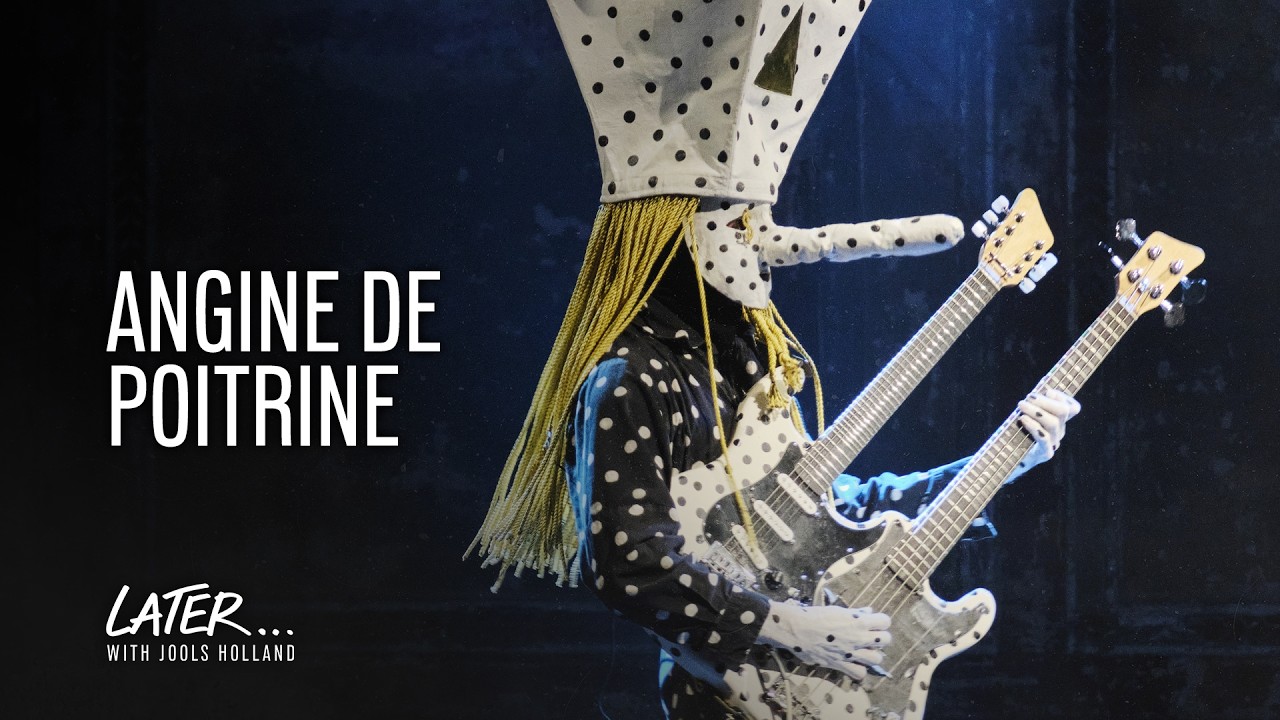
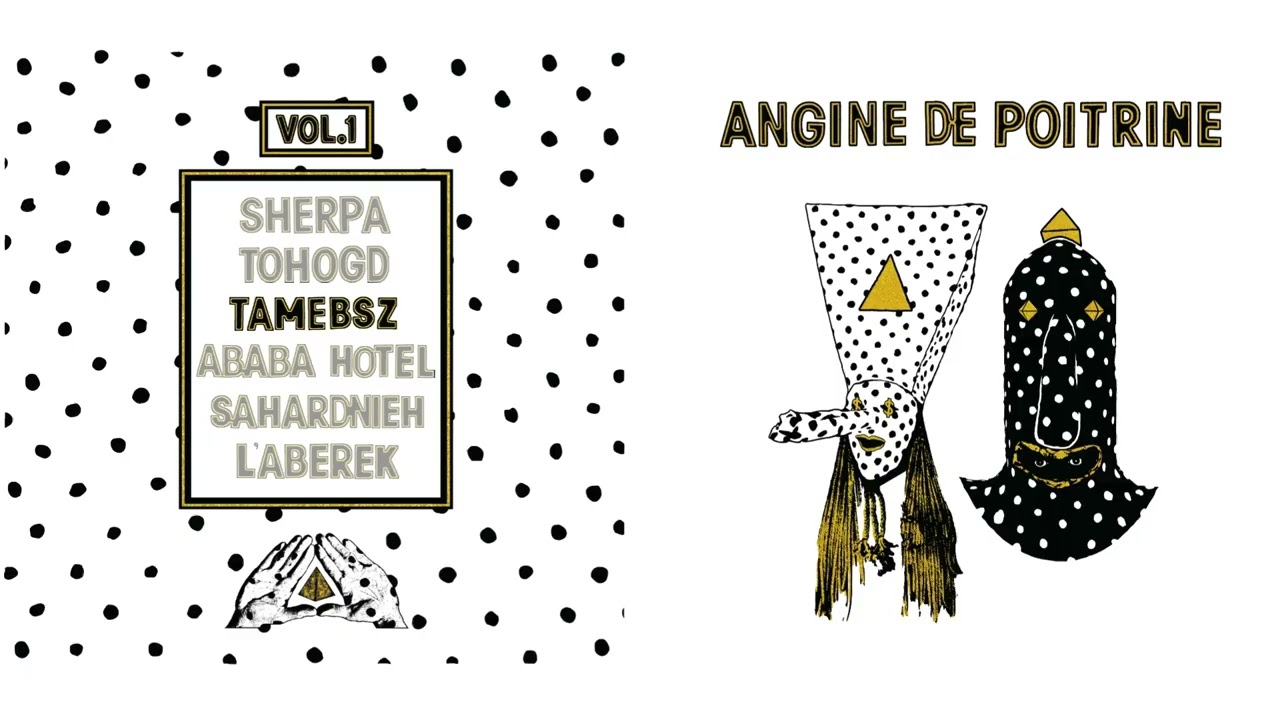
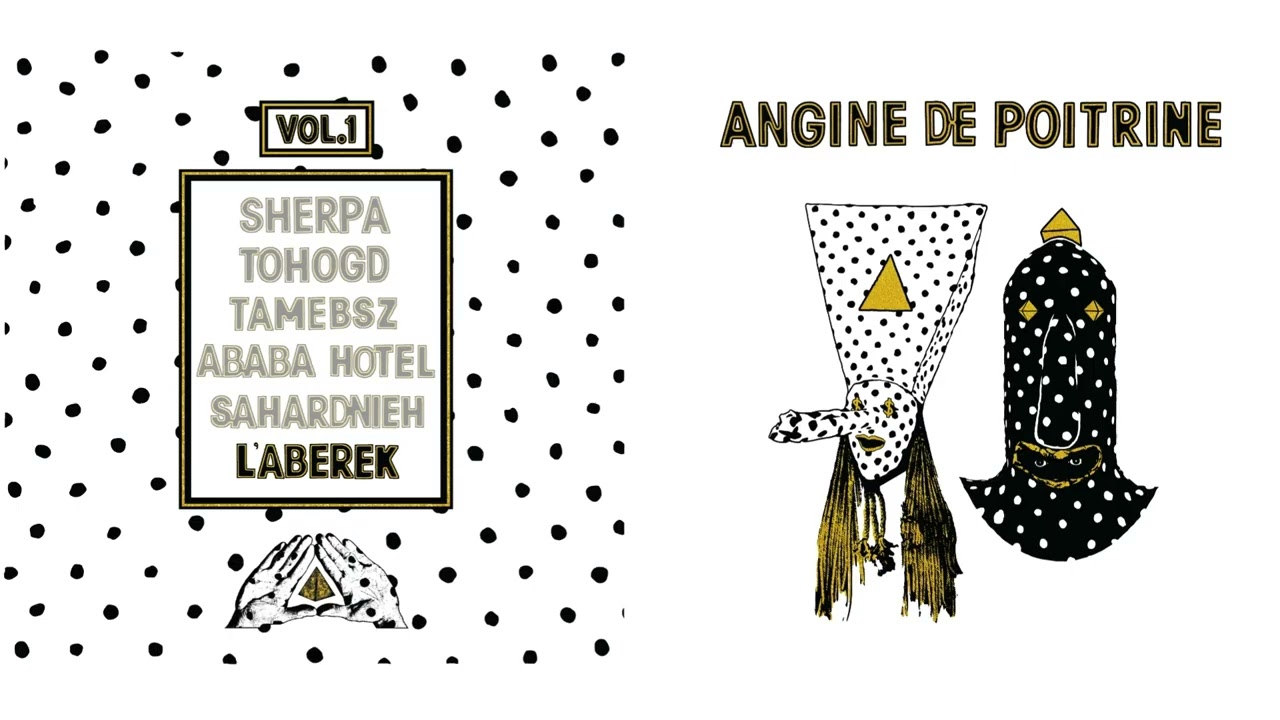
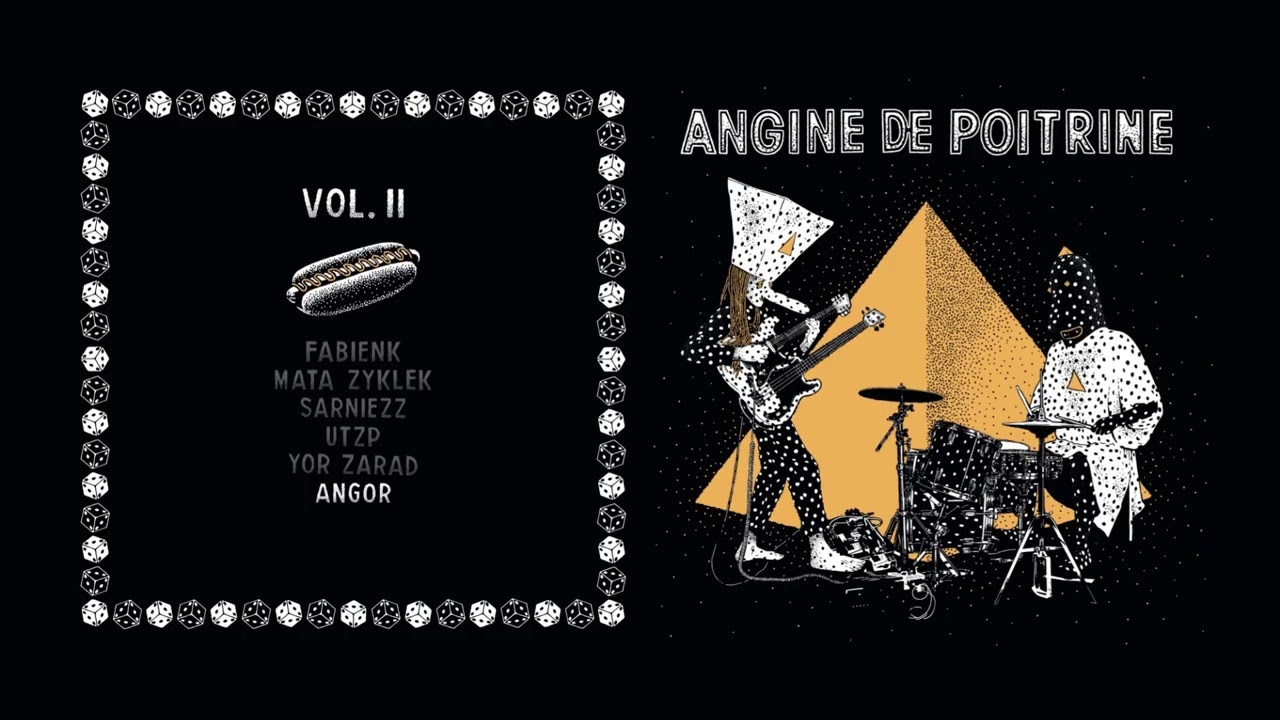
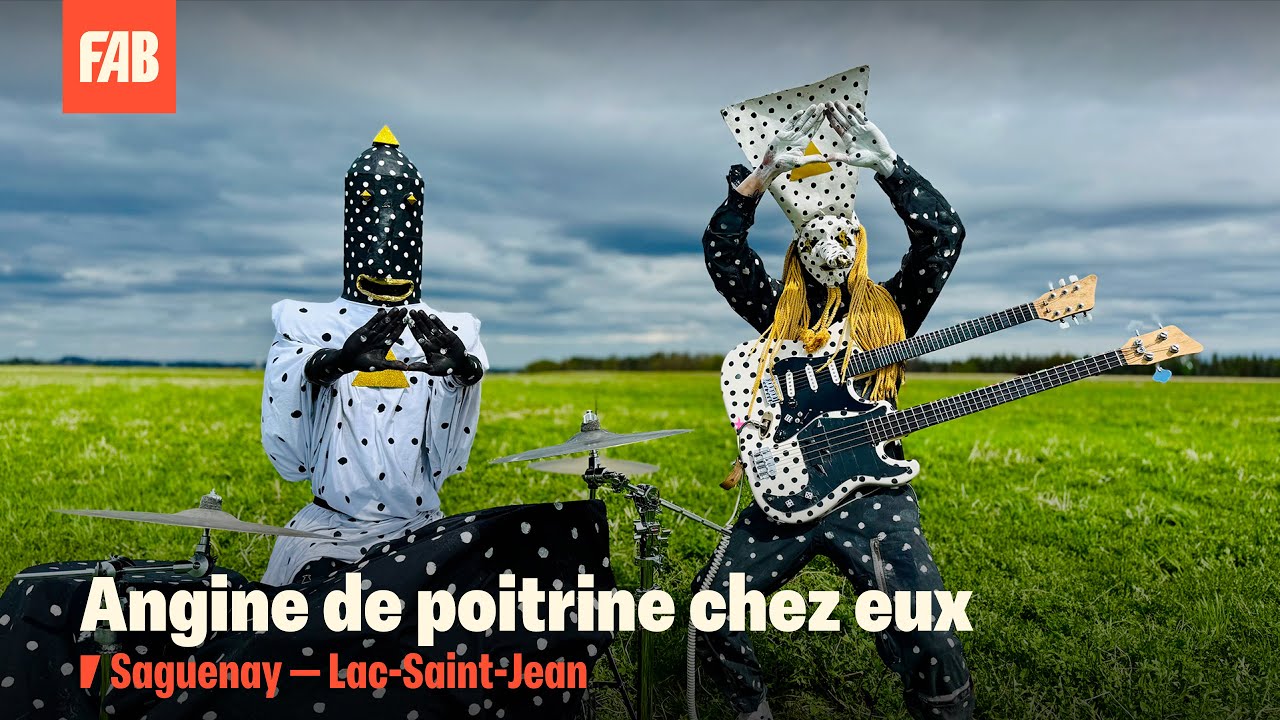
Here was a band who looked like they’d arrived from outer space, thanks to their oversized papier-mâché masks, oversized noses and polka dot costumes, drawing heavily from avant-garde and surrealist-adjacent art movements like absurdism and Dadaism.
They even communicate like extra-terrestrials, as evidenced by their appearance on Canadian TV show Tout Le Monde En Parle, where the pair spoke in bleeps, grunts and gargles – noises that were carefully translated by subtitles and by their manager, Sébastien Collin, who sat next to them.
There is, of course, an interesting backstory here. The group – Khn on guitar/bass and Klek on drums – half-jokingly claim to be 333-year-old time travelers inspired by the Nasal Quartet, a solemn choir of proboscis monkeys from the island of Borneo, who the duo once described as “the undisputed musical pinnacle of the galaxy.”
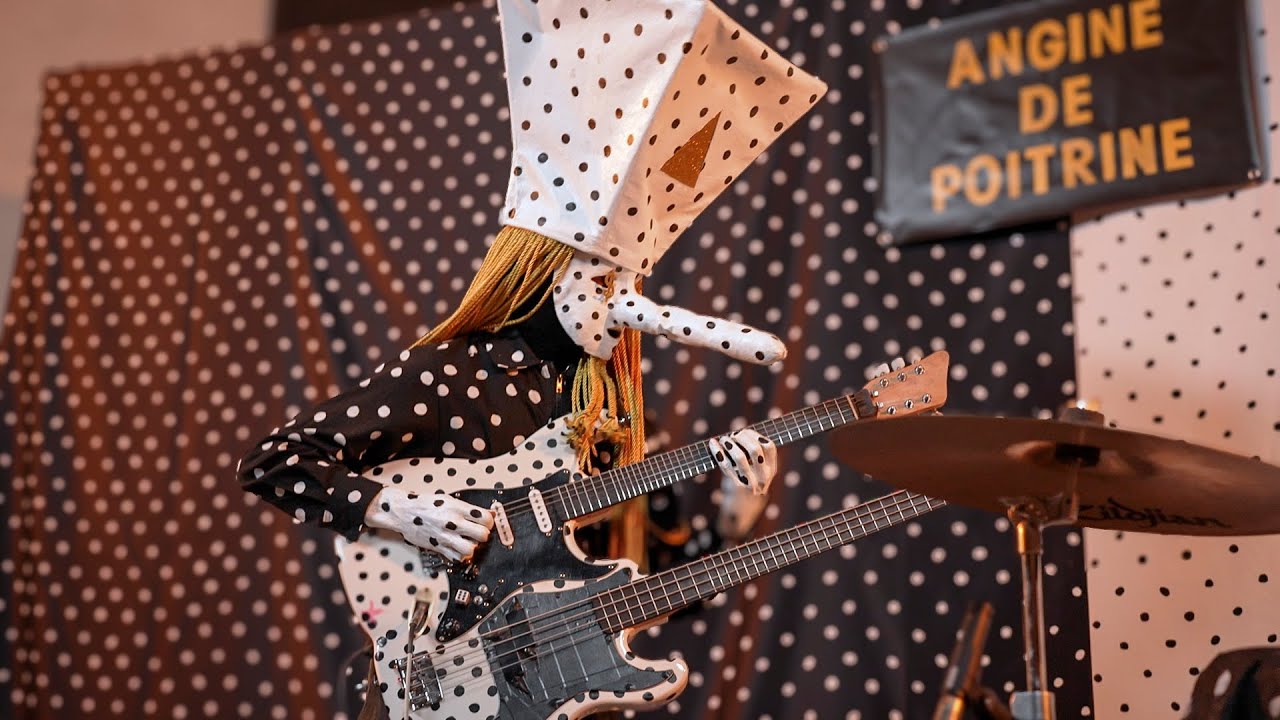
Another big talking point has been the double-neck bass/guitar hybrid in Khn’s hands, fitted with extra frets to help facilitate their microtonal musings – providing access to notes and intervals outside the usual 12-tone equal temperament typically used in Western music.
With seemingly endless opportunities for new sonic textures, harmonies and melodies, the usage of this tuning system has been hugely advantageous for the duo, helping them stand out from the norm and genuinely push the boundaries of creativity in the modern age.
They’re by no means the first musicians to attempt this – Radiohead, King Gizzard and the Lizard Wizard, Steve Vai and Jacob Collier are just a handful of the western names who have experimented in such a manner – though at a time when accusations of AI slop and industry plants are rife, Angine de Poitrine have been rightfully described by many as a breath of fresh air.
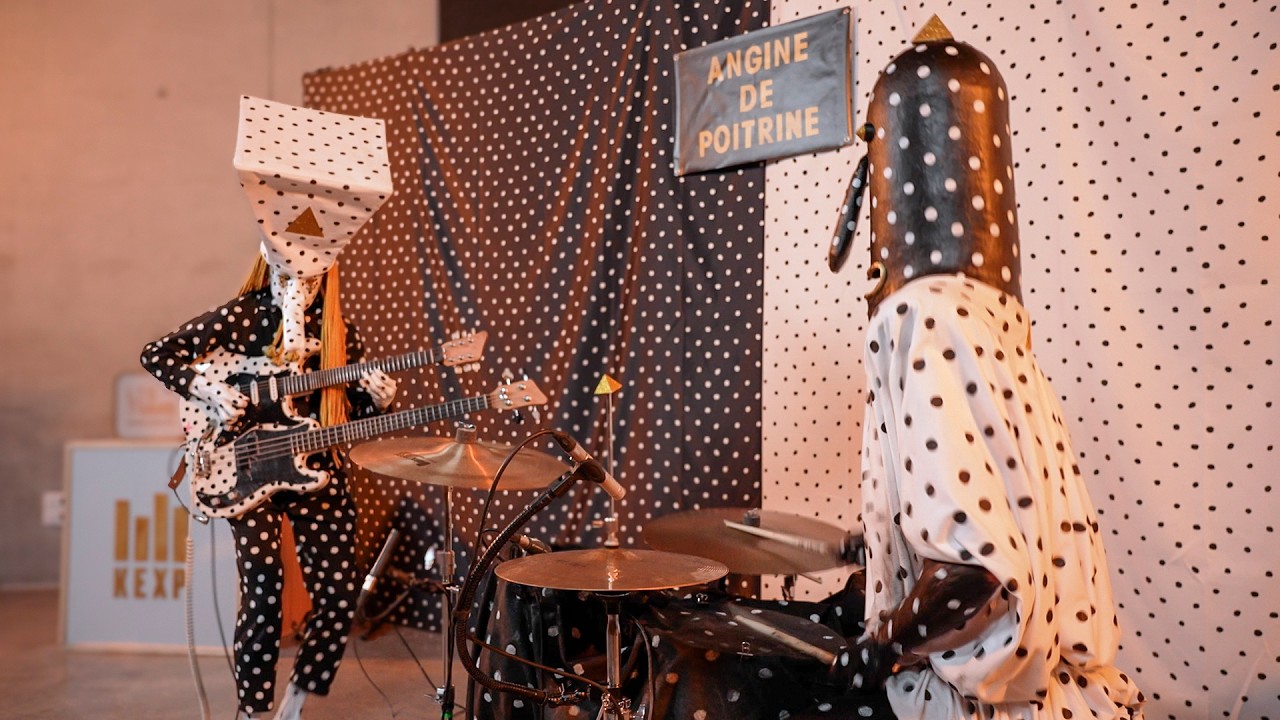
None of this would mean a thing, however, if they didn’t have the music or panache to back it up. Gimmicks are OK, but – without substance – things become subject to ridicule. This is not something Khn and Klek need to worry about; their largely instrumental music is infectious and played impossibly well, with layer upon layer added in real time live on stage.
It’s the kind of scenario that would make a lot of musicians crumble in fear, even without the visual impairment that comes from wearing masks.
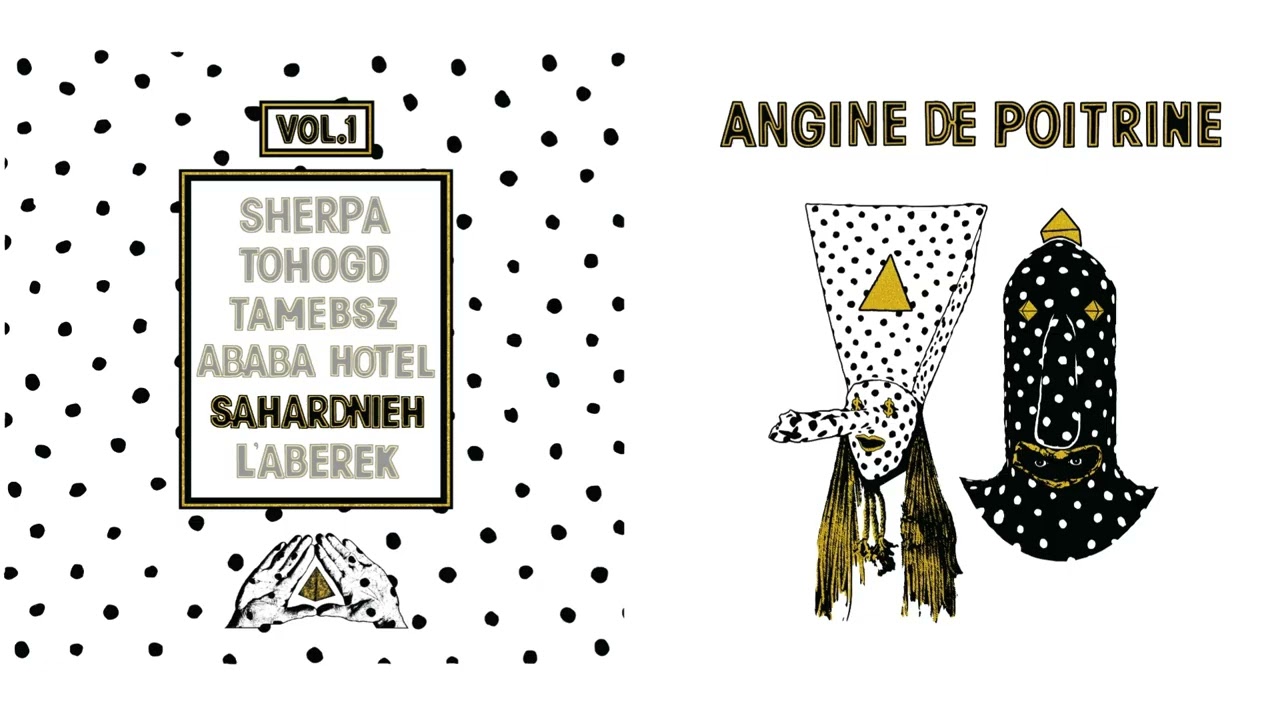
Stylistically, there’s a lot at play, from the funky grooves of Sarniezz and the Eastern mysticism at the heart of Mata Zyklek to the math rock madness of Sherpa. Some of it might remind you of the cosmos-cruising psychedelic exploits typified by artists like King Crimson, Frank Zappa and Gentle Giant, while other parts are more dissonant, jagged and angular, reminiscent of Voivod, Primus and Gong.
In any case, this is not radio-friendly or crowd-pleasing music, at least not through intention. They even named themselves after the pain that comes from the heart not receiving enough oxygen-rich blood, officially termed by medical professionals as angina pectoris, or just plain ol’ angina. In severe cases, this tightness and pressure can lead to a heart attack.
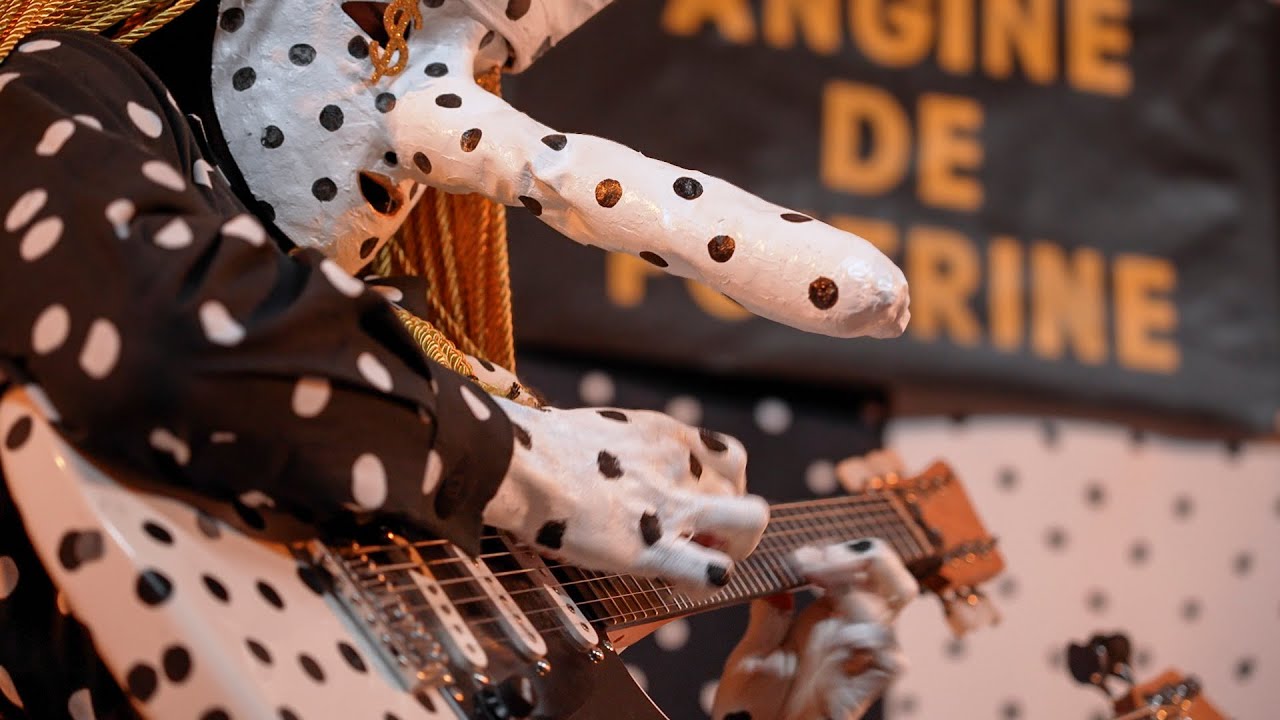
Perhaps it’s the sheer audacity of it all – from the mystery surrounding their identities to the imagery and music – that’s made them crash land into the zeitgeist as 2026’s unlikely success story, winning them friends in high places such as Dave Grohl and Lars Ulrich.
I’d see these hedonist teenagers who were part of this stoner-speed-freak social microcosm known for its alcohol-induced-misdeeds
There were even accusations of a copycat band selling themselves as the real deal in Russia, and an unofficial inspired-by signature model, the Microtonal Doubleneck 4/6 by Eastwood that got launched in May. There may even be an official Godin signature in the future. Whatever they’re doing, it’s working.
In this exclusive interview (which took place via email), Khn talks us through his musical roots and the gear he relies on and offers advice on how to sound bigger when it’s just the two of you.
Which musicians taught you the most, and exactly what did you learn from them?
The most important stuff came from a teacher I was studying with at the end of my high school years. The music school in town had this little venue called Le Ménestrel, where I’d go to watch concerts by students. I’d see these hedonist teenagers who were part of this stoner-speed-freak social microcosm known for its alcohol-induced-misdeeds.
I eventually built a poetic narrative about how those guys were leaning selflessly into this high-effort, low-payoff deal where you have to master technically difficult pieces on an unforgiving instrument – something that sounds pretty thin and would be of no interest to the vast majority of people.
That’s an interesting way of looking at it.
The whole idea actually seemed appealing to me, so for my last high school year, I switched to the classical-guitar course and signed up for a program where you start school earlier in the morning in order to attend music lessons every afternoon.
This meant getting a new guitar teacher – the kind of teacher a lot of kids would be a bit scared of. Someone who always looked mad and had quirky habits like keeping his tuner in an old Ziploc bag.
What was your first lesson like?
This short and highly strung man in cowboy boots lit a hand-rolled smoke in a little room, asking me to play something. He stopped me after 15 seconds, visibly irritated and disgusted by my shit, before grabbing my hand and filing down my nails to a good angle.
He then proceeded to install an old taped-up metal ring to keep my right hand’s pinky close to its neighbor. He made me play a variety of fingerpicking patterns on open strings while heavy-handedly correcting my posture and bombarding me with information.

I came out of that class with a strong feeling of mediocrity, which pushed me to practice a lot. Eventually, we had a very pleasant relationship.
Those kinds of teachers will kick the living crap out of your ego if they feel like you don’t push yourself, because they feel strongly about music. But when it becomes obvious that you’re putting in the work and applying the principles being taught, they become the most generous teachers ever.
He sounds like an interesting character. What was his story?
That guy had toured all over Quebec playing bass in blues bands and was a huge Frank Zappa fan. He made simple arrangements of songs like King Kong, Son of Mr. Green Genes and My Guitar Wants to Kill Your Mama and had us form bands to play those songs live in front of our parents.
He made us improvise noisy, chaotic, atonal transitions between the songs, directing with hand signals. Someone passing down knowledge and sharing a passion with such generosity would be my definition of a guitar hero. He’d invite touring musicians to give masterclasses and booked our Zappa tribute to open for other bands or play in restaurants downtown.

He told us stories about life on the road in the ’70s. Outside of his school duties, he pushed us into our first gigs where we were getting paid to play to a real audience. It made us feel proud, but also self-conscious, opening for 50-year-old fellas with experience. I keep strong memories of those years.
My first encounter with odd time signatures was the intro to Zomby Woof on Frank Zappa’s Cheap Thrills
There’s a big prog and math-rock influence in your music. Are bands like Rush and King Crimson relevant to the sound you make?
They were never really part of my day-to-day music consumption, except for a couple of King Crimson albums here and there. Klek and I did listen to a lot of old ’70s prog, though, just not much modern stuff. I grew up in a rural area with little to no internet connection, so I’d listen to whatever I could find, mostly in thrift shops or from the public library. I’d listen to the same records six million times.
My first encounter with odd time signatures was the intro to Zomby Woof on Frank Zappa’s Cheap Thrills. I remember the clerk at the record store being enthusiastic about a teenager buying that record. I still love that riff. Klek and myself were also huge Gentle Giant fans when we were young.
I would go to his mother’s place and we’d spend our time watching old Soft Machine, King Crimson, Genesis and Zappa videos on the internet, but Gentle Giant had most of our attention.
They’re definitely one of the more curious names from the ’70s British prog scene. What about them did you find so inspiring?
We liked the fact that their whole proposition was kind of awkward and geeky. We thought it was hilarious, while also genuinely enjoying all the improbable and beautiful musical ideas in there.
Just the Same would be a good example of how they’d keep things groovy in odd times. The guitar part and punches just before the two-minute mark, and the way that whole subsequent bridge comes along, sounds very tasty to me.
What are your three favorite guitar riffs of all time and why?
Everything in Legs by Massacre is like candy for my brain. It’s the chord sequence and melody on top, plus the basslines and tones. I would also say Reptilia by the Strokes. I’ve always had a thing for the sound of energetically strummed 10ths on an electric guitar.
I’ll also say the guitars in Pin It Down by Madison Cunningham. I’ve been massively enjoying her albums. I really like the tones, low tuning and subtlety of it all.
You’ve gotta love anything that makes a bit of a chromatic enclosure around the major third. You gotta love a chorus with a seven feel that starts with a minor second wobbling in your ear like “vwoubvwoubvwoub.” Do it justice – don’t listen to it in your car while chatting with your buddy. Listen to it loud – it’s great stuff.
How much do you think in terms of theory and scales when writing for Angine de Poitrine?
I think in terms of scales all the time. Or rather, intervals in a context. But it’s just a harmless piece of information that sits there in the consciousness. A lot of people get this idea of someone playing robotically with a straight face, thinking, “Now I should play this note, for this reason.”
Even among musicians, there is this myth of how knowledge might somehow end up hurting your creativity. If I say, “I think in terms of scales all the time,” it does not mean, “the things that should be done according to a given set of rules will dictate all of my choices.” It’s not like I will only act creatively in a sterile and conscious effort to create only using these tools.
That’s a very balanced way of looking at it.
When I wander in that space, I have a compass and a map in my pocket. Some areas remain blurry to me since my knowledge is limited, but I can recognize and name some of the sounds and phenomenons that I love. I can use them by choice if I’m looking for a specific taste, but I can also let things happen and analyze as I go or even after. Terminology matters to me.
When someone uses the inappropriate term in a conversation, I become insanely irritated. I make a conscious effort not to bother people too much with that stuff, though. But when you play chords, intervals, melodies in a harmonic and rhythmic context, every aspect of what is happening has a name.
Why on earth would someone make a point out of not knowing the names of things? Terminology is our only hope at humanity. Without it, chaos awaits. Value terminology. Worship terminology. Or be a monkey. That being said, I have always dreamed of jamming with monkeys. [Laughs]
What about the odd-time signatures?
As far as time signatures go, rhythm tends to happen naturally. But for that reflex to happen, odd-time signatures had to become a natural part of my vocabulary at a certain point in my youth.
I was driven by curiosity and forced that rhythmic vocabulary upon myself. Eventually that stuff becomes integrated and you can play it without much thought. We still use that stuff in a very square, classic rock ’n’ roll kind of way.
We heard it was Quebec luthier Raphaël Le Breton who built the double-neck guitar you use – although Klek made your first microtonal instrument.
Klek made the first microtonal guitar we used. It was a single-neck electric, a cheap random Strat ripoff that he refretted and put together with parts scattered here and there. It was a personal project born out of curiosity.
When he made me try it, it worked well. I fell in love with the new territory it opened, but I don’t think I would’ve ever set foot in there if he hadn’t brought that thing over.

With the first double-neck guitar, the one I’m using at the moment, I had a hard time finding someone to build it. After failed attempts asking companies to customize existing double-neck models, I started buying parts. I had two Warmoth necks built, just slotted with no frets, so I asked a luthier back home to modify and fret the necks into quarter tones.
Basically, I dumped a bunch of parts at his place and he was nice enough to do the strange project without judging. [Laughs] I had him cut and glue two cheap Chinese Strat and P-Bass bodies together, and he did a beautiful job with the fretting.
I wouldn’t say the extra frets bring more freedom. Arguably, it’s quite the opposite. But they open the door to possibilities
How do the extra frets allow you to create more freely?
I wouldn’t say they bring more freedom. Arguably, it’s quite the opposite. But they open the door to possibilities that are new to me, which feels refreshing. I’ve also always had a thing for chromaticism and dissonance. Double the notes in an octave give you a lot of chromaticism and friction opportunities, which is great.
I guess with time, a lot of companies are going to start offering microtonal guitar options because there’s a bit of a growing trend with that sound in popular occidental music. I was actually surprised by how hard it was to get my hands on a professionally built microtonal neck in 2023.
Are there any other guitars in the Angine de Poitrine arsenal, and would you ever sign with a big guitar company?
There are no other guitars yet, but there might be something in the making.
Is it hard covering bass and guitar at the same time, especially given how many times you need to change tones or loop with your feet?
I play both but never at the same time. The double-neck just serves a purpose of facilitating frequent and quick switches between bass and guitar to loop short phrases.
The looper pedal tap-dance, constant saturation level and volume management between the different guitar layers and overall physical handicap is what makes the activity very challenging as a whole. All the lines are rather playable, if you ask me.
Even with the masks?
Well, when you have this excellent idea of playing these lines in the dark with lights flashing in your face, no peripheral vision, dollar store acrylic paint all over your fingers, while having a heat stroke just for kicks, sure, it’s very hard.
We always struggle and laugh at how ridiculous it all is. But it’s a band. It’s an act to make people smile, to make people laugh, possibly while dancing. It wouldn’t make much sense to do that if show business was strictly about music as [just sound].
Almost everything gets recorded into your Boss RC-600 looper. How do you make sure it all locks in with Klek?
Like with any looper, the length of a given loop will be dependent on the length of the first recorded loop, meaning it will be able to be of equal length, or double, triple or four times the length of that initial loop in a given song. With pretty much any standard looper, two layers or tracks will not be able to shift and become offset from one another.
Meaning that if you want to use polyrhythmic effects, you’ll have to loop a phrase long enough for that whole cycle to happen where two phrases shift apart from one another until both their beginnings meet again. Which means that if you play like crap, the looper is going to play that crap back to the audience as is.
Performing everything on the fly like that looks like risky business.
There are no pre-recorded guitar or basslines. Every line has to be played live; it’s what this freak show is all about – making it ridiculous, hard and painful for the musicians, thus fun for the audience.
If I start using one, two, three pre-recorded lines, where do I draw the line between that and putting the whole pre-recorded set on there? I would ditch the guitar, tweak on filters and effects, making it a DJ set. Which would be something else.
What happens when things don’t go according to plan?
When I mess something up, I have to erase it before it plays back, while keeping on playing that phrase, while trying to physically signal to Klek that we have to stagnate for another block of four, eight or whatever bars into a given section before moving forward.
For him that means holding back on a buildup and staying alert for that signal that says, “Okay, I got myself out of my mess – I’m ready to move forward.” It’s dangerous, it’s imperfect, and I’m guessing if it somehow becomes easy for us, we’ll find a way to make it fun again.
What are the limitations of playing in a two-piece band, and what advice do you have for duos trying to sound bigger?
Obviously, playing in a duo imposes big limitations arrangement-wise, which can be frustrating. But it’s not like you wake up in the morning and think, “Hey, let’s start a duo.” It just happens. There you are, playing with someone because you get along musically. No-one else is around, so you adapt.
Then the years go by, and time doesn’t make it easier to find a perfect candidate to bring in, even if you ask yourself, “Wouldn’t it be great to have a bass or saxophone doing this or that?”
You get used to your workflow as a tight-knit unit. There’s something pretty intimate about the creative space between two people, especially after 20-something years.
It’s not only about the music, but also sharing a common sense of humor and artistic vision. At some point, I guess you become scared of shaking and disturbing that space. We’re a fossilized duo.

Splitting the signal must be imperative to create a deeper and richer wall of sound as a duo. It has worked well for bands like Royal Blood and Death from Above 1979.
For a thicker and fuller sound in this kind of duo context, yes, the obvious strategy is splitting the signal for two different amps with an ABY switch. But when doing so, I place a lot of importance on the following principle: drive, fuzz or any kind of distorted sounds should get chained after the splitter.
That gets sent to a guitar amp dealing with all the rich mid- and high-frequency harmonic content, thus keeping the other channel to send into a clean or almost clean bass amp, making for a very percussive, snappy and powerful sound when blended with good taste. With heavy music, it’s tempting to drown all your sounds in heavy saturation, but that kills the snappiness and prevents finding common ground with the drums.
It’s good to use heavy-gauge strings at the bottom for high tension, then lighter-gauge strings at the top if you want to put some natural vibrato and a bit of expressiveness in there. But I don’t apply that recipe at all with Angine at all, since I have the electric bass.
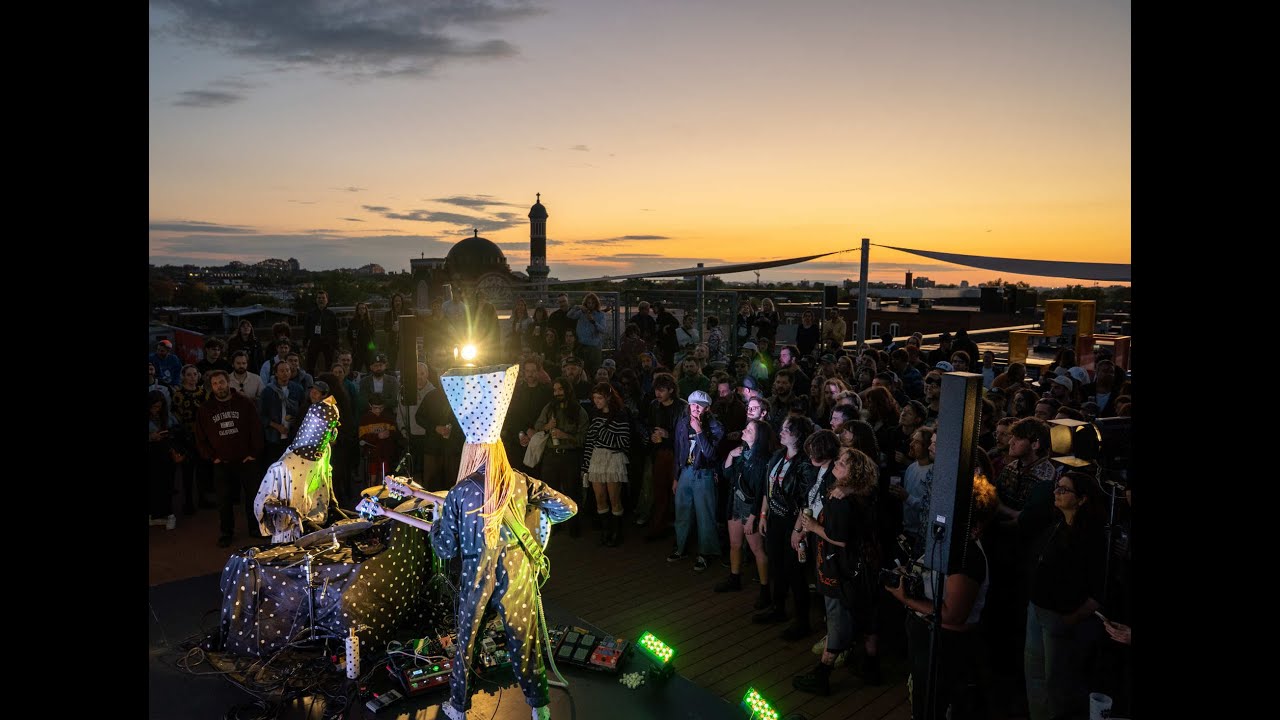
Let’s talk about the rig. Usually there aren’t any amps on stage behind you.
I’ve never been much of a gearhead. As far as amps go, I’ve always used simple solid-state amps
I work with no amps on stage most of the time. We run the signals through DIs and rely entirely on simulators. It’s convenient for our backs and van space, but it also reacts properly to the stacking of multiple layers and the obvious crescendo that happens in the process.
I’ve never been much of a gearhead. As far as amps go, I’ve always used simple solid-state amps. Any Peavey ripoff bass amp from the early ’80s, paired with a Roland JC-120, has been my go-to for the past decade.
What pedals can’t you live without?
The looper, definitely. I always carry a spare one that’s kept on stage. For me, having the looper stop working entirely is the equivalent of that classic nightmare where one goes to school naked.
Our music depends on the use of that system. But the answer is very project-specific. The funny thing is it took me nearly a decade of playing before I bought my first pedal, which was the Unpleasant Surprise fuzz/gate by Fairfield Circuitry. I bought it to make scratch-like effects with a live band playing rock renditions of electronic compositions.
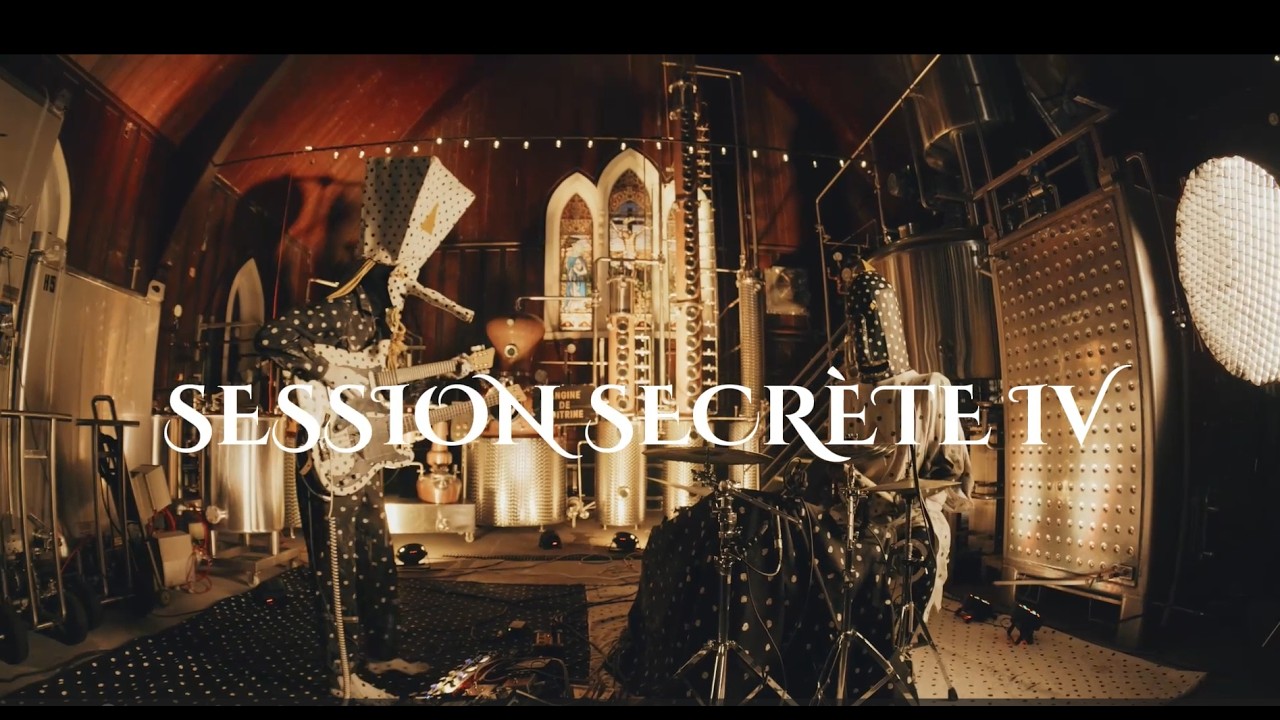
Finally, there can be no doubt you are the music industry’s biggest success story of 2026. Why do you think that is?
It would be presumptuous to think that it’s only about the music. Because, while we make an honest effort to create fun and original tunes, there’s also an endless flow of amazing music being put out every day by people whose virtuosity knocks me out of my chair.
Has the success of any rock band ever been only about the music? The music needs to be catchy, but it’s also about how people relate to it. Angine confusingly celebrating while also satirizing some of rock ’n’ roll’s clichés – all in good fun – might be what a lot of people needed.
In times where communication technologies bring a constant smell of fear and conflict, Angine invites everyone to knee-bend dance to weird, wonky rock ’n’ roll, putting forward no specific message about human affairs.
Ultimately we’re saying, “You have the right to let your brain snap out of it for an hour – have a hotdog and go crazy.”
- Vol. II is out now via Ato Records.
- This article first appeared in Guitar World. Subscribe and save.

