

Tony Iommi, 78, has been a bona fide celebrity for more than half a century and should, in theory, be enjoying a well-earned retirement.
In reality, it’s hard to think of a comparable musician of his demographic who is anywhere near as busy as Iommi, who has spent the past few years working on boxset reissues from his old band, Black Sabbath, playing with and promoting a Sabbath-themed ballet, recording songs to accompany an Iommi-branded line of perfumes by Xerjoff (yep, you read that right), guesting with the pop singer Robbie Williams – and, of course, playing at the Back to the Beginning concert in Sabbath’s hometown of Birmingham, England, in July 2025.
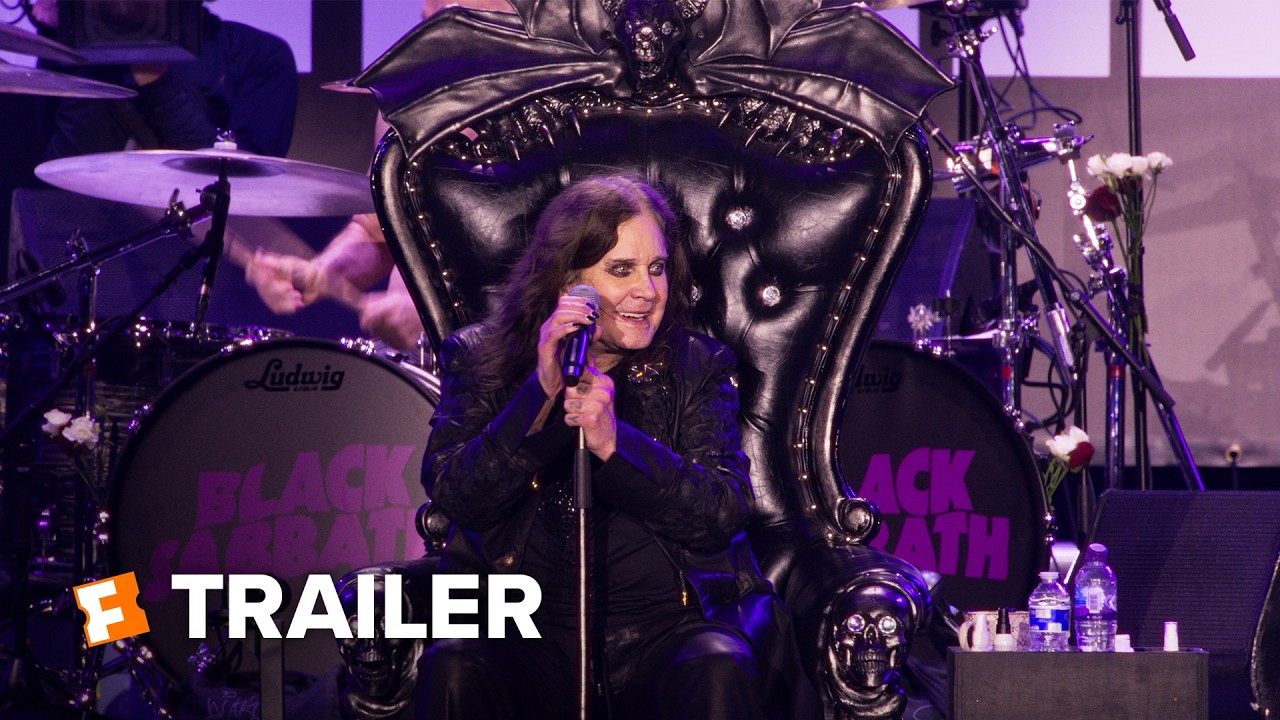
That landmark event, held just 17 days before Sabbath’s singer, Ozzy Osbourne, died on July 22 at age 76, marks a dividing line between one era of heavy metal and another, specifically because it was the last performance by the group’s classic lineup of Ozzy, Iommi, bassist Terence “Geezer” Butler and drummer Bill Ward.
A year after Ozzy’s death, many of his fans are still struggling to comprehend a future without him or Sabbath in it; fortunately, the creative heart of the band, if not its most visible face and voice, is still present and productive in the form of Iommi, whose new solo album, From the Dark – his first in 21 years – is out in October.
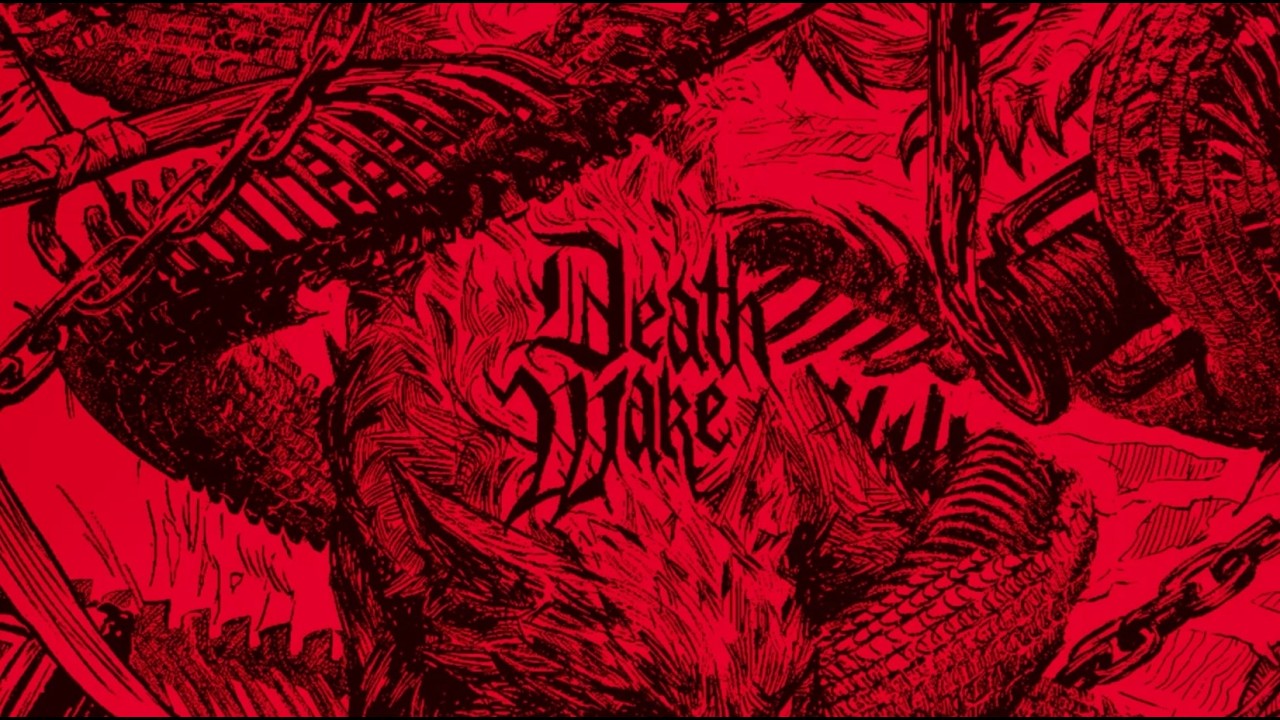
It’s a highly accomplished set of songs, with the music written by Iommi, lyrics and vocals by Norwegian singer Jorn Lande, bass by Mercyful Fate’s Becky Baldwin and drums by Karl Brazil of Robbie Williams’ band. Iommi’s long-time collaborator, Mike Exeter, co-produced the record and mixed it alongside Judas Priest’s Andy Sneap, and none other than Sir Brian May of Queen delivered a guest solo on Death Wakes.
This is an elite team, and it shows, with ambitious, multi-layered arrangements underpinning the songs as well as plenty of dynamic range, from atmospheric moments to full-on metal storms.
As for guitar? Iommi is on fire, supplying riffs that range from the expected Sabbath-like doom (Black Times) to mid-tempo chug (Over the Violent Sun) and soloing throughout like a man possessed. Whatever is in the water supply at his home studio near the Cotswolds in southern England, we want some.
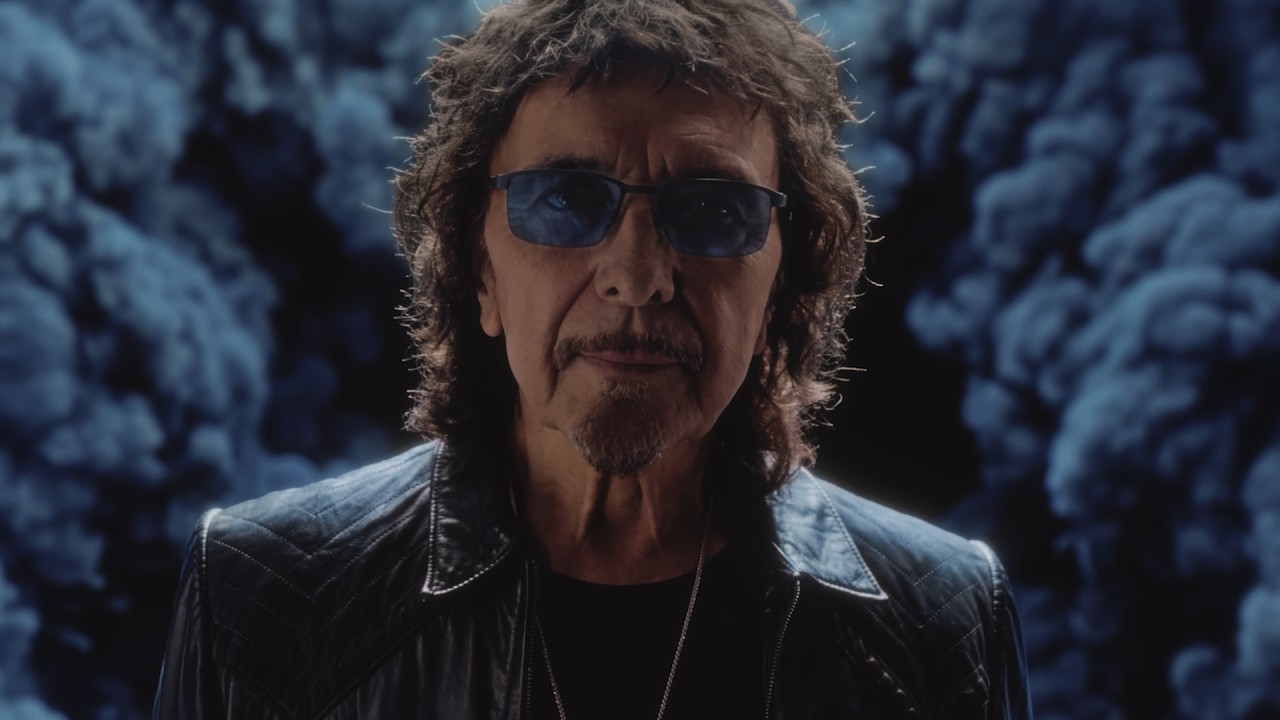
When Iommi calls us from his home to discuss From the Dark, England is in the middle of the hottest summer on record, a situation for which most Brits are completely unprepared.
“There’s wildfires not far from here,” he says with concern, but as anyone knows who has read any of his interviews, Iommi tends to be pretty relaxed about most things. It’s no different today, presumably because he spent 50 years in one of the most eccentric bands of all time, and it takes a lot to shock him these days.
This is helpful, because we have all the big questions to ask, including whether he invented the two-octave fretboard, what Ozzy was really like – and if he’s really responsible for heavy metal.
We’re really enjoying the new album.
Thank you! This one’s not been like the other albums I’ve done, where I’ve generally had a month to write the stuff and then record it for six weeks. Normally we work five days a week, but for this album I’d get my engineer over, we’d put something down, work a couple of days and then have a week off and come back again. There was no pressure because there was no release date or anything.
That sounds ideal.
Well, it works because you can just take your time with it and do it when you really feel like it, you know. I’ve got a normal life like everybody else, and I’ve got loads of other things happening.
How close was From the Dark to completion by the time of Back to the Beginning last July? I imagine preparation for that event took up a lot of time.
A lot of things have taken a lot of time. The Back to the Beginning rehearsals took quite a while, because we had Bill Ward come over, and we hadn’t played live with him for 20 years. And also, of course, I had the Robbie Williams thing and the ballet [Ed. note: Black Sabbath – The Ballet was created by the Birmingham Royal Ballet under the direction of Carlos Acosta; it premiered in 2023].

What were the original goals for the new music?
With this record, to be honest, I was thinking, “This is an instrumental album,” like I did with the two tracks for the perfume [Scent of Dark and Deified, both 2021]. But then I thought, “Maybe I should think about writing stuff for a vocalist” and changed my mind and started again. I’ve always liked Jorn Lande’s voice, and it’s been great working with him.
How did you recruit Becky Baldwin and Karl Brazil on bass and drums, respectively?
Karl came through Mike Exeter, who’s been my engineer and producer for many years. I was down at my other house on the south coast, and I was walking along the seafront, and this guy came up to me and went, “Hello, I’m Karl.” I thought he was a fan, but he said, “We’ve got mutual friends.” I went, “Oh, who?” and he went, “Mike Exeter – and I’m the drummer with Robbie Williams.”
There was a point when Mike and I said, “We need a drummer” and I wanted somebody local, somebody who was good and somebody who could get over and start work straight away, so I said, “Let’s try Karl.” We used him on one of the perfume tracks, and he was great, and he’s really good to work with – a lovely guy. The same thing happened with Becky.
Mike told me about her, so I looked her up and watched some of her videos, and we said, “Let’s see if she’s interested.” She was, so she came over to my house, and that was it. She worked out really well. The great thing is that she’s a big fan of Geezer, so she’s playing in Geezer’s style, which I wanted.
What was your songwriting process?
We put general ideas for the song structures down, and then we got Jorn over from Norway and showed him what we’d got. He took the songs away and came back and recorded them. He’ll go on all night, Jorn.
He’ll do a take and we’ll say “That’s good,” and he’ll say, “I could just do a better one,” and we’ll say, “No, that one was fine!” And, of course, Mike played his keyboard on the album. There’s endless amounts of bloody bells on it.
I noticed a doomy bell in Legacy. Was that a nod toward the song Black Sabbath?
Yeah, absolutely! And also we brought in Andy Sneap, just to help, because it’s always nice to have another opinion from somebody who is good at engineering.
How do you write riffs? Do they just come out of thin air?
You know, it’s always a strange thing. It’s just one of the things I can do – probably one of the only things I can do. [Laughs] Generally, we’ll go in the studio and start playing and something comes up. I’d better not go on about it too much, because the next time I do it, I won’t be able to do anything… But that’s generally how it is.
I go into a particular studio and start playing, and the sound sets me up for what sort of riff I’m going to play, or what mood I’m in. I generally start off with doomy stuff and then go into something else. I’ll think, “That’s a good riff,” so I’ll leave that one and then play something else and go, “Oh, that’s good too.” And then I’ll listen back to them an hour or so later and work on a few of them.
After writing hundreds of riffs by this point, how do you avoid repeating yourself?
I don’t know. I might have repeated myself; there are so many riffs on different albums. I tend not to listen to other people because you never know, subconsciously you might come up with a riff that’s somebody else’s.
What guitars did you use this time?
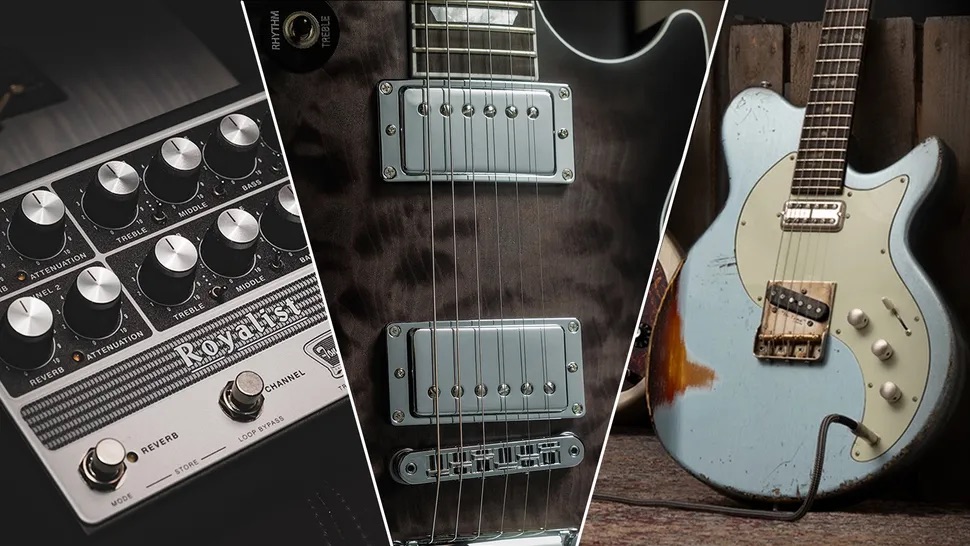
I used different ones. I used my Gibson SGs, the copies of the Monkey that Gibson made [Gibson Custom Tony Iommi “Monkey” 1964 SG Special Replica]. I used that for a bit, and then I went back to my JayDee [Custom] Old Boy and used that, because I’m so used to that guitar, so I shuffled from one to the other. Also, Brian May had one of his Red Special guitars made for me, and I used that on a couple of bits.
There are so many different combinations on that guitar – I haven’t played it enough yet to find out what they are. There’s a few little bits of acoustic guitar in the background here and there, too; I played a Taylor, and I might have used a Gibson.

What happened to the original Monkey SG? We heard there was some sort of chat with the Hard Rock Cafe…
Years ago, the guy who buys all the memorabilia for the Hard Rock Cafe arranged to come over to England and visit me. He said, “Look, if you’ve got anything, I can give you up to a million for it.” At first I said, “I don’t really have anything I want to sell,” but then I thought, “Hang on, I have got my original Monkey guitar, which I don’t use now. It’s in a box and I don’t use it, because I don’t want it to get nicked if I take it on the road, which has happened a couple of times with things.”
And the man said, “If you ever want it back, let me know, give me the money back and you can have the guitar back.” I said, “Fine, that’s a great deal.”
Anyway, that’s what happened, but later the guy passed away and nobody had any idea of what arrangement we’d made! The Hard Rock Cafe apparently didn’t know that was the deal. They contacted me and said, “We don’t know anything about that.” So that was it – but I’d rather it be on show than stuck in a box.
You told Guitar World in 2024 that you were experimenting with a Kemper Profiler. Did you use it on this record?
I played a couple in drop D and the rest a semitone down, which I’ve done for many, many years.
I started off with the Kemper, which is great for what I need to get. I’ve never used anything like that before. I’ve always used amplifiers, but when we were first putting ideas down, I hadn’t got my studio built yet.
We were working on the top floor of my house, and that’s when Mike suggested this Kemper and we started using it. I liked it, I thought it was really good, but when we had the studio built in the winter, I used my Laney valve amp, the Iommi TI100. But the Kemper has been really, really useful.

What were the tunings on the record?
Out! [Laughs] I played a couple in drop D and the rest a semitone down, which I’ve done for many, many years.
Do you find that you can still solo as quickly and fluently as ever?
I’ve had problems. I broke a tendon in my arm, and I’ve never been able to repair it, but I get by and I do what I can. I’m not one for playing technically, like the other guitar players of today, who are really technical and very, very good. I still play in the old style, and I don’t even realize what I’m playing. It’s weird. I generally put a solo down, and if they say, “Can you repeat that?” I go, “No, I don’t know what I did!”
So if you then have to play the song live, you have to relearn the solo as it was recorded?
Well, yeah, to a point, I have to do it, and it’s difficult. When I did the video for World Alone, I thought, “God, what did I play in that?” I had to listen to it again and try to get it in my head. You get other guitarists who can play a solo the same way all the time, but I just can’t do that. I play exactly how I feel at that time, so it’s never really the same.

Are you planning any live dates to promote the album?
We haven’t planned anything yet, but I wouldn’t mind doing a couple of them again. I’m not going to be doing world tours or anything like that. That finished with Sabbath, but it’d be interesting to do some on-and-off stuff.
I would think that any of the big festivals next summer would happily put you on as headliner.
Yeah, but nobody would come. [Laughs] I enjoy playing live. But who knows?
Brian May plays guest guitar on Death Wake. Did you just call him and say, “Want to play on my album, Brian?”
[Laughs] I landed it on him. I said, “Bring a couple of guitars over.” “Why?” “Just bring them…” We’ve always had that relationship of just playing together. It’s been a great friendship, over the last 60-odd years.
We’d love to see a May & Iommi album come out sometime.
Yeah, I would as well, and we keep talking about it. That’s as far as we’ve gotten.
You’ve been an innovator in guitar design over the years. Is it true that you were the one who came up with two-octave fretboards before anybody else?
I came up with a lot of ideas like that. I went to various companies – big companies, you know – but they weren’t interested. They said, “What’s the point of that? Nobody’s going to use [the extra frets]. It’s always 21 or 22 frets,” so I invested in a guy in Birmingham, John Birch, who made guitars.
I said, “Can you make me a 24-fret guitar?” He said yes and made me one. After I used it, of course, companies caught on. I did it with a locking nut as well, which used an Allen wrench.
My other idea was an interchangeable pickup. The idea was that you had half a dozen pickups, and you could pull them out from the back of the guitar and then snap a different one in – if you were in the studio and you wanted a different sound. I suppose nowadays you’ve only got to press a button and you get the sound you want.
You famously lost two fingertips in an industrial accident in 1965, obliging you to fret the strings with prosthetic fingertips. How are the injured fingers holding up?
They’re all right. I have to keep the fingertips in shape when I’m on tour. I change the leather parts every couple of weeks, and it’s a bit of a hassle, but I’ve got used to it.
Do you feel any pain when you fret the strings with those fingers?
No, because I put tape on those fingers, and then I put a bit of glue on the tape and push the thimble [i.e. the prosthesis] until it holds on. They used to fall off, and it was a bloody pain, trying to find them. “Where is it? It’s on the floor somewhere!” [Laughs] But, yeah, the same thing has worked for me since day one.
If, for whatever reason, you lost the prostheses right before stage time, could you get through the gig just using your actual fingers?
No, I couldn’t get through the gig, because I couldn’t touch the strings with those fingers. The bone is right under the skin. One time, years ago, when it did come off, I fretted a string and it sliced right through my finger. There was blood all over the place. But I can play with the two other fingers – I learned to use my little finger [pinky] in the early days because I had to.

It's constantly written, including by Guitar World, that you invented heavy metal by tuning down. Do you agree with that?
That’s what they say. I mean, I did it for me. I wasn’t thinking, “I’m going to invent heavy metal today.” I actually liked the sound of it when it was tuned down. It gave it a lot more guts.
I thought we were a hard rock band. And then, when I did an interview for Melody Maker or something, the guy said, “So, of course, you play heavy metal.” “Heavy metal? What’s that?”
I remember Rick Rubin, when he produced Black Sabbath’s 13 in 2013, telling you guys, “You’re not a metal band, you’re a blues band.”
Yeah, well, Rick Rubin said quite a lot of things. [Laughs] I don’t know. Many years ago, I thought we were a hard rock band. And then, when I did an interview for Melody Maker or something, the guy said, “So, of course, you play heavy metal.” “Heavy metal? What’s that?” I suppose it was, really, because we come from a city where people work in factories with machinery and stuff like that, so I suppose you can relate it to that sort of thing.
Ozzy Osbourne was your friend for 50 years. What kind of person was he, from your perspective?
We got on really well. He’d always look up to me and ask me if this was all right or that was all right. He was a bit insecure at certain times, but at other times when he’d go on stage, he’d be more confident. He loved what he did. He loved getting on stage. We had a laugh – a great laugh. He’d always come up to me and Geezer on stage and pull a funny face, to make us laugh. We had some good fun over the years.

How was the Back to the Beginning show for you?
Difficult. Initially, when it was mentioned to me, I said no, because we’d done The End Tour [2016 to 2017] and I didn’t want to be like, “Here we are again, another tour.” But when it was mentioned about it being for charity, then yes, I was into it.
Still, I thought, “What’s it going to be like? We haven’t played with Bill for years,” and when we got into rehearsal, I hadn’t seen Ozzy since we’d done the Commonwealth Games in 2022. That was the last time I’d seen him, because he was in the States and he couldn’t get over because of his health situation; they wouldn’t let him fly. Eventually, when he came over, and we met for rehearsals, we were floored, because he was carried in, basically. I couldn't believe how he’d deteriorated. We were all in shock, really.
He sat there, and I said to him, “You know, you don’t have to sing, we’ll just run through it instrumentally,” but he said “No, I’ll have a go” and he’d sing for a bit. And then we’d finish for the day and I said, “Don’t bother to come in tomorrow, we’ll just run over the songs instrumentally with Bill.” He said, “All right,” and then he might turn up the next day – or not.
And how was the actual gig?
The hard thing for me was when we got on stage. I couldn’t see Ozzy, because he was in his chair and I was at the back, because Bill wanted me to stand back by him to give him any clues if something went wrong. So I couldn’t see Ozzy at all, apart from when I did go to the very front and I could see him for a second.
It was very difficult, because I was so used to Ozzy jumping around and running up to me and grabbing me. It was just a terribly different thing altogether, and it was very hard to do it. But, you know, I’m glad we did it, because it was the original band and we won’t be doing it again. I’m really glad we did it for Ozzy and for the fans.
I was so used to Ozzy jumping around and running up to me and grabbing me. It was just a terribly different thing altogether, and it was very hard to do it
The final song on your new album is called Legacy, about a musical artist and his legacy. Does it refer to you?
I don’t know. That’s a question you’d have to ask Jorn.
So what is your legacy?
I think we started something that wasn’t around at the time. I think that’s mainly what we get credited for, because nobody was doing this sort of music, so when we did it, we had a hell of a job getting accepted in the early days.
You had to prove yourself. There was no MTV, so it was all word of mouth, and we were limited to where we could play because there were only a couple of blues clubs in Birmingham. That’s why we used to go abroad – to Germany, Switzerland, Sweden, all over.

What are your goals at this point?
I’ll just take things as they come. I’m open to a lot of different things and I enjoy it all. I enjoyed doing the Robbie Williams thing because it was something different. I enjoyed doing the perfume tracks because that was something very different. I really enjoyed doing this new album, too, and I’m very excited to see what happens when it comes out. Hopefully people will like it.
I enjoyed doing the Robbie Williams thing because it was something different
We mentioned Sir Brian May earlier, who is, of course, a knight of the realm. When are you going to be “Sir Tony Iommi”?
[Laughs] I don’t know, that’s up to the King. I did get an MBE [Member of the Order of the British Empire, a prestigious British honor] a couple of months ago.
Did that mean a lot to you?
Yeah, absolutely. All the awards I’ve had, I really do take them seriously. They show that people like what you’ve done, and they think you deserve it. To get an MBE is just fantastic.
Especially when you think about where Black Sabbath came from.
Exactly, yeah. Funnily enough, Geezer emailed me when they announced it, and he said exactly that – about looking back where we came from. It’s unbelievable, really.
- From the Dark is out now via BMG.
- This article first appeared in Guitar World. Subscribe and save.

