


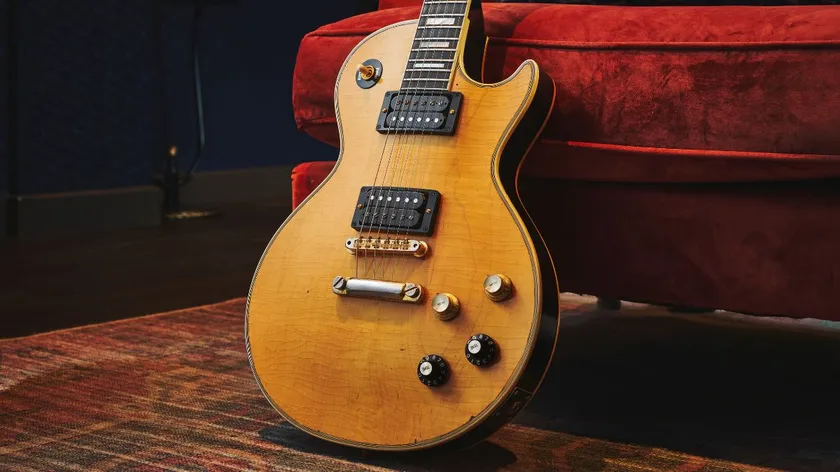


Starting life as a radical costume change for the flailing Les Paul, the SG would go on to become a rock 'n' roll icon in its own right, earning accolades from guitar heroes such as Angus Young, Tony Iommi, Sister Rosetta Tharpe, Frank Zappa, among many, many more. These musical legends have used the SG's fierce mid-range bark to create some of the most recognizable tones of all time. Luckily, if you fancy following in the footsteps of rock royalty, now is the time, as the guitar giant is producing some of the best Gibson SGs ever, with more configurations than you can shake your devil horns at.
While its flashier, flame-topped brother is often thought of as the poster child for the brand, the SG has an enduring presence in the Gibson catalog, having never been out of production since it hit the scene in 1961. Today the Gibson SG's legacy is celebrated with a slew of era-specific reissues, modern updates and affordable variations – meaning there's most definitely an SG out there for everyone.
Join us as we walk you through our budget-spanning picks of Gibson's Solid Guitar, with some handy buying advice if this is your first venture into the wonderful world of the SG. So, for those about to rock, we'd advise you to start right here.
Best overall

Coming from Gibson's aptly named Original Collection, the SG Standard '61 comes in a few slight variations. Now, while you have the choice of either the Maestro Vibrola or Sideways Vibrola, we've decided to showcase the Tune-O-Matic version, as we believe it will appeal to the vast majority of players.
As you'd expect, the SG Standard '61 follows the tried and tested formula that made the initial guitars so beloved. The SlimTaper mahogany neck is a joy to play, while the bound rosewood fingerboard has beautifully rolled edges, making it one of the most comfortable necks Gibson presents.
The tonal center of this stylish guitar is a set of '60s Burstbucker humbuckers, which deliver a fierce growl and a stunning amount of clarity. If you are in the market for the best SG, Gibson SG Standard '61 has to be at the top of your must-try list.

"This top-tier SG is stripped-down like the originals and a bona fide rock machine, but it can do a lot more besides."
Read our full Gibson SG Standard ’61 review
Best with P-90s

This dual P-90 classic from Gibson's distinctly retro Original Collection now comes in a choice of four '60s-style gloss nitrocellulose lacquer finishes – Faded Pelham Blue, Vintage Sparkling Burgundy, Vintage Cherry and Ebony.
Beyond its head-turning looks, the Gibson SG Special also delivers on playability and tone. With a mahogany body, a slim taper mahogany neck and a bound rosewood fingerboard, the guitar is sure to satisfy vintage gear hounds.
The duo of soapbar P-90s provides a broad tonal base, with a virtually endless array of further possibilities through the guitar's hand-wired volume and tone controls.
"This guitar supports the hypothesis that says the P-90 soapbar is pound-for-pound the best pickup ever."
Read our full Gibson SG Special review
Best vintage

Okay, so now we turn to see what the folks over at the Gibson Custom shop have been cooking up. Top of the line in '63 – and today – this Custom Shop reissue has been painstakingly recreated using Gibson's traditional building methods and is easily one of the best Gibson guitars money can buy.
Sporting a solid one-piece mahogany body and long tenon, hide-glue fit neck, Classic White vintage patina nitro finish, solid ebony fretboard, mother-of-pearl block inlays, and Custombucker Alnico III humbuckers, this guitar was built to turn heads and melt faces.
So, if you are looking for something a little special – and insanely versatile – then you'll want to check out the timeless classic that is the Gibson 1963 Les Paul SG Custom Reissue.
Best modern

The majority of the guitars on this list fall under the vintage reissue category, but that's not to say that all Gibson SGs are stuffy old six-strings that can't shred. The bold Gibson SG Modern proves that this horned devil can deliver a contemporary playing experience.
Featuring a AA maple top and mahogany back, the SG Modern is clearly taking some style cues from its big brother, the Gibson Les Paul. It also differs from the classic SG design in other ways with an ebony, 24-fret compound radius fingerboard, which features an asymmetrical SlimTaper neck profile.
At the heart of this contemporary guitar is a pair of calibrated Burstbucker Pro Alnico 5 humbuckers, which feature push-pull controls allowing you to effortlessly switch between the fierce power of a humbucker to the bright attack of the P-90.
Best satin

The Gibson SG Standard '61 Faded Maestro is essentially the same guitar as our top pick, but this time in a "faded" finish. After a very short period of time, this satin nitrocellulose lacquer will start to look played in, giving the SG a vintage feel – something that would take years on the full gloss version.
While the "standard" Gibson SG '61 is available in three options – Maestro Vibrola, Sideways Vibrola and Tune-O-Matic – the Faded option is currently only available with the Maestro Vibrola. Hopefully, this will change in the future.

"While these new Faded models might simply be an opportunity for Gibson to offer guitars that are slightly reduced in price (by around 11 percent) when compared with the fully finished equivalent models, they neither feel nor sound like instruments made in a hurry."
Read our full Gibson SG Standard '61 Faded Maestro review
How to choose

When it comes to selecting the best Gibson SG for you, the first thing to consider is budget. Luckily, Gibson offers plenty of options at various price points. If you want the SG look, feel and tone but don't want to spend a fortune, the Tribute series is most definitely for you. Of course, if even that is a little too much, there are affordable Epiphone options as well.
As you move through the range from Standard to Custom Shop, the guitars get progressively more expensive, adding more features and desirable additions.
Next, you'll want to consider the tone you are looking for. Despite looking very similar, the pickups vary wildly from SG to SG. Some are loaded with the retro-sounding 60s Burstbuckers, while others opt for the Alnico 3 Custombuckers, modern Burstbucker Pro + or even P-90s. So, our advice would be to spend some time thinking about the sound you are looking to produce and use that as a starting point.
Lastly, you'll want to decide on the feel. The most common neck shapes on the SG are the fan favorite, SlimTaper or the slightly chunkier Rounded profile. Now, this is a matter of taste, so there are no wrong answers here. Simply choose the one that's more comfortable for you.
Glossary of terms
- Bevel: The sculpted, contoured edges on the SG body that give it a sharp, comfortable feel and its signature look.
- Body: The main wooden section of the guitar, typically made of mahogany on the SG, featuring a thin profile and double cutaways.
- Bridge: The metal piece on the body where the strings rest and are anchored; usually a “Tune-o-matic” style on the SG, allowing for precise intonation and string height adjustment.
- Control Knobs: Dials located on the body, usually two for volume and two for tone, letting you tweak the sound of each pickup independently.
- Cutaway: The scooped-out sections on both sides of the SG’s body next to the neck, making it easy to reach higher frets.
- Fretboard (Fingerboard): The front surface of the neck with metal frets, typically made from rosewood or ebony, where you press the strings to play notes.
- Frets: The thin metal strips across the fretboard that divide it into fixed segments for each note.
- Headstock: The top end of the neck where the tuning pegs are mounted.
- Humbucker: A type of pickup with two coils designed to cancel out electrical hum, providing the SG with its thick, powerful sound.
- Maestro Vibrola: A vibrato (whammy bar) system found on some SG models, allowing players to create pitch-shifting effects by rocking the arm. The Maestro Vibrola is famous for its decorative tailpiece and smooth action, often associated with classic ‘60s SGs.
- Neck: The long, narrow part of the guitar that extends from the body, housing the fretboard, frets, and truss rod. The SG is known for its slim, fast neck profile.
- Neck Joint: The area where the neck meets the body; on the SG, this is usually a glued “set-neck” for better sustain.
- Nitro Finish: Short for nitrocellulose lacquer, this traditional, thin, breathable finish is used on many classic SGs. It ages and “relics” over time, allowing the wood to resonate more.
- Pickup Selector Switch: A switch (often three-way) that lets you choose between the neck pickup, bridge pickup, or both.
- Tailpiece: The metal part behind the bridge that anchors the strings to the body; sometimes integrated with the bridge itself or as part of a vibrato system like the Maestro Vibrola.
A brief history of the Gibson SG

From a modern viewpoint, it's hard to believe that Gibson was having a hard time selling the Les Paul model, but the guitar-playing community of 1960 just wasn't interested in a heavy hunk of mahogany topped with flamed maple. Guitarists of the day were flocking to Fender's futuristic – and double cutaway – Stratocaster and Gibson knew they needed to do something radical to keep up with their Californian rivals.

The story of the Gibson SG: the first two decades of the Les Paul's double-cutaway successor
Gibson's answer would be to completely redesign the Les Paul into an unrecognizable slab of bevels and curves. Still baring the Les Paul moniker at this point, this new guitar was thinner, lighter and offered players the upper fret access they were crying out for.
By the end of 1963, the devil-horned Gibson would get a name change, becoming the SG, which stands for "solid guitar". Now, there are many reasons cited for this change, but there are two explanations that are most commonly used to explain the decision.
First of all, despite appearing in the adverts for the radical new Gibson, Les Paul himself wasn't a fan of the redesign, preferring the strength and feel of his original singlecut. It's also been said that as Les was in the process of divorcing his wife and singing partner, Mary Ford, Gibson wasn't happy with the negative publicity that the very public divorce was starting to garner. At the same time, Les was advised not to sign a new contract with Gibson while in the middle of a messy divorce, and eventually, the Les Paul name would be removed from the new guitars.
Over the years, the SG has gone through various iterations with slight tweaks to everything from the bevels and contours to the bridge style and pickups. Today Gibson makes a slew of SG models, from historic reissues that capture the magic of the original to contemporary versions that are perfect for modern shredders.
FAQs
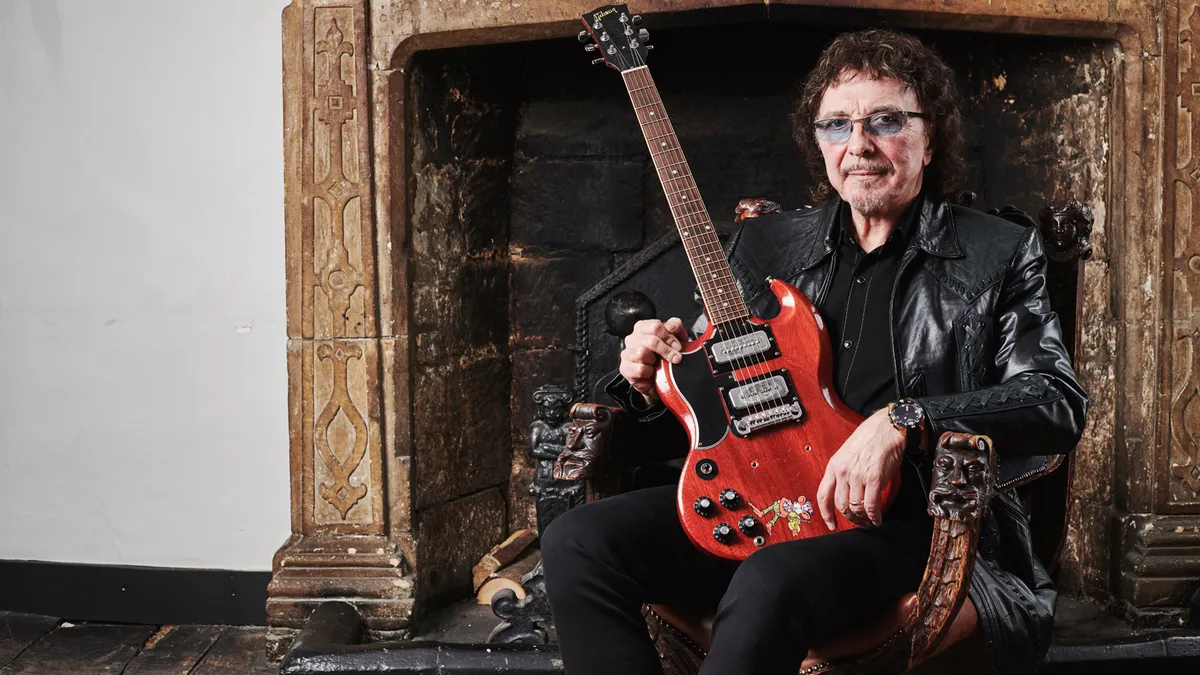
What notable guitarists play an SG?
We all know that the Gibson SG is a hard rock staple, with the likes of AC/DC axeman, Angus Young and the godfather of heavy metal, Tony Iommi relying on the SG to bring power to their iconic riffs.
That said, the SG is more than a rock 'n' roll tone machine, with the likes of Derek Trucks, proving that it can bring a touch of soul to beautiful slide licks, while Gary Clarke Jr uses his SG to seamlessly blend the blues with modern soul and hip hop.
Other notable SG players include George Harrison, Eric Clapton, Frank Zappa, Robbie Krieger, Sister Rosetta Tharpe and Mastodon guitarist, Brent Hinds.
What makes the Gibson SG great?
The Gibson SG stands out mainly for its double-cutaway design and slim, lightweight body. Unlike the heavier Les Paul, the SG is super comfortable to play for long periods, thanks to its thinner body and lighter build.
The double cutaways give you easy access to the higher frets, making soloing a breeze. It’s also known for its punchy, aggressive tone, thanks to its solid mahogany construction and dual humbucker pickups.
The SG’s distinct look, sharp horns, and sleek, contoured body make it instantly recognizable. Whether you’re into rock, blues, or metal, the SG’s versatility and playability make it a favorite for many guitarists.
Is the Gibson SG good for beginners?
Absolutely! The Gibson SG is a great choice as a beginner electric guitar because it’s lightweight and very comfortable to hold, even for smaller players. The neck is typically slim and easy to navigate, which helps when you’re just starting out.
Plus, the SG has a cool, classic look that can be motivating to pick up and play. The only thing to watch out for is the neck-heavy balance, which some players notice, but you’ll get used to it quickly. Overall, it’s a solid, user-friendly guitar for anyone getting into music.
What genres is the Gibson SG best suited for?
I think the Gibson SG is super versatile, but it’s especially popular in rock and blues. Think of legends like Angus Young from AC/DC or Tony Iommi from Black Sabbath; both are famous for their SG sound.
The SG’s humbucker pickups give it a thick, powerful tone that works great for crunchy rock riffs, heavy metal, and even smooth blues licks. That said, you’ll also see the SG in punk, indie, and sometimes even jazz.
Its wide range of tones means you’re not limited to just one style, so whether you want clean sounds or heavy distortion, the SG can handle it.
How does the SG’s tone compare to a Les Paul?
While both guitars use similar woods and pickups, the SG usually sounds a bit brighter and more aggressive than a Les Paul. That’s mostly because the SG’s body is thinner and lighter, which gives it a snappier, more pronounced midrange.
The Les Paul, on the other hand, often sounds warmer and a bit more mellow, with extra sustain due to its thicker body. If you like biting leads and a more pronounced attack, the SG is the way to go. For smoother, rounder sounds, the Les Paul might be your pick.
How we select products

Here at Guitar World, we are experts in our field, with many years of playing and product testing between us. We live and breathe everything guitar and bass related, and we draw on this knowledge and experience of using products in live, recording and rehearsal scenarios when selecting the products for our guides.
When choosing what we believe to be the best Gibson SGs available right now, we combine our hands-on experience, user reviews and testimonies and engage in lengthy discussions with our editorial colleagues to reach a consensus about the top products in any given category.
First and foremost, we are guitarists, and we want other players to find the right product for them. So we take into careful consideration everything from budget to feature set, ease of use and durability to come up with a list of what we can safely say are the best Gibson SGs on the market right now.
Read more about our rating system, how we choose the gear we feature, and exactly how we test each product.
Why trust Guitar World

☑️ A global audience of 3.8 million guitarists monthly
☑️ 1,200+ reviews on GuitarWorld.com
☑️ 30+ years of product testing at Guitar World
Guitar World boasts over 44 years of expertise and stands as the ultimate authority on all things related to guitars. The magazine and website feature expertly written gear round-ups and top-quality, authoritative reviews penned by a team of highly experienced industry professionals.
Guitar World's inaugural print issue hit the shelves in July 1980, and ever since, it has been captivating players and enthusiasts with engaging lessons, insightful interviews with the biggest guitar heroes, and priceless buying advice for newbie players.
Furthermore, GuitarWorld.com continues this legacy online and serves as the hub of the world's foremost authorities on guitar playing. The site not only hosts content from Guitar World but also showcases articles from respected publications such as Guitarist, Total Guitar, Guitar Techniques, and Bass Player. With a reach extending to 3.8 million players each month, GuitarWorld.com is a go-to destination for guitar fanatics globally.
Below you'll find more information on the expert authors of this guide.

Daryl is a Senior Deals Writer at Guitar World, where he creates and maintains our 200+ buyer's guides, finds the best deals on guitar products, and tests the latest gear. His reviews have been featured in prominent publications like Total Guitar, Future Music magazine, and MusicRadar.com.
During his career, he has been lucky enough to talk to many of his musical heroes, having interviewed Slash and members of Sum 41, Foo Fighters, The Offspring, Feeder, Thrice, and more. In a past life, Daryl worked in music retail. For a little under a decade, he advised everyone from absolute beginners to seasoned pros on the right gear for their needs.
Daryl is also a fully qualified sound engineer, holding a first-class Bachelor's degree in Creative Sound Production from the University of Abertay.

Rod Brakes is a music journalist with an expertise in guitars. Having spent many years at the coalface as a guitar dealer and tech, Rod's more recent work as a writer covering artists, industry pros and gear includes contributions for leading publications and websites such as Guitarist, Total Guitar, Guitar World, Guitar Player and MusicRadar in addition to specialist music books, blogs and social media. He is also a lifelong musician.
Related buyer's guides
You can trust Guitar World Our expert reviewers spend hours testing and comparing guitar products so you can choose the best for you. Find out more about how we test.
- Here are the best electric guitars for all budgets
- Best Telecasters: top Fender Tele electric guitars
- Epiphone vs Gibson: what's the difference?
- Here are the best Epiphone Les Pauls available right now
- Got the blues? Check out the best blues guitars
- From Fender to Gibson, Taylor to Martin, here are the best guitar brands

