

Hearing Carl Carlton spin his life story is almost as thrilling as sitting opposite him as he rattles a slide lick up the neck of his Telecaster.
Born on 20 April 1955, as the son of a livestock farmer in Germany’s sleepy Friesland region, the teenage guitarist found himself at the right time – but entirely the wrong place – for the rock ’n’ roll boom.
Yet Carlton – real name Karl Buskohl – soon defied his circumstances, upping sticks for the country’s roughneck port towns to learn his craft at the sharp end, before becoming a first-call sideman who inspired giants like Robert Palmer and Eric Burdon to Grammy-nominated career heights.
Carlton always ran his own bands in parallel, with new album, Miles Of Time – alongside vocalist and partner Melanie Wiegmann – the official reason for today’s interview. But as the 71-year-old folds his 6ft 5in frame onto the Guitarist sofa, he’s happy to wind back the clock.
Do you remember how music came into your world?
My father was a farmer and once a week he’d take the animals to market. So they did the deal and afterwards we’d go to a pub with a jukebox on the counter. The publican looked a bit like a Gypsy, with a gold tooth.
People loved him. And the music on his jukebox wasn’t the usual German oompah or schlager. He had Ray Charles, Elvis, Beatles, Stones, Kinks. My father played cards and he always gave me coins for the jukebox. That was a revelation: “What the fuck is this?” I’d never heard anything like it.
How did you start down the road to becoming a guitarist?
Christmas ’66, I got my first guitar. First song I learnt was House Of The Rising Sun. 40 years later, I’m playing a tour with Eric Burdon in Toronto, Canada. And Eric says, “We have a guest today, the original guitar player from The Animals, Hilton Valentine.” So we’re on stage together playing the first song I ever learnt. These things come in circles.
I could play Blue Suede Shoes really well, so I did that for 15 bucks and a bottle of wine, and I was happy
How did your musicianship develop?
I was at a boarding school on one of the Frisian islands. All the other kids came from Berlin and Hamburg, failures from dysfunctional rich families. But there were some players. I remember guys three years older who showed me John Mayall and Canned Heat. Coming back to Friesland, I played drums, bass, whatever was needed. I played in these Top 40 bands, who also played quite progressive stuff – not just Chirpy Chirpy Cheep Cheep but The Doobie Brothers.
They were amazing musicians, and the shit sounded exactly like the record. They were very precise at copying. Most of these guys had their own ‘serious’ bands, but they were making good money playing covers [on the side]. I could play Blue Suede Shoes really well, so I did that for 15 bucks and a bottle of wine, and I was happy.

You’re renowned as a slide player. How did you discover that side of your palette?
Again, The Rolling Stones were the culprits because through them I heard so many new sounds and names, like Ry Cooder. Around 1970, I became a big Cooder fan and there was also Little Feat’s first album. So I was sold on that slide sound.
Someone who played more regular slide was Jesse Ed Davis, Taj Mahal’s underrated guitar hero. Of course, you didn’t have YouTube, so it took a while. They must have thought I killed a cat next door. At the same time, I learned a lot of slide and slow solo playing from Joe Walsh.

How did your early career gather momentum?
My first bands started to clash with school. But I was really radical in what I wanted. It was the lifestyle and the music. I just broke out. I moved to a port town near the Dutch border where there was plenty of work.
I learnt how to defend myself. Witnessed crime and sex for the first time. I changed my bands like my shirts, always with the dream of writing my own material.
One of my bands opened up for a Dutch group called Long Tall Ernie & The Shakers. They had hits in Germany, Holland, Belgium, France with 50s-style rock ’n’ roll. And they needed a guitar player. It wasn’t all my cup of tea because they were teddy boys. I don’t know what drove me.
But they had flight cases and they had a crew. I thought, “Fuck it, I’ll get back to what I want later.” So I joined them. And playing in that band taught me the ABC of rock ’n’ roll. We even had a No 1 in [the Netherlands] in 1977 with Do You Remember.
How did success change things for you?
Out of the blue, I made what to me was a lot of money. It might have been £10,000 or something. So I bought a big old Cadillac, second or third-hand, and we had a summer break, so I drove down to Cannes with my dog. Ridiculous, in that big ship!
I ended up at the Carlton Hotel and nearly blew all my money there. Then my car broke down in Paris. I literally gave it away at a petrol station. And I hitch-hiked home.
When I got back, the band started calling me Carlton. And it stuck. Then some executive from the label thought that was actually my name and got it wrong on the records.
But we opened up for Golden Earring with my new band and the bass player, Rinus Gerritsen, said, “That’s not a bad name. Keep it.” So because of that money, I not only got my name but felt secure enough to break out and start my own band.

How did you start working with Robert Palmer in the 90s?
I was always a big fan. At the time, I had a group of well-oiled musicians around me and we called ourselves The Treatment. In ’94 or ’95, Robert just had a greatest hits out, so the head of CBS called me up and said, “Carl, could you get a band together? Robert needs horns. He needs percussion.”
Robert’s MD came over with the setlist and, with no particular instructions, we just learned it off the records. But I went back to the arrangements from his first Island albums like Sneakin’ Sally Through The Alley [1974], y’know, when he was backed by The Meters and Little Feat. I was young and sassy. And in the middle of rehearsals, the door opens, Robert flies in, gives it a listen, throws away his coat, starts singing and that was it. I could have been fired. But Robert loved to improvise. So off we went.”
Tell us about the genesis of your all-star Songdogs project around the millennium.
We did a Robert Palmer show and Ronnie Wood was there. We talked about this band and Ronnie said, “Oh man, let’s call Mac,” – y’know, Ian McLagan from the Small Faces and the Faces. So he came and Bobby Keys, the saxophone player from The Stones.
So that’s how the band grew. It was almost like a summer camp down in Louisiana. And during that session, BB King’s producer was there. He said he knew Levon Helm and thought he’d love what we were doing.

That was at a low point for Levon. He’d just had cancer. It was the end of the 90s and nobody knew who he was any more. But we knew who he was. We were all like trembling schoolboys on the porch when his car arrived with his famous mandolin. Even Sonny Landreth next to me was kind of trembling.
You were wondering how he could even see in the car because it was so full of weed smoke. And he became a lifelong friend. While Robert to me was like an elder brother because I had lost my parents very early, Levon really became a bit like a stepfather figure.
What do you remember about Robert Palmer’s final album, Drive, from 2003?
After Robert guested on [2001’s Robert Johnson tribute album] Hellhound On My Trail, he told me, “Y’know, I’d love to do a whole album like that.” But he said, “Let’s give it a timeframe and do rock ’n’ roll and rhythm and blues from the end of the 40s into ’55, no later.” If you listen to the record, there’s actually a bit more. Y’know, there’s even a ZZ Top cover on it [TV Dinners]. But that was the idea, and we dug deep into the blues.
I remember, for one song, he told me, “Play some straight eights, but think ‘swing.’” I replied, “Robert, are you nuts? Did you have one martini too many? What do you mean?” Because I was short-tempered and not very patient.
But after you’ve played them for a while, those eights don’t quite go into a swing, but they go somewhere in-between. I’m getting the chills right now talking about it. That was Robert. He brought some authentic shit out in you, which is all pure African or Caribbean.
On your new album, Miles Of Time, what were your go-to guitars?
I use different acoustics for different tunings. Because the guitars suffer if you constantly change the tunings, especially the acoustics, from the weight of the strings. So certain acoustics, I always keep in the same key. I have this old Gibson ’39 J-whatever-it-is that’s always in G. It even comes out of the box in tune now.
But I also used a ’55 Country Western – my birth year – and that beautiful-sounding Gibson from ’39, from a pawn shop in New Orleans. I very much like the new Larson Prairie State. But sometimes I need a funny sound and I take a not-so-good-sounding new Fender Paramount. Cheap can sound good. Super-cool-sounding is not always great. Too much cake, y’know? Sometimes you want it lo-fi or dirty or whatever.

We have to ask about your signature Duesenberg CC.
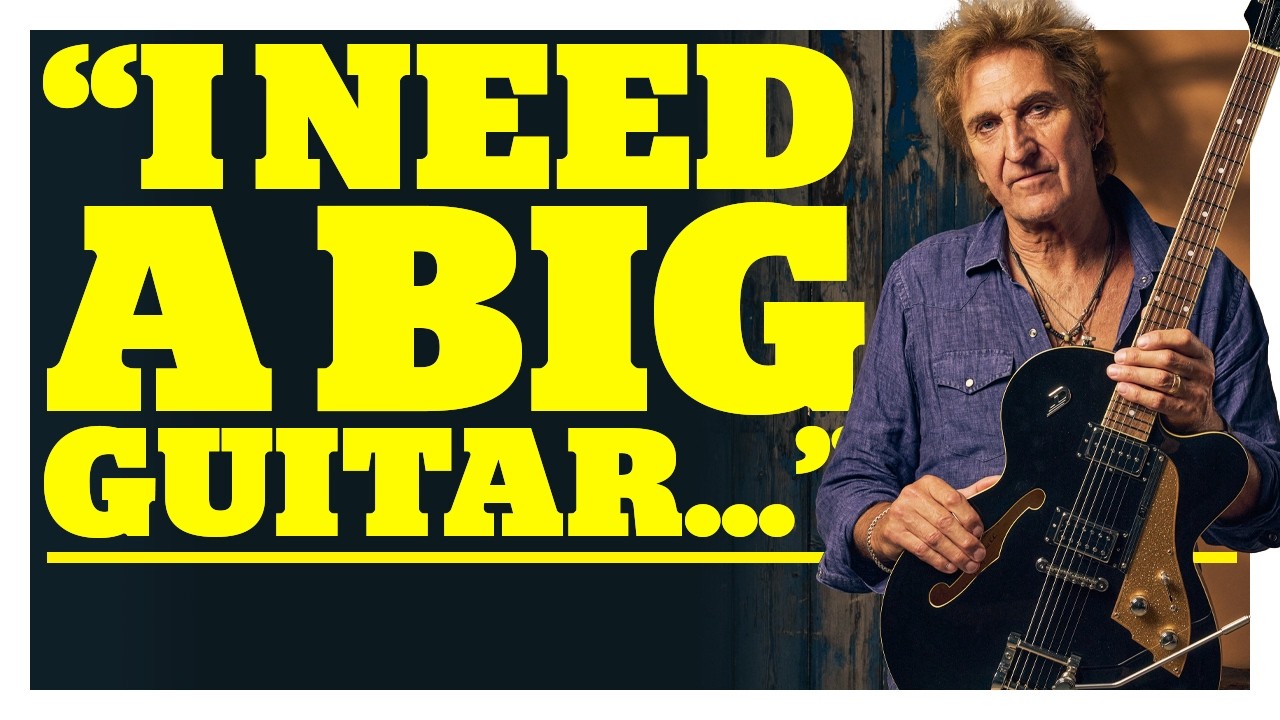
Dieter Gölsdorf and I were friends, and he said, “Carl, what would be your ideal guitar?” Well, I’m 6ft 5in, and I always thought I was uncool because I didn’t look like Steve Marriott or Paul Kossoff, these tiny men with big guitars.
I mean, if Marriott wore a Gretsch, he looked so cool. Everybody says, “Oh, be happy you’re so tall.” But I wasn’t. I wanted to be tiny like the Small Faces. The Les Paul on me looks like a ukulele, right? So that’s why I started playing 335s, all the big Gibsons and Gretsches.
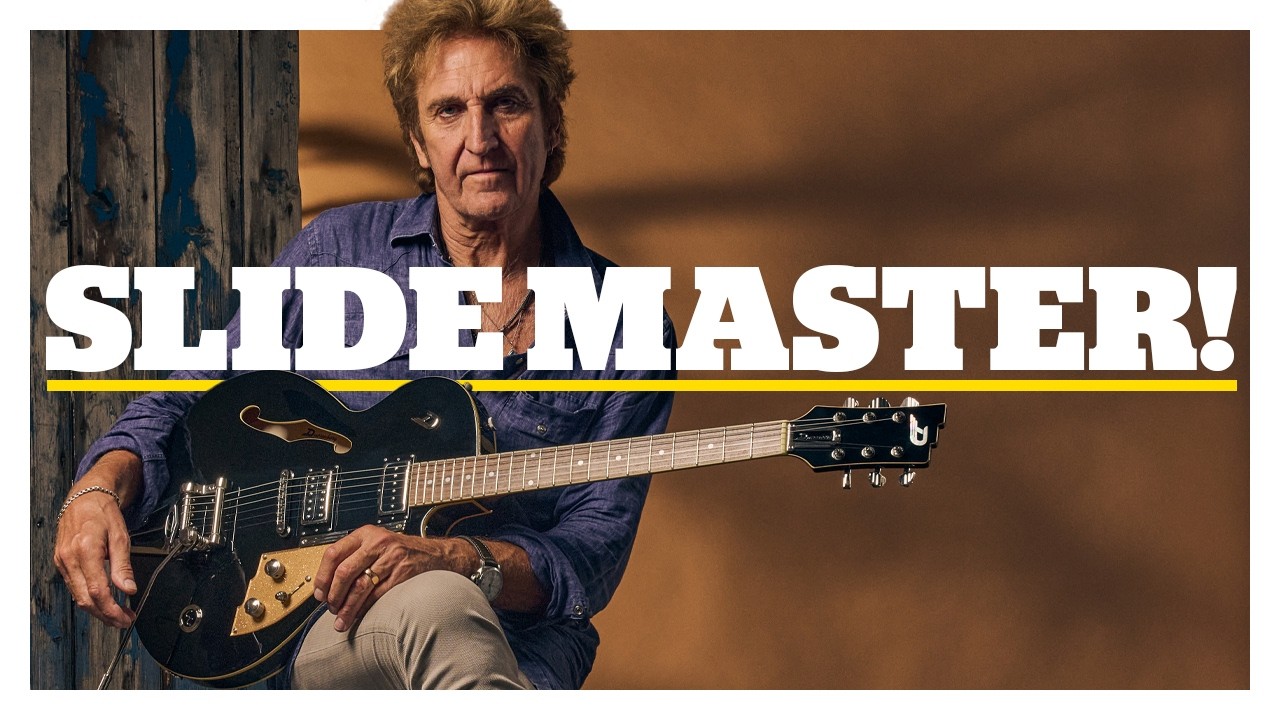
Anyway, I said to Dieter, “Well, it’s got to be big like a 335. It needs to have a single coil and a humbucker.” And I love Bigsbys. They look cool even if you don’t use them, but they were always out of tune. So I said, “Can you invent something like a Bigsby, but which doesn’t go out of tune and it’s easier to handle when you change the strings?”
So he came back with this guitar and it was an amazing sound. Then they built smaller ones called the Starplayer: very similar to this but with a semi-hollow Les Paul[-style] body. That’s how it all started. And it’s been a big success story.
And do you use the CC for your standard-tuning, non-slide playing?
Yeah, I more or less use my Teles or weird old Nationals for slide. But not always. Sometimes the more melodic slide, I do on the Duesenberg. My tunings depend on the song. I love the D tuning, or E, which is literally the same, just one step up or down. Every key has its own character. Like, on our new album, if I play, say, Daddy’s Little Pumpkin in G, it doesn’t sound like it would in Bb. That’s just the right tuning for it.
Sometimes, the band will say to me, “Oh Carl, does it always have to be in Bb?” And I’ll say “No, let’s move it to A.” But that half-step is such a big difference in vibe. All the Chuck Berry tunes are in Bb. It also suits my vocal and it’s very sassy. It’s kinky. It’s passive-aggressive in a way. I really love that. But not for all songs. For others, I prefer D or G. Also, the capo is my best friend, y’know?
You’ve achieved so much in your career. Have you ever had a moment of self-doubt?
I always had imposter syndrome. When I played with Manfred Mann or something, I always thought, “Any minute, they’re going to find out I’m no good.” I didn’t think I could be a good guitarist. It was like, “I’m from this little farm in the middle of nowhere. I’m not from London or some hip city. I’m nothing. And they will find out.”
But during the recording of Drive, Robert really helped me out without realising. I was working on a really tough tune – Stella – which was like a calypso groove by Mighty Sparrow. But the cassette I was working from was, like, from the 50s. It was very hard to make out. And on top of that, for whatever reason, I decided to challenge myself and do it in open G, with all these jazz chords.
What happened next?
We went to Metropolis Studios in London to finish the song, and I just couldn’t get it together. And I was so nervous because my friend Robbie McIntosh – who played with us live – was in the control room. Also, to commercialise Drive, the record company had suggested Eric Clapton as a guest. So rumour had it EC would be there any minute. So I got really nervous. I just couldn’t get this song together, and I got really angry.
Robert meant it when he said he liked my playing and he was confident that I would make the song work. So that helped me out a lot
So Robert came in, with his martini and his cigarette, and he said, “Carl, what’s the matter? Can I make you a drink? A Bloody Mary? A glass of Champagne?” And I’m like, “No! I can’t get this shit to work and Robbie’s sat there and Clapton’s coming any minute!” And he’d never seen me like that. He said, “Please, Carl, take all the time you want. I don’t want Robbie. I don’t want Clapton. I want you.” And that triggered off the imposter syndrome big-time. I was like: “That’s a fucking lie!”
But it wasn’t. I had a bit of a nervous breakdown, went out to the toilet crying. But someone’s girlfriend walked past me and said, “Carl, what’s the matter?” And I told her. And she said, “No, Robert is always talking to everyone about your playing and your feel. And he wants you – nobody else.”
So I found out that it was true: Robert meant it when he said he liked my playing and he was confident that I would make the song work. So that helped me out a lot. That was a big step for me…
- Miles of Time is out now via Timezone
- This article first appeared in Guitarist. Subscribe and save.

