





Guitar World Verdict
It certainly nods to the classics, the benchmark designs of our industry. And yet, especially in this semi-hollow guise, it manages to add another level that seems to enhance lower-volume cleaner styles or, by contrast, screaming musical feedback at stage volumes as you lean into your amp. No guitar does everything, but this comes dangerously close.
Reasons to buy
- +
The perfect craft informed from more than 40 years of guitar making.
- +
Superb proprietary hardware and vibrato.
- +
Tuned control circuit with immensely versatile voicing, not least the single-coil sounds.
Reasons to avoid
- -
While the controls are the key to the voicing, they’re not for everyone – but PRS has plenty of equally stellar two- and four-control options available!
You can trust Guitar World Our expert reviewers spend hours testing and comparing guitar products so you can choose the best for you. Find out more about how we test.
What is it?

PRS Guitars might have just celebrated its 40th anniversary, but you still can’t help but smile when you open one of the company’s now-moulded guitar cases.
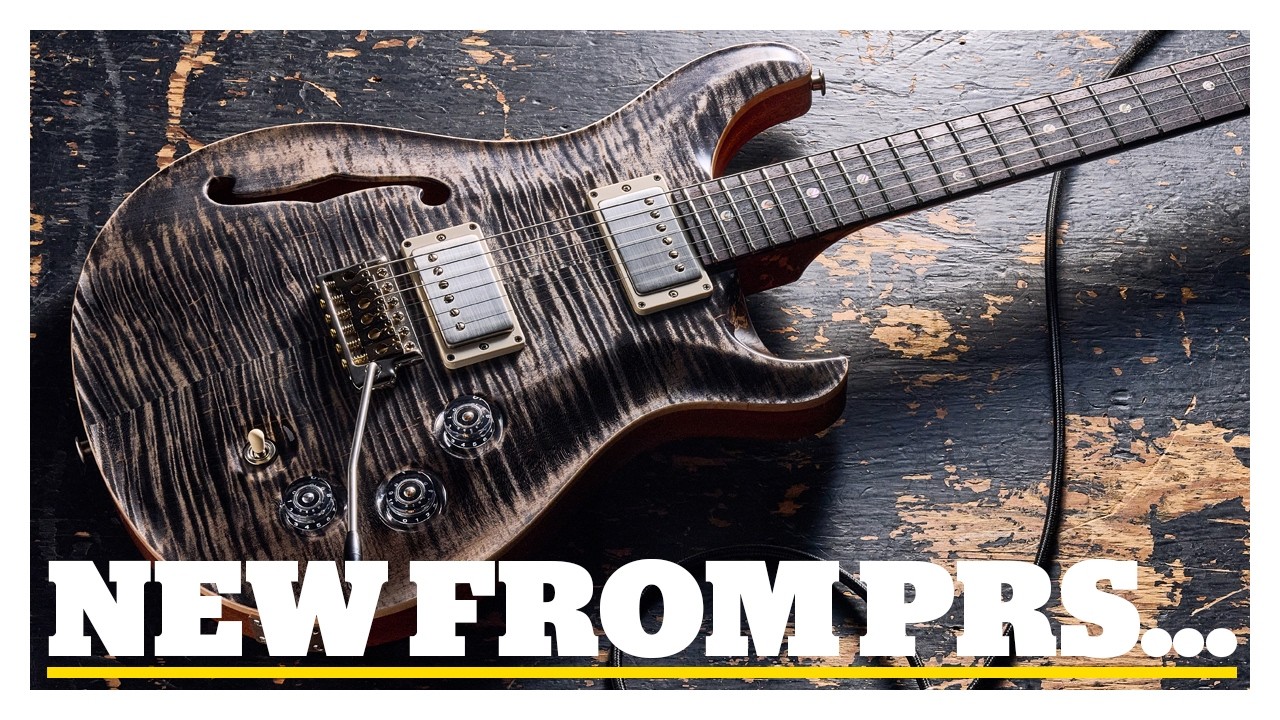
One of the true classic designs of the modern era, the PRS is defined by its elegant double-cutaway outline, its carved and vividly curly maple top and, typically, those bird inlays that pepper the fingerboard.
This writer remembers falling for its charms in the late ’80s at a far-from-glorious period for the electric guitar. It seemed like a reminder of a bygone time, a beautifully made musical instrument, not just a garish plank to support a Floyd Rose and a hot humbucker.
Just over four decades on, little has changed outwardly, although – of course – every detail has evolved to improve function, playability and, most importantly, sound.
Plug in an early mid-’80s PRS Custom and compare it with one that’s rolled off the production line in 2026 and you’ll see, hear and feel a colossal difference. Battling fad, fashion and economic upheavals over these past decades, PRS has stuck to its guns: ‘good’ is not good enough, and there’s always a better way to eke out another micro-percentage of improvement to better serve the musician.
David Grissom is one such musician who knows that better than most. A PRS player since the late ’80s, David was instrumental in the development of the crucial, more vintage-aimed McCarty Model, launched in 1994, which subtly changed the original PRS flavour and recipe.
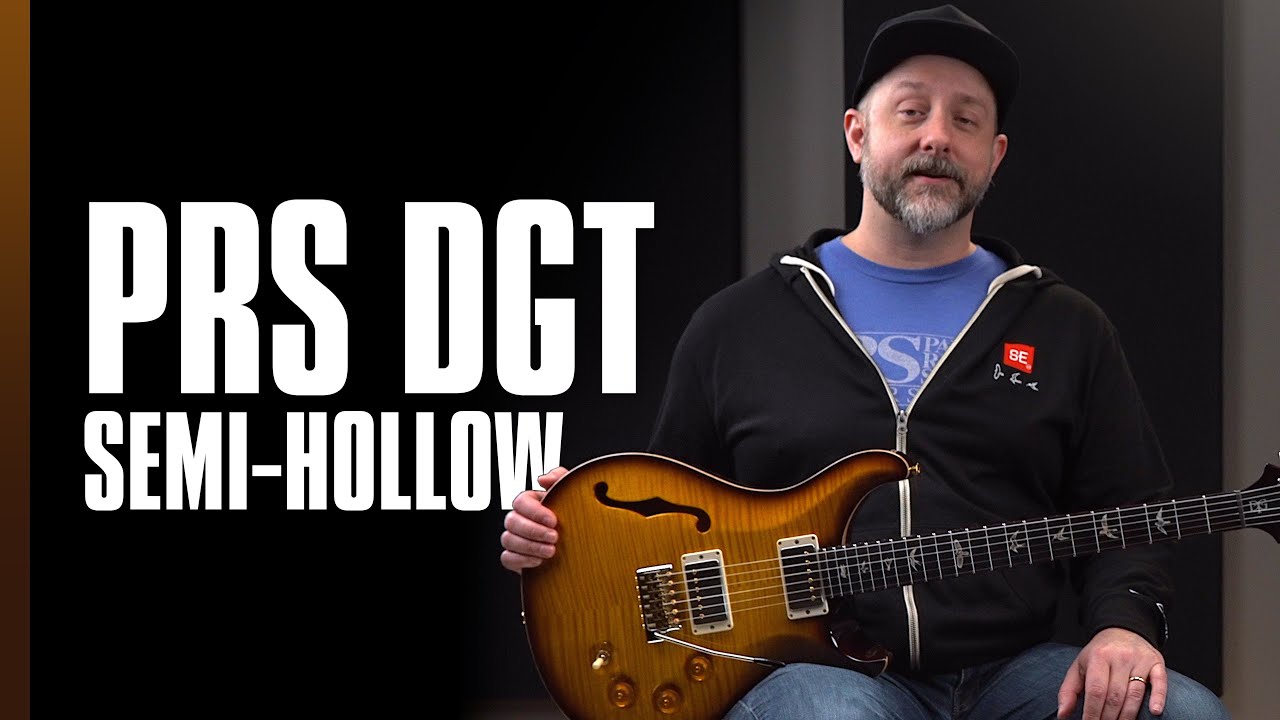
His own signature model (with its working title of ‘McCarty II’) launched in 2007, and the DGT (as in ‘David Grissom Tremolo’) has been in production ever since – a real player’s PRS that has spawned an all-mahogany Standard version and (after a 200-piece limited edition announced in late 2024) this new full-production DGT Semi-Hollow.

In its Charcoal gloss nitro finish – one of seven offered including a Gold-Top – our new single f-hole model is priced the same as the solidbody DGT. Either DGT is the lowest-ticket maple-topped Core model in the 2026 line-up if you go for the less opulent-looking moon inlays, while a bird-inlaid version adds $/£320 to the full retail price.
Note that the DGT is the only Core PRS model still offered with moon inlays, which date back to the very first mid-’80s guitars. The third option comes with bird inlays, a 10-Top maple cap and hybrid (gold and nickel) hardware and will cost you a cool $/£5,540.
Specs

- PRICE: From $/£4,420 (inc case)
- ORIGIN: USA
- TYPE: Double-cutaway, carved-top solidbody electric
- BODY: 1-piece mahogany with figured maple top
- NECK: 1-piece mahogany, DGT profile, glued-in
- SCALE LENGTH: 635mm (25”)
- NUT/WIDTH: Brass-infused, friction-reducing material/42.4mm
- FINGERBOARD: Rosewood, moon inlays, 254mm (10”) radius
- FRETS: 22, jumbo
- HARDWARE: PRS Gen II vibrato, PRS Phase III locking tuners (w/brass posts and faux bone buttons)
- STRING SPACING, BRIDGE: 52.5mm
- ELECTRICS: PRS DGT Treble and Bass covered humbuckers, 3-way toggle pickup selector switch, individual volume controls and master tone (with coil-split pull-switch)
- WEIGHT (kg/lb): 3.12/6.86
- OPTIONS: The DGT starts at $/£4,420 w/ moon inlays. With bird inlays it’s $/£4,740; with bird inlays plus 10 Top/hybrid hardware it’s $/£5,540
- RANGE OPTIONS: The other semi-hollow 2026 Core model is the Special Semi-Hollow ($/£5,060)
- LEFT-HANDERS: No
- FINISHES: Charcoal (as reviewed), Dark Cherry Sunburst, Tiger Eye, Faded Blue Jean, McCarty Sunburst and McCarty Tobacco Sunburst
- CONTACT: PRS Guitars
Build quality, usability and sounds

The DGT builds on the McCarty recipe that was noticeably different from the Custom on its launch in 1994. Always a 635mm (25-inch) 22-fret (not 24) guitar, its primary difference was a slightly thicker mahogany back, covered humbuckers (a first for PRS), and a toggle-switch pickup selector with master volume and tone (that later added a pull-switch coil-split for both pickups). Originally, the McCarty featured the then-new PRS Stoptail bridge, although a vibrato option followed.
Another change is that both 2026-spec models stick with the original-style Gen II vibrato (not the latest III version) that was briefly offered on the DGT
David Grissom custom-ordered his first PRS in the style of what was to become the McCarty in around 1991, and his signature model was the result of playing his McCartys for some 15 years. It came with his own neck shape, “somewhere in between a Wide-Fat and an old Regular shape,” said David at the time. “We compared my ’93 McCarty and my ’87 Standard and shot for something in between those, as they were both my favourite ‘feeling’ guitars.”
Obviously, the DGT came with the PRS vibrato, while another difference remains the control setup: a volume for each pickup (the control closest is for the bridge) and a master tone with a pull-switch to engage coil-splits for both pickups simultaneously. Grissom’s model also introduced the partial coil-splits that have subsequently been used on many PRS guitars.
What else? Oh yes, bigger ‘jumbo’ frets based on the Dunlop 6100 gauge that Grissom preferred, and 0.011-gauge strings (with a plain third string, of course). Then, the stuff of legend, a signature DGT pickup-set originally voiced from listening to 40-plus prototypes – with the help of tech Ed Reynolds’ pickup-swapping test guitar.

That initial recipe is the basis of the current DGT, both solid and semi. Of course, plenty of tweaks have occurred since 2007, not least the full nitro-gloss finish – the original DGT introduced nitro to the PRS guitar but only the top coat over a thin acrylic basecoat.
Another change is that both 2026-spec models stick with the original-style Gen II vibrato (not the latest III version) that was briefly offered on the DGT, according to PRS specs, certainly from 2022. Also, instead of the previous bone nut, here we have the Core-standard brass-infused low-friction type.
As ever, the DGT doesn’t feature fingerboard binding like the current McCarty, or a headstock facing like most Core models. The DGT pickups and the control circuit have evolved, too (see Under The Hood, right).
As to the hollow bits of our subject here, it’s primarily the bass side that’s hollowed and behind the bridge, too; both the mahogany back and some of the underside of the maple top (around the f-hole area) are machined away. Like the solidbody, the thickness is 52mm in the centre of the body (the Custom is 49mm), just over 30mm at the rim, and you can expect a slightly lighter weight – ours was a nicely trim 3.12kg (6.86lb).

It’s rare to find a USA solidbody PRS that’s very much above 3.6kg (8lb), Singlecuts excepted; closer to 3.4kg (7.5lb) is a rough average in our experience.
The lighter weight here is very engaging from the off. PRS’s specs tell us that the DGT neck is slightly narrower at the nut than the Pattern profile, but the same as the Pattern Regular (42.06mm); ours is fractionally wider. It’s fractionally narrower than the others at the top fret, too (56.4mm), which is bang on what we measure.
Depth-wise, it feels pretty fulsome with the same 1st-fret depth as the Pattern and Pattern Regular (21.4mm), and by the 12th it’s the same as the Pattern (24.2mm); again, ours is fractionally deeper.
Comparing the neck with an older Pattern profile, well, they’re very close, although there does seem to be a little less shoulder in upper positions as it’s subtly more V’d.
But the most noticeable differences are the bigger and taller frets (measured at 2.74mm wide by 1.4mm high) and the bigger 0.011 gauge strings. There’s plenty of fight if you’re used to a lighter gauge, although David won’t hunt you down if you drop to PRS’s standard 10s.

Exactly what the semi-hollow construction brings to the table, sound-wise, is not easy to define. David believes it “has a bit warmer top-end, a little less bottom than the solidbody, and I can get more controlled feedback” – and he should know.
The guitar does have a very vibrant ring unplugged, though with quite defined highs, a lively ringing response and a little more volume than any of our solidbody references. It feels and sounds very alive.
Plugging into a clean amp, we were in coil-split mode and the voice we hear is rather like that unplugged character. Kick in a delay and it’s classic-era The Edge, but these splits are very good; musical with character and depth. Having been a little sidetracked, we headed back to humbucker mode and with some crunchy, rootsy light gain we’re right into that Grissom-style voicing and there’s plenty to enjoy.
Even without touching the controls, bridge to neck is really balanced with a nice bite to the former and a big plummy depth to the latter. It doesn’t sound over-hot, though, but there is a fullness to the voice that frankly makes our reference Patent Applied For-style solidbodies sound a little bright and thin.

Pulling back the volumes a little and the subtlety and versatility begins to come through, slightly smoothing the high-end but not losing any clarity, and sitting nicely for classic rockier rhythm duties.
In the mixed-pickup position, those controls seem almost interactive and take on a faster taper; a slight adjustment of either volume yields another nuance. It’s the way these controls work, not least with the coil-splits, that is the key to this guitar.
With little more than a couple of different, light drive pedals, the guitar just delivers, nodding to a good Les Paul but with seemingly more definition. In this sort of environment, the single-coil voices give a really valid texture: lighter with more present high-end that cleans for more strummy and arpeggiated rhythms, particularly with a slight volume reduction. Jangle? Oh yes.
In terms of the sounds we conjure and the playability, it’s really so responsive. Needless to say, this guitar is extremely stable and in tune, too, with or without the vibrato in play. It’s stellar craft but with a tremendous lived-in and vintage-y feel, and it’s very, very hard to put down. We don’t want to stop playing.
Verdict
Verdict: ★★★★★

We all know if you put in the hours you’ll become a better player. David Grissom has certainly done that, but those countless hours have really informed this guitar.
He’d already been a PRS player for more than 15 years before his signature model launched in 2007, and since that time he and PRS have continued to tweak and improve a guitar that – nearly 20 years ago – was already exceptional.
The DGT was always pitched as the workingman’s PRS, a more vintage-y, rootsy vision, and this semi-hollow version amplifies that reputation. It’s lighter in weight, ridiculously alive in our hands, does full-throttle with ease or, conversely, works effortlessly in cleaner environments where those coil-splits provide really usable single-coil textures to our ears.
Guitar World verdict: It certainly nods to the classics, the benchmark designs of our industry. And yet, especially in this semi-hollow guise, it manages to add another level that seems to enhance lower-volume cleaner styles or, by contrast, screaming musical feedback at stage volumes as you lean into your amp. No guitar does everything, but this comes dangerously close.
Hands-on videos
Guitarist
PRS Guitars

- “There’s more ‘Fender’ to Fiore and more ‘Gibson’ to the SE DGT… Inspiring guitars from inspiring players”: PRS Fiore HH and SE DGT Standard review
- This article first appeared in Guitar World. Subscribe and save.

