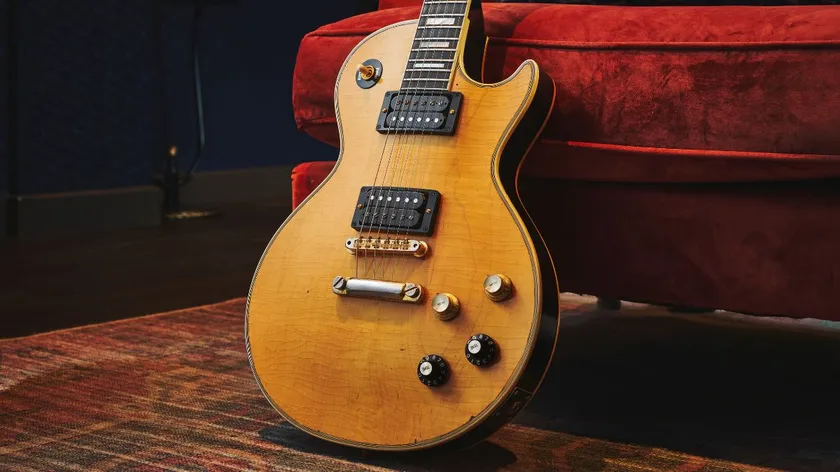





Guitar World Verdict
The Fiore might be less classic PRS in style, but not so in build and detail: it’s superbly done with sounds and feel to match. The SE DGT Standard not only trims a fair bit off the maple-topped version, but plenty might prefer its earthier tones, and there’s nothing cut-price in the build. It’s also a guitar you could happily upgrade with some success as the ‘chassis’ here is so good. Inspiring guitars from inspiring players.
Pros
- +
Fiore has an excellent clean, detailed build.
- +
Great neck shape and playability.
- +
Wide stylistic range from humbuckers and very usable hum-cancelling parallel sounds.
- +
Satin and gloss colours
- +
DGT has similarly detailed build and great neck.
- +
Jumbo frets and slinky playability.
- +
Dual volumes.
- +
Wide range of classic rock sounds with credible single-coil splits.
Cons
- -
The HH super-S styles are pretty niche.
- -
DGT has limited colours.
You can trust Guitar World Our expert reviewers spend hours testing and comparing guitar products so you can choose the best for you. Find out more about how we test.
What is it?

Satisfying artists has always been a prime objective of Paul Reed Smith, be it Ted Nugent, Howard Leese or Carlos Santana (back before his production company kicked off), or more contemporary players such as DragonForce’s Herman Li.
However, Herman’s Chleo – a very, very different PRS with its Floyd Rose vibrato Fishman Fluence active pickups and a very un-PRS shape – has been the only brand-new artist signature guitar during this 40th Anniversary year.
Other artists haven’t been totally forgotten, though, and just as the brand’s celebratory year draws to a close, long-running signature artist David Grissom gets a new ‘Standard’ version of his SE DGT, while Mark Lettieri gets an HH version of his Fiore, which was first introduced in 2021.
It’d been rude not to take a look…
Fiore HH Satin

For a guitarist with such impressive credentials, Mark Lettieri and the tools of his trade are anything but show-off. Pulling this new HH model from its gigbag, it may as well have ‘working guitar’ stamped on the headstock.
When we looked at Mark’s original Fiore HSS model, as impressed as we were, it did come in on the heavy side for the style, not least that it employs a typically light-in-weight swamp ash body. The good news here is that, at 3.2kg (7.04lb), it’s been to the gym, which just adds to the ‘pick up and go’ vibe.
Rather like how John Mayer’s famed Silver Sky was a retooling of the Stratocaster, the Fiore’s DNA comes from the good ol’ hot-rod super-S and replicates the longer Fender scale-length with 22 frets. It has sleek horns combined with PRS’s hallmark treble cutaway scoop and the usual body contouring of the style.

The satin nitro Sunflower finish is thin and doesn’t fill the ash’s identifying open-grain wavy streaks, but, those aside, it’s silky smooth to the touch. The actual central top colour looks a little faded; the yellow is less bright than the gloss versions we’ve seen, which adds to the unshowy, almost used-guitar style, and you can see it’s a two-piece centre-joined body.
Like PRS’s other bolt-on models, there is a headstock splice, but here it’s nearly invisible, the slab-sawn maple left quite white with no visible amber tinting.
Another change here is the switch from a maple fingerboard of the HSS model to this dark brown Indian rosewood; the open bird inlays are stylish and less in your face than the solid or posh-shell birds of so many PRS models.
Each individual pickup tone control is paired with a master volume and has a pull-switch that changes each pickup from standard series to parallel wiring
The hardware follows the original Fiore model, though, and you’ll find vintage-style top-locking tuners and a two-post vibrato, which are seemingly the same as the ones used on the SE Silver Sky. The posts are 4.96mm bolts that thread into collars mounted in the body, rather than screws, while the pressed saddles are steel like the top plate and deep-drilled block.
Then there’s a push-in arm, here with a metal tip, plus swing tension adjustment. Unlike Mayer’s guitars, there’s an up-tilt to the vibrato, giving a semitone rise on the high E string, a minor 3rd on the G.
Along with the additional directly mounted Fiore humbucker at the neck, each individual pickup tone control is paired with a master volume and has a pull-switch that changes each pickup from standard series to parallel wiring. The previous model’s five-way pickup selector changes to a three way.
SE DGT Standard

The DGT (David Grissom Tremolo) has its own fanbase within the PRS fraternity and in essence is an evolution of the McCarty model, of which David had quite a hand in. His original signature model appeared in 2007, but it wasn’t until the end of 2022 that the much-anticipated SE version was launched, and this new 2025 addition simply changes the maple-topped body to all-mahogany, hence that Standard designation.
Both SEs are offered in McCarty Tobacco Sunburst, the maple-top level also gets a classic Gold Top, while the other option (as here) is a translucent Vintage Cherry. It gives us a chance to see the wood, of course, and the body is a three-piece spread – and, yes, you can see the slightly different grain patterns up close.
It also features the SE’s ‘shallow violin’ carve, which adds light dishing around the outer edges, although the main face remains flat. It really seems to suit this colour, and there’s no posh figured maple to show off. The glued-in neck is a three-piece longitudinal laminate of mahogany.

There’s no change to the non-locking tuners or the cast steel vibrato that’s used on plenty of SE, S2 and CE models. Over the years, and certainly on its USA models, PRS has moved to proprietary designed hardware from the vibrato, the locking tuners, even the Lampshade control knob and strap buttons.
While the lower-ticket SEs have historically stuck with more generic parts, they’re changing and here we have the new, really stylish proprietary-design humbucking rings as used on the SE Paul’s Guitar and more recently seen on the new-design SE Hollowbodies and the SE CE 24 Standard Stoptail Satin – more will undoubtedly follow. Yes, we get standard speed knobs, but they’re also used on the Core model. David must prefer them!
The DGT’s control setup continues to use a volume for each pickup (the bridge pickup control is closest to the bridge) with the lower control being the master tone, which has a standard pull-switch so you can split the DGT ‘S’ pickups simultaneously, not individually.
Specs
PRS Fiore HH Satin

- PRICE: $2,649/£2,599 (inc gigbag)
- ORIGIN: USA
- TYPE: Double-cutaway solidbody electric
- BODY: Swamp ash
- NECK: Maple (3-piece), Fiore profile, bolt-on
- SCALE LENGTH: 648mm (25.5”)
- NUT/WIDTH: Bone/42.34mm
- FINGERBOARD: Rosewood, outline bird inlays, 254mm (10”) radius
- FRETS: 22, medium
- HARDWARE: PRS-designed 2-post steel block vibrato, PRS-designed vintage-style locking tuners – nickel-plated
- STRING SPACING, BRIDGE: 54mm
- ELECTRICS: 2x Fiore-H humbuckers, 3-way lever pickup selector switch, master volume, tone 1 (neck), tone 2 (bridge) each w/ series/parallel pull switch
- WEIGHT (kg/lb): 3.2/7.04
- LEFT-HANDERS: No
- FINISHES: Sunflower (as reviewed), Black Hyacinth, Metallic Midnight, Red Apple Metallic – satin nitro body and neck back
PRS SE DGT Standard

- PRICE: $899/£779 (inc gigbag)
- ORIGIN: Indonesia
- TYPE: Double-cutaway, carved-top solidbody electric
- BODY: Mahogany with ‘shallow violin’ carved top
- NECK: Mahogany, DGT profile, glued-in
- SCALE LENGTH: 635mm (25”)
- NUT/WIDTH: Synthetic/42.6mm
- FINGERBOARD: Rosewood, ‘moon’ inlays, 254mm (10”) radius
- FRETS: 22, jumbo
- HARDWARE: PRS Patented vibrato (cast), PRS designed enclosed tuners – nickel-plated
- STRING SPACING, BRIDGE: 52.5mm
- ELECTRICS: PRS DGT ‘S’ Treble and Bass covered humbuckers, 3-way toggle pickup selector switch, individual volume controls and master tone with simultaneous coil-split pull-switch
- WEIGHT (kg/lb): 3.37/7.4
- LEFT-HANDERS: No
- FINISHES: Vintage Cherry (as reviewed), McCarty Tobacco Burst – all high gloss
- CONTACT: PRS Guitars
Playability and sounds

While both models here are twin-humbucking guitars with vibratos, pretty much everything else is different: the scale length, neck join, neck profiles and fretwire.
The Fiore’s neck feels the slimmer of the pair: 42.34mm at the nut, 21.5mm deep at the 1st fret and 23.7mm by the 12th. The DGT is marginally wider at the nut (42.6mm) but only fractionally, with pretty much the same depth at the 1st fret of 21.2mm, but it fills out considerably to 24.7mm by the 12th – and that’s what your hand really feels.
But both necks are very well shaped with what feels like a very slight ‘V’ in lower positions, which rounds out as you move up towards the body. The DGT’s neck back is gloss; the Fiore’s is satin.
Rather oddly, despite being spec’d with 0.010-gauge strings, our DGT arrived with 11s, like the Core model, which adds to the bulk, despite the shorter 635mm (25-inch) scale. Another big difference is the fretwire: while the Fiore goes with the pretty standard PRS gauge (measured at 2.57mm wide by 1.14mm high), the DGT’s frets are much bigger in both width and height (2.81mm by 1.4mm).

To pigeonhole the builds, there’s obviously more ‘Fender’ to Fiore and more ‘Gibson’ to the SE DGT, from the percussive snap of the former to the more fundamental response of the DGT when played unplugged. That vague observation is not a million miles away from their inherent characters when we fire them up.
There’s not a lot of difference in output clout from either in humbucker mode, but the DGT piles on the creamy midrange
There’s not a lot of difference in output clout from either in humbucker mode, but the DGT piles on the creamy midrange, which is far from honky at the bridge; there’s gutsy Les Paul-like push with just enough clarity. The neck is perfectly balanced output-wise, thicker and chewier, and there’s a good sparkle with both on. Three impressive sounds.
Switching to the Fiore and it slightly pulls back the bluster and seems to clean up those lower-mids a little. And with this leaner sound, there’s a touch more clarity for those of us who prefer the slightly brighter side of the tone tracks.
Don’t be fooled, though; it still rocks out, and the neck pickup is pretty thick and actually does a superb Santana with just a little tone roll-off.
These different characters are enhanced by the secondary sounds of both. The DGT’s partial coil-splits certainly sound very single coil-y, hollowed with a percussive attack and plenty of high-end detail.
Pull up the individual tones on the Fiore and the parallel humbucker sounds are in the single-coil realm, too, but a little smoother, a little steelier but extremely usable, coming across rather like a well-behaved Telecaster.
These sounds really seem to love a pedalboard, too – the no-hum smooth clarity almost sounds post-produced. We might suggest that the DGT comes across as a really rootsy rock bar-room brawler, and the Fiore nods a little more to a smoother ‘LA studio’ tool – it’s just so classy.
We mentioned the up-tilt of the Fiore’s vibrato earlier on and, as ever, the DGT’s bridge sits parallel to the top, producing slightly less up-bend. The Fiore’s arm sits a little lower, too, while the DGT’s angles up a little more. Also, the DGT uses four springs and the Fiore three, so yet again – like virtually every other feature – the vibratos are subtly different.
Verdict
Verdict: ★★★★½

Once upon a time, the PRS guitar came in just one flavour with an additional topping of curly maple and a sprinkling of birds if you fancied. Today? Well, we’ve honestly lost count of the number of new models we’ve seen this year alone, and in terms of style and price point the PRS range has choice aplenty and then some.
Our two signature additions here illustrate that breadth: very different guitars with zero bling and very different price points. While the higher-tier Core guitars are now in what many of us would consider ‘Custom Shop’ territory in terms of cost, this Fiore is priced more like a USA-production Fender.
Guitar World verdict: The Fiore might be less classic PRS in style, but not so in build and detail: it’s superbly done with sounds and feel to match. The SE DGT Standard not only trims a fair bit off the maple-topped version, but plenty might prefer its earthier tones, and there’s nothing cut-price in the build. It’s also a guitar you could happily upgrade with some success as the ‘chassis’ here is so good. Inspiring guitars from inspiring players.
Hands-on videos
PRS Guitars
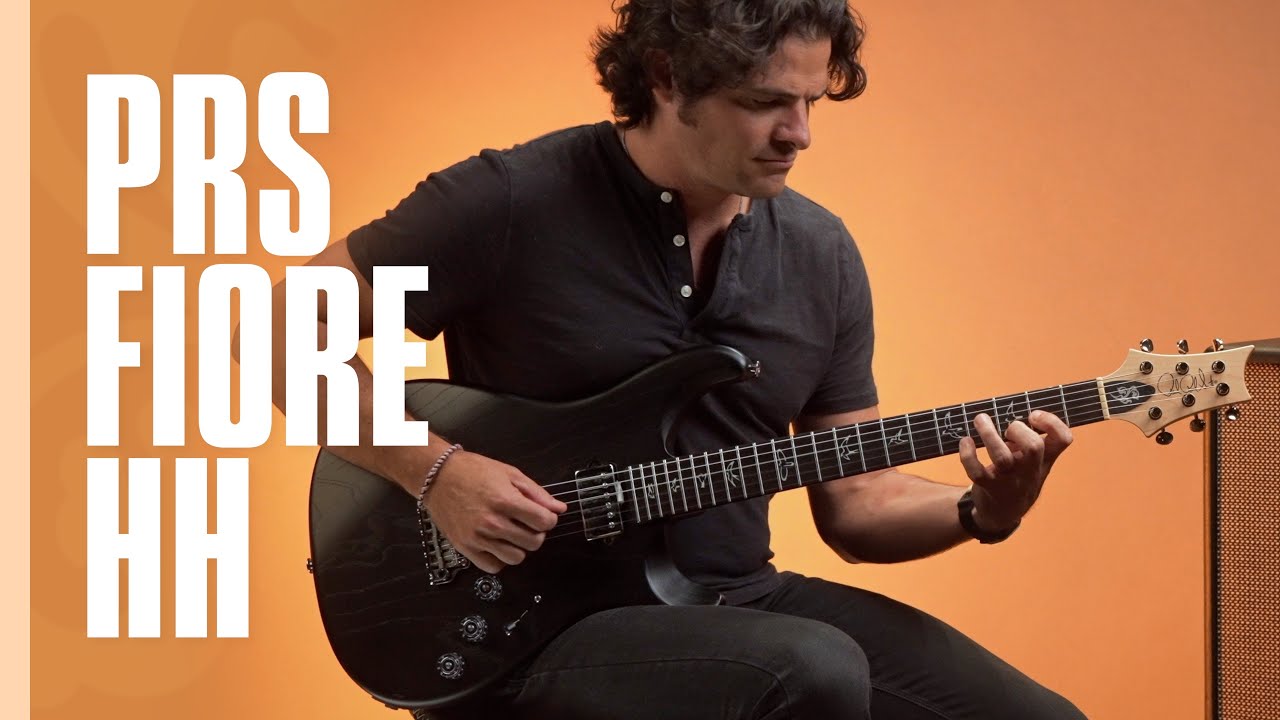
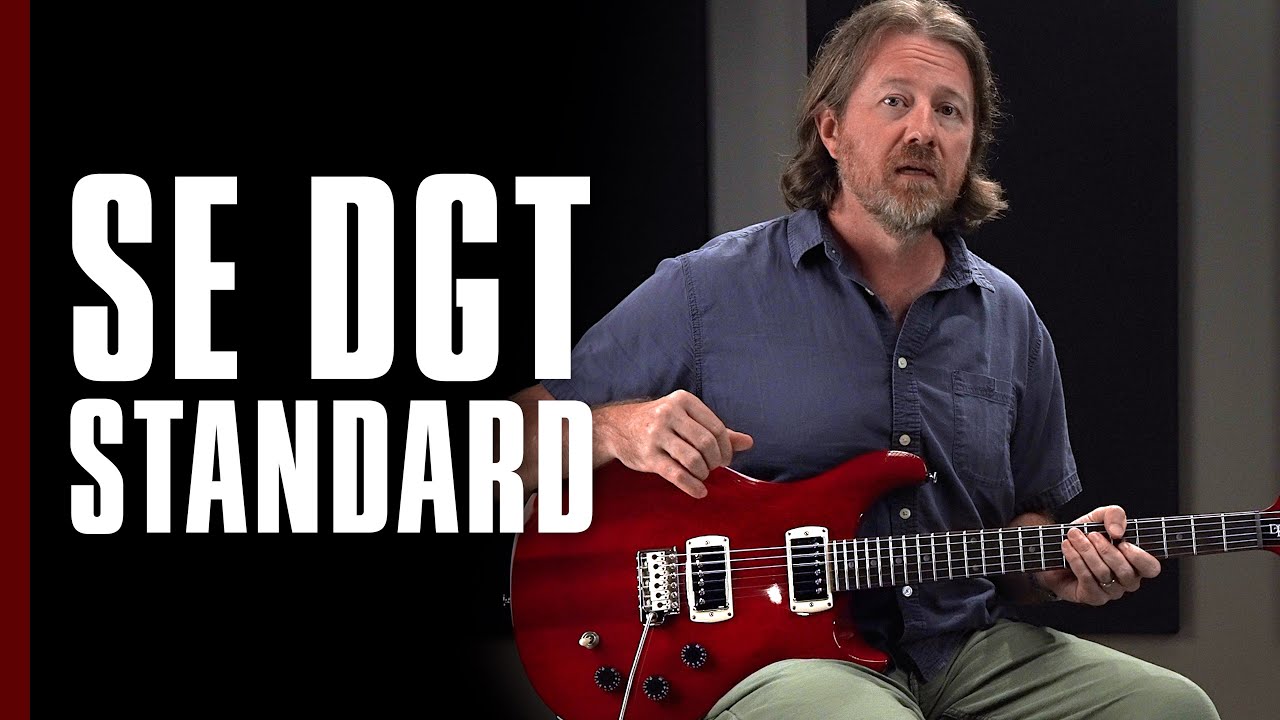
- “A supremely versatile platform that blurs the line between solidbody and semi”: The PRS 40th Anniversary Special Semi-Hollow Limited Edition
- This article first appeared in Guitarist. Subscribe and save.

