


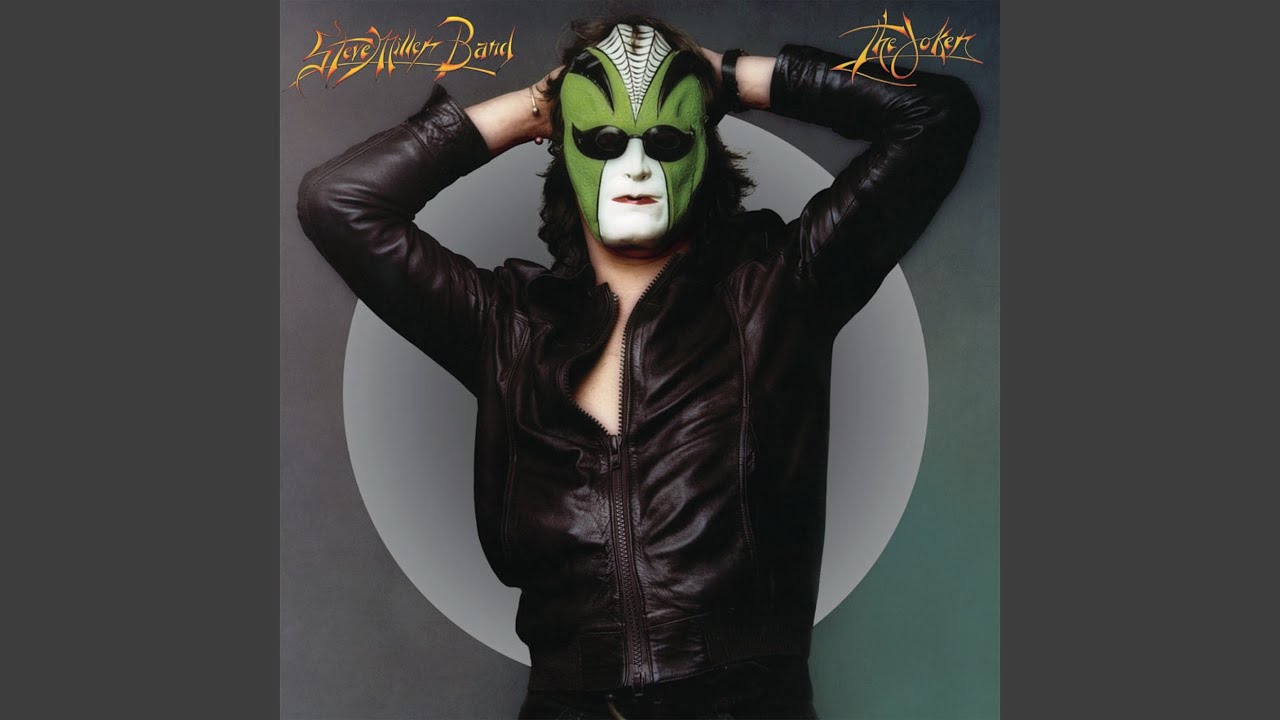
In the wake of John Entwistle’s thunderous breaks on the Who’s 1965 hit My Generation, bass solos on pop singles have remained rare. That didn't stop Texas rock icon Steve Miller from featuring bassist Gerald Johnson, on Shu Ba Da Du Ma Ma Ma Ma, from Miller's platinum-selling 1973 album, The Joker.
Johnson, born in Chattanooga, Tennessee in 1949, found his way to bass at age 13, while attending a Louisiana boarding school. There, at the behest of his piano-playing classmate Antoine – the son of Fats Domino – he borrowed a Fender P-Bass, turned it upside down to accommodate his being left-handed, learned Wading in the Water by Ramsey Lewis, and was hooked.
Directing his ear toward James Jamerson, Carol Kaye, and Bob Babbitt, Johnson returned to his family's Washington, D.C. home upon graduating and soon landed his first big gig with vocal group the Sweet Inspirations.
While the band was opening for Elvis Presley in Lake Tahoe, Johnson met Steve Miller, who called him eight months later to come to Hollywood to play on his 1972 LP, Recall the Beginning: A Journey From Eden.
The connection led the lefty low-ender to decades of touring and recording work with Miller, Dave Mason, Stephen Stills, CSN, and many others.
In the summer of 1973, Johnson, Miller, drummer John King, and keyboardist Dickie Smith headed north to Creedence Clearwater Revival's warehouse studio in Berkeley, California to record The Joker – with Shu Ba Da eventually becoming the third of four singles from the now-classic album.
“Steve wrote Shu Ba Da from one of our rehearsal jams,” Johnson told Bass Player back in October 2014. “He thought it would be a good live feature for me, because it was in the key of E.
“We had three weeks off between tour legs, so, not wanting to leave my solo to chance each night, I sat on my bed and came up with various lines to use.”
The solo culminates in some dramatic string bends (from B, to B and back) before settling into a recognisable lick for the final four bars.
“I borrowed that lick from Willie Weeks. He played it on Voices Inside (Everything Is Everything). By the time we hit my hometown of D.C., I had the entire solo under my fingers, and that's what I played when we went into the studio.”

The band recorded live with scratch vocals, opting for the third or fourth take. Johnson used two fingers to pluck his custom ’73 Fender P-Bass, which was ordered by Miller's management, and featured a blonde lefty body, right-handed maple neck (resulting in an upside-down head-stock) with the dot markers placed on the G-string side, and La Bella flatwounds.
The track begins with drums, adding Miller's rhythm guitar and his singing of the song's title, before the bass and organ unison riff enters. Johnson answers the riff with bluesy upper-register fills, immediately establishing his dominant role.
For the first verse, Johnson moves to issue a funky ostinato. He continues the line for the first chorus, where he also had the idea to vary beat four by landing on the root, 3rd, 5th, and 7th in successive measures.
At 02:13, Johnson’s 16-bar solo unfolds via four different four-bar ideas. He begins with a chromatic-infused, blues-based statement. In the ensuing four bars he embellishes it, while applying vibrato to the high G# by subtly bending the string up and down. How Johnson slid into the high E's, he's not sure, as his P-Bass has only 20 frets!
Continuing the momentum, Miller has Johnson double his guitar riff at 02:50, with Johnson spontaneously harmonizing the line in the last five measures by playing a high B-A-G over Miller's G-F#-E on guitar.
At 03:09 Miller spins a written guitar line (with guitar overdubs), for which Johnson first plays two bars of a melodic figure before settling into a 7th-fret centered boogie groove.
As the section moves along, two concepts stand out: Johnson’s periodic use of the flatted 3rd (G instead of the G#, which pulls his hand out of position), and his decision, eight bars in, to alternately play the pattern an octave higher.
Johnson continues his boogie variations through Miller's guitar solo, before returning to the intro riff, the final verse, and the final chorus. Capping the track nicely is the outro, at 05:20.
“I was experimenting with 10th and 7th intervals at the time, and Steve heard it and said, ‘Let's use that for the ending.’ He came up with the closing lick, too.”
Consider that the numerous descending runs – which are easier to play righty, due to string-raking as the hand moves toward the lower strings – are actually the more difficult-to-play ascending runs for the lefty Johnson. Conversely, strings bent upward for righties are pulled downward in Johnson’s case.
“The key is to have your fingerings in order, and to play on top and drive the track. As we used to say, it definitely leans into the wind!”
