

To call Tony Levin simply a bassist would be doing him a disservice. He’s a full-scale multi-hyphenate musician who’s added his magic to the work of Peter Gabriel, Alice Cooper, King Crimson and more.
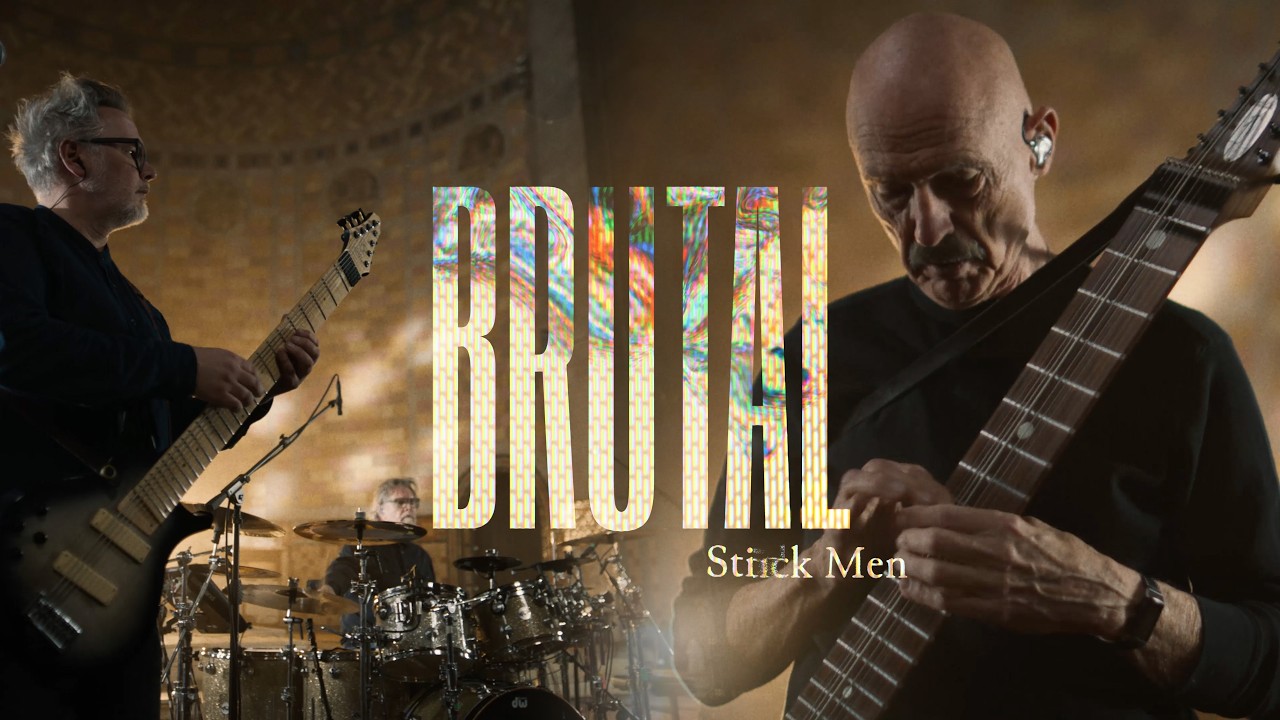
For the last two years he’s been touring with BEAT, celebrating Crimson’s music. He has a new Stick Men record out titled Let’s Thrak. Meanwhile he’s writing his memoirs.
“I've been working on it for years,” he says. “I’m lucky to have great stories of these bands I've played with, including playing under Igor Stravinsky. It’s pretty wild to have played with both Igor Stravinsky and Alice Cooper!”
1. What was your first bass?
I started on upright as a classical player, but I don’t have that bass. My first Fender was a Precision I bought in the ’60s. I saw a guy playing one at a show and asked him, “Hey, what’s that?” He gave me great advice: “Don’t buy a new one; buy a used one.” In the ’60s we didn’t use the term “vintage” – it’s just that older instruments were cheaper than new ones.
He said, “Go to New York and for $180 you’ll buy a used Fender Precision.” I did that; and for many years, that was my bass. Later on I switched to Music Man, also designed by Leo Fender. Unfortunately there was a fire in my barn in Woodstock, New York, and all my basses except for my road ones were lost.
2. What’s a quirk or habit of your playing’s become a part of your style?
There are probably a few, but I’m not aware of them because I don’t analyze my playing that way. No matter how complex or simple, when I hear a piece of music, I’m not thinking with the prefrontal cortex. I just let the bass player take over.
3. How many guitars do you own, and what gear do you own that might surprise people?
I don’t have that many, considering how many years I’ve been doing this! We all love to collect instruments, but frankly I can’t tell you how many I have. As for surprising instruments, I have a cello, and if it’s my album and nobody to stop me, I’ll play some cello.
4. Which bass do you have the closest relationship with?
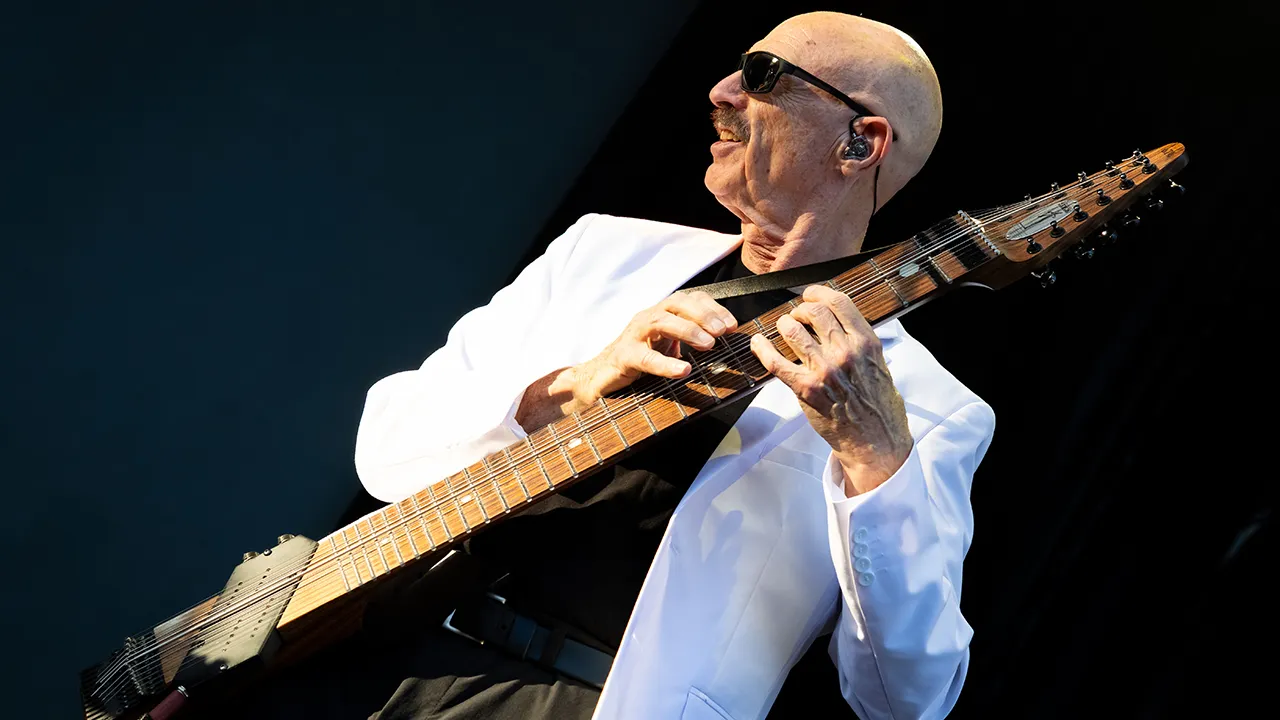
It varies with the band I’m touring with. With Stick Men I play the Chapman Stick. Mine has 12 strings, with six guitar strings and six bass strings, and it’s touch-style with a stereo output.
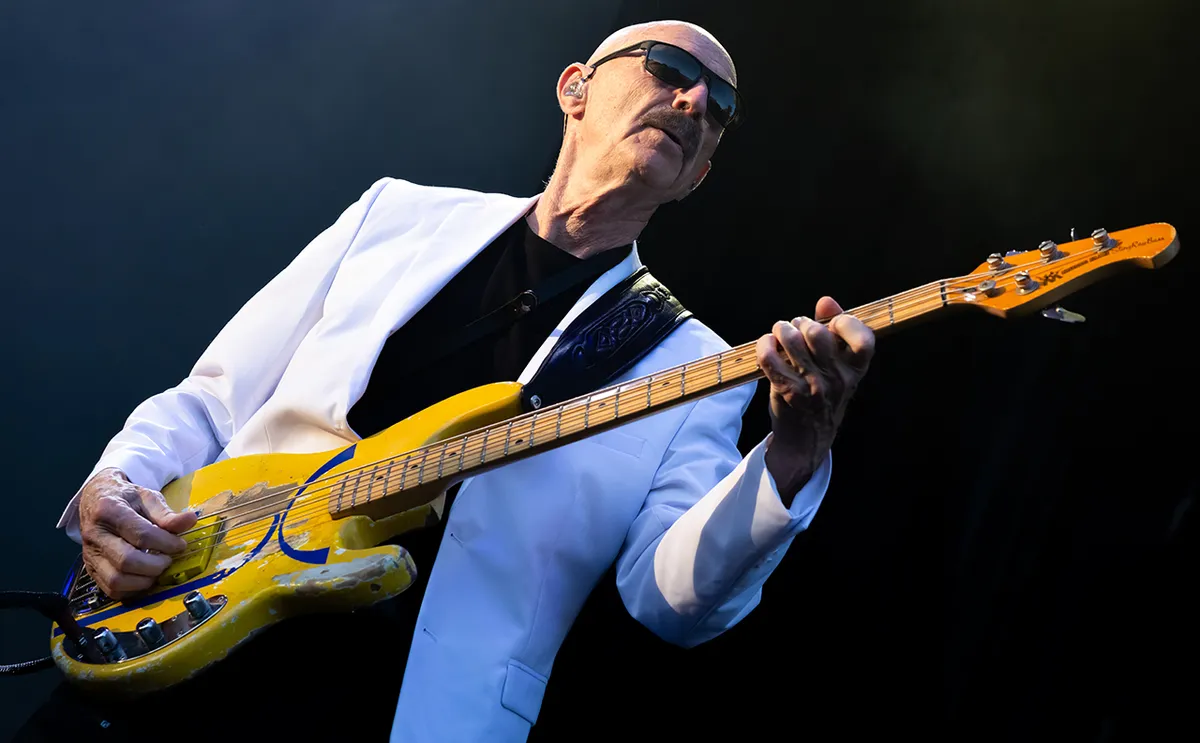
And then there’s BEAT, which is the music of Crimson from the ’80s and maybe the ’90s, and I’ll play more Stick but also bass. My five-string Music Man is my go-to bass now. But I also have the four-string Music Man I played in the ’80s.
Being a musician often entails being in situations where you’re not wanted. When you’re rejected, it hurts
5. Tell us about a time you were faced with a decision that had real implications for your life as a musician.
There is, of course, no single moment; but I’m still going to pick one! I harken back to 1976 in July when I was called to play on an album in Toronto with Peter Gabriel, whom I didn’t know of. I hadn’t even heard of Genesis! One of the guitar players was Robert Fripp, so I met the two of them that day.
Now, there’s a craft to studio work. I loved doing it, and I’d just fallen into it. I’d started playing on rock albums for Lou Reed and Alice Cooper. Then Peter gave me the choice to go on the road with him, or I could continue to be a New York studio player.
I chose to play live, which is what I love to do. I chose to be musically kicked in the butt and given subtle music lessons on how not to be a “normal player,” and how to step outside the business as usual. A few years later I joined King Crimson, where business as usual is not even considered – we wanted to truly be progressive.
6. What’s your most memorable moment with a guitarist or guitar hero?
A day that’s been on my mind lately, is from 1980, when Robert asked me to get together with some guys he knew and think about forming a band. I went to downtown New York, and in the studio were Adrian Belew, Bill Bruford and Robert.
I hadn’t even heard the music of Bill and Adrian, but I knew Robert’s playing because I’d played on his solo album, Exposure, and I’d played on the road with him with Peter.
I vividly remember the first few minutes of them playing, and my jaw dropped. Adrian was a completely unique guitar player, Bill was the same on drums, and then there’s Robert Fripp, who, obviously, was completely unique.
My thoughts while looking down at my bass and Chapman Stick were, “I’m not even going to touch the bass. in this band I’m going to be super-challenged to just belong in the room.”
7. What’s it like being in the room with Adrian and Steve Vai with BEAT now?
It’s the same – but I’m not shocked anymore! I’m used to it. Steve is just a unique player and an amazing technician. I take it as an honor to be in a band with both of them. It’s a challenge to up my game musically; not technically, necessarily, but musically: to be fresh and unique and special enough. To try – and maybe I won't succeed – to be that kind of player, because that's what is called for.
8. What’s been the toughest time you’ve had as a musician?
I don’t think about how people think about me. I’m a little famous in some niches, and that’s nice
I’ve been rejected from a band or from a tour. It hurts. It happens to most of us. This strange occupation of being a musician often entails being in situations where you’re not wanted. You put a lot of your deepest self into it, so when you’re rejected, it hurts. It can be rough, but we deal with it.
9. What’s the best piece of advice you’ve received?
I can’t think of verbal advice, but when I was at the Eastman School of Music with Steve Gadd, he was a great drummer even then. He got me on gigs and mentored me, and it was invaluable just standing next to him.
I got to feel what it was like to have good time, never speed up or slow down too much, and just have good feel – which is a pretty advanced lesson. He wasn’t showing me or even telling me; it was just subtle things I picked up.

10. What’s the biggest misconception about you as a player?
The truth is that I don’t think about how people think about me. I’m a little famous in some niches, and that’s nice; that’s okay – but I don’t think about it at all. I’m very aware of how lucky I am to be playing really good music with really good musicians.
11. What lessons have proven most true throughout your career?
With being humble, you want to talk to Peter Gabriel. I’ve been with the guy for 40 or 50 years; he asks if anyone in the room wants tea – and then he goes and makes it! He’s the guy who, at meet-and-greets or an after-show thing where everyone in the room is there to see him, will see the person in the corner not talking to anybody, and he’ll talk to that person.
I’ve been around Peter and people like him a lot. If some of that rubbed off on me, I give them the credit.
- BEAT hit the road again across North America on October 9.