



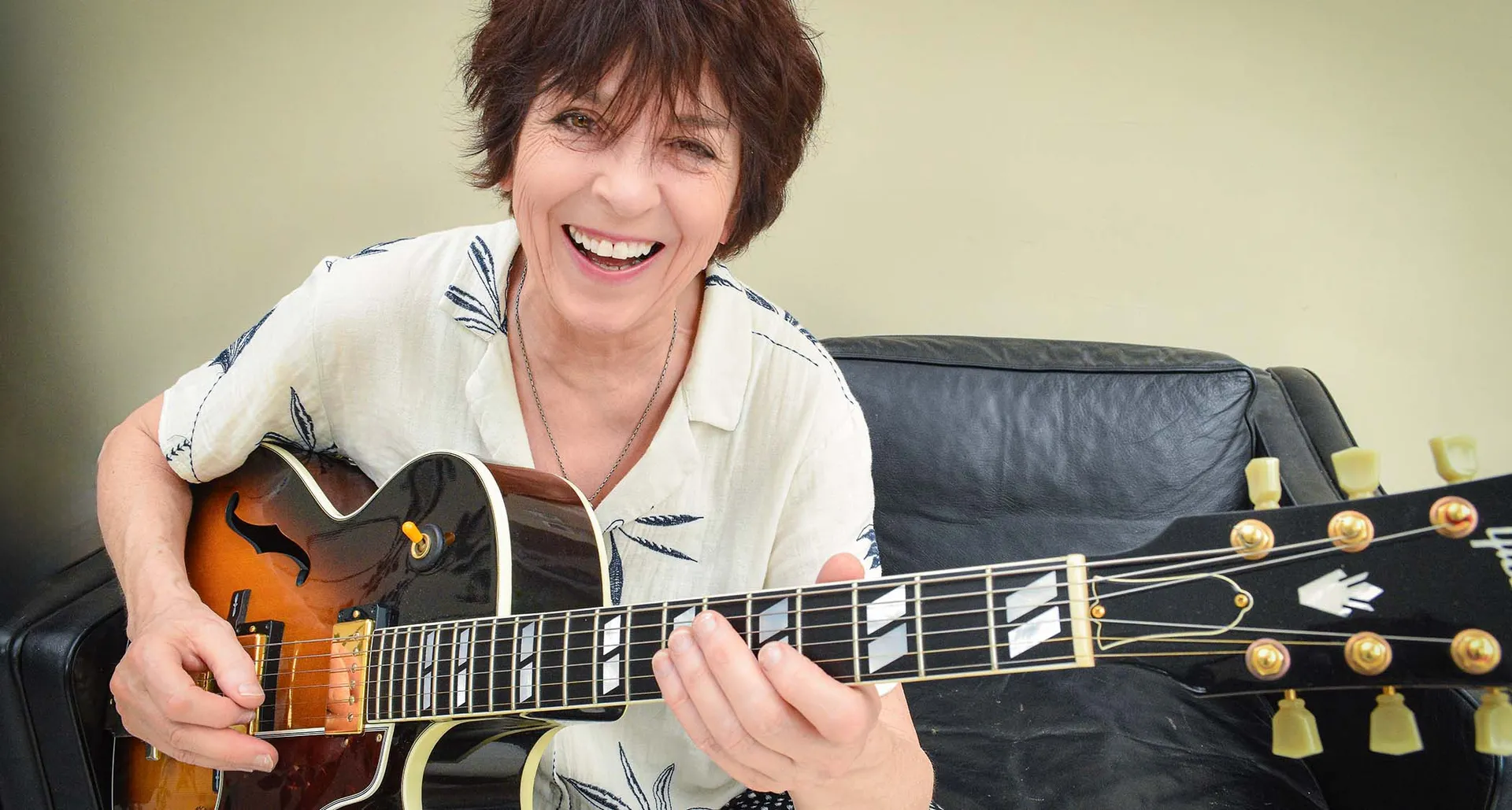
Many people will always associate Deirdre Cartwright with the BBC Two programme RockSchool, which ran from 1983 to 1987 and was hosted by top players and teachers of the day: Henry Thomas, Alastair Gavin and Geoff Nicholls.
The show featured tutorials on various styles of popular music as well as pro tips on maintaining gear. Since then, Deirdre has become a well-known jazz player on the festival and club circuits and has released a string of albums under her own name, as well as been an ensemble player on many more.
Her most recent album, Organik, finds her back in the role as band leader.
Why the 15-year gap between albums?
I’ve led lots of really great bands. Some of them involved musicians from Europe, and it’s a lot to organise – touring, getting gigs and all the rest of it – and I think I just became a bit wiped out with it all. At the same time, Alison Rayner, who I’ve played with for a very long time, wanted to form her own band because she wanted to do more composition.
She had written a little bit for my band, but it was mostly my compositions, so she said she was going to form ARQ, the Alison Rayner Quintet, and that started in about 2012, 2013. I actually thought, “Oh, it’s so nice just to be in a band, as opposed to leading a band,” because when you lead a band, you also have to do all the organising as well. So I’ve done four albums with ARQ, and that’s been great. I really love working with that band, and hopefully that will continue.
But gradually I began to get back much more into what I’d call classic jazz, if you know what I mean, and I got into exploring again all those wonderful guitarists – Wes Montgomery, Pat Martino, Kenny Burrell and Grant Green – all that kind of playing. I had started to play with Pete Whittaker [Hammond player].
We were doing a sort of jazz-duo gig, and I hadn’t really played with organ before. We just got on really well. And then Gary Hammond, who’s a wonderful conga player and percussionist, played in my bands in the ’90s, and he ended up playing with The Beautiful South. He was down in London and so I thought, “Okay, let’s just try doing an organ trio.” We’ve only ever done about half a dozen gigs [as Organik], but it really gave me enthusiasm again for playing and, I suppose, leading a band again.
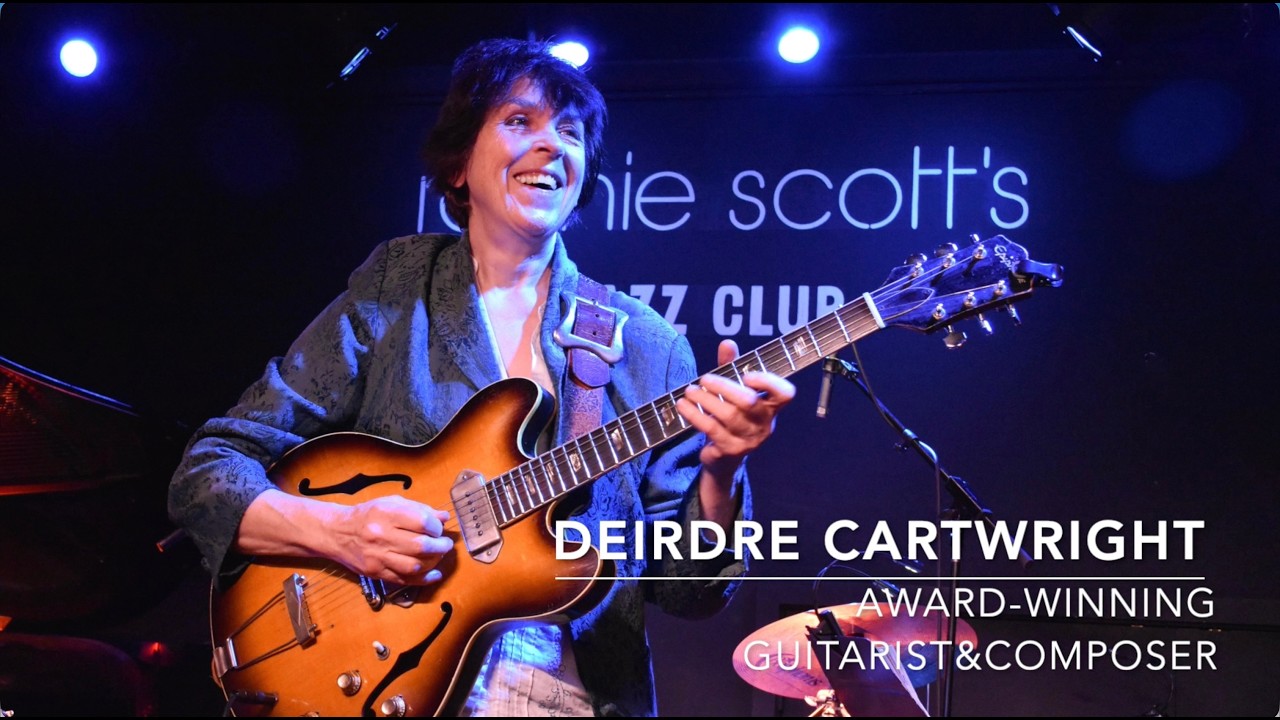
What gear did you use to record the Organik album?
When I first started playing with Organik, I was playing a Heritage, which is based on a [Gibson] Super 400 so it’s a really big guitar. I’m relatively tall, but I thought, “Wow, this is a really big guitar…”
I often go down to Cornwall and I know a jazz guitarist down there called Martin Bowie. When I’m down there we often do a duo gig together and he has a Gibson L-4. So I had a little go after a gig and I said, “This guitar is just a little bit smaller and it feels really nice to play.’ I thought I would love to get a blonde 175 like Pat Metheny, who I’ve loved since the ’70s.
I’d been down to the Bath guitar auctions [at Gardiner Houlgate], and they had about half a dozen 175s and L-4s, and I thought I might get one from there, so I tried them all out. I also spotted an L-4 and I thought what a beautiful guitar it was, in really beautiful condition.
Anyway, when the auction came up, I put a bid on a 175 [and won], and I put a lowish bid on the L-4. I’d just arrived in Greece, looked at my phone and it said, “Congratulations, you’ve got the L-4”, and I went, “Oh my God!” So I ended up with two guitars and they’re both really fantastic. They’re both beautiful. So on the album I use the 175 and a Lazy J amp.

Which model Lazy J is it?
It’s a 20-watt model reverb. I used that on the album and then I realised halfway through that it was making a slightly odd sound. I actually discovered afterwards there was a problem with one of the reverb springs, and it was just rattling around a bit.
So I also used my little Fender Princeton, which is a 12-watt amp, but it has a 12-inch speaker in it. It’s a 1971, but it looks like it’s not really a ’70s one inside; it’s all totally ’60s still. It’s got the most beautiful sound. It’s a little too quiet for most gigs, but it’s got wonderful sounds, so that’s what I used on the album: the 175, the Lazy J a little bit, and a Fender Twin that was in the studio and was a little bit bright, and then my Fender Princeton.
Any effects?
No effects. I’m getting less and less into effects. I started off always playing with effects pedals, but I think [not doing so] really improved my technique and my playing. I think it’s really made me focus on the notes more. You have to be able to do it all. So all I had was the guitar lead into the amp, and that was it.
I thought, “Oh yeah, maybe for the moment I’m not using effects, but maybe I’ll try the 175 or the L-4 through a couple of things,” you know? I won’t do a Ted Nugent, though
Funnily enough a couple of weeks ago, I was talking to [jazz guitarist] Rob Luft, and he’s got a pedalboard. He was using what looked to me like a Gibson L-5 through all these effects. And I came home and I got my old [Line 6] POD out and I started playing with the delays and I thought, “Oh yeah, maybe for the moment I’m not using effects, but maybe I’ll try the 175 or the L-4 through a couple of things,” you know? I won’t do a Ted Nugent, though.
You’ve included quite a few jazz standards on the album, including The Gentle Rain and On Green Dolphin Street. Are these particular favourites?
Yeah, I’ve always loved The Gentle Rain. I’ve always kept that in my repertoire, even though I play other bossa novas. I went to see Pat Metheny playing in the ’90s at the Mean Fiddler. He played all standards that night – and maybe a couple of his tunes but mostly standards – and he played The Gentle Rain and I thought, “Oh, that’s gorgeous!” It just made me think, ‘I’ve got to learn that tune.’
Are you going to take Organik on tour?
Yeah, I would like to do some more gigs. I’m going to be getting some gigs in the autumn and next spring, that’s the thing. I’ve been offered a couple, which is really nice, because people don’t really know about it and I play with two or three different groups, but I definitely want to tour Organik.
I’ve actually fulfilled a lot of what I wanted to do when I was younger, just being able to play certain things, and I’ve fulfilled a lot of my aspirations, you know? But it doesn’t stop there.
I just always want to learn more and improve and keep on bringing what I observe and what I hear into the music. There’s a couple of great jazz standards I really want to learn, and I heard Bill Frisell playing a fantastic version of Epistrophy, and I just think, “Oh, that’d be great.” So who knows, on the next one I might do a couple of Thelonious Monk tunes.”
- This article first appeared in Guitarist. Subscribe and save.

