

In the summer of 1983, 18-year-old David Ellefson had moved from Jackson, Minnesota to Los Angeles, where he met guitarist Dave Mustaine, who had recently been fired from a new band named Metallica.
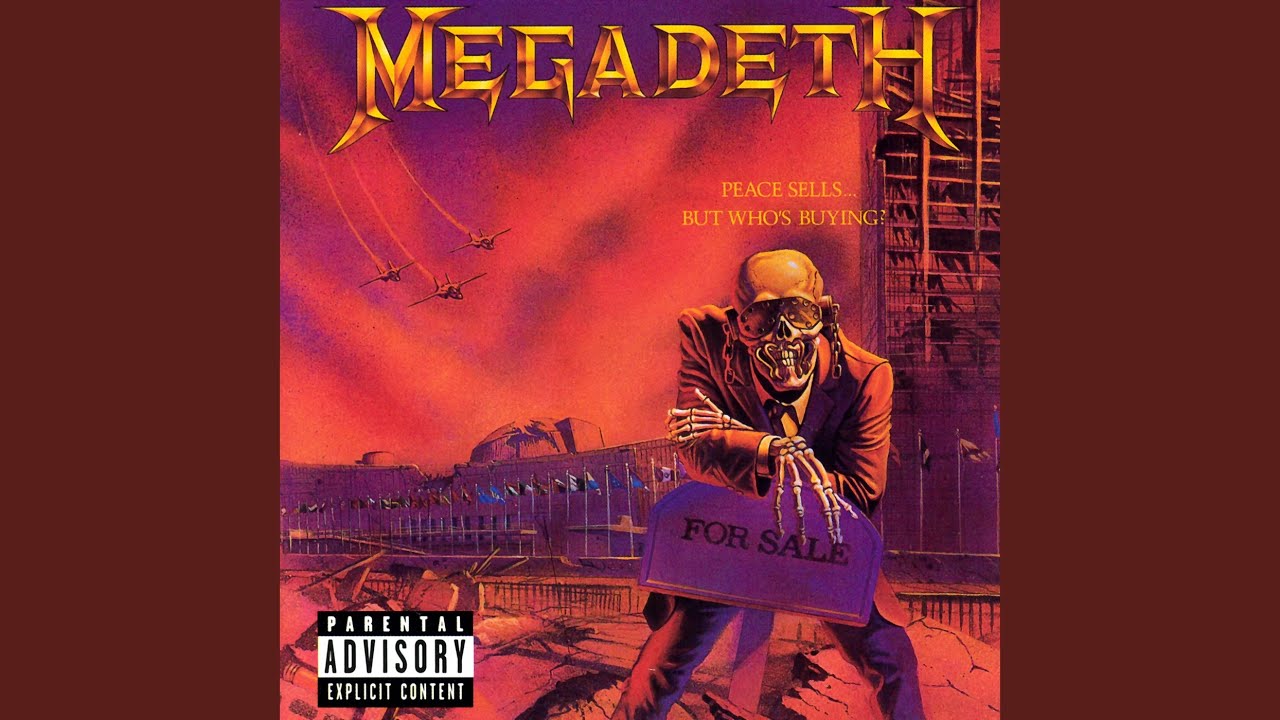
Equipped with only a bag of clothes, a B.C. Rich Mockingbird bass guitar, and a small Roland Cube amp, Ellefson squatted around L.A. while writing what would become Megadeth’s first two albums. Killing Is My Business... and Business Is Good! and Peace Sells... but Who's Buying?
This classic slice of ’80s thrash metal owes much of its success to Ellefson’s growling pick-driven bass tone. By locking tightly into the drums and guitar, Ellefson cemented his reputation as one of the genre’s greatest players.
“Growing up, I could never afford a big amp,” said Ellefson in the March 2016 issue of Bass Player. “I found that playing with a pick gave me a tone that would cut through, even when playing with my buddies who were using half-stacks.
“Fast forward to moving to L.A. and meeting Dave in 1988. When we first started writing music for Megadeth, I used my fingers because the music was much slower – it was almost Black Sabbath-type tempos.”
Megadeth’s transformation into one of thrash metal’s defining bands wasn’t entirely preordained. For Ellefson, the shift happened almost overnight, sparked by an unlikely source.
“One day, a fan wrote a letter to Dave that said, ‘Dude, I hope your new shit is faster than Metallica.’ Right then, we went to rehearsal, all of the tempos sped up by 50 to 60 BPM, and we became a thrash band that night.
“Because of that, I needed to use a pick to keep up, and it was already natural to me. The pick is just an all-purpose device that allows me to do everything.”
Another key element of Ellefson’s tone has been his long-standing relationship with Jackson, a partnership that began in the late ’80s and would eventually lead to a series of signature models.
“I went to see Judas Priest on their Turbo tour, and the opening act was Dokken. Jeff Pilson was playing a Charvel bass, and his tone was phenomenal.

“The next day I went to the Guitar Center on Sunset Boulevard, and I saw a Jackson bass on the wall. I plugged it through a GK 800RB head into a Hartke 4x10 and a single 1x15 cabinet. My tone was born right then and there.”
It was in 2016 that Ellefson reportedly achieved his favourite bass tone to date. During the recording of Megadeth’s Dystopia album, he decided to track with no drums, no guitars, and no vocals – just his bass and a metronome.
“Dave and I sat there together, and we went through everything part-by-part and song-by-song; by having the bass guitar as the first brick of the building being laid down, the rest of the structure was built on the back of the bass tracks.

“As bass players reading this will understand, you can sit by yourself at a computer and dial in a great bass tone, and then once the band comes in and everyone tracks together, your tone disappears in the mix.
“By doing it this way, we were able to build a tone that would stand up to the drums and the heavy rhythm guitar on top of it. We got such a crystal-clear, ripping bass sound. The bass became the benchmark for the rest of the album.”
The bold manoeuvre paid off, with Ellefson setting the bar for the rest of the band – nowhere more so than in the bass-heavy Fatal Illusion.
“That bass riff actually started off as a guitar part. That would happen a lot of times, where we’d write something difficult with a lot of hammer-ons and pull-offs, which can be tricky to nail on a five-string bass with a wide neck.

“But sometimes, instead of keeping them on guitar or doubling them up, we’d delegate them to bass. That part is on the lower register, down near the nut where the strings feel super-tight.
“Playing it is almost like a seesaw, where once you’re locked into it, it takes you into the riff. So the trick for me is to lock in right away, because as long as I get my up- and downstrokes going it’s like clockwork. But I tell you what, if you land on one of those notes wrong, you'll never get back into it.”