



When your gig is a seemingly permanent slot as the rhythm guitarist and co-songwriter for a rock icon, everything else is pretty much gravy. Billy Morrison, who was brought into Billy Idol’s band in 2010, has gravy to spare – enough to cover Thanksgiving dinners for everyone in a sold-out stadium.
On top of that, Morrison has become a successful painter, with a healthy list of wealthy return clients. He has displayed his work in numerous exhibitions, and one of his pieces from a series of butterfly paintings has been hanging in the U.S. Capitol for more than 10 years.
So, when it comes to his solo albums, Morrison doesn’t need to write hit songs, address a particular audience, or play out live. His sole focus is to write in a variety of rock, punk, and metal styles he enjoys, then get together with friends to hang out and jam. Of course, as a fixture of the L.A. scene for more than a decade, many of his friends just happen to be multi-platinum rock stars.
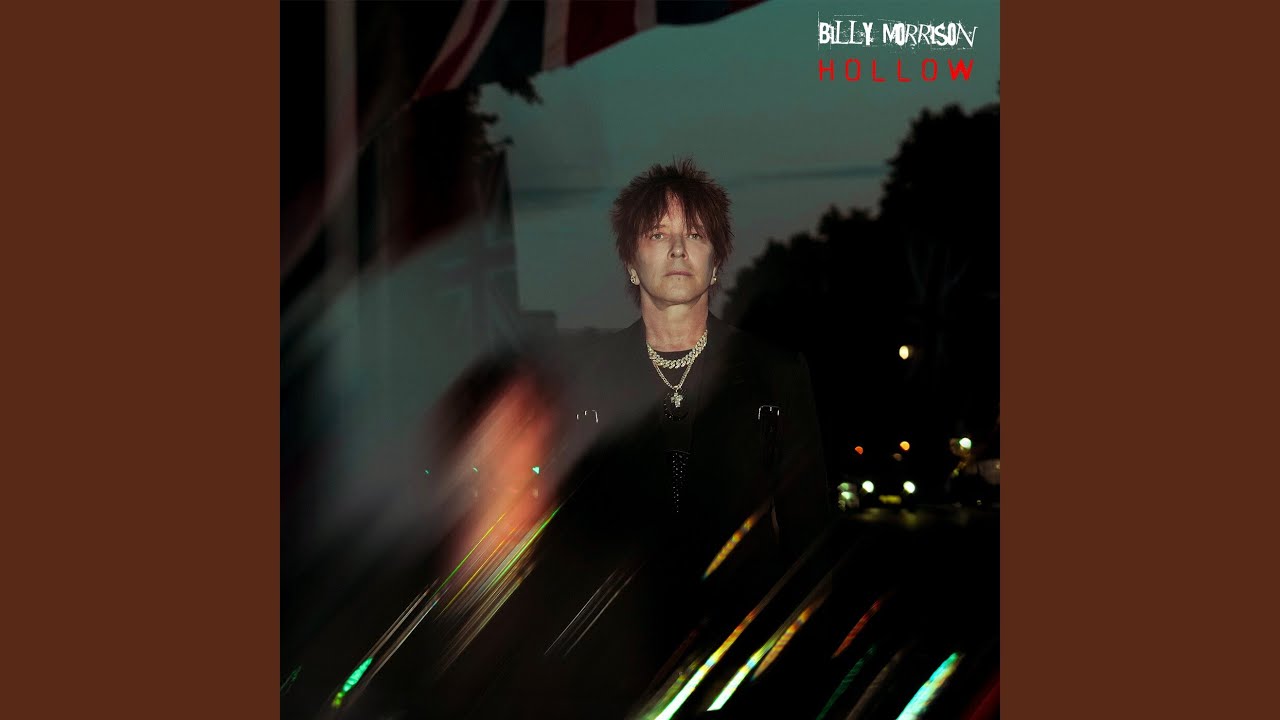
His fourth solo album, Hollow, features guitar work by Billy Idol’s lead guitarist, Steve Stevens, Nuno Bettencourt, and Duff McKagan, and guest vocals from Sully Erna, Dexter Holland, Marilyn Manson, and rappers Chuck D, B-Real, and D.M.C.
“I love working with musicians I like and admire,” Morrison says from the desk in his home studio in Beverly Hills. “That’s a real thrill for me. And I can work with whoever I want and put as many different genres onto a rock record as I want, because the only person I have to please is myself.”
It’s a formula that has served Morrison well. In 2024, Crack Cocaine, the snarling riff-driven anthem he co-wrote with Ozzy Osbourne, went to number one on the Mediabase Active Rock Chart, and fueled the success of Morrison’s third album, The Morrison Project.
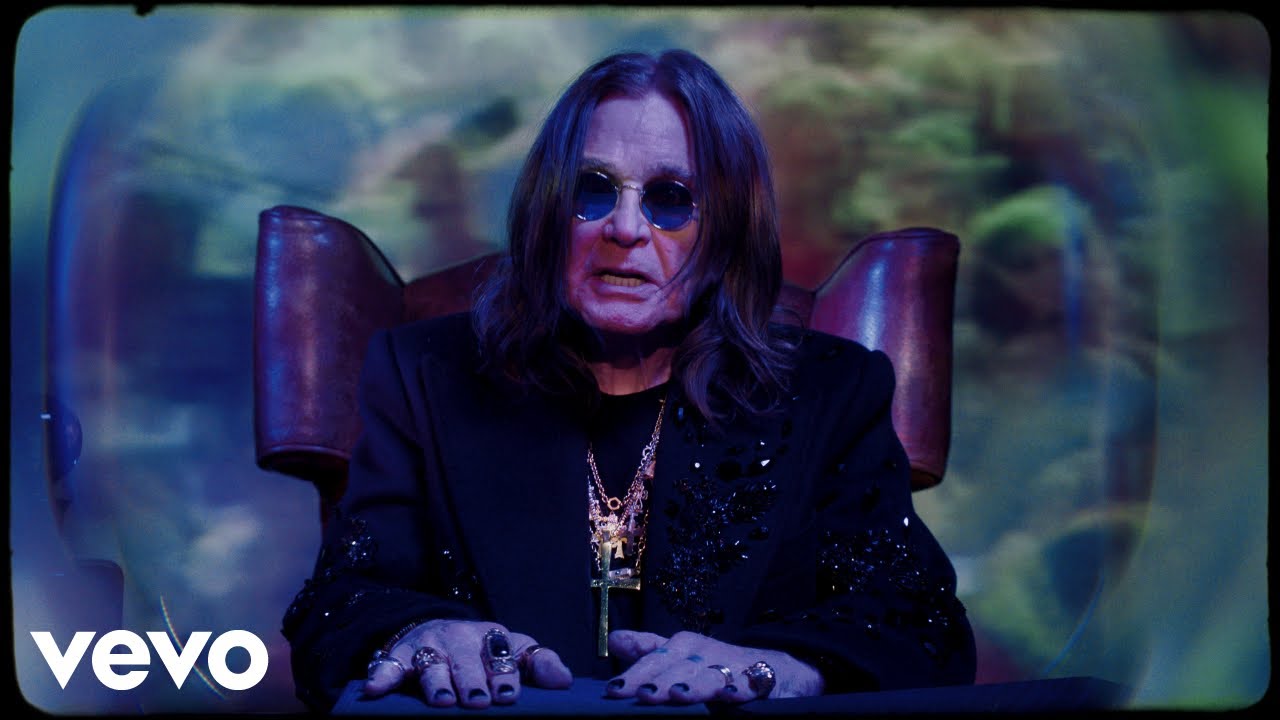
The record also featured the Ozzy co-write Gods of Rock N Roll, an epic, orchestral power ballad that went top 10 on the Active Rock Billboard Mainstream Rock charts. Becoming, a new, brooding, caustic grunge-metal collaboration with Godsmack’s Sully Erna and Bettencourt, went top 20 on Active Rock and created a strong buzz for Hollow.
I was a heroin addict for 15 years, and I only woke up in the early 1990s. So, everything between the late ‘70s and the mid ‘90s was just a blank
“My God, it seems like it was just yesterday that Crack Cocaine went to number one,” Morrison says, his hands linked in front of him, revealing colorful tattoos and blue polished fingernails. “And Gods of Rock N Roll was still in the charts while I was writing these new songs. Before I knew it, I had written enough for another record, so I figured while I was having fun, I might as well start recording it.”
Morrison’s eclectic guitar style and aesthetic are partially rooted in the UK punk and old-school glam he grew up on, which explains the abundance of reverent Sex Pistols and David Bowie nods. The other main inspirations on Hollow are late ’90s and early 2000’s alternative rock. There’s a reason for that.
“I was a heroin addict for 15 years, and I only woke up in the early 1990s,” Morrison says. “So, everything between the late ‘70s and the mid ‘90s was just a blank. It didn’t seep in.
“I caught up to it later, but what really stayed in my blood is drop-D Seattle music, stuff like Nine Inch Nails and Marilyn Manson, and then pop-punk stuff like Blink-182 and the Offspring. That’s the kind of thing that gets me excited about writing music, and it’s good because a lot of it is pretty different than what I’m doing with Billy Idol, so neither gig ever gets boring.”
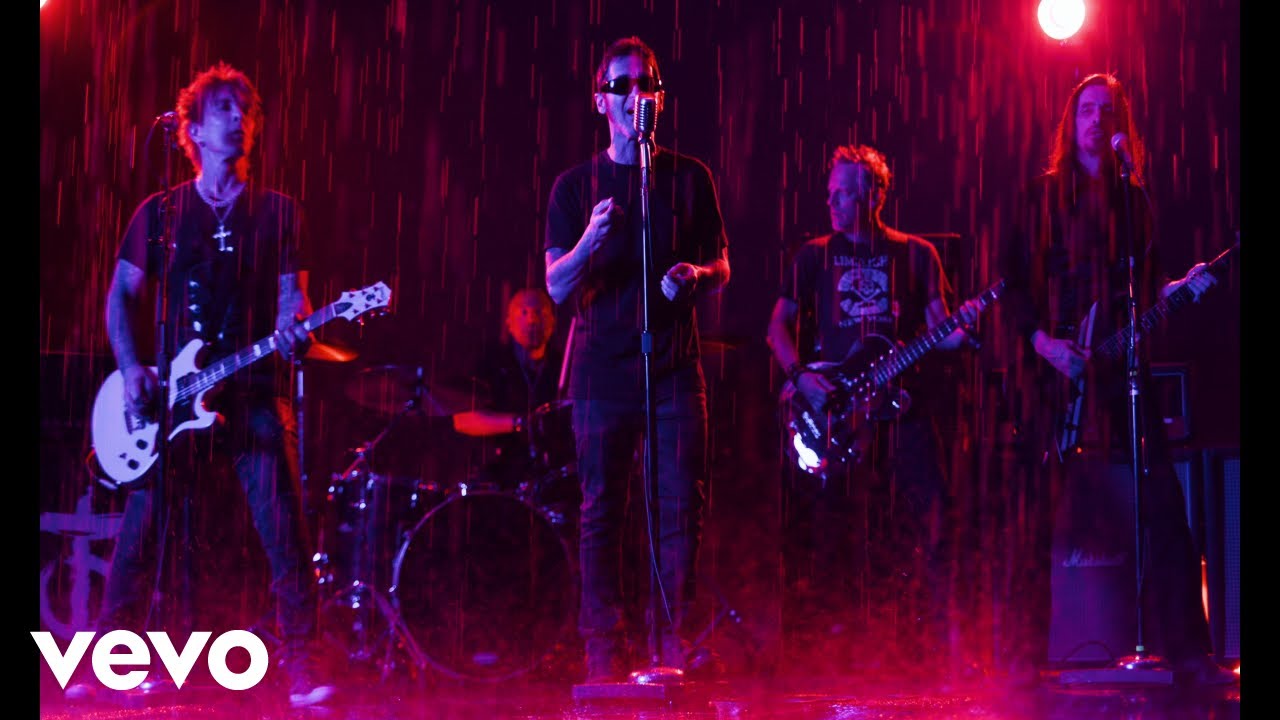
In a revealing interview, Morrison talked about how he wrote and recorded Hollow, his escape from near-terminal addiction, his tight friendship with Ozzy Osbourne, and the gear and goals he has as Steve Stevens’ sidekick.
I wrote Never Gonna Change in about four minutes. It’s a pop-punk song with four chords in it. I love The Offspring, and I could hear Dexter singing on it, so I texted him
Did you write songs for Hollow with particular vocalists in mind?
No, that came later. I’d get two-thirds of the way through writing a song before I figured out who I wanted to sing on it. Like, The Tailor had an industrial feel with heavy guitars and electronics, and I went, ‘I’ve got to text Marilyn Manson.’ Now, Manson is a friend so it wasn’t hard to get things started.
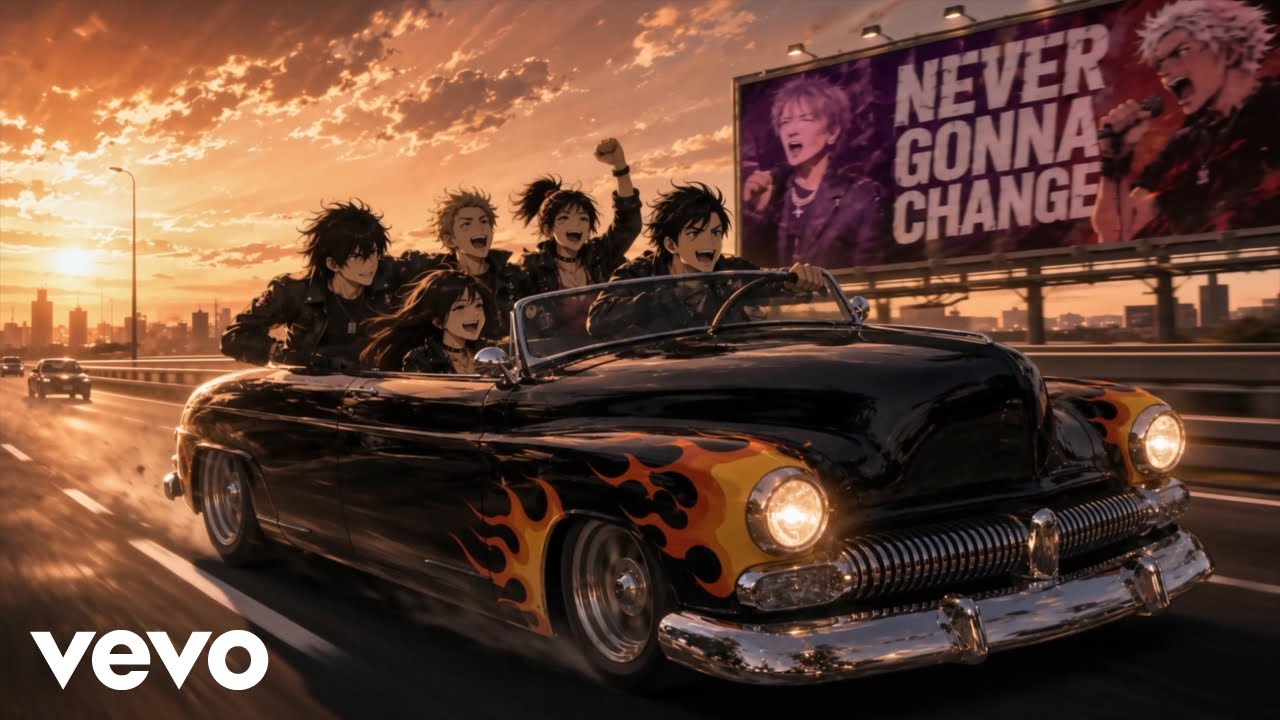
The same went for Dexter Holland. I wrote Never Gonna Change in about four minutes. It’s a pop-punk song with four chords in it. I love The Offspring, and I could hear Dexter singing on it so I texted him. It was like that for pretty much everything I didn’t sing on.

You wear your influences on your sleeve, but with great reverence for the artists who inspired you. And you combine them in creative ways. Take Me As I Am, for example, sounds like a hybrid of Soundgarden and Oasis.
I’ll take it. Thank you. At the end of the day, all you can do is put out a record and hope other people understand what you’re doing. I’m proud of my influences, but at the same time, I never said, “Okay, I’m going to rip this off and that off, and combine them.”
What you hear is what comes out of me naturally when I pick up a guitar. It might be a drop-D riff, or a jangly open-chord thing. But then, maybe I’ll do something with it like add another guitar or put some EDM samples on top of it, and if it fits my limited vocal range, I’ll sing on it. And if it doesn’t, I’ll call one of my rock star buddies.
You’re well-versed in straightforward rock, power-chord riffing, drop-D doom, open-chord spangle, country twang, and driving percussive punk. Do you view each of these as separate entities requiring specific playing techniques?
When it comes to rhythm, I learned everything I know from Steve Jones. If it works, it’s good, whatever label you want to put on it. And you know, The Sex Pistols only wrote 12 songs 50 years ago. But every one of them has a chorus to die for.
That band played with anger and venom, which put them in what became the punk genre, but those are pop songs, and they’re all about huge choruses, which are what I love and what I go for.
Hollow ebbs and flows through a wide range of emotions.
There are peaks and valleys because life’s like that. Look at [David Bowie’s The Rise and Fall of] Ziggy Stardust [and the Spiders from Mars]. That album is a journey through his mind. I want Hollow to be a journey through different areas of my brain, and that includes some very energetic stuff and some very dark things.
When you mix different subgenres within a song, do you use different gear for each style?
It depends on what I’m going for. Let’s say you have a riff that goes G-D-A. You can play that Noel Gallagher style with open chords down on the first, second, and third fret areas. For that, I would probably go to my JCM 2000, which was modified by Dave Friedman, and it’s a big, important mod that makes it sound nothing like a JCM 2000.
I’d play that on my signature Knaggs [double-cutaway solid body] with P90s on the bridge. And then, I would go to my Friedman [BE-100 Deluxe] head with a Les Paul, and I would play fifth-fret and seventh-fret power chords and layer left and right. I’m a huge fan of playing the exact same thing twice, so you have four tracks shaping the sound.
To make the sound thicker?
There’s that, but also, you want to play it twice because you physically, humanly can't play it exactly the same way, so it’s more organic. Sometimes, I’ll pan the takes at ten and two, and then do another pair of tracks with a different rhythmic technique hard left and hard right.

You produced Hollow in your Beverly Hills home studio. When you’re writing the songs, do you have a basic idea of how you’re going to engineer them?
To an extent, but that’s not why I do it. Producing my albums gives me time and creative freedom. I’m not on anyone else’s schedule, so I can make sure the aesthetic of the music is visually and sonically consistent. If you play this and the last album back-to-back, it sounds like the same band.
There are only two guest guitar leads on the album. You play all the other solos, which suggests you’ve overcome the insecurities you used to have about soloing.
I'm going to be as honest as I can without being narcissistic. I don't feel insecure anymore. I definitely wouldn't try something like Eruption. I know who I am as a player and who I am not, and on the songs I played leads, I totally enjoyed pushing myself to make them as good as they could be.
You prioritize melody over speed.
I don’t care about playing fast. I’m more concerned about having the right notes and the right space between them. Some of the greatest solos to me are things I can hum, and that’s always at the front of my mind.

Are you schooled in the seven diatonic modes?
No, I haven't got a clue. I tried, but I just… You know, it wasn't for me. And you know what? I probably play them. Clearly, someone could dissect one of my solos and say, “Oh, he was in Dorian, and then he went to Mixolydian,” but I’m playing with my ears. I have no idea what to call what I do.
Why did you invite Nuno to play on Becoming?
When I first heard Nuno’s playing it felt to me like someone raising the stakes of the game. And Sully and Nuno are both from Boston, and they’re friends. So, when I was working with Sully, a lightbulb went off in my head.
Nuno was in town doing a charity gig, and we bum-rushed him in the dressing room and asked him to do it, and he said sure because, you know, you don’t want to say no to your friends. It was only later that he said, “Man, I didn’t even think about what I would have done if the song sucked.”
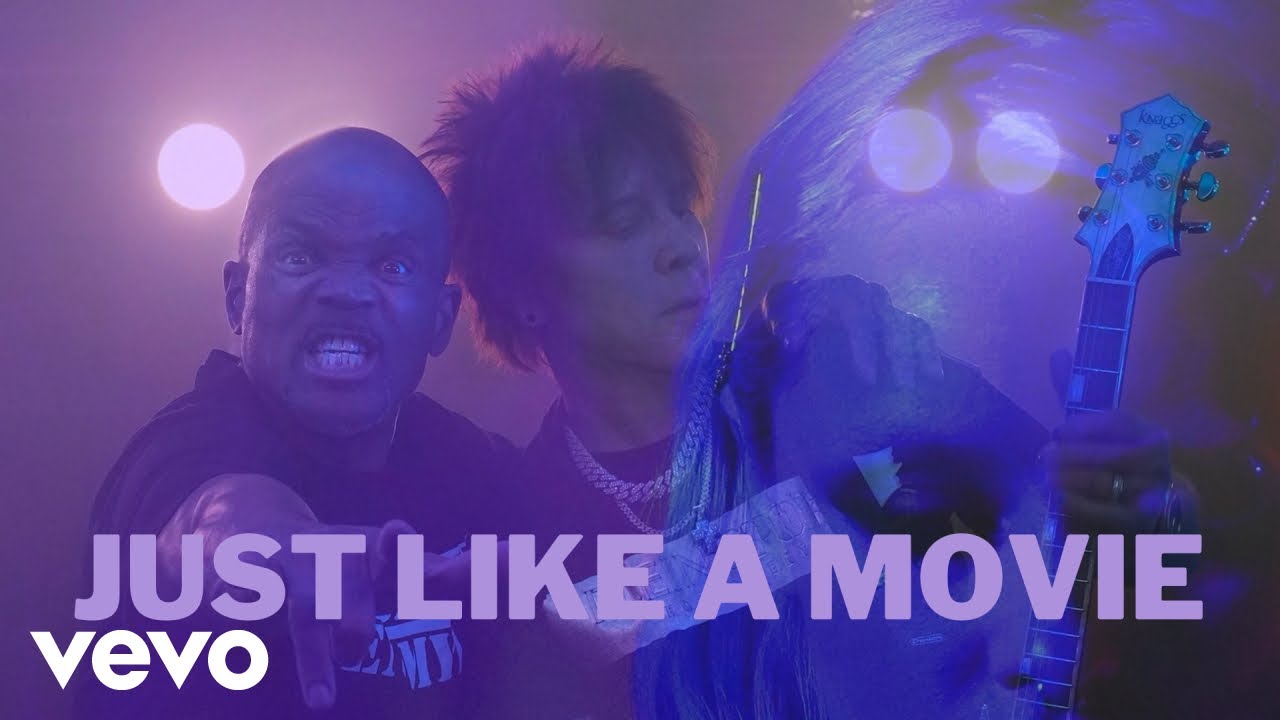
Steve Stevens plays lead on Another Day.
I didn’t even have to think about that one. I love my brother, and if I’m making a record, he needs to be on it.
You met Steve when you were in the LA cover band Camp Freddy (with Dave Navarro and Matt Sorum), and Steve started joining you onstage. The two of you had shared interests and you quickly became friends. Steve had long been Billy’s only guitarist. Why did Steve suggest to Billy Idol that he hire you as the band’s full-time rhythm guitarist in 2010?
They decided it was time to be a two-guitar band. The two of them wrote Rebel Yell, White Wedding, Eyes Without a Face. They were like Mick and Keith for a long time. I’m nothing compared to them. So, I’m fortunate that they asked me to play with them and they didn’t say no.
So, once you have us being a twin-guitar band, the two of us need to complement each other and play off one another. And you can't do that if both of you are playing Les Paul-style, PAF humbucking pickup guitars. You just sound the same. And we're both using Friedman amps. So, that’s where my signature guitar with Knaggs came in.
Your Knaggs Keya B-M is your primary guitar onstage with Billy Idol, and it was your go-to for Hollow?
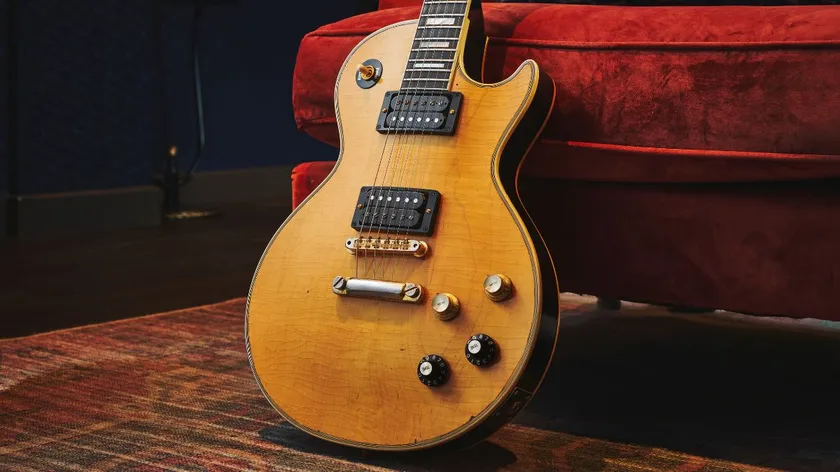
My signature guitar is a nod of the hat to Steve Jones, who played a white Les Paul Custom that was so nicotine-stained from the clubs that it was more of an off-white. So, we called the color “nico-cream,” and it has a thick neck profile. Most Les Paul Juniors are really skinny, so you don't get all of the tone from it.
I’ve got big, fat fingers, so I asked for a thicker neck that was more like a Les Paul, but with Fralin Noiseless P90s. So now, Steve’s on the humbuckers and I'm on the P90s, and they sound great together. And I know Billy and Steve appreciate what I bring to the performance, which is what matters most to me.
What made you decide to kick drugs?
That's a very powerful question. And the truth of the matter is, I had a moment of clarity. It was an acute realization that I was going to die. I was homeless, living under a piece of corrugated iron propped up on someone’s fence. I was shooting in my neck.
My body had abscesses and was going septic and shutting down. But it wasn’t the thought that I was going to die that really affected me, it was the thought that I was going to die and I would have done nothing with my life and no one would care. That was the kicker.
No one in my life would even be surprised that I was gone. That’s when I was able to start turning things around, and it was hard. I was a nasty person when I was using. You have to be if you’re homeless with a five-hundred-dollar-a-day habit. I’ve been clean 30 years now, and I would hope most people would say I’m not a nasty person.
When you finally kicked drugs, was music a salvation for you? A new addiction?
Um, yeah, but I had a lot to catch up on. I felt like I'd been missing for 15 years, which I had been. So, I really got into music again, but I also had to go back and discover what had happened while I was gone. It’s funny because I was actually in LA during that time and there was all this music happening that inspired people. I always say I couldn’t even get that right.
All these other musicians formed a band, got a couple of gold records, and then shot heroin. I went straight to shooting heroin. I didn't even get to the “form a band, make the records” part.
The Morrison Project included two songs you co-wrote with Ozzy Osbourne. The two of you were close friends. Before he got terribly ill, was there ever talk of working with him again on Hollow?
No, we did it – twice. So even when he was alive, there was no talk of him being on the record. I got to have my moment with my best friend. That’s it. Done.
Ozzy was so strong and overcame so much. He would text me: ‘I'm in pain. This thing, it's getting me down.’ I would just say: ‘You're the strongest man I know’
The Back to the Beginning show was an incredible, emotional tribute to Ozzy and Black Sabbath. People were aware he had Parkinson’s and had undergone dangerous surgeries. Fans and musicians at the show were in tears because they knew he was ailing. Yet, it was still a huge shock when he died 17 days after the concert. Did you know how ill he was?
Everyone with a heart was crying the day of that show. Obviously, his health had been declining, and I had been witness to that. I had seen him in more than one hospital with tubes attached. I visited him coming out of surgeries. But you know you don’t go there in your head.
Ozzy was so strong and overcame so much. He would text me: ‘I'm in pain. This thing, it's getting me down.’ I would just say: ‘You're the strongest man I know.’ So, I expected him to overcome everything like he’s Superman because, to me, that's who Ozzy Osbourne was.
He bounced back time after time after time. So certainly, I don’t know whether it was expected, but I was not ready. And the hardest day I've ever been through was his funeral. I flew to his funeral in England, and I delivered a eulogy. It was one of the hardest things I’ve ever had to do.
What made him your best friend?
Humor was what bonded us. Sharon would tell you that we were like two 11-year-olds when we got together. We were annoying to anyone else. It was difficult taking us both to the same dinner because we would be giggling and making inappropriate jokes and laughing at things no-one even vaguely understood. And we would be shuddering with tears of laughter, so we couldn’t speak.
That's what made the friendship special. We understood each other in situations where, perhaps, other people didn't understand us.
And as friends, there were huge life events for both of us where one of us helped get the other one through. And there were events in our lives that happened, and we had a connection. I miss him.
- Hollow is out now via TLG/Zoid.
- This article first appeared in Guitar World. Subscribe and save.