

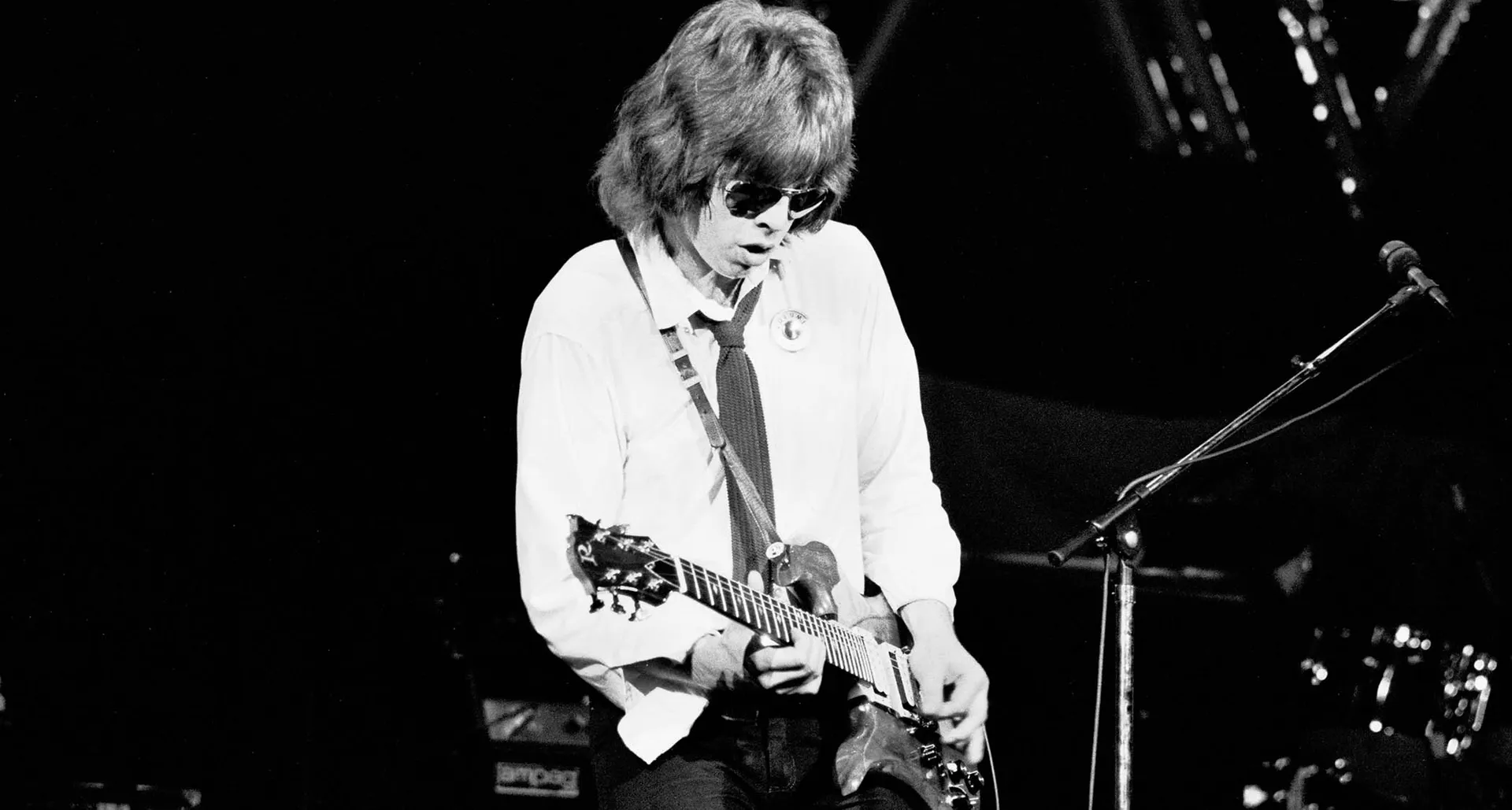
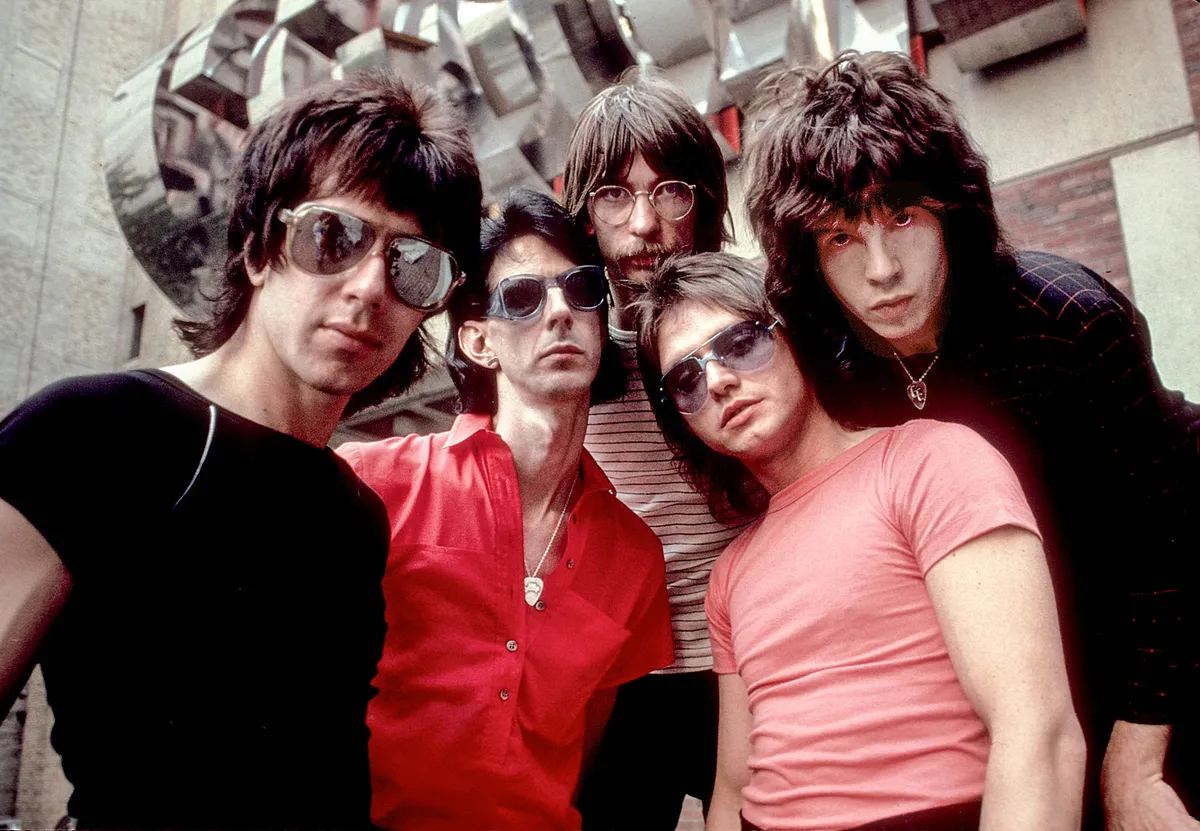
By 1978, the Cars, a young Boston-based band consisting of Ric Ocasek (vocals/rhythm guitar), Benjamin Orr (vocals/bass), David Robinson (drums), Greg Hawkes (keyboards), and Elliot Easton (lead guitar), were a well-oiled machine.
The group had cut its teeth in the local club scene and even heard their demos played on local radio. This led to an easy, breezy process at AIR Studios in London with producer Roy Thomas Baker. But Easton wasn’t sure the group’s debut, 1978’s The Cars, would be a hit.
“I remember we were just sitting around saying, ‘I hope this sells enough so that we can get to do this again,’” Easton says. “Because we just had such a good time making that record.”
At six times Platinum and reading back more like a greatest-hits package than a debut album, one could say The Cars did, in fact, sell enough. Songs like My Best Friend’s Girl, Just What I Needed, and Good Times Roll, as Easton puts it, “captured the zeitgeist.”
The Cars’ success was one of those magical things that can’t be planned, which is funny, as Easton’s solos were entirely planned. “It’s what I’d been playing in clubs,” he says. “It was just a matter of doing it and getting it on tape.”
A lot of that had to do with Easton’s mentality when it comes to delivering solos live versus in the studio. “I could never see the point in not giving audiences what I did on the record,” he says. “I wasn’t winging it, trying to write a better solo. The odds of me writing something better than what I’d already polished were slim. Once I write a solo, that’s how I play it because it’s part of the song.”
Easton’s rehearsed approach led to a comfortable recording atmosphere, which comes across in the songs.
“I was totally at ease,” he says. “You can’t believe the treatment we got from the label. We had everything, and we hadn’t sold one record yet. [Laughs]
“The label obviously really believed in us, but that goes back to a lot of people being fans of the band going in around Boston. We were getting reported on nationally, and we didn’t even have a record out yet. They had a lot of faith in us.”
Easton and his bandmates being left alone to do their thing paid off big time. Upon its release in 1978, The Cars was a monster hit. But before then, Easton was just 23 and loving every minute of the process, but had no idea what to expect.
“We made and mixed that record so quickly,” Easton says. “They totally left us alone. No A&R guys were coming in; there was none of that. They really rolled out the red carpet for us. But it’s interesting… when it was done, we didn’t know what to expect.
“But here we are almost 50 years after recording it,” Easton says. “That record is still selling, so we all must have known something! [Laughs] It’s really amazing to me that we’re talking about this record now all these years later. It was 23 when we made it, so it’s really pretty incredible.”
The Cars were mainstays on the Boston bar scene, and local disc jockey Maxanne Sartori played the band’s demos. It seems you were pretty well-rehearsed going into AIR Studios with Roy Thomas Baker.
We were. We recorded the entire first album in 12 days and mixed it in nine. It was basically our club set, so I’d already worked out my solos and parts. But I’ll tell you the truth – and this is not made up! When we got to the guitar parts, I was sick with dysentery and spewing from both ends. I was sick as a dog, but I still did all my parts in a day and a half.
We recorded the entire first album in 12 days and mixed it in nine. It was basically our club set
Yikes! What gear did you use?
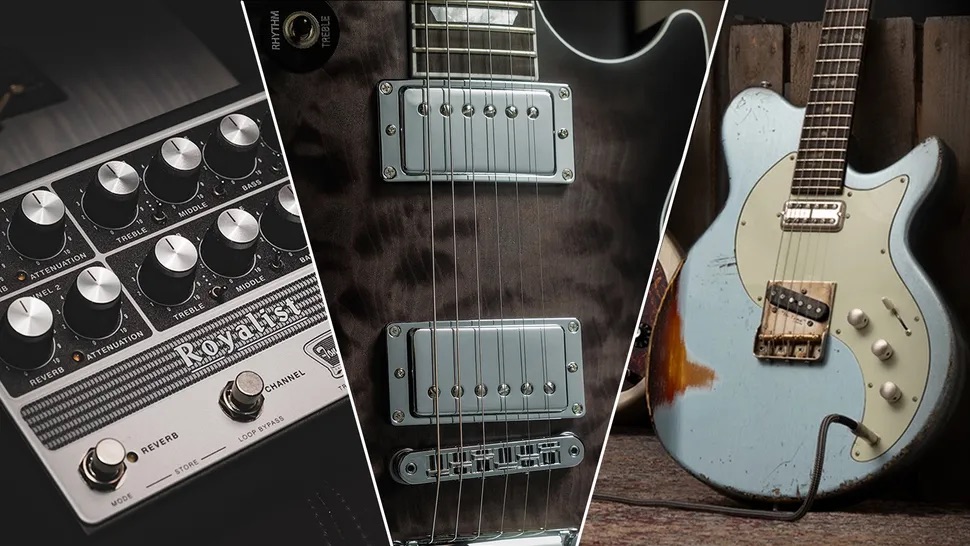
It was the beginning, so we didn’t have any money or gear. I brought a ’77 Les Paul Standard, which had DiMarzio Super Distortion humbuckers because that was the new thing. And I had a ’77 Telecaster with a Bartolini in the bridge and a [Gibson] Firebird mini humbucker in the neck.
We’d gotten an advance from [Elektra], and I obviously ran out and bought new guitars. [Laughs] I bought a Martin D-35, which I barely used aside from some strums. I also brought a Boss Chorus Ensemble and a Morley Echo Volume – but I didn’t use either of them!

Why is that?
Roy said, “For chorus, let’s do it the real way, the way we used to do it.” He’d have me double-track it with a slight variation in speed for the second part to throw it just a little bit out of time with the first track. That created the chorus effect. I actually didn’t use any pedals.
Some bands believe you should play live differently from the record; I’m not of that philosophy
I didn’t use overdrive, either. I didn’t even bring an overdrive! It was all amps. Again, we were broke, but someone got us a deal on Ampegs, and Ric had a [Fender] Twin. I think we might have had a Marshall cabinet, but that was about it. It wasn’t really a lot of gear, which is amazing to me.
How did Good Times Roll and My Best Friend’s Girl come together?
Both of those solos were worked out, so it was just a matter of laying them down on tape. For My Best Friend’s Girl, I used my Tele with both pickups engaged; we got the slapback from quarter-inch recorded tape in the control room. There’s a lick at the end of the solo that goes back to the top, and Greg said, “Why don’t you do it twice?” So I did!
And then there’s Just What I Needed, which features one of the more singable solos you’ll ever hear.
Thanks! That’s another one that I’d honed in the clubs. I polished it and moved notes around here and there until it was just the way I wanted it. So, that’s how I played it on the record. Some bands believe you should play live differently from the record; I’m not of that philosophy.
An audience comes to see you, and they pay a lot of money to hear you, so that’s what they want – that recognition, to hear the songs and see you play them the way you did on the record. I always played the solos live the way I did on the record, and you’d see the kids in the front row pointing, saying, “Look! He’s doing it!” They’d be so happy.
Of course, there’s Moving in Stereo, which became a pop-culture phenomenon a few years later after being featured in 1982’s Fast Times at Ridgemont High.
Yeah… [Laughs] I can remember Ben using an octave divider on that for an octave down. But honestly, we made that record so quickly, and we were just laying it down. We didn’t stop to think about it too much. Everyone knew what they were supposed to do, and we had a good time. We didn’t know if it would be successful; we just enjoyed the process.
The first time you heard The Cars, did you feel it was strong?
I did. I remember coming back to Boston with it and playing it for friends. Everybody was flipping out, going, “This is great. You guys did a great job. You really captured it!” They already knew the songs because we’d been playing them for months in clubs.
I really felt like we captured a moment in time for the band, and how we played the songs then. I thought it was strong then, and it still sounds good to me.
The Cars still sounds fresh. If it came out today, it’d probably be a success. How do you view the legacy and longevity of this record?
I hesitate to analyze it. If people knew what made a hit record, then every record would be a hit, you know? There’s an X-factor with that record. It captured the imagination of the public at the time. It captured the zeitgeist. It was of its time, and it felt right for the moment that it came out.
From the opinions of millions of people who bought the record, it just seemed to be the right record at the right time. You can’t plan for something like that.
And we weren’t trying to be “new wave” or “punk” or anything like that. We were just five guys, and that record is just what it sounded like when the five of us played music together and worked on those songs. To label it is a journalistic thing. It’s for people to decide on their own what they want to call it. But we just called it the Cars, and that’s what it was – how we sounded when we played.
- This article first appeared in Guitar World. Subscribe and save.

