




The British punk scene was as simple as 1-2-3-4! But by the end of the ’70s, this spittle-flecked, safety-pinned hooligan was flanked by its more sophisticated, open-minded cousin, billed by the weekly music press as ‘New Wave’.
Dave Gregory had looked on with admiration – and perhaps a little envy – as his old mates from the Swindon circuit had broken through with 1978’s White Music and Go 2 (“I thought, ‘It’s kind of punk, but they’ve got something those other bands don’t, some musical skills and really good songs’”).
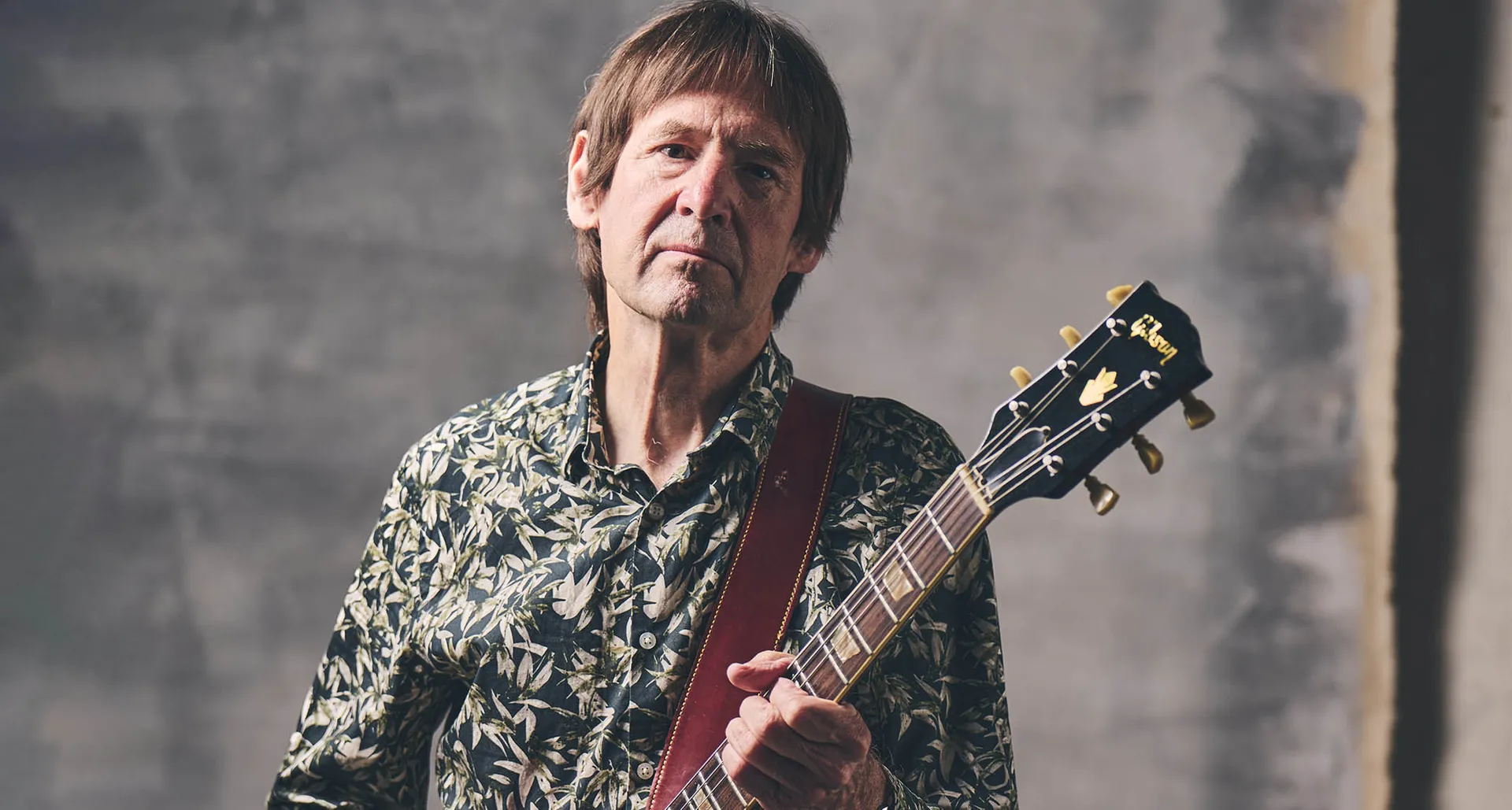
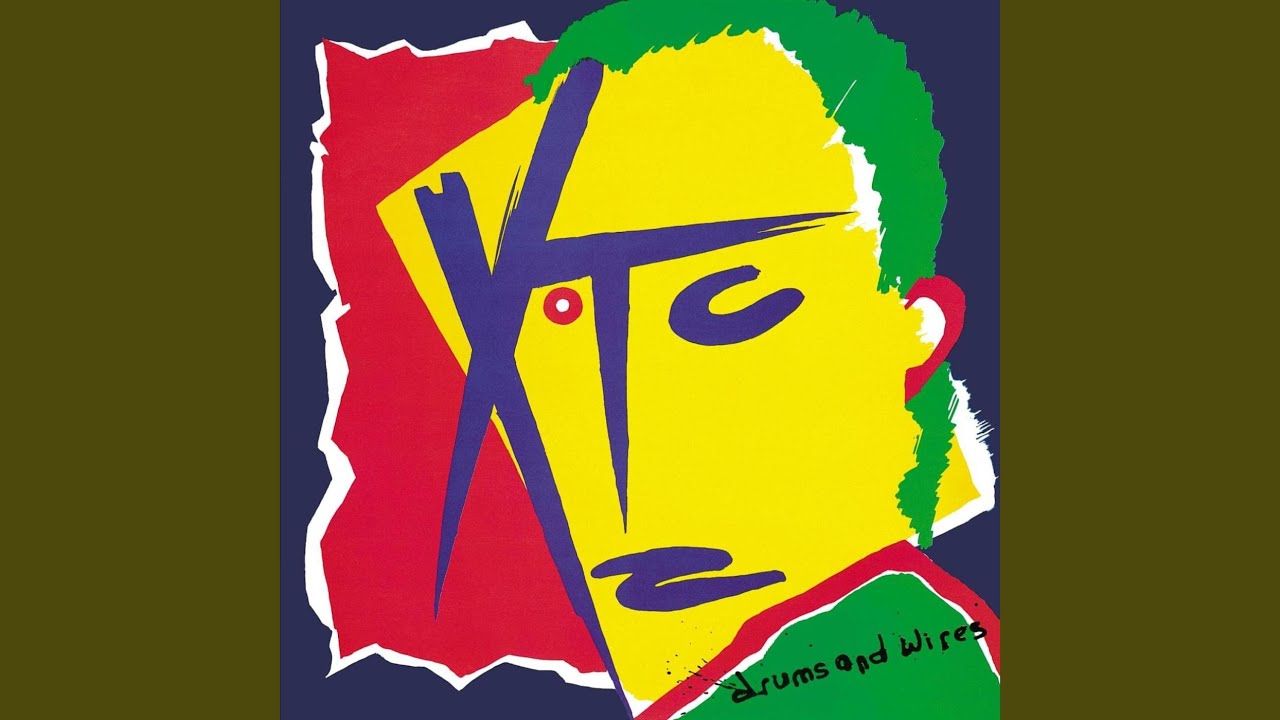
But as the 73-year-old guitarist reflects, he had no inkling the phone was about to ring with an invitation to join XTC for 1979’s classic Drums And Wires.
You joined just in time for Drums And Wires…
I’d been in the band three months and suddenly we had an album to make. So it was a big thrill for me. I wasn’t sure how long that thrill would last, but I was going to make the most of every minute. XTC had been keyboard-based for the first two albums and Barry Andrews was a huge part of their sound, so to replace him with me, I thought, “That’s a pretty drastic move. Thank you for being brave, fellas. I’ll do what I can…”
What was your own musical experience?
By ’76, I’d quit the prog band I was in. They couldn’t get any work and I was fed up of being skint. So I came back to Swindon, tail between my legs, got a job and was doing local deps for country and western groups. New Year ’79, the phone rang. My brother answered: “Oh, I just had a call from [XTC guitarist] Andy Partridge.”
I think they were desperate to keep the ball rolling. We started rehearsing in a freezing cellar. Next door was the kitchen for the Rendezvous Chinese restaurant. So we’d be doing battle with pots and pans, people yelling at each other through the breeze-block wall.
Was XTC an easy adaption for you?
When it came to rehearsing the new stuff, I was winging it. But Andy was winging it as well. He didn’t like rock ’n’ roll. He didn’t like rock ’n’ roll clichés. He didn’t want to repeat anything that had been done before, by anybody else, for any reason at all. No more wailing around, playing blues clichés. Any hint of a blues cliché was out.
The songs were so good: they were full of melody, plenty of hooks, rather than just showing off for the sake of it. So there was that unwritten discipline that I was happy to comply with.
How did the sessions get started?
After Life Begins At The Hop, Virgin wanted another single straightaway, and Colin [Moulding, bass] had this melody that became Making Plans For Nigel. We went into the studio the first week of June ’79 for two days, with Steve Lillywhite and Hugh Padgham.
Then it was like, ‘Right, we want you back here in 10 days to do the album.’ We knew we had three weeks to record and mix Drums And Wires, so that meant cutting two or three basic tracks a day, then overdubs and vocals. Amazingly, we did it. That’s why I like listening to the album today – because it wasn’t fussed over.

How did Making Plans For Nigel come together?
Well, that ‘dah-dah-dah’ riff, that’s Andy. I’m doing these slashing chords, locking in with the bass and drums, fleshing it out. The great thing about Andy is, he can throw his left hand on the neck and something comes out. He will not move his left hand unless he absolutely has to.
He’s thinking more laterally than longitudinally. So he’ll make a false nut with his first finger, then he’ll mess around. That’s how that riff came about. There’s hardly any movement. It’s so typical Andy. Brilliant. And I could certainly relate to Nigel because my parents were not happy about me having a career as a rock musician…
How did you slot in with Andy’s playing?
Again, we just winged it. We never sat down face to face and said, ‘Right, what do you want to play?’ We’d just keep running the songs in rehearsal until it felt right, and sometimes we’d get so far then he’d point at me and say, ‘Solo.’ That meant I’d get eight bars to do something with. But on Drums And Wires, most of the leads are his. Because I was the new boy, I wasn’t going to challenge him.
What did you play on Making Plans For Nigel?
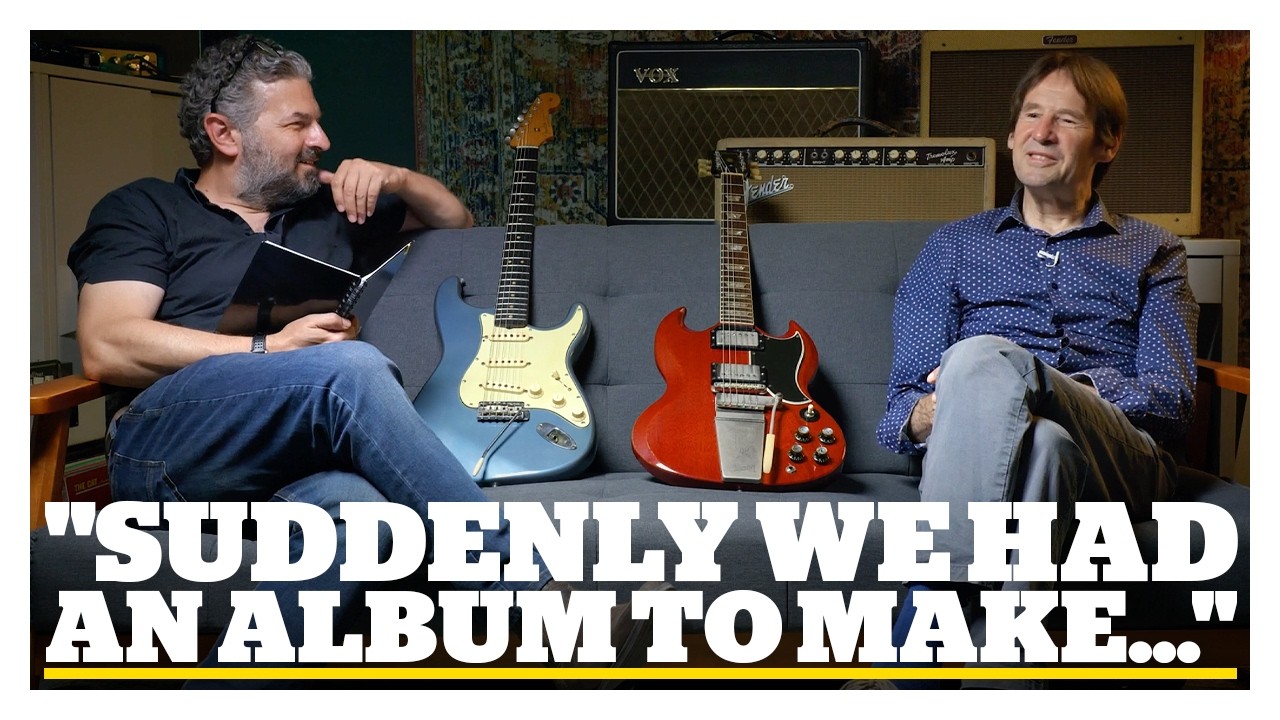
Well, it was this Strat. I bought that used from a friend in 1978, so I’d owned it for about a year when I joined XTC, and it was actually Sherwood Green metallic, a custom colour that today would be worth a fortune. But it didn’t go with the rosewood ’board at all. I thought it looked really dull, so I got it lacquered with a sort of antique violin stain.
The guitar itself is extraordinary. It’s the loudest Strat I’ve ever played. There’s something about how it’s set up, the components, and I guess the wood. The neck had a twist in it. That was a reason the guy wanted to sell it because it was difficult to set the action. There was a big lump that meant you had to have the action high. I didn’t mind that because my hands were quite strong. That funny neck gave it a certain timbre.

What else did you use?
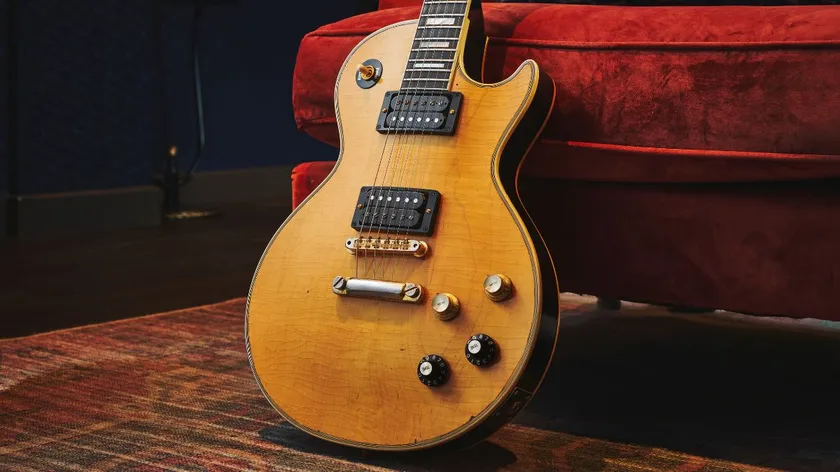
I used this SG on one or two songs. It’s the first Gibson I ever bought, and I bought it used in 1972. It’s an early ’65. Again, I was playing in this country and western band. And what everyone was doing in those days was taking the covers off the pickups because you were going to get more output and sustain and all the rest of that nonsense.
So I removed the cover from the bridge pickup and broke the wrap. A friend said, ‘Oh, I could fix that for you.’ And he basically destroyed it. It wasn’t easy to get Gibson spares in the ’70s, but someone had some humbuckers for sale. I bought one and wired it in, but it just wasn’t a patch on the original. Just so weak and skinny.
But then, at some point in ’77 or ’78, someone advertised an original [Patent Applied For pickup] in the Melody Maker, taken from the middle position of a Custom. I paid £60 for it, and once I put that in, the guitar came back to life.

But then, when I joined XTC, I thought, ‘They’re not going to want a big full-throated Gibson tone. I’ll get some coil-taps.’ It kind of worked, but it didn’t do anything the Strat wouldn’t do better. The one song I used this SG for was the solo on Outside World, and I might have played it on the rhythm part to Complicated Game.
Speaking of Complicated Game, how did that song come together?
It’s Andy’s creation. He just wanted this huge outburst of frustration at things being messed up by other people. Live, it would start with a whisper, then it would build, and you had this massive key change into the middle eight and this extraordinary guitar solo. Andy, at the time, had been using his Ibanez 2619.
Quite a rare guitar, I’ve never seen another one. But I seem to remember, for Drums And Wires, he had a sunburst Les Paul Standard and a little Marshall, one of the first 210 combos, 100-watt. Horrible thing! I hated the sound, but it suited his style because it was visceral and spiky.
Helicopter has an entirely different energy…
It’s like a little nursery rhyme. That used to have the kids pogo-ing. The Strat plays the riff and solo and it was through my little Tremolux with the shimmer on it. It’s just Fender nonsense, all done on the bridge pickup.
What bands were you listening to?
Well, Talking Heads were definitely featured. Television. Iggy Pop. David Bowie, who was always new wave, despite being an old hippie. A lot of dub reggae: Andy and Colin were well into that. Terry was more into traditional rock ’n’ roll like Hawkwind and Pink Fairies.
I just liked everything and was open to being educated, but a lot of it didn’t click with me because there wasn’t enough blues in it. I still retain a strong instinct for blues music. It’s always going to be there, but I had to rein it in because it wasn’t to Andy’s liking at all. But we would listen to whatever was floating around.
Tell us about Scissor Man.
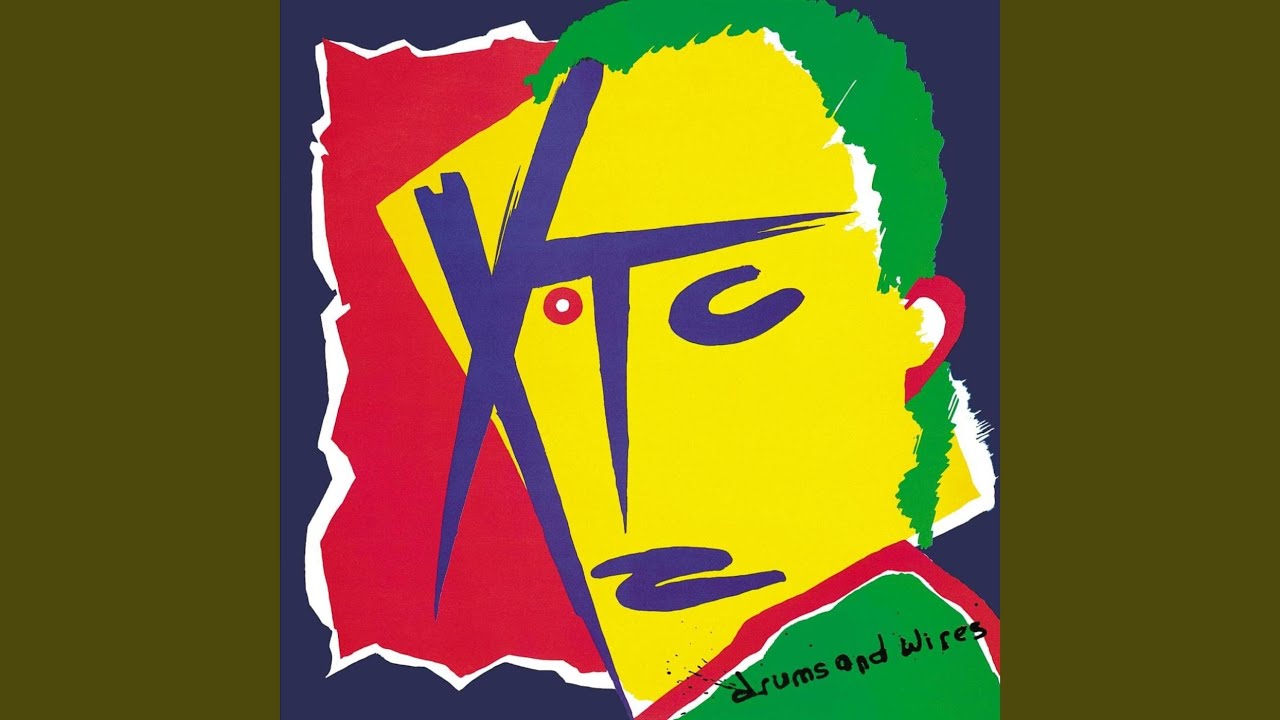
Andy had given me the riff to play and Lillywhite wanted it doubled. I would’ve thought it was easier to just put a bit of slapback echo on it, but no. So I doubled it and I thought, “You’d never know that was two separate takes.” So I’m very happy with my playing on that. When we played Scissor Man live, it used to go at such a pace.
We just released this bootleg of a 1981 gig in New Jersey. I was horrified at how fast everyone was playing, and mostly it was my fault. But we thought speed equalled energy, equalled excitement, which to an extent it does. But to listen back, it’s a bit exhausting. You just think, “Whoa! Slow down, boys. Where’s the fire?”
When You’re Near Me I Have Difficulty is a kind of socially awkward love song…
One of my favourite songs on the album. I thought, "This is a McCartney song, surely? No, it’s Andy." What a joyful noise. I even liked my out-of-tune intro. Steven Wilson corrected that when he remastered everything. But I miss it. So if I want to hear my out-of-tune guitar intro, I’ll put the original vinyl on.
Beyond the Tremolux, what were you using when it came to amps?
As far as I can remember, that’s the only amp I had. The Tremolux, it’s a piggyback amp, with a cabinet with two 10-inch speakers. But the speakers had blown. So I had an old Selmer bass cabinet and I bought a brand-new ATC 12-inch 100-watt speaker that I knew would cope with as much noise as the Tremolux could send. I used to turn everything up to 7. And that was the sound.
There might have been a little Mesa/Boogie, too. But this was the one set of sessions where I didn’t keep a daily log. I wish I had now. Of course, you don’t realise at the time that 47 years later you’re going to be pinned down about details. Y’know, were we still going to be alive in 10 years’ time? Would people still remember this album when we’re old and grey? Well, the amazing thing is, yes, they do, and they’re still buying it.
I also did a couple of solos direct to the desk, like Ten Feet Tall. I used the 335 for the arpeggios. Then Andy took the first four bars of the solo, then handed me the 335 and I played the second four bars.
How did you feel about the album’s reception?
I remember, when we were sitting on the studio couch, Andy turned to me and said, “It’s going to be a good album.” And I thought, “Actually, it does sound pretty good already. And it’s not even finished.” And he was right. It is a good album, and it remains one of my favourites because of the fun we had making it.
We were still friends. We were still up for anything. And when the album came out, we were happy to see so many good reviews. Nobody slagged it, and you have to remember the inkies would jump on anything and rip it to pieces. But sales were slow until we had the hit with Nigel, then things started to pick up…”
- This article first appeared in Guitarist. Subscribe and save.

