

The primal urge to play guitar with fire, skill and dizzying velocity is as old as rock ’n’ roll itself. But while the godfather of shred is debatable – you could equally fight the corner for Les Paul, Ritchie Blackmore, Alvin Lee, Eddie Van Halen and Yngwie Malmsteen – there’s no doubting the guitarists who have flown the flag highest since the mid-’80s.
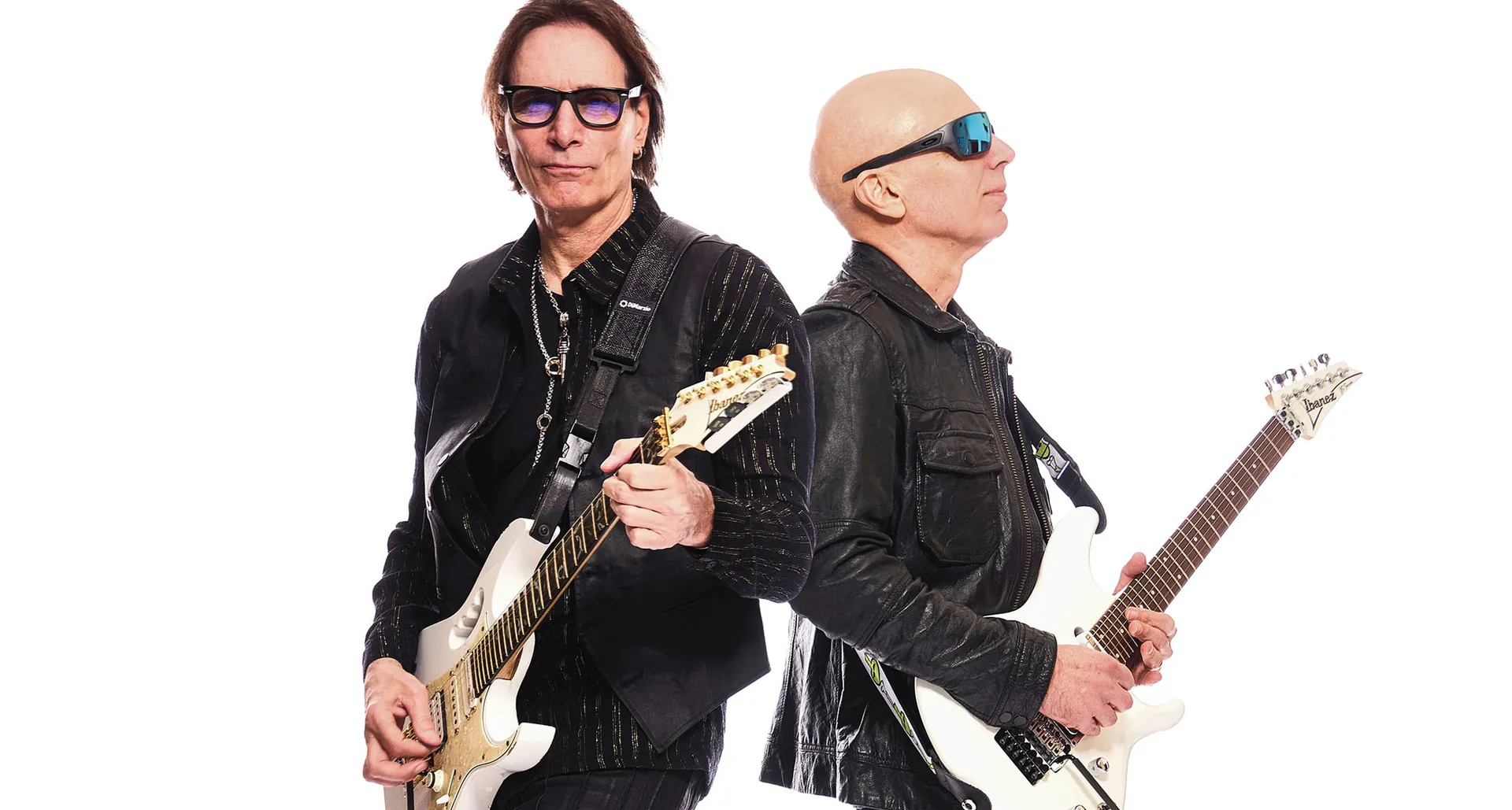
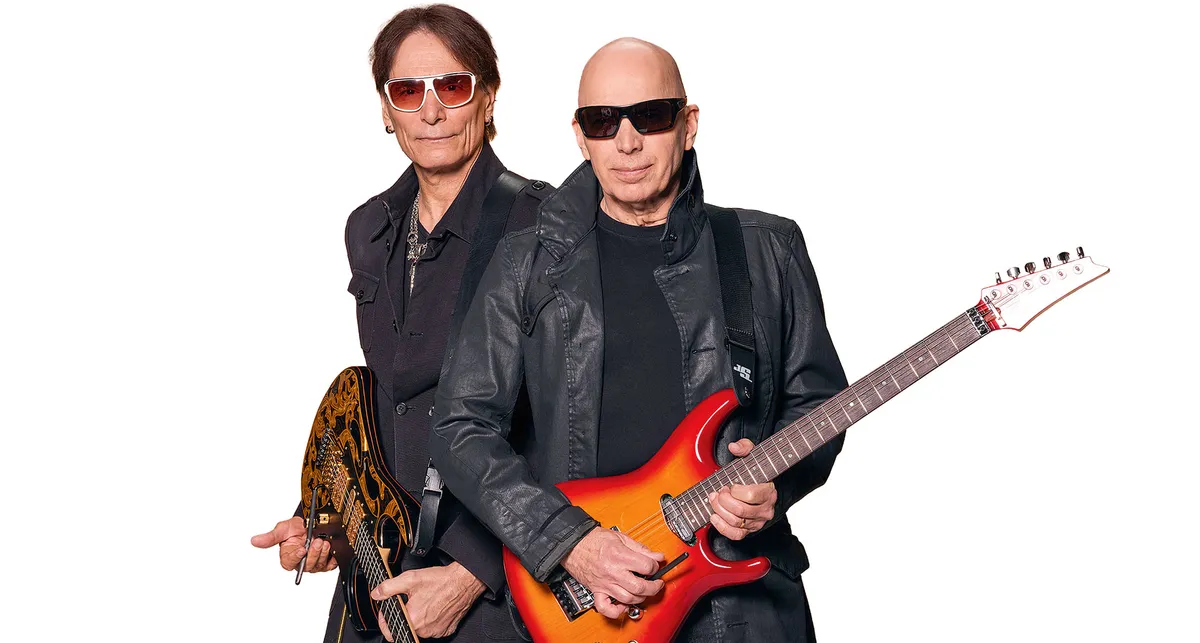
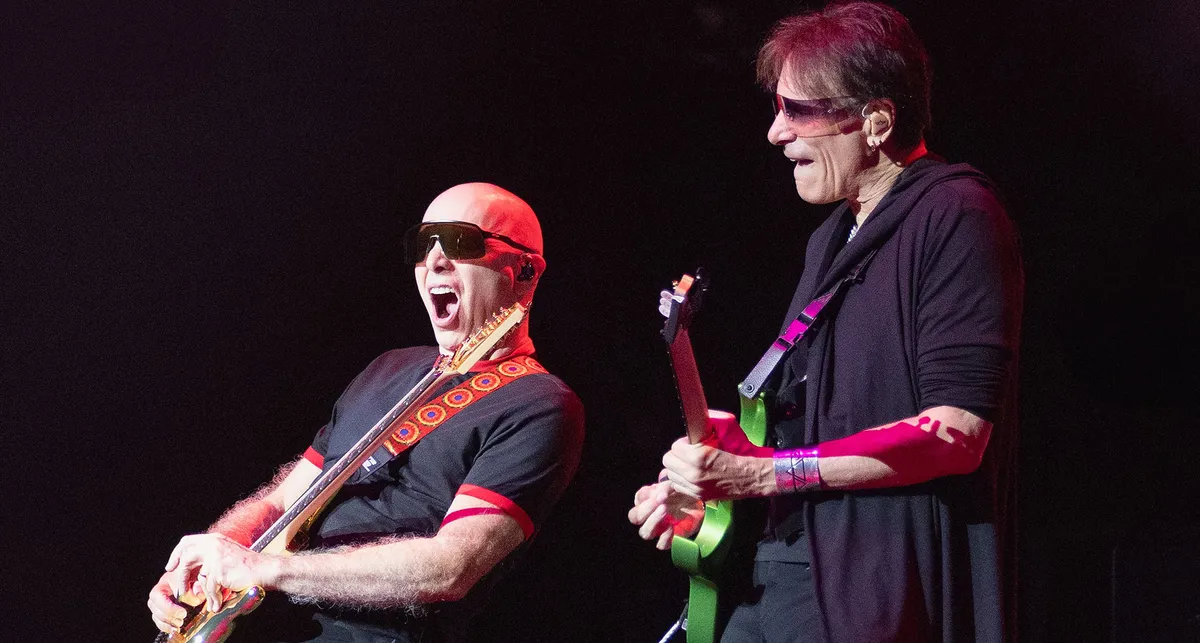
It hardly needs restating that Joe Satriani and Steve Vai were – and are – mindblowing players. But the New Yorkers also redrew the landscape of instrumental guitar. By launching the all-star G3 tour in 1996 – an era in which Satriani recalls that hotshot guitar players were told: “Don’t stand next to that guy because he’s your competitor” – the pair proved virtuosity and community needn’t be mutually exclusive.
But does shred still have a place in the modern world? With the web churning out gunslingers, and the limits of human physiology surely now in sight, is the pursuit of hard, cold technical prowess, as Keith Richards once put it, “a dead-end street”?
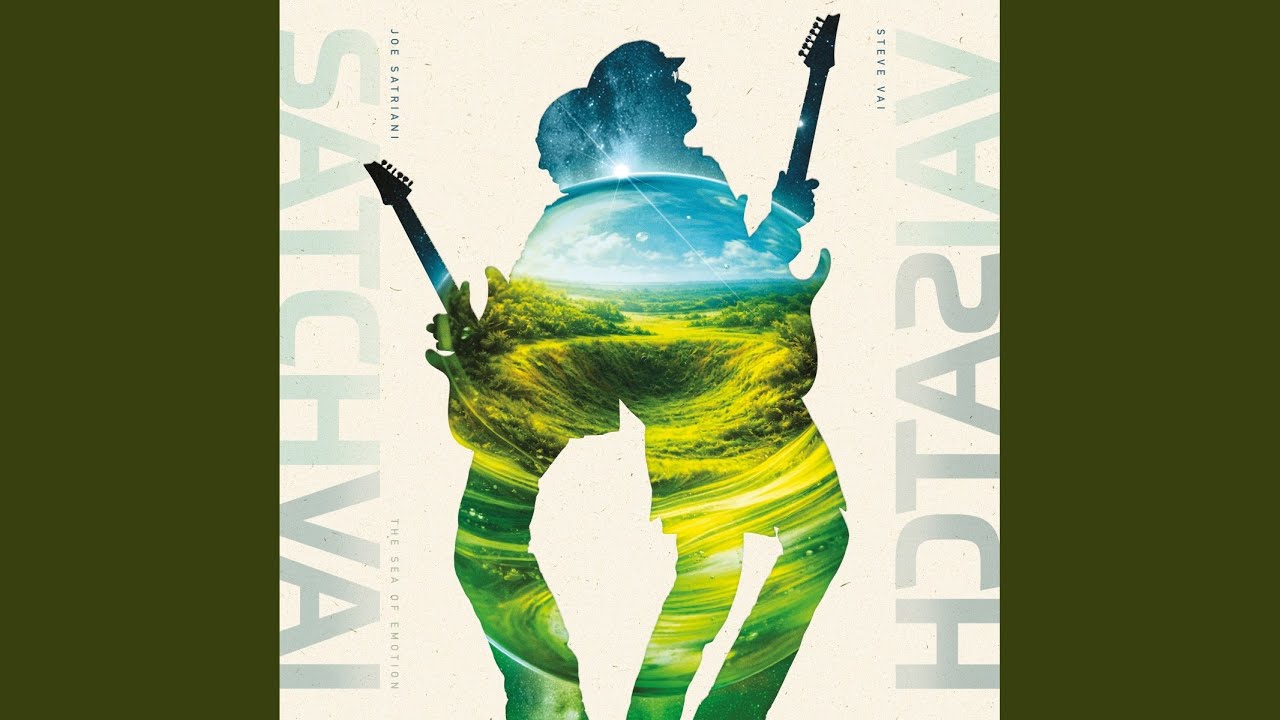
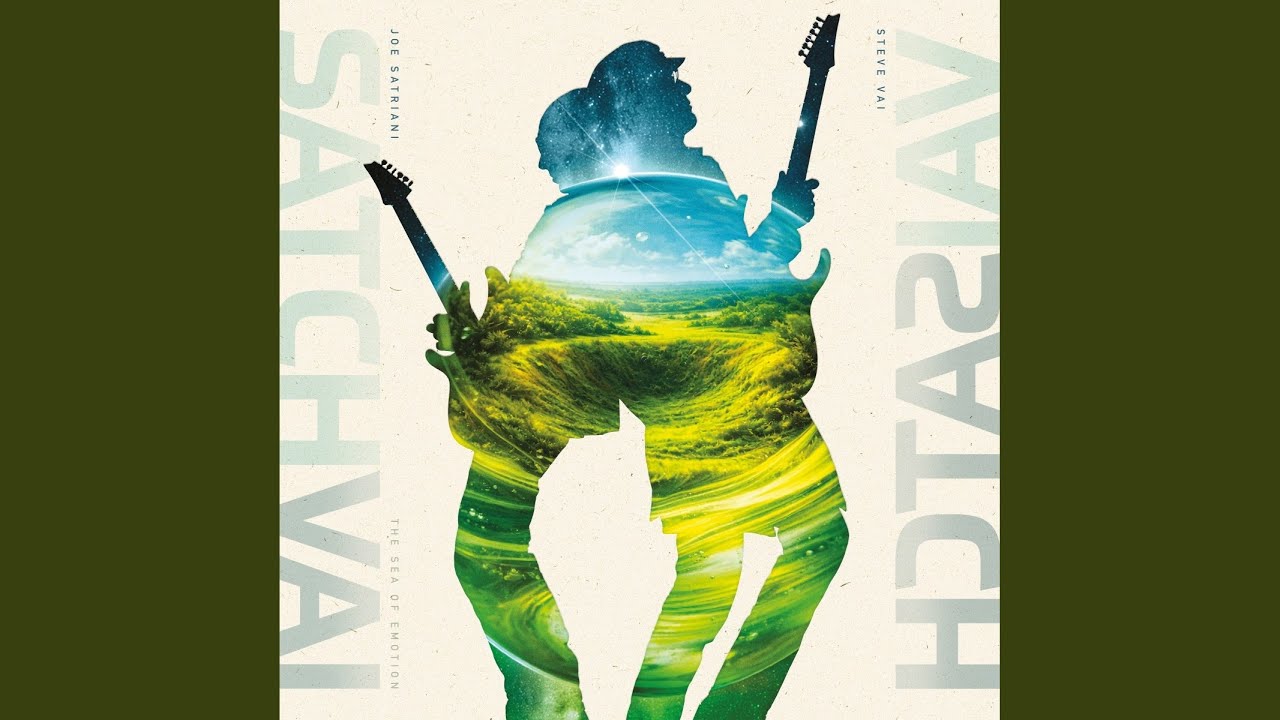
As Satch and Vai hit the promotional trail for their first joint studio album, The Sea Of Emotion, they open up on the new material and take the pulse of the scene they helped create.
Let’s start with The Sea Of Emotion. Are you pleased with how the album’s come out?
Joe Satriani: Well, it’s too late now [laughs].
Steve Vai: My affection for it grows every time I listen. And it started out very high.

You’ve helmed your respective solo careers for decades now. What was it like relinquishing a little control on this joint album?
Satriani: When we’re working together, it’s the best feeling of comradeship, competition and support all wrapped up into one. If there was one person I would trust to push me into areas I didn’t think I could play – or say, “That sucks, Joe, can you do something else?” – it would be Steve.
Vai: Well, the feeling is mutual. It takes a certain chemistry to help you to raise your own bar. But it just happened so organically. Each of us knew if something was working or not. When Joe would write back and go, “You know what? Let’s put this one on the shelf” – because we had, like, 17 tracks we were working on – I would always instinctively feel, “Yeah, he’s right.”
Satriani: If we’re critiquing each other about how we build things, y’know, I [tend to] want to underproduce something and Steve might want to overproduce something. I’m always like, “Sorry, I only have two guitar parts for this song.” And he’s like, “Sorry, I’ve only got 17 guitars already on this song.” But somewhere it all makes sense.
Which guitar parts really pushed you out of your comfort zone?
Satriani: The nylon-string intro to The Sea Of Emotion Pt 2. When I first composed that, I had full distortion, stereo echo, chorus, and I’m playing it on electric guitar. And I’m so excited, like, ‘This is huge!’ But then reality sets in.
So the song made this journey from a grown man who still thinks like a 14-year-old, sitting by his amplifier, having a rock ’n’ roll moment, to seeing that I should play it on a nylon-string and leave space for what Steve did, which is that electric violin-type dreamscape.
But playing that on nylon-string – and keeping it well intonated and not squeaky – was hard because I hardly ever play those instruments. It was a piece of cake on the electric but not on the acoustic.
Fretless guitars – they’re not my expertise. I struggle with them. But to get that ghostly, weird, offbeat riff, it had to be
Steve Vai
Vai: One of the big challenges for me was Old Sins Have Long Shadows. Joe had a riff and I wanted to create something that didn’t get in the way but didn’t copy it. When I approach a part, there’s kind of two sides of me.
One of them is thinking, [panicked] “My God, what am I going to do? I don’t want to ruin this!” Then there’s the part of me that just shuts up and waits. And what came out was, “You’re gonna make it sound like a ghost and play a fretless guitar.”
Fretless guitars – they’re not my expertise. I struggle with them. But to get that ghostly, weird, offbeat riff, it had to be, y’know? All the vibrato and little shakes – it doesn’t sound like a guitar. It sounds like a ghostly spirit.
How did you react to that contribution, Joe?
Satriani: “It’s completely insane that Steve would think that way. When he comes up with these parts, the first time you hear it, you often go, “What the hell is that?” But the next time you hear it, if that track isn’t on there, you go, “Well, where’s that really cool part?”
Vai: For me, the thing that’s always fascinated me to death about Joe is just his musical instincts. He’s able to just touch the notes in a way that perfectly fits. Like, after you hear what he does, you just think, “Well, it really couldn’t have been anything else,” y’know?
How do you see the health of the instrumental guitar scene today, compared with when you guys set out back in the early ’80s?
Satriani: It’s changed a lot. There’s less attention on it. But the market is bigger because the world has opened up. When Steve and I started out, we didn’t have the internet to tell everyone, all at the same time, that we had a new album coming out. So we didn’t get invitations to tour the world. But as the internet opened up the planet to us, we got invited to play everywhere.
We could literally stay on the road 12 months out of the year. So that’s been wonderful for us. But for instrumental guitarists who are just starting out? The talent is fantastic. The technique is the best it’s ever been. But their only outlet is Instagram or TikTok, and that is changing how they play because they figure, “I only got 30 seconds, I better give them everything, or dress up, do something really weird, play with my cat on my head.”
It’s totally different from, let’s say, when I went to a New York club to see Allan Holdsworth back in the ’70s. He’s up there thinking, “Well, I got three hours to play in front of 14 people.” It was a very poorly attended event [laughs]. But can you imagine if Allan was 18 today and looking to make a name for himself – I mean, can you imagine his Instagram posts?
Do you think guitarists can realistically get much more technical?
Vai: Yes, but it’s going to depend on a unique individual to do it. The funny thing about us humans is that we come across something that feels new and we think, “That’s it, it’s not going anyplace from here.” It’s a kind of ignorance and arrogance.
There’s always those individuals who will not give up, who look at the intense guitar technique that’s already there and say, “Okay, this is where I start.” Those glass ceilings are always shattered by people who don’t even recognise the ceiling.
And God knows where they’re going to go. Even in the ’90s, when shreddy ’80s guitar playing took a hit, it seemed there was this underground movement of kids just wanting to shred the shit out of the instrument. They’re the ones that will take that particular torch and burn it brighter. When I listen to Tosin Abasi in Animals As Leaders, say, he’s doing something really melodically challenging. It sounds different.
Do you hear young players, Joe, who prick up your ears?
Satriani: Every single day. Some of them have been around for a long time: I just never knew about it. And some are just kids. Y’know, all of a sudden, there’s a kid from New York or Tokyo or Moscow or China, and you go, ‘Oh wow, that’s elevated the level of guitar playing.’ Like, you take two players like Alyssa Day and Ariel Posen. They’re from different worlds, but they’re both amazingly accomplished players using the internet to spread their musical message.
What do you think is the key to writing great instrumental music?
Vai: The first artist that really moved me was Jeff Beck. He was handing you the melody on a silver platter. There was something in Beck’s melodies that made songs sound like pieces of standalone music, y’know, with a voice.
I thought Carlos Santana was doing some really cool stuff, and then, of course, there was more fusion stuff like Al Di Meola and John McLaughlin. But really, I didn’t hear [those melodies] again until Joe. And then, on top of that, the sheer technical evolution of the instrument in his hands.
I’m sure there’s a lot of beautiful instrumental guitar records that have come along since then. And there’s a lot of great contemporary players doing fascinating, impossible things, technique-wise. But for my personal ears, some of it lacks those kind of melodies that are handed to you on a silver platter. And I think that’s the thing that gives artists and songs real shelf life.
Would you agree or disagree that the internet has made people better technical players?
Satriani: Well, it’s helped me a lot. I’ll give you two examples. A couple of years ago, I was listening to a song called 4+20 by Stephen Stills. It’s an acoustic song, just him playing acoustic, Travis picking while he’s singing. It sounds like a Civil War-era kind of a song. I always loved it, always thought it was really spooky and beautiful.
Then I thought, you know, “I don’t know how to play that.” How stupid is that? Like, I can play all this stuff. I’ve been listening to this song since I’ve been a teenager and I don’t know how to play it.
Obviously, within about 30 seconds, I’m looking at a guy on YouTube going, “This is how you tune your guitar for 4+20.” A minute later, there I am playing it and I’m like the happiest kid in the world, you know?
Covering Robert Fripp and Eddie Van Halen – that’s super-extreme and it took a lot of physical work
Joe Satriani
Another example is when Alex [Van Halen] and Dave [Lee Roth] called me about the Eddie Van Halen tribute tour. After I explained to them, “I don’t know how to play any of those songs” – because I’ve avoided it on purpose, y’know? – I thought, “Well, damn, how do you play that stuff anyway?” It’s basically a sort of glorified cover gig but in the most extreme. Covering Robert Fripp and Eddie Van Halen – that’s like super-extreme and it took a lot of physical work.
So, of course, the internet opened me up to this community of thousands of amazing players who have dedicated themselves to figuring out exactly how Eddie played all these songs. And when you see a 15-year-old nail Mean Streets, you go, “Okay, it’s achievable.”
Was this new album recorded nose-to-nose or remotely?
Satriani: The only time we were together was when we recorded Glenn Hughes singing I Wanna Play My Guitar at Steve’s house. The rest of the time we were engineering on our own in our separate pods, separated by 400 miles.

Vai: There is actually one little snippet we did play together because the technology to record remotely didn’t exist. That’s the intro to The Sea Of Emotion Part 3: Reflections On A Year And A Half. That was recorded during one of my guitar lessons with Joe when I was, like, 13.
We still don’t even know who played what, but it’s eight minutes of these teenage kids having total freedom. So I took a little snippet of that. That’s the only time on the record we’re sitting in the same room playing together. And it was over 50 years ago.
So what guitars were you both playing when you recorded the new album?
Satriani: [Deadpan] I did all my guitar parts on the Hydra.
Vai: So did I – at the same time [laughs]!
Satriani: No, it was a small cache of my ‘home’ guitars. So I had my [Ibanez] ‘Chrome Boy’, the very first gold JS, the MCR #2, and the Paisley prototype. I had a Taylor nylon, a Guild acoustic 12-string, my ’72 P-Bass and a Jerry Jones sitar. Steve and I are always putting sitars on our albums. No amps, no mics. Basically, SansAmp, Tonex, Brainworx plug-ins, Neural DSP…
Vai: Similar to Joe, a lot of my gear was in transit. So I used JEMs and PIAs – the Evo, Flo III, my black onyx PIA. And I have this crazy seven-string sitar Sterling Ball made for me.

So you guys have both come around to plugins?
When I had to play with Van Halen, a couple of times I was thinking, “Oh, I bet people in the audience are thinking that it doesn’t sound exactly like the albums”
Joe Satriani
Vai: After I heard Joe’s album, The Elephants of Mars [2022], he told me he’d used plugins. And I was stunned because I had a very snobbish attitude: ‘Oh, you have to have microphones.’ So I started fooling around with SansAmp and realised how easy it is. Now, it’s mostly the Neural stuff that I use.
There were a couple of things where I still used a combination of my [Carvin] Legacy 3 amp and my Synergy module. And I would mic things ad nauseum. Y’know, I’d have two stereo cabs, three mics on the front of each, one in the back, then 4ft away. And then sets of stereo 414 room mics. And it’s nice… but it’s a lot of setup, a lot of work.
You both have such towering reputations. Every time you put your fingers to a fretboard, do you think, ‘This has to be amazing,’ or does that not cross your mind?
Satriani: It’s funny. It doesn’t bother me that much when I’m working on my own stuff. It certainly was a concern these last couple of years where I had to play like somebody else. When I had to play with Van Halen, a couple of times I was thinking, “Oh, I bet people in the audience are thinking that it doesn’t sound exactly like the albums.” But Steve and I both had to get over that with our extracurricular gigs.

Finally, which two guitarists would you most like to see record an album together?
Satriani: I mean, we don’t have enough Jimmy Page, first of all. Steve and I really love Jimmy Page, and he just hasn’t recorded enough for us, if I’m going to be selfish about it. If he was a friend of mine, I’d call him up and I’d say, “Will you please record yourself more?” But who would you pair with Page? I mean, Jimmy Page and Brian May…
Vai: Yeah, they would work together well, I think.
Satriani: Or Tony Iommi and Page would be good. Two guys that are so close to each other in where they come from and when they were born and how they grew up, but wow, what different players and entirely different composers. I’d be fascinated to hear that.
- The Sea of Emotion is out now via earMUSIC.
- This article first appeared in Guitarist. Subscribe and save.

