


Greg Leisz doesn’t consider himself a session musician – but his résumé in the field is unparalleled. He’s worked with Matthew Sweet, Smashing Pumpkins, Eric Clapton, John Mayer, Jackson Browne, Bruce Springsteen, Daft Punk, and so many others we’d be kept going for ages.
“I was always interested in connecting the parts on the records to the names I was seeing,” he says. “But playing on records myself was a pipe dream.”
So what put him on so many artists’ speed dial? “It took many years, and a fair amount of encouragement from players and producers, to develop the confidence and trust in myself.”
He continues: “The best training ground for me has always been to play live in group situations. It taught me how to listen to what’s happening in the moment with other players, and react without thinking.”
At 76 he has no intention of stopping. “It’s very intuitive,” he says of session work today. “Even if I’m overdubbing on a song after it’s been recorded, I try to find a way to make it sound like I was there, so it doesn’t feel like an overdub.”
Despite his achievements, his career still feels like a dream. “A few years ago I found myself playing guitar for Aaron Neville at Electric Ladyland in New York, sitting next to Keith Richards, who was co-producing the album. It was just two guys sitting and playing the guitar. Doesn’t get much better than that!”
Did you set out to be a session musician?
I certainly did not! I started playing guitar in 1962, teaching myself out of folk singalong books. The players on the albums I first heard were usually not named, although I do remember first seeing accompanist names on some of the early ‘60s folk albums by people like Judy Collins.
In 1966, I remember seeing a credit for organ by Van Dyke Parks on the Byrds' Fifth Dimension album. That stood out to me – it was unusual for bands in those days to credit other musicians on their albums.
So what got you into session work?
I came up through the self-taught garage band paradigm in the ‘60s. Gradually, through playing with better musicians than myself and learning to play a wider range of musical styles, I started to find myself in recording situations by the mid-1970s. You could say I just fell into doing more and more session work.
What was your toolkit like?
It’s pretty much always been an extension of the gear I first played in the ‘60s, when all I had was one acoustic and one electric guitar and an amp. I accumulated more; I needed a wider variety of sounds, so I experimented with new instruments outside guitar. I taught myself dobro, lap steel, and pedal steel, along with some basic mandolin and banjo, and I even found myself on bass occasionally.
But if I had to choose one guitar, it would probably be the 1964 Stratocaster that got stolen out of a club dressing room in the 1980s.
Since I doubt I’ll ever get it back – although if anyone finds serial number L35655, black refinished, please return it to me! – I might take my’ 64 Fender Jazzmaster. Between that and my ‘62 Gibson ES-330 it’s impossible to pick one guitar! And I’d need a vintage Princeton Reverb and a tuner pedal, since I lack perfect pitch.

How did you first meet Matthew Sweet, leading to your work on his Girlfriend album?
I met him in 1985 at a New York City club I was playing. Four years later he had me come back to New York to play on Girlfriend. I played a grungy low lap steel on the title track as an overdub, right after Robert Quine had overdubbed his lead guitar. I also overdubbed some pedal steel on a couple of others.
Being an accompanist to k.d. lang has truly been a high point in my career
I think what made that album stand out sonically at the time was its being completely devoid of reverb. That, and the combination of Matthew’s pop-rock melodies with Richard Lloyd and Robert Quine’s intense, angular electric guitars.
I went on to play on many other of Matthew’s albums after that, including In Reverse, which I co-produced, and I even did some touring with him.
How about k.d. lang?
We met in 1988 when she was doing some TV talk shows in LA and needed a steel guitar player. That led to the first record I did with her, Absolute Torch and Twang. The record was recorded in Vancouver with her band, The Reclines.
I took quite a bit of gear with me – I played a ‘66 Emmons D10 pedal steel, a Fender 800 pedal steel, a Fender Stringmaster Console steel, a 1940s six-string Bakelite lap steel, and a Weissenborn. I probably used ‘60s Fender blackface amps.
I worked with k.d. on and off for the next 18 years and played on most of her albums during that time. Being an accompanist to her has truly been a high point in my career.
In the ‘90s you worked with Smashing Pumpkins on Mellon Collie and the Infinite Sadness, and with James Iha on his solo album, Let It Come Down.
The only Smashing Pumpkins track I played on was a song by James called Take Me Down. I believe it was the only song he wrote and sang on the album. I briefly met Billy Corgan in the studio when we ate lunch, but he wasn’t involved in the session at all. Later, I worked on an entire solo album with Iha.

How did you meet Lucinda Williams ?
I’ve known her for a long time, since the 1980’s, from playing the same clubs in LA. We’ve worked together a lot, especially on the two albums I co-produced and played on, Down Where the Spirit Meets the Bone and The Ghosts of Highway 20.
I also played on Blessed, the reworking of the Sweet Old World album, and Vanished Gardens, with Charles Lloyd and The Marvels. I’m really proud of the work we’ve done together. She loves electric guitar and always has great players in her bands.
Daft Punk were looking for someone with a ‘70s sensibility. Avenged Sevenfold wanted to put a touch of country in their sound
There were usually two other guitarists besides Lucinda – myself and Bill Frisell, Val McCallum, Stuart Mathis or Doug Pettibone. Lucinda is very intuitive and [knows] when a song has found the right home.
How about Eric Clapton?
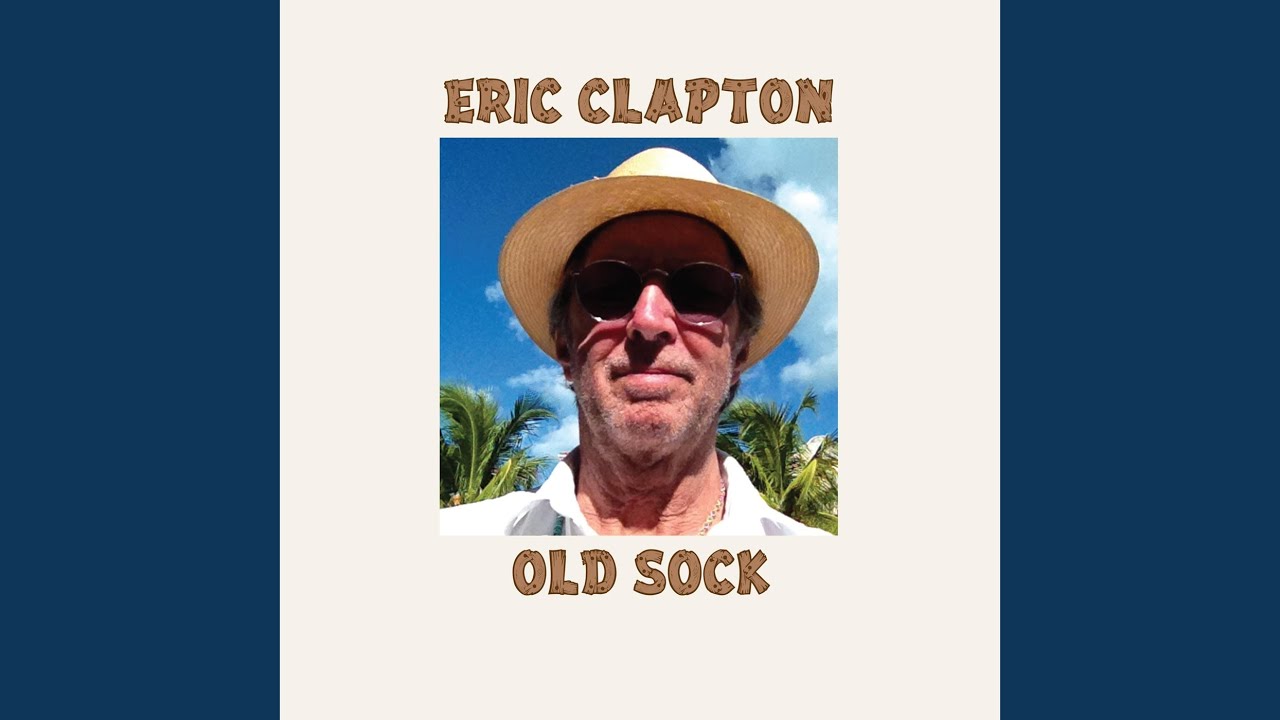
I first met him through Doyle Bramhall, who was producing and playing guitar in Eric’s band. Doyle brought me in to do some recording with Eric on a couple of his albums, mainly Old Sock. He asked me to tour with him after that, and I jumped at the chance.
The band was incredible and Eric was amazing every night. I was blown away by how great a singer he is. He’s very relaxed on stage; he’s there to enjoy what he loves doing. He gives very little direction, and I found him to be a true gentleman. He’s very respectful and trusting of his band.
How did you hook up with John Mayer?
I met him when I played on a couple of songs for his Heavier Things album. I had worked with Jack Joseph Puig, his producer, before then, and Jack brought me in to try a couple of lap steel parts.
Don’t count on falling into work like I did. There was way too much luck involved
I’ve worked on three of John’s albums and I’ve always enjoyed the process. He’s very focused, knows what he’s looking for, and he’s good at giving direction while still allowing you to use your own intuition. The only time I played live with him was when he asked me to sit in at Eric Clapton’s Crossroads festival in 2013, when I was a member of Eric’s touring band.
Two interesting credits on your resume are Daft Punk and Avenged Sevenfold. How did they come about?
Maybe it sounds a little out of left field for those groups to use pedal steel, but they were specifically looking for that sound in their music. Daft Punk were looking for someone with a ‘70s sensibility, I think. And I guess Avenged Sevenfold wanted to put a touch of country into their sound on a couple of things. I also played some banjo on that session.

With a sprawling résumé and sessions still pouring in, do you see yourself retiring anytime soon?
I don’t see it on my calendar yet. In the last 15 years I’ve had the good fortune to have played with many other artists. But when I think of the work I’ve done, I have a hard time thinking of myself as a “session” musician.
The way I met and recorded with a lot of them, it’s not usually been through some session networking protocol. The threads that connect us are varied and surprising. So I don’t really think of myself as a session musician, though I know it’s a real thing that people do.
What’s your best piece of advice for young players looking to get into your line of work?
I would say: definitely don’t do what I did! Or at least do what I didn’t do. Go to a good music school; seek out teachers and mentors; learn your chosen instruments backward, forwards, up, and down.
Listen to and learn to play every style of music you can, but don’t count on falling into work like I did. There was way too much luck involved.

