




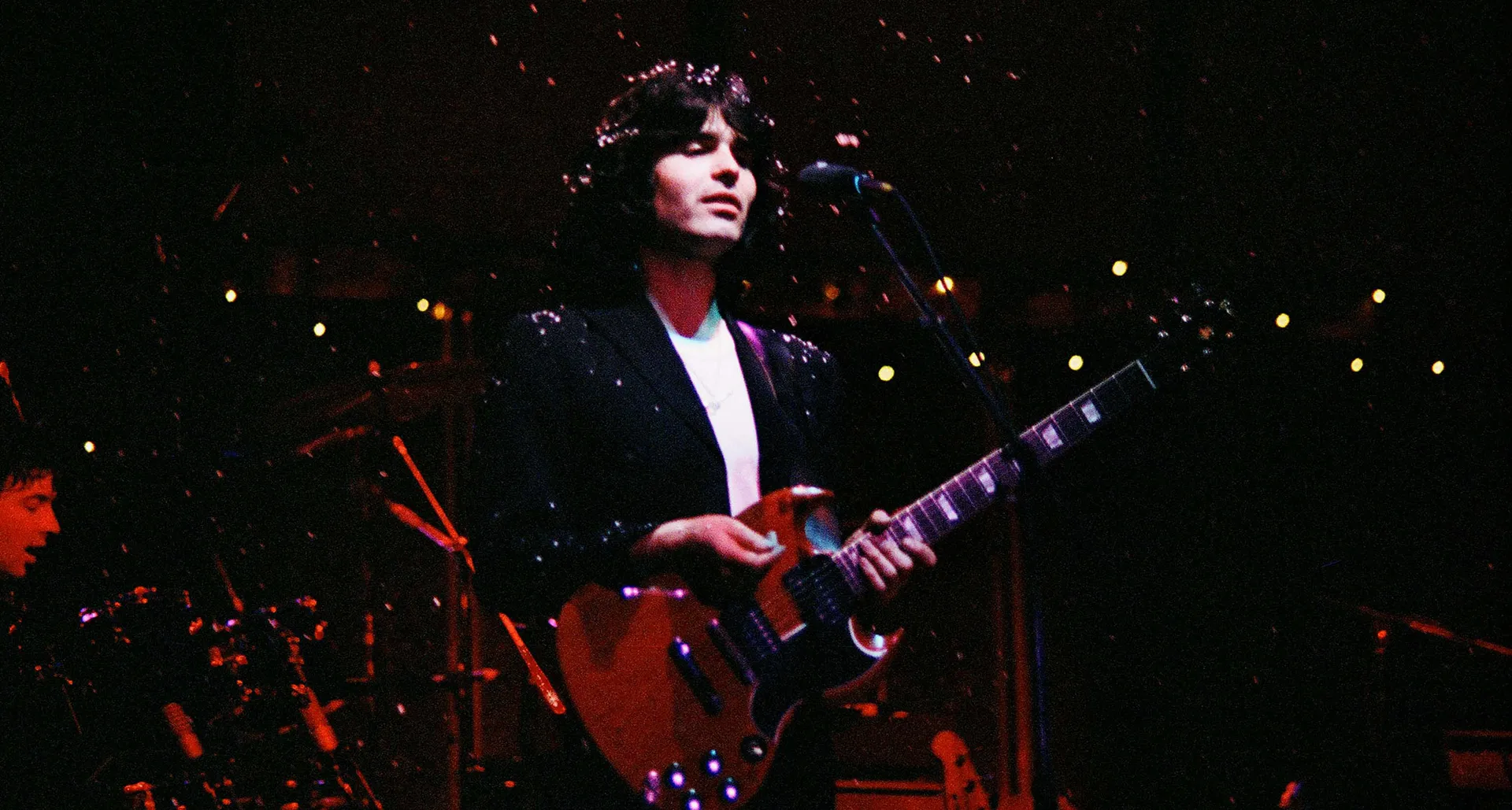
Laurence Juber grew up a Beatles fan, which isn’t exactly uncommon, especially among the generation of British musicians born in the early ’50s.
“When I started playing guitar in November 1963, it was during the breaking wave of Beatlemania in the U.K.,” Juber tells Guitar World. “The Beatles had an impact, but so did the Shadows, the Rolling Stones, the Animals and other British Invasion bands. My focus was on being a studio musician – once I learned that it was an actual career path.”
That career path got rolling pretty quickly, as Juber, a versatile player with a knack for laying back and choosing the right gear, became an in-demand session guitarist. His first brush with the Beatles’ universe came when he hooked up with their producer, George Martin, for Cleo Laine’s 1976 album, Born on a Friday.
“George was the first real record producer I worked with – and an icon,” Juber says. “His manner in the studio was relaxed and encouraging.”
It’s very possible that Martin’s relaxed demeanor rubbed off on Juber; still, the guitarist admits to feeling nervous when he joined Paul McCartney’s successful post-Beatles band, Wings, in 1978, replacing Jimmy McCulloch, who had been fired for drunken misbehavior.
“Recording was my day-to-day experience,” Juber says. “Being on stage with a Beatle was a different perspective.”
In the case of Back to the Egg, the 1979 Wings album on which Juber played (along with another new member, drummer Steve Holley), perspective is everything.
Some of its reviews were negative, perhaps because the LP represented the tail end of a band that was a spent force after eight years of ups and downs. Then again, there are some fabulous moments, like Rockestra Theme, which bagged a Grammy, plus Spin It On, Getting Closer, Arrow Through Me and After the Ball/Million Miles.
There was a missed opportunity, though, with Goodnight Tonight, one of Wings’ last hits. Although it was recorded during the Back to the Egg sessions, it didn’t appear on the album, robbing the LP of the pop single it needed to take it over the edge.
What led to your joining Wings? Longtime Wings guitarist Denny Laine had a hand in it, right?
I was very active in London as a session guitarist in the mid-’70s. I was playing lead guitar on a TV show with David Essex. Denny was a guest, performing the Moody Blues hit Go Now! [Editor’s note: Laine was in the Moody Blues from 1964-66]. He liked my playing and recommended me to Paul and Linda McCartney.
What were Paul’s expectations of you going into the studio, and what do you think he liked about your playing?
The basic expectation was that we were forming a new incarnation of Wings and to think of it as a band. I think my versatility was an asset. My predecessors were fine rock players, but Paul was looking for a more comprehensive approach to the guitar.
What was the studio like, and what gear did you use?
We started Back to the Egg on the farm in Scotland, where the studio was basically a barn with a mobile recording truck. It was quite basic but functional.
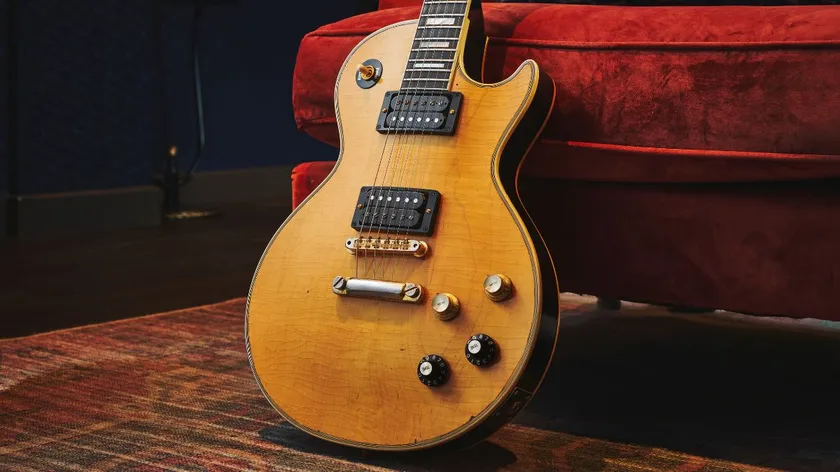
My go-to electric guitars at the time were a mid-’70s Gibson Les Paul Custom, a ’63 Fender Strat and a mid-’70s maple-board Strat. For acoustics, I had a Martin D-28 and some Ovations. I had been using a Music Man amp, but we also had some small old Fenders and a Mesa/Boogie.
Paul is on the record as suggesting he wanted to record an up-tempo album influenced by things other than the previous Wings albums. Is that how you remember it?
The musical zeitgeist was changing, punk was in the air and new wave was around the corner. Our co-producer Chris Thomas was in between doing the Sex Pistols and the Pretenders.
What was it like putting together To You, Spin It On, Old Siam, Sir and Arrow Through Me?
The first tunes we recorded were To You, Spin It On and Old Siam, Sir. To You was interesting, as Paul played a Zemaitis acoustic bass on the track. For the solo, I was playing the ’63 Strat through the Mesa/Boogie.
Paul was in the control room manipulating an Eventide harmonizer while I was improvising, so I was hearing notes in the headphones that were transposed from what I was actually playing. That led me to play outside of the changes… weirdly satisfying.
The Spin It On solo was done in the control room with the same gear. Paul and I sat eye to eye, and I learned his strengths as a producer while he coaxed a punk-rockabilly-like solo out of me. Arrow Through Me had a whole different sensibility and was keyboard- and horn-driven.
How about Rockestra Theme, Winter Rose/Love Awake and The Broadcast?
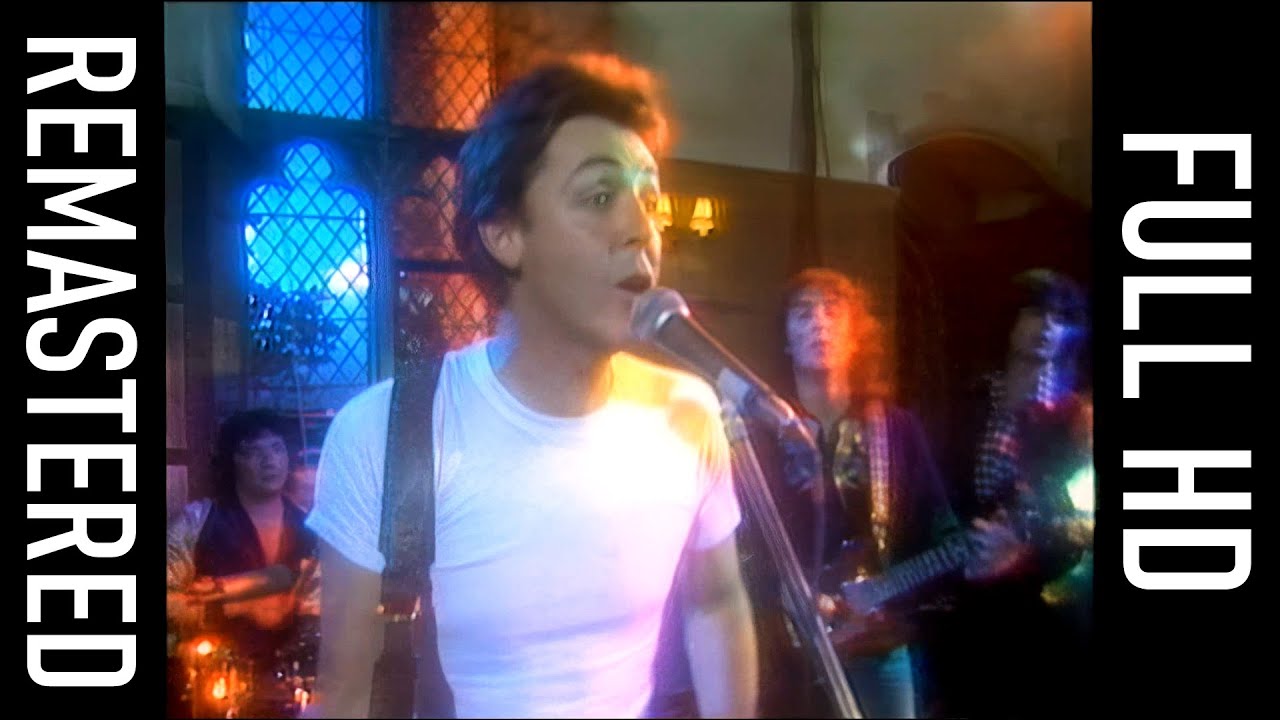
Winter Rose was started in Scotland. I played an Ovation nylon-string direct with a pickup that alternated the strings left and right in the stereo spread. Love Awake was recorded in our second studio, which was a medieval castle [Lympne Castle in Kent]. I played bass when we cut the track, while Paul and Denny played acoustics.
I figured Paul would replace the bass, but he said he liked my part. When I rerecorded it, he knelt on the floor in front of me and gave me picking tips
I figured Paul would replace the bass, but he said he liked my part. When I rerecorded it, he knelt on the floor in front of me and gave me picking tips. It was pretty cool getting a bass lesson from Macca. I overdubbed the harmonic cascades near the end with an Ovation Adamas.
The Broadcast was also done at the castle. Paul played a Tele copy with a Gizmotron prototype, plusa Mellotron for strings. I played my ’70s Strat with a Roland pickup through an Arp Avatar guitar synth with a string-type patch. I used that setup on Reception, too, doubling the lead guitar with a horn patch.
We demoed Rockestra Theme at the castle but recorded it with the full Rockestra band in Studio Two at Abbey Road. That was quite a session – being in the guitar section with Denny Laine, Hank Marvin, David Gilmour and Pete Townshend.
And then there’s After the Ball, which has a brief outro solo made up of longer solos played by Denny, Paul and you.
Also done at the castle. I recall playing a Gibson ES-335 Dot, the same one that’s in the Goodnight Tonight music video. I forget which amp I used. That guitar also was on Baby’s Request – and that’s curious since I had a Gibson Super 400 [archtop], which would have been the more obvious choice. I think I played it through a 50-watt Hiwatt. The tone was right.
Hearing the music in a Dolby Atmos mix made me want to hear the whole album that way
What did you think of Back to the Egg the first time you heard it?
I thought it turned out quite well – the fans liked it. Other than Rockestra Theme and a few other spots, Denny mostly played acoustic guitar and contributed to the backing vocals.
The sound of Paul, Linda and Denny singing together still gives me chills. In the 2026 Man on the Run documentary, the director, Morgan Neville, very effectively used some of the Back to the Egg tracks as underscore. Hearing the music in a Dolby Atmos mix made me want to hear the whole album that way.
Some of the reviews for Back to the Egg were negative, which is interesting because, as you said, fans tend to love it. How did the reviews affect everyone?
Not all the reviews were negative – just the ones Paul reacted to. It went platinum in the U.S. and was more successful than some other Wings projects. The album would likely have sold better if the hit single from that period, Goodnight Tonight, had been on it.
Why was Goodnight Tonight omitted?
The Beatles’ singles in the U.K. weren’t on the albums, and Paul had the notion of standalone singles giving the fans extra value. It didn’t really work the same way in the U.S., where labels depended on singles as the primary promotional tool.
I don’t know if he regretted not putting the single on the album. Goodnight Tonight and its B-side, Daytime Nighttime Suffering, were added to the CD release. Paul generally seems to move on to the next project without reflecting much on the previous releases.
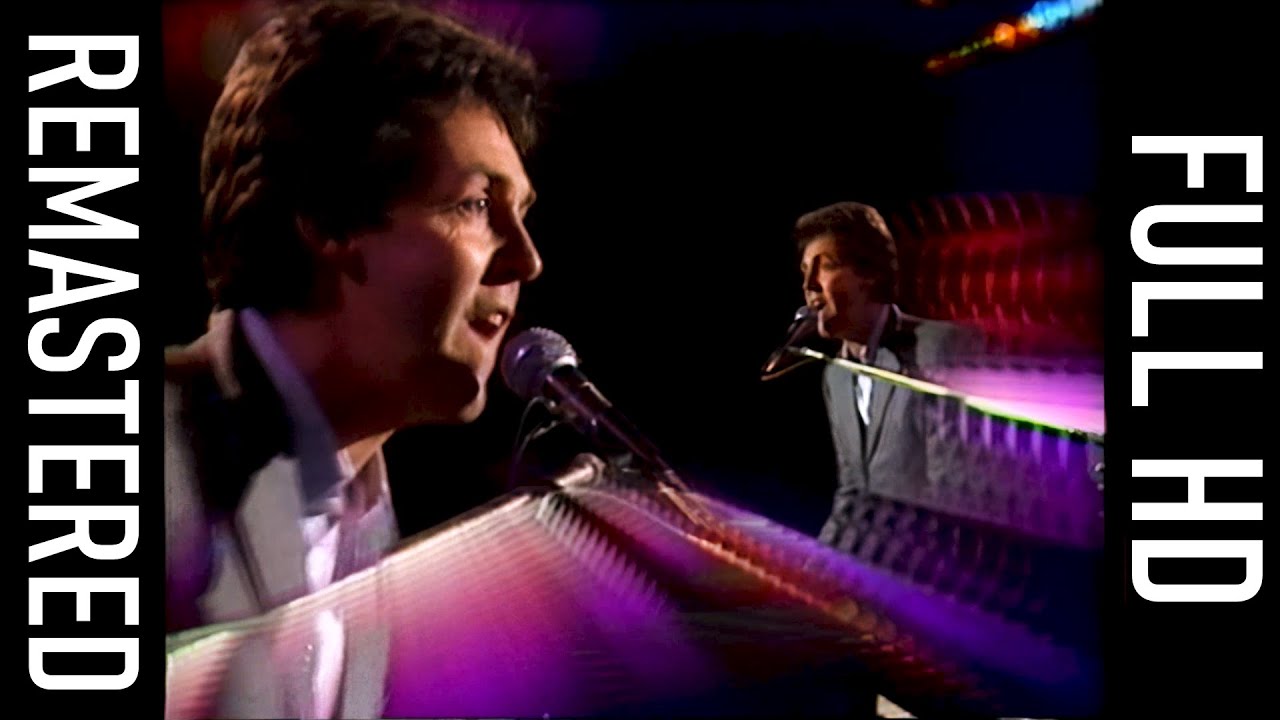
Some fans also wonder why Denny Laine’s Weep for Love wasn’t included on the album.
It wasn’t recorded for Back to the Egg; the album was already finished. It was recorded at Lympne Castle, May 23, 1979, during the period we were filming the video special [also called Back to the Egg].
We had the mobile studio and did some extra recording on days we weren’t filming. Steve plays the percussion groove. Paul is playing the bass guitar with a drumstick. I played the tremolo electric guitar and both of the harmony solo parts.
How do you think the album stands up?
It occupies a unique spot in Paul’s artistic timeline – a slightly different dimension. [Laughs] I’m gratified. It’s nice to get some peer recognition, but the real satisfaction is reaching people with music.
Over the years, it’s been reevaluated and recognized on its own musical terms, especially among musicians and musical artists, and Rockestra Theme won the first Grammy awarded for Best Rock Instrumental Performance in 1980.

How do you view your time with Wings?
I look at it as getting my “master’s degree from McCartney University.” [Laughs] It was a great musical experience, an education in the business of music, plus it gave me a launching pad to develop the next phase of my life and career.
The Japanese bust was unfortunate [Editor’s note: McCartney was arrested in Tokyo in January 1980 for attempting to smuggle around 7.5 ounces of marijuana into Japan]. It functionally put an end to the touring band. Subsequently, Wings’ live version of Coming Up went to Number 1 in the U.S.
What advice would you offer a guitarist stepping into a similar situation?
For professional freelance players, be a musician – study the masters, take care of business and be on time and well-prepared for the gig. In the studio world, you never know what you might be called on to play. For performing artists, life on the road can be hard and, for solo performers, quite solitary. But it develops chops, style-refining opportunities and audience interaction.
- This article first appeared in Guitar World. Subscribe and save.

