




Guitar World Verdict
For such a small price, it’s hard to complain too much. Whilst there are some compromises, there are enough good tones in the GP-5 to cover all of the sounds a beginner will need, and having the option to run Snaptone versions of NAM captures is a real boon. In short, the GP-5 is great value for those getting started with modern, digital guitar multi-effects.
Pros
- +
Tiny.
- +
Fantastic value for money.
- +
NAM compatibility via Snaptone.
Cons
- -
Bluetooth connection was patchy during testing.
- -
Not all sounds are great.
- -
App required for adjusting effect parameters and signal chain.
You can trust Guitar World Our expert reviewers spend hours testing and comparing guitar products so you can choose the best for you. Find out more about how we test.
What is it?
As guitar players, we have been on quite the journey when it comes to digital amp modelers. We now find them at the centre of many rigs, pro, home and weekend giggers alike. They have also provided a means through which the budget-conscious can get access to some pretty impressive tones. Products like the Quad Cortex Mini have also seen the tech shrink to sizes that will please those looking to incorporate such gear into their pedalboards. The Valeton GP-5 takes all of this to the extreme.
It’s an amp modeler and multi-effects that packs a maximum of 100 rigs, featuring up to nine blocks each, all in a tiny, one-footswitch package and for around $79. It also runs NAM captures… sort of. More on that later, but the point for now is that this does an astonishing number of things for such a small price and size.
Often, with so many functions and so few controls, using these things can be a mess of multiple button presses and some serious manual diving. The GP-5 looks to get around this by relying on a mobile Bluetooth app, which could make this the perfect space-saving, entry-level modeler.
Specs

- Launch price: $79 | £79 | €79
- Type: Amp modeler and multi-effects
- Controls: Volume, Parameter
- Features: Bluetooth app for editing, NAM capture compatibility via Snaptone
- Connectivity: ¼” input, ¼” TRS output, USB-C, Bluetooth
- Power: 9v, center negative, 100mA
- Dimensions: 93.5x42x52mm/3.68”x1.6”x2.0”
- Weight: 0.5lbs/236g
- Contact: Valeton
Build quality

Build quality rating: ★★★★½
Comfortably fitting into the palm of my hand, at 0.5lbs the GP-5 is light by conventional pedal standards, but surprisingly weighty for a small thing. Its metal chassis feels well put together and robust enough to withstand the abuses that often come with life on a pedalboard.
We have a grand total of two controls named Parameter and Volume, plus a footswitch. All feel unexpectedly premium, with the exception of the Parameter encoder that has a little bit of horizontal movement, but not problematically so.
Its tiny dimensions necessitate minimal I/O, and as such, we have one ¼” input, a single ¼” TRS output, and a USB-C port. This all sits beside the power input, which has an impressively small (for digital gear) 100 mA draw, making it a breeze for pedalboard power supplies.
The screen is nothing exciting in its blue stylings, but then again we are talking about a $79 piece of gear here, so this is absolutely acceptable. The only requirement is that it is bright enough so as not to be easily drowned out by other lights. A requirement happily met.
Usability and features

Usability and features rating: ★★★½
Every now and again, the Bluetooth decides it doesn’t want to connect
Turning the pedal on, the initial experience of browsing through the presets is incredibly simple. The Parameter knob scrolls through them, and the Volume knob does as you would expect. So far, so easy.
A press of the Parameter button grants access to some global settings, and holding it down activates the Bluetooth. Both functions are hidden, but easy enough to deduce through a little experimentation. We also have a tuner that is accessed by the tried and tested method of holding down the fooswitch.
Deeper editing functions are usually problematic with such minimal controls, but here is where the app comes into its own. Once I have it downloaded onto my phone, it's a case of turning the GP-5’s Bluetooth on and selecting it from my phone's menu.
Bluetooth can be a frustratingly fickle beast, and with my Google Pixel 9 Pro, it is misbehaving a little. The vast majority of the time I am up and running seamlessly, but every now and again it just decides it doesn’t want to connect, and sometimes inputs on the pedal lag behind changes on the app.

A bit annoying, but not too frequent, and a simple ‘off and on again’ is all it usually takes to fix it. While this didn’t happen often enough to be any more than a minor inconvenience at home, it potentially writes the pedal off for any live use, where quick and reliable parameter changes may be required. At least with my Google Pixel Pro.
It’s all about as easy as it can possibly be
The app itself is incredibly simple. The signal chain is laid out clearly with aesthetically plain, but easy-to-understand icons. Tap the block you want to adjust, and you will be presented with a selection of straightforward slider bars to adjust the block's parameters, and a drop-down menu should you want to change the effect. Easy.
Utilities for saving and scrolling presets are equally easy to access across the top of the app, and the bottom displays options for importing impulse response files, a drum machine, Global settings, as well as access to documentation and update details. It’s all about as easy as it can possibly be.
With this type of affordable product, there are usually restrictions in the signal chain in order to reduce the amount of processing power the unit needs, and this is the case here. There are 10 blocks (up to 9 active at once) that cannot be moved around and are preset to different effect types.

These effect types are Gate, Pre, Dist, Snaptone (NAM), Amp, Cab, EQ, Mod, Delay, and Reverb. Pre is a selection of compressors, boosts, pitch, and auto-wah effects; Dist presents a selection of 10 drives; then there are 32 amps, 20 cabs/20 user IR slots, five EQs, ten delays, and ten reverbs.
So, although the signal chain is restricted, it's a pretty full complement of guitar effects and amp models.
What is frustrating, however, is setting up the Valeton Suite software on my Windows 11 laptop. Valeton notes an issue on Windows 11 that requires manually updating a driver to allow the operating system to recognise the GP-5, but, in my case, this doesn’t work despite Valeton’s easy-to-follow instructions.

While this is a pain, it is not a dealbreaker, as the same tasks can be completed on the mobile app, with the exception of batch managing files. The main thing I'm looking to do is test some NAM files.
But that falls short of a completely smooth experience, too. Valeton does not use NAM files directly; it instead converts them into its proprietary Snaptone format for use with the GP series pedals. Turns out, it cannot currently convert the new NAM A2 files at the time of writing, so we are restricted to the older A1 architecture.
This would not be a problem if Valeton notes this in the app to give the user a heads-up. Instead, I am left waiting for a conversion that ends with a ‘timeout’ message and some of my time wasted. In contrast, importation and conversion of the A1 versions of NAM captures go off without a hitch.
Sounds

Sounds rating: ★★★½
The GP-5 punches well above its price tag
The thing with units like this is that it would be wrong to expect top-of-the-range sounds. It’s $79. But the bottom line is that the GP-5 punches well above its price tag.
I love a Fender Twin Reverb, so I’m starting with the Dark Twin model and am immediately impressed by the lovely clarity in the high end and the scoop in the mid range. The low end is a tad muddy, but not unforgivably so.
The Foxy 30TB model also does a fantastic job of imitating the famous mid-forward Vox AC30 sound, but weirdly the EQ controls on this model don’t do much (not the case for other models). For high gain, I’m immediately drawn to the EV 51 (EVH5150) model because of its super tight low end. This is perhaps the highlight for me, as I can’t stop having fun chugging through some hard rock riffage.
Something that is apparent through all the amp models is that they don’t clean up particularly well on my guitars' volume controls, so they are not the most dynamic of things.
And while the aforementioned amp models are great, this is not universally the case, as exemplified by the Match CL model, which has a plasticky midrange that sounds cheap to my ears.

The drives are particularly impressive
In this criticism, however, I will refer you again to the absurdly low price. The fact that we have plenty of decent models to choose from, even amongst the not-so-great, is a win at $79.
The drives are particularly impressive, with highlights including the Green OD bringing the Tube Screamer tone that is a pre-requisite for every multi-effects and Darktale distortion doing a great job of imitating the Pro Co Rat. Neither imitation is 'perfect', as the former doesn’t quite have the chewy, compressed feel nailed, and the latter doesn’t have that fuzzy edge that the real thing does, but they are close enough to sound fantastic in their own right.
I actually think the Darktale distortion is my favourite effect in the whole pedal, as it's high-gain with a cutting but not piercing high-end, which is endlessly rewarding for quick palm-muted classic rock riffs. Arguably, not quite the same as the real thing, but honestly, I’m having so much fun with it that I don’t care.

As we are in the land of high gain, it’s worth turning that noise gate on, which does its job without feeling like it's cutting off too much sustain. What more can you ask for from a gate?
The pitch-shifting effects all add dissonant artifacts that are unpleasant to listen to
It’s not all good news, though, as there are some effects that are bordering on unusable. The Autowah, for example, while it sounds good, drops way too much volume with a clean tone, and the pitch-shifting effects all add dissonant artifacts that are unpleasant to listen to.
Then we have some at the opposite end of the scale that offer fantastic value for money. The M-Vibe is an effect I would happily pay the $79 for alone. It retains plenty of low end while adding the movement that only uni-vibe type pedals can, making breaking out those Jimi Hendrix tunes a joy.
Effects like the two Chorus options fall between these, both adding some rewarding movement, whilst perhaps being a feeling a little too artificial to blow me away with the lush wobbly tones I get from pedals like my (much more expensive) Way Huge Blue Hippo.

We are, of course, not limited to just Valeton’s models, as we have the aforementioned Snaptone versions of the totally free and potentially market-disrupting NAM captures to play with too.
NAM is its own thing and worth looking into for high-quality amp and drive pedal captures at the grand total of $0. My experience of it so far - via other pieces of hardware - is that the captures are impressively touch-sensitive and genuinely representative of the amps they are using, if you get the right capture. And there are plenty of great ones available via the Tone 3000 website.
But the GP-5 Snaptone is a converted version of this tech, presumably to reduce the processing power needed to run it. To test the difference it makes, I run a full A1 legacy (as previously mentioned, the GP-5 can't run the new A2) capture of a Sundragon Jimmy Page signature amp on the Darkglass Anagram Guitar Essentials I’ve just finished reviewing, and compare it to the Snaptone version of the same thing in the Valeton.
Snaptone isn't quite the same quality as the actual NAM captures, but still undeniably improves the tones available on the GP-5
First impressions are that Snaptone is a step up from the factory Valeton amp models. It reacts much better to my playing dynamics, and as a result feels more alive under the fingers. Compared to the full NAM capture, the full thing is more dynamic, has more high-end detail, and is a little less gainy.
So, Snaptone isn't quite the same quality as the actual NAM captures, but still undeniably improves the tones available on the GP-5.
Verdict

Even though there are a few duds, there are plenty of great sounds in the unit
It’s not perfect, but with so many features at $79, there are bound to be a few compromises. For that sort of money, Valeton’s sights are set clearly on the beginner market, and there, the biggest considerations are that the unit is easy to use, affordable, and has enough inspiring sounds to keep learners playing.
The ease of use here is heavily dependent on the app, and there are some issues when it comes to the Bluetooth connection and the Desktop version. While this is annoying, its saving grace is that the general operation of editing patches on the app is well designed and straightforward.
Even though there are a few duds, there are plenty of great sounds in the unit, and some that are arguably worth the cost of the pedal on their own. Chuck in the Snaptone feature, which improves the amp tones available, and the Valeton GP-5 is a bargain.
Guitar World verdict: For such a small price, it’s hard to complain too much. Whilst there are some compromises, there are enough good tones in the GP-5 to cover all of the sounds a beginner will need, and having the option to run Snaptone versions of NAM captures is a real boon. In short, the GP-5 is great value for those getting started with modern, digital guitar multi-effects.
Test |
Results |
Score |
|---|---|---|
Build quality |
Robust and surprisingly premium feeling for the price, with the exception of the screen. |
★★★★☆ |
Usability and features |
Reliant on an app, which is straightforward to use, but a little shaky at times when it comes to a stable connection. Could not get the desktop app working on Windows. |
★★★½ |
Sounds |
Some great, some not so much, some in between. NAM compatibility adds a wealth of good tones. |
★★★½ |
Overall |
A few compromises, but a decent selection of sounds. It may not be perfect, but it is a bargain. |
★★★½ |
Also try
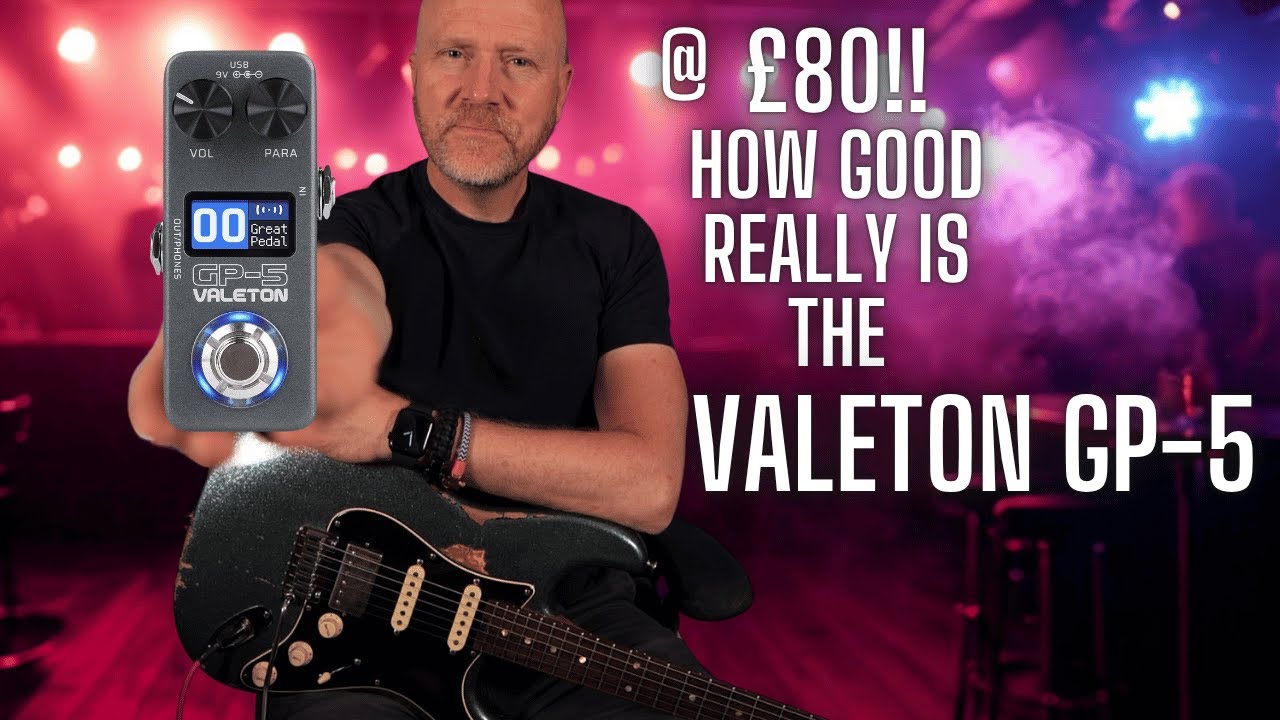
Hands-on videos
The Studio Rats
Dagan Wilkin
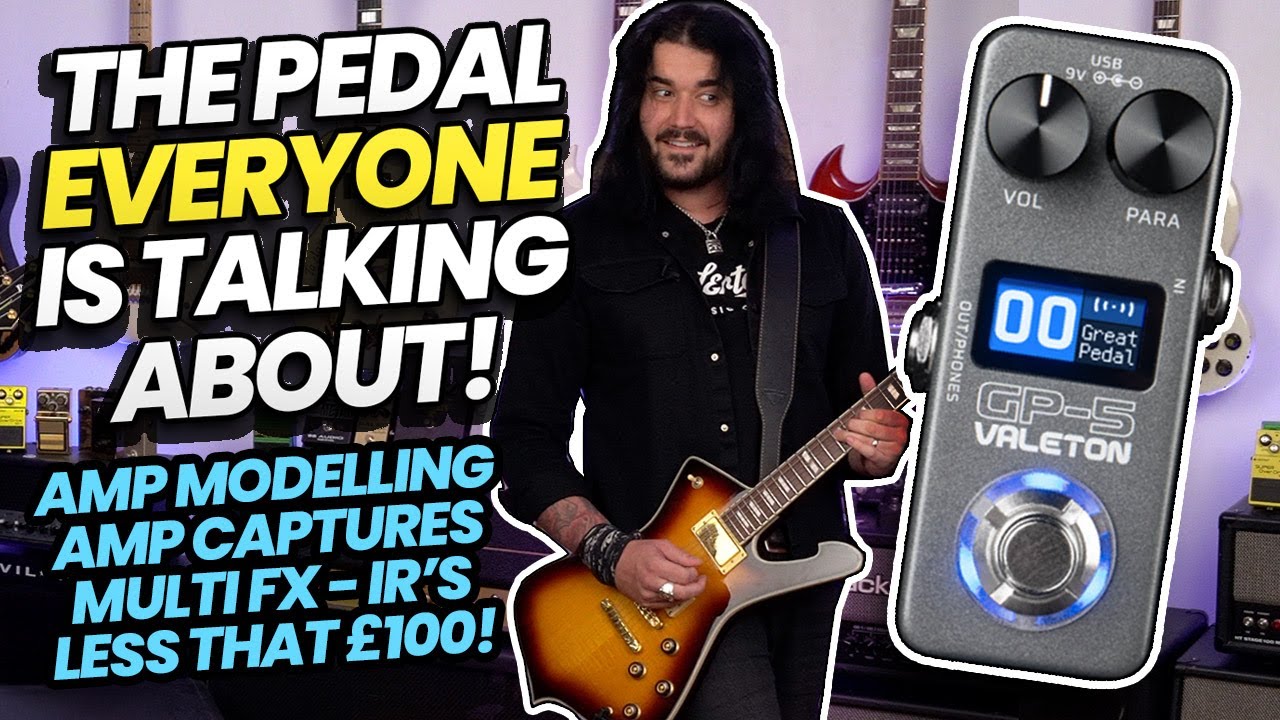
Sweetwater, Riffs, Beards and Gear, Steve Sterlacci