


If Steve Rothery and Steve Hackett were to hang it up today, they’d go with their heads held high. But – fear not – they’re not going anywhere. Former Genesis man Hackett has a busy solo career, as does Rothery, who’s deliriously active with Marillion.
Yet, somehow, they found time to record a new joint album, a little something called The Roaring Waves. Although these guys have known each other since Risky Business, Flashdance and Return of the Jedi were in theaters, this is the first time they’ve recorded an entire album together.
On that note, we’ll let them take it from here.
You’ve known each other for ages. Have you always admired each other’s work?
Steve Rothery: We met in 1983. Steve was actually one of my main influences because I discovered Genesis early. So he was a great inspiration and one of the reasons I wanted to become a musician.
Steve Hackett: We immediately connected – personally and musically.
How did The Roaring Waves kick off?
Rothery: I played on Steve’s Genesis Revisited II [2012] and on its subsequent tour, and then Steve guested on my album, Ghosts of Pripyat [2014]. We always talked about trying to work together and eventually found time in our insanely busy schedules.
Hackett: Yes, we talked a lot about making an album together. Our first session went so well – we knew it was going to work, so we just took it from there. Despite our schedules, the whole project developed in a unique way.
What gear did you use?
Rothery: A Groove Tubes Trio three-channel valve preamp, a Fryette power amp, Free the Tone delays, an AnalogMan chorus and Prince of Tone overdrive, plus a Dumble clone. My guitars were my signature Jack Dent SR and my Blade RH4.
Hackett: I used a [goldtop] Fernandes with a Sustainer pickup, plus a Yairi nylon-string, a sitar guitar and a Brian May Red Special. I favored a cranked-up Engl amp, a SansAmp for distortion – sometimes two in series – plus a DigiTech Whammy and a phaser.
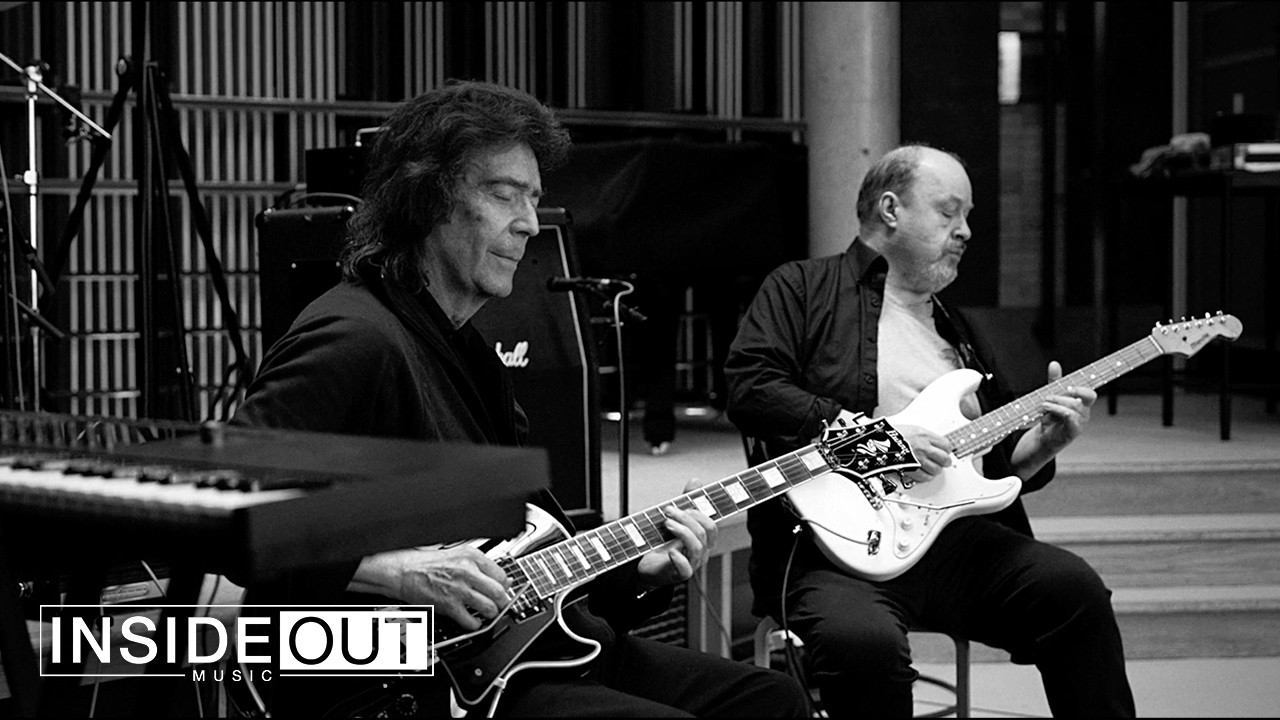
Which song would each of you call out from a guitar perspective?
Rothery: Probably the last part of the title track, The Roaring Waves. The interplay is really special. The first part of the song was an idea that Steve had, and I recorded it at his house using my Quad Cortex and laptop.
Hackett: I agree with Steve – that one sounds particularly good!
I’ve always loved Steve’s soulful, heartfelt playing. We complement each other in a special way
Steve Hackett
What sticks out about each other’s playing?
Rothery: Steve is incredibly melodic and inventive – with a unique voice. We speak the same musical language but with slightly different influences, his being more classical, mine more folk. Working with Steve was fun; there were no egos or arguments – just two friends enjoying playing and writing together. Great chemistry.
Hackett: I’ve always loved Steve’s soulful, heartfelt playing. We complement each other in a special way.
How do you view your legacies?
Rothery: I’m proud of everything Marillion has done. We’re recording our 19th album and just got back from two sold-out shows.
Hackett: I was proud to be a part of Genesis in the ’70s. We created some groundbreaking work. Since then, I’ve carried the flame through for music that crosses over boundaries in my own solo work.
- The Roaring Waves is out now via Inside Out.
- This article first appeared in Guitar World. Subscribe and save.

