


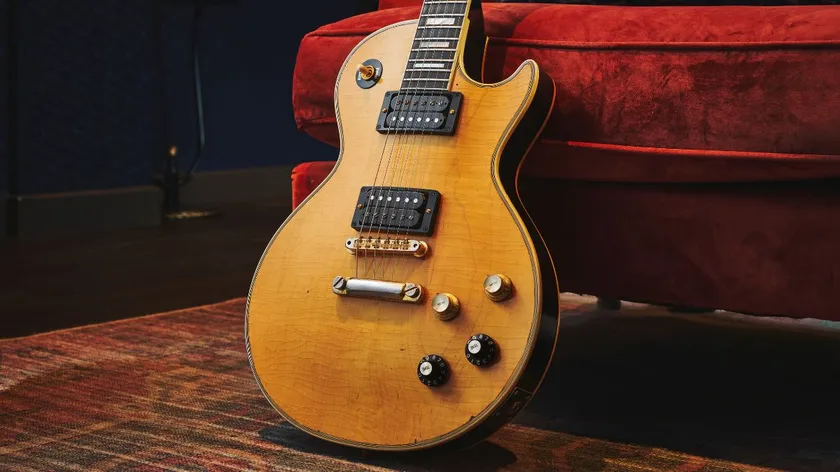


Van Halen was the world’s biggest rock band at the beginning of 1985. Their 1984 album had sold more than five million copies in the U.S., reaching Number 2 on the Billboard 200 albums chart (their highest position to that date, held back only by the juggernaut that was Michael Jackson’s Thriller album) and delivering their only Number 1 single, Jump. The supporting tour was a massive success, selling out all 101 shows.
Eddie Van Halen hoped to propel the band to even greater success, starting work in early 1985 on new musical ideas at his 5150 studio with Donn Landee, who engineered all six of Van Halen’s previous albums and had become the guitarist’s studio sidekick.
Meanwhile, singer David Lee Roth released the four-song Crazy from the Heat EP, recorded with Van Halen’s producer Ted Templeman and released in late January 1985.
Eddie didn’t mind the singer’s extracurricular activity at first and spoke positively about Dave’s solo record in interviews. The EP’s music bore no resemblance to Van Halen material, and the general consensus among the band members was that Roth deserved the opportunity to release some creative steam as long as it didn’t interfere with the band.
However, when Roth showed up at a handful of sessions to write lyrics and work on melodies for the next Van Halen album, he seemed detached and disinterested. Eventually, he stopped showing up altogether, choosing to conduct interviews and promote his EP instead.
One evening in late March, Eddie invited Dave to his home to discuss Van Halen’s future plans. The guitarist was shocked but not surprised to find out that Roth had received an offer from CBS Studios to star in a film with a $20 million budget.
While Ed wanted to release the next Van Halen album before the end of 1985, Dave wanted to take a full year off to make his movie. The singer suggested a short summer stadium tour as a compromise, but the guitarist refused to go out without any new material. Roth also invited the band to record music for the film’s soundtrack, but Van Halen shot that offer down as well. A stalemate was reached, with both parties refusing to budge.
Many sources cite that meeting as the end of Van Halen’s classic era with David Lee Roth, but the singer’s departure actually became official and final almost four months later.
![Van Halen - Jump (Official Music Video) [HD] - YouTube](https://img.youtube.com/vi/SwYN7mTi6HM/maxresdefault.jpg)
Dave assumed that his bandmates would wait for him to return to Van Halen after the film was finished, while Eddie was convinced that the singer would eventually come to his senses and join the band in the studio.
The situation became more complicated when the band fired its manager, Noel Monk, after he demanded a new contract that would have paid him more than any individual band member. Without an authoritative mediator to guide and advise them, the friction grew.
Initially, Ed pitched the idea of making an album with several of his favorite singers.
“We bounced around the idea of doing a record with me writing all the music and having everyone from Joe Cocker to Phil Collins to Mike Rutherford sing a different vocal on each track,” Van Halen told Steven Rosen in May 1986. “But Alex talked me out of it. He said that would be just a one-shot project, and it made me realize that I wanted a family.”

Ed also reached out to Pete Townshend around this time to pitch ideas for a collaboration, but that effort never went further than the exchange of a few telegrams.
When the guitarist found out that Roth was putting together a band to record music for his movie and had reached out to Billy Sheehan (who accepted) and Yngwie Malmsteen (who declined), he realized Van Halen should probably start looking for a new singer as well. He made a genuine offer to Scandal vocalist Patti Smyth, but she turned it down because she was pregnant and concerned about the band’s reputation as hardcore partiers.
News of Roth’s and the Van Halen camp’s extracurricular activities appeared in music publications like Rolling Stone, convincing many fans that the band was finished.
Privately, Eddie Van Halen clung onto hope that Roth would return, but his attitude soon changed thanks to some matchmaking assistance from his friend, exotic car dealer Claudio Zampolli. One day in late June 1985, Sammy Hagar dropped by Zampolli’s L.A. shop on Wilshire Boulevard to check out Ferraris.
Ed had purchased several Lamborghinis from Zampolli, and during a recent friendly chat he mentioned that he was looking for someone to replace Roth. Zampolli told Hagar about Van Halen’s predicament; Hagar gave Zampolli permission to pass along his phone number to Ed; Ed called to set up a meeting and audition.
Hagar was an enticing prospect to replace Roth. His solo career was on an upward trajectory at the time, with his three most recent albums (Standing Hampton, Three Lock Box and VOA) achieving Gold certification and VOA ascending toward Platinum, thanks to the ongoing popularity of his need-for-speed anthem I Can’t Drive 55. In between he joined the supergroup Hagar Schon Aaronson Shrieve (HSAS), which showed that he could be a team player as well as a solo frontman.
The Van Halen brothers were also big fans of the albums Hagar recorded as lead vocalist for Montrose in the mid-’70s. An added bonus was that Hagar had recorded the Montrose and Paper Money Montrose albums as well as VOA with Van Halen’s producer Ted Templeman.
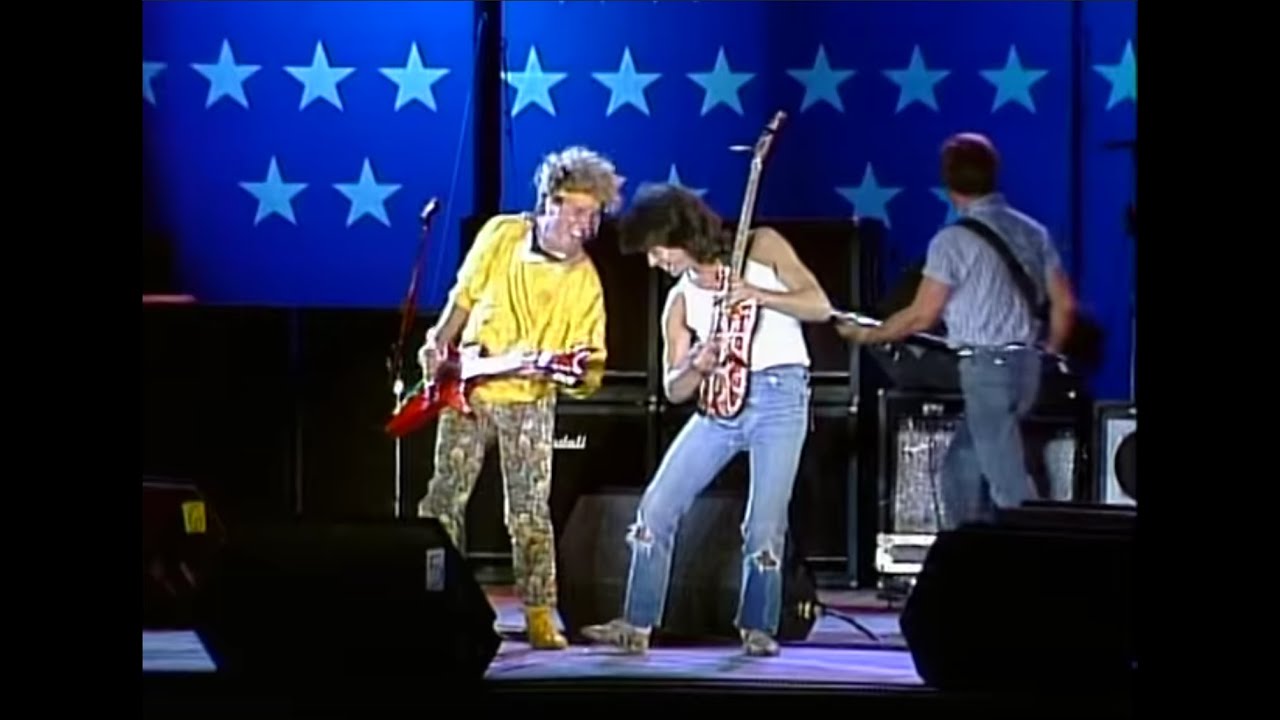
Ed remained unwilling to give up on Roth until July 15, 1985, when Hagar dropped by 5150 to play and record a few new songs with the band. As Van Halen played the first song, Summer Nights, Hagar came up with lyrics and a vocal melody on the spot. “In 20 minutes we had a complete song,” Edward told Rosen. “We all freaked out.”
“Believe it or not, I just started singing summer nights for the chorus,” Hagar told John Stix in 1986. “They all looked at each other and said, ‘Wait a minute, the guy can sing!’”
Although the Van Halen brothers and Michael Anthony decided to hire Hagar on the spot that day in July, the public announcement followed a few months later, even though the news leaked almost immediately.
![Van Halen - Summer Nights (from Live Without A Net) [Official Video] - YouTube](https://img.youtube.com/vi/g9pYywCZrXc/maxresdefault.jpg)
In August, the band issued a statement confirming that David Lee Roth was no longer a member of Van Halen. However, Hagar’s official induction waited until September 22, 1985, in the middle of Hagar’s final concert performance with his former backing band at the Farm Aid concert in Champaign, Illinois.
Actually, co-host Gary Beaty of The Nashville Network prematurely spilled the beans during the live broadcast a few seconds before Eddie Van Halen joined Hagar on stage, confirming the rumors once and for all.
Before the duo played their first notes, Sammy fumbled with a banner and joked that it read, “My dick’s too small.” From that point onwards it became obvious that the Red Rocker was not going to be David Lee Roth 2.0, as the former Van Halen frontman would never speak of “Little Dave” in such self-deprecating terms.
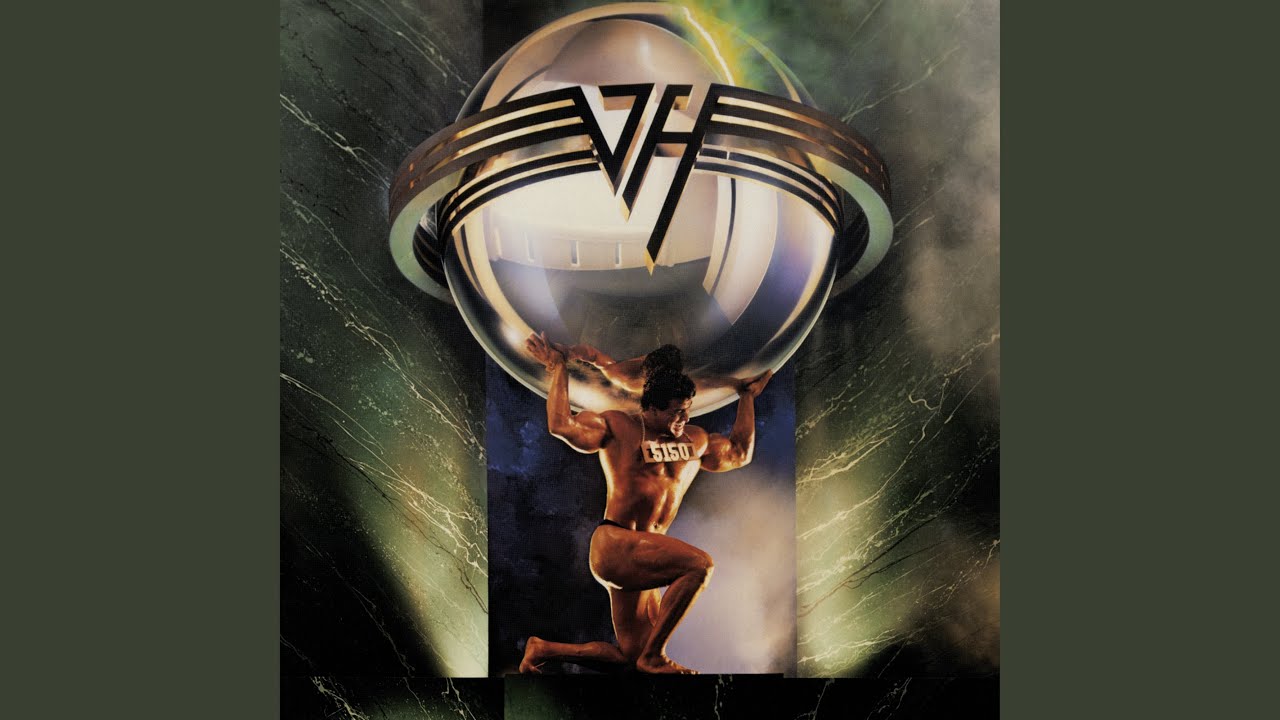
Hagar and Roth both were high-energy, dynamic performers who let expletives fly like a sailor with his dinghy caught in a zipper, but Hagar was more down-to-earth and less intimidating, with more working-class appeal.
Hagar’s lyrics may not have been as clever as Roth’s – Sammy’s sexual innuendos were more single than double entendre – but they were direct, to the point and arguably more relatable, if perhaps also too obvious.
While Roth was prone to unapologetic braggadocio, Hagar offered a less threatening approach and more modest personality – consider Roth’s Ain’t Talkin’ ‘Bout Love compared to Hagar’s Why Can’t This Be Love, or “guaranteed to satisfy” in Ice Cream Man to “you’re never satisfied” in 5150.
After the Farm Aid appearance, the new line-up of Van Halen spent most of October 1985 writing and completing material for their first album. Recording started in November at Ed’s 5150 studio with engineer Donn Landee behind the mixing console.

The band wanted Ted Templeman to produce the album since he had already produced nine albums in total with Hagar and Van Halen, but much to their dismay they discovered that Templeman was unavailable due to his commitment to produce David Lee Roth’s Eat ’Em and Smile.
Instead, Ed and Donn presumed the producer roles until December, when they hired Foreigner guitarist Mick Jones, who previously co-produced all of his own band’s albums.
“Sammy and [us] were all thinking we didn’t want to do the whole thing on our own because we need an outside opinion,” Van Halen said. “Mick was playing in town with Foreigner and called Sammy to invite him to the show. Sammy asked if Mick wanted to co-produce our album and he said yes.
“Actually we were almost done with it, but Mick helped us organize everything and polish it up. He changed a few things, especially on Dreams, which is like a different song than it originally was. He got a hell of a vocal performance out of Sammy on that song, too.”

Eddie Van Halen’s guitar tone on 5150 went through a dramatic sonic shift compared to the albums he recorded with Roth. Although he previously used an Eventide H949 Harmonizer on various earlier Van Halen tracks, here he used it almost nonstop to create a stereo chorus-style effect by using one H949 panned right with a slight pitch detune, another H949 panned left with a different micropitch detune setting and his dry signal panned to the center.
Landee occasionally patched in delay from a Roland SDE3000 or Lexicon PCM70 to add space and reverb-like resonance. The guitar’s midrange was also more focused, providing more breathing room for Anthony’s bass.
5150 was also the first album that Ed recorded without using his faithful original Frankenstein guitar, now replaced in the pecking order by the Kramer 5150 guitar he built himself, featuring a single Seymour Duncan JB humbucker and Floyd Rose vibrato.
Previously he tuned his guitar down ¼ to ½ step to accommodate Roth’s vocals, but here he generally used standard pitch. For 5150, Ed used his 1958 Gibson Flying V tuned down a half step (to D#) with the low E string tuned further down a whole step drop D tuning-style (to C#) to record the main rhythm track and overdubbed the solos using the Kramer 5150.
Good Enough features Ed’s Kramer 1984 guitar with the low E string replaced by a low A string from a bass (tuning low to high is AADGBE) to provide the vibe of a baritone guitar on the rhythm parts while allowing Ed to still play his regular lead parts.
Ned Steinberger gave Ed a Steinberger GL2T headless guitar with a TransTrem system at the 1985 Summer NAMM convention in New Orleans. Ed immediately put this new toy to good use, writing the songs Summer Nights and Get Up only a few days after first receiving it and expertly employing the TransTrem system.
“You can use the vibrato bar to take whole chords up or down and they’ll stay in tune,” he said. “You can also lock the bar in different positions to instantly transpose keys. It’s kinda like a capo, but you can go up or down in pitch.”
Other guitars featured on 5150 include a Fender Stratocaster with the bridge/middle pickup setting on Best of Both Worlds and a Kramer Ferrington acoustic-electric for the acoustic guitar tracks on Dreams. Ed’s number one 1968 Marshall model 1959 Super Lead plexi remained his amp of choice, plugged into a single 4x12 Marshall cabinet miked with either Shure SM57 or SM58 mics.
Ed’s keyboard excursions continued to evolve on 5150, with several songs prominently featuring synths. An Oberheim OB-8 preset with a sweeping sawtooth oscillator patch provided the ersatz distorted “guitar” riff on Why Can’t This Be Love. Organic-sounding OB-8 string patches layered with an acoustic Steinway piano with MIDI controller capabilities provided lush textures on Dreams and Love Walks In.
Ed played Fairlight CMI and E-mu Emulator II sampling keyboards for the horn section hits and slappy bass on Inside, which unfortunately instantly made it the most dated-sounding track Van Halen ever recorded.
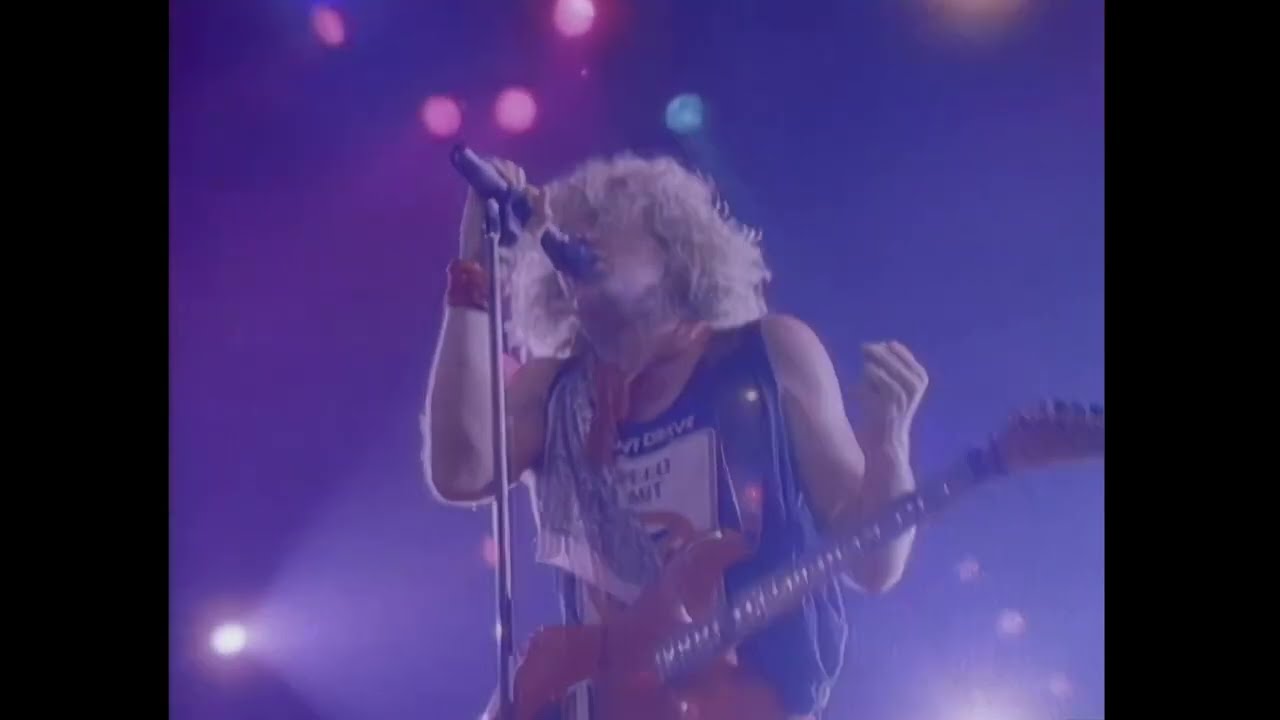
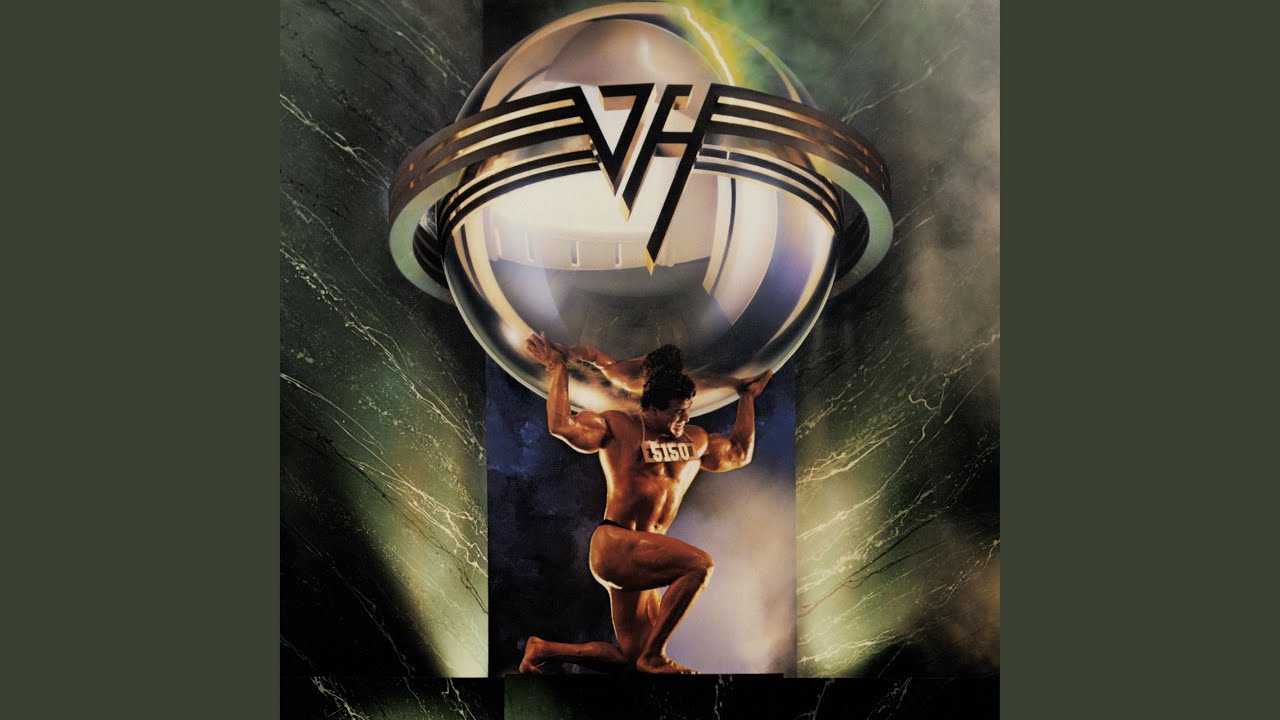
When the newly revamped Van Halen released 5150 on March 24, 1986, the album proved that lightning can indeed strike twice. The album benefitted from the momentum of 1984’s phenomenal success, and Sammy Hagar brought along a new group of followers to compensate for many of the David Lee Roth die-hards who broke ranks.
It was also the first Van Halen album to reach Number 1 on the Billboard 200 chart, reaching that milestone only one month after its release date, although it took about eight years to reach the stunning 5x Platinum sales figure that 1984 achieved in just one year.
Of course, 5150 also ignited a David Lee Roth vs. Sammy Hagar debate that still rages today, even as it becomes more meaningless and trivial with the passage of time. Although Roth didn’t match his previous band’s success when he teamed up with the incredible line-up of Steve Vai, Billy Sheehan and Gregg Bissonette to record Eat ‘Em and Smile, he delivered one hell of an album to satisfy the old-school fans.
Meanwhile Van Halen 2.0 (a.k.a. Van Hagar) maintained a large dedicated following and found new fans as they provided a perfect soundtrack for the remainder of the dayglo/just say no Eighties.
As Hagar sang on perhaps his most eloquent performance with Van Halen, it was the best of both worlds.
- This article first appeared in Guitar World. Subscribe and save.

