


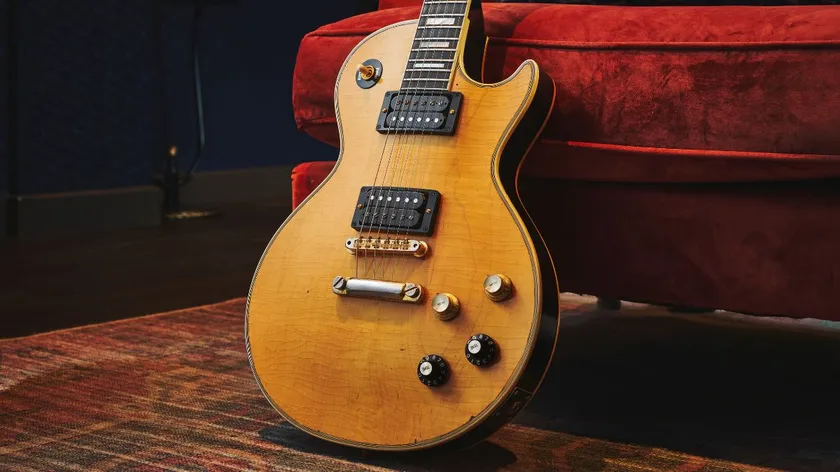


We guitarists are supremely lucky – we already play an instrument we can take with us and play anywhere. Drummers look at us with envy at our relative portability. However, the best travel guitars enhance and refine that concept further to offer the ultimate in portability without compromising on tone and playability. From travel-size stalwarts from Taylor and Martin to fascinatingly unexpected options from Blackstar and Yamaha, there’s something for everyone, and I'm covering the best of the bunch in this guide.
Whether you’re constantly on the move and need a travel companion to satisfy your musical urges, or maybe you want something a little comfier for the couch, I've selected a surprisingly varied group – from full-scale electric guitars to 3/4-size acoustic electrics.
If you want to cut through the crowd, my first recommendation off the bat is the Taylor GS Mini-e Koa. It’s exceptionally well built, plays like a dream, and the koa finish adds a slightly different flavor than the standard option. Of course, not all of us have a Taylor budget, and the best budget option, in my opinion, is the Yamaha JR1. I had the pleasure of reviewing this brilliant budget guitar and was incredibly impressed by the build quality and depth of tone for a laminate guitar.
However, these two travel guitars only scratch the surface. There’s a good reason for the wide variety on offer: a travel guitar needs to be portable, of course, but how it achieves that can be decided by several factors. Not to mention the preferences in playability, construction, electronics, and overall build that guitarists may look for in a travel guitar.
I've taken them all into consideration with my choices – and if you need any further guidance, head straight for my FAQ section at the bottom of the page or visit the glossary explaining all the key terms I've used.
Best overall

✅ Buy if you want a travel guitar that doesn’t sacrifice tone or playability: Not only does it play incredibly well, but the GS Mini-e sounds as good as many full-sized acoustic guitars.
❌ Avoid if you’d prefer an electric travel guitar: This won’t appeal to players looking to shred on their travels.
The lowdown: Taylor’s GS Mini was ahead of most of the pack when it launched in 2010, and it still stands up today thanks to the company’s design wizard Andy Powers. It’s a benchmark example of a guitar that sounds far fuller than its dimensions – aided by the slight arch of its back. Although more than a decade old, due to its continued success, fantastic playability, and many attempted iterations, I've honored it as my number one pick.
Build: One of my favorite GS Minis is this handsome koa finish, which adds an exotic flair to an otherwise standard acoustic aesthetic. With spruce and mahogany options proving popular, the koa stands out thanks to the visual clout of its dramatic figuring. A solid koa top, layered koa back and sides, a sapele neck, and an ebony fingerboard provide a rich tonal recipe here. It also exhibits Taylor’s fantastic craftsmanship. Although this is considered one of the more affordable guitars in Taylor’s range, they certainly haven’t cast aside their attention to detail.
Sounds: As for the tone, expect plenty of articulation with the sweet brightness Taylor acoustic guitars are known for. There isn’t a huge amount of volume or projection, as you'd expect from an acoustic guitar with smaller dimensions, but it’s certainly loud enough for playing on the sofa. If you do need a bit more volume, the Taylor ES-B preamp system, complete with a handy built-in tuner, allows you to amplify it for some added oomph.
Playability: Taylor guitars are loved the world over due to their flawless playability, and the GS Mini upholds that mantra well. Since the string spacing is the same as a standard guitar, paired with a lower action, it’ll feel instantly familiar. The scale length may take a bit of getting used to for some, as will having no cutaway for the higher frets, but there really aren’t many travel guitars that play smoother than this. The compact body makes it an addictive companion that's incredibly easy to pick up and play.
Watch out Taylor GS Mini-e demo:

Editor's note: This is review is not of the koa edition, but it should give you an impression of the overall build and features of this guitar.
"Showing they know how to celebrate in style, the 50th Anniversary GS Mini is Taylor’s party piece. A ravishing instrument, it’s an all-round honouring of the GS Mini from the unique visual touches to the core of this guitar’s ultimate appeal in its super-balanced sound."
Read more: Taylor GS Mini-e Rosewood review
Best budget

✅ Buy if you’re looking for a well-made companion that won’t bust the bank: The JR1 is sturdy, well put together, and has great quality hardware for the price.
❌ Avoid if you want something louder: It doesn’t project amazingly well due to its size, and there is an obvious lack of low end.
The lowdown: Yamaha is known for classical pianos, rocking Revstar electric guitars, heck, even motorcycles, but it’s the brand’s diminutive JR1 that takes my top spot for the best budget travel guitars. It’s a worthy purchase if you value great build quality, fun playability and a well-balanced acoustic that you can sling in a bag and take with you anywhere.
Build: Featuring a laminate spruce top with ‘locally sourced tonewood’ back and sides, there isn’t anything groundbreaking about the choices here. However, the tinted-top aesthetic helps the JR1 look much less anemic than others at this price. There’s also a rosewood bridge and a tortoise-style pickguard that polishes off this smart travel guitar. This is a Yamaha, the proud owners of the classroom-popular, bullet-proof Pacifica electric range, meaning they know how to create a sturdy guitar at this price range. Luckily for us, the JR1 carries the same hallmark, and even the vintage-style tuning machines are both handsome and practical.
Playability: The JR1 is designed to provide an enjoyable, smooth, and comfortable experience. With a 21.25” scale length, this truly sits in the travel guitar category; accompany that with the small, but well-balanced miniature-dreadnought body, and you have an instrument that is both enjoyable and lightweight to pick up and play. The frets aren’t totally full-sized, so it can be a little cramped if you have particularly large hands, so bear that in mind.
Sounds: For a fully-composite miniature guitar, the JR1 does a commendable job on the tone front. Sure, it isn’t the boomiest in the low-end, and it does lean a little ‘boxy’ in character, but the articulation and clarity make it an enjoyable listening experience. In my review, I found that the note separation was very clear and with a generous amount of sustain, the JR1 offers a good tonal punch that will keep most players happy, particularly at this price.

"Affordable, well-built, and far more playable than its ½-size frame suggests, the Yamaha JR1 is a brilliant option for young beginners and travel-minded players alike. Sure, it can sound a little boxy, and the fretwork isn’t perfect, but with its comfortable neck, balanced body, and trademark Yamaha reliability, there’s a lot to love here for the price."
Read more: Yamaha JR1 review
Best acoustic

✅ Buy if you want a professional travel guitar: The LX1E proves miniature guitars can be professional, and can headline stadiums if you manage to get there.
❌ Avoid if you want something more glamorous: Although it’s a fantastic guitar, it may be a little plain for some glamorous guitarists.
The lowdown: A firm favorite of Ed Sheeran – although he has made a move to Lowden in recent years – the Martin LX1E is Martin's pint-sized offering (and one of our top picks for the best 3/4 acoustic guitars), delivering the outstanding build quality you’d expect from the acoustic giant and a quality amplified sound.
Build: The guitar is made with a solid spruce top and high-pressure laminate back and sides, as well as a composite neck. It may not have the elegant looks of the D-28 or HD-35, but it is incredibly strong and almost indestructible. There’s also a Richlite fingerboard, a man-made material designed to be smooth yet very durable. Aesthetically, it reminds me of ebony, but it’s much more uniform in color. This mighty little guitar will undoubtedly handle any of the harsh conditions bestowed upon it.
Playability: Having the neck join the body at the 14th fret is a great addition, allowing better access to the higher frets. Pair that with a comfortable, low action and a modified low oval neck – which sits in the ‘C’ shape territory – it’s easy to see why Sheeran managed to make a career out of playing this comfortable little guitar.
Sounds: There’s a very clear midrange, but it does well not to venture into the boxy territory. There isn’t a great deal of low end present, but the lack thereof allows room for a lovely chime, largely thanks to the solid spruce top. The Fishman Presys VT does a great job of translating the guitar’s nuance when plugged in and the straightforward controls situated in the soundhole will never get in your way.
Watch our Martin LX1E demo:
"Compact, reliable, and consistently great to play, the Martin LX1E proves it still has plenty to offer. While its smaller body limits low-end depth, its clarity, durability, and ease of use make it a standout choice for travel and everyday playing."
Read more: Martin LX1E Little Martin review
Best nylon

✅ Buy if you need quiet practice for hotel rooms: You won’t get thrown out of your hotel for playing the SLG200N on your next work trip, as acoustically, it’s very quiet.
❌ Avoid if you’d prefer to make some noise: For some, playing with headphones is restrictive and uninspiring; therefore, the SLG200N won’t be for them.
The lowdown: Yamaha’s Silent Guitar is an unusual proposition with a detachable frame for folding down. Due to this, it’s a winner when it comes to traveling as the SLG200N can be partly disassembled as the bass side of the body screws off. This allows you to slot the guitar in the Yamaha-branded gig bag like you're carrying around a laptop.
Build: There’s no getting away from the appearance of this guitar; it’s, shall we say… modern? Some will hate it; I, however, love it. Due to the amount of wood missing, the construction is quite simple to list. There’s a mahogany neck with a rosewood fingerboard while the frame consists of rosewood and maple. At 25.5 inches, you get a full-sized scale length, which is a real treat for a travel guitar. It’s finished off with medium-gauge frets and the neck joins the body at the 12th fret. The central solid body hosts the electronics model on its underside and that’s where most of the technology is housed.
Playability: Unsurprisingly, this guitar is incredibly lightweight and its lack of heft may take a bit of getting used to for some. The neck profile sits on the flat end of the spectrum, ideal for classical players, and it’s paired with a flat rosewood fingerboard. The nut is 50mm wide, providing ample string spacing for clean and accurate finger picking, while the body frame has a rounded bass-side shoulder that keeps things very comfortable for your picking arm.
Sounds: Being a silent guitar it is designed to be plugged in for amplification or via headphones – it makes very little acoustic sound of its own. This has the advantage of quiet practice but the Silent Guitar’s SRT and pickup blend system also shines via a PA or acoustic combo live for surprisingly organic tones to mimic a real acoustic being mic’d. The onboard chorus and reverb are reminiscent of the Transacoustic series and further enhance the SLG200N’s usability as a traveling companion.
Best electric
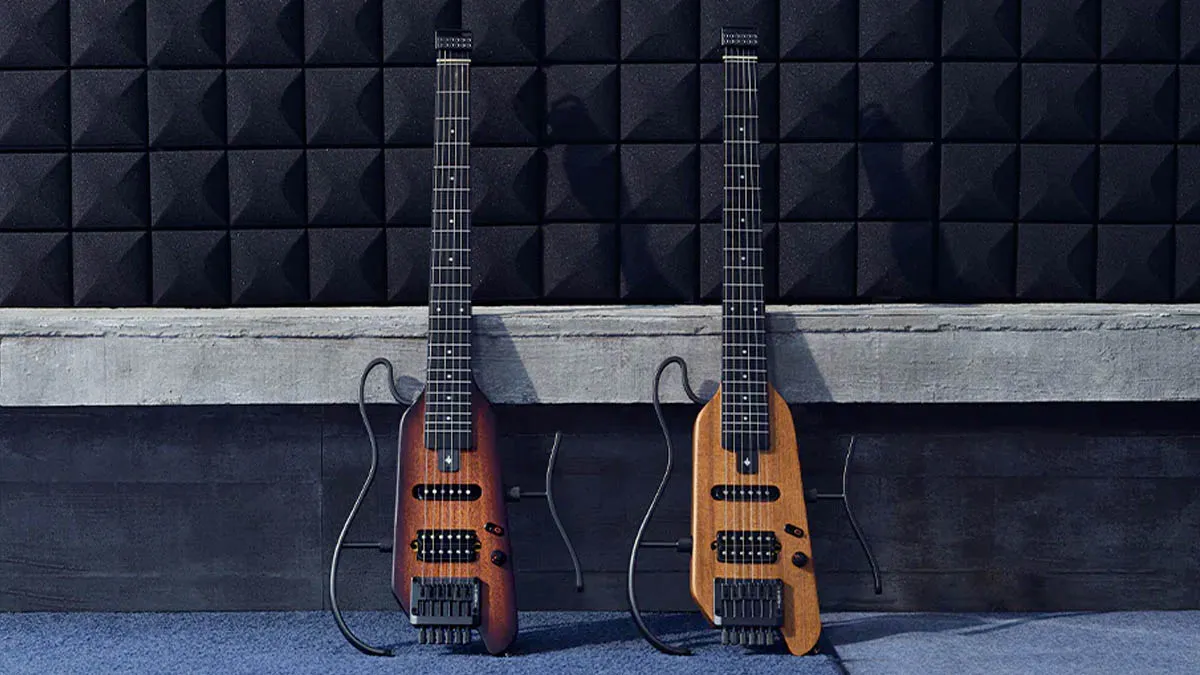
✅ Buy if you can’t leave raucous rock tones at home: Some players just need a high-output humbucker fix, even on their travels.
❌ Avoid if you don’t have portable amplification: The Hush X comes to life when amplified or used with some kind of amplifier; if you don’t have access to that, it may not be worth your while.
The lowdown: Budget sweetheart Donner has never been shy about trying something different. So, when its Steinberger-esque travel electric guitar, the Hush X, was released, it got plenty of attention. Following a wave of positive reviews, including Guitar World's own, this incredibly lightweight guitar has quickly established itself as one of the best electric travel guitars on the market.
Build: Very similar to Yamaha’s Silent Guitar in construction, the Hush X features frame extensions that attach to a slim mahogany 'body,' both of which are detachable when you need to sling it into the supplied gig bag. Since space on the body is at a premium, the clever concentric volume and tone control comes in handy. This sits right next to a roaring, high-output humbucker in the bridge position, while an Alnico V single-coil occupies the neck. Also inspired by Steinberger, the six-saddle fixed bridge features built-in thumbwheel tuners for any tuning adjustments you need to make. Better still, it gets rid of those old-fashioned, ugly headstocks found on other guitars.
Playability: Players will be pleased to hear that the Hush X features a full-sized 25.5-inch scale length with 22 medium frets. That means there is no cramped shredding and your muscle memory should remain intact as it feels like a traditional guitar, mostly. The fingerboard has a modern asymmetrical profile and the 403mm radius is very flat and wide to further assist with fast licks, even when you are on your travels.
Sounds: For a travel guitar, the Hush X offers plenty of tones on tap. The high-output humbucker is exactly that; full-bodied, dynamic with a boatload of bite. With your eyes closed, you’d be surprised to discover this is a 5-pound travel guitar and not a Jackson Soloist. The single-coil at the bridge does a great job of covering Fender-like chime with a pleasing amount of presence and articulation.

"The minimal design of the Donner Hush-X certainly is compact and lightweight enough to deserve its “travel guitar” distinction, but it performs every bit as good as a traditional full-size solidbody, making it a great, affordable all-around axe."
Read more: Donner Hush X review
Best for metal

✅ Buy if you want a self-contained shredder: A built-in amplifier offering clean, overdriven and heavier distortion makes it a fantastic travel companion for metalheads.
❌ Avoid if you want something a tad more mellow: Although this appeals to gain demons, it may not suit those who prefer a softer experience.
The lowdown: Another collaboration between two successful guitar brands, Traveler already has a formidable reputation for electric travel guitars and ESP builds some of the finest guitars for heavy rock and metal around with its EC series; the LTD EC-1 is the combination of those skills.
Build: The full-scale single-cut model first surfaced in 2016 and is now available in Vintage Black with gold hardware, Snow White, Dark Brown Sunburst and See Thru Black Cherry. The latter two are both available with handsome quilted tops. A Traveler design calling card is to cut down on overall length by placing locking tuners within the body design. A unique look, but an ergonomic one and locking tuners on a travel guitar feel like a rare luxury. Weighing in at 5lb 4 oz, you’ll have no problem with slinging this in the included gig bag and taking it around on your travels, or perhaps even use it as a comfortable couch guitar.
Playability: With a 24.75” scale length, Traveler is very proud of giving guitarists the same playing area as a full-sized EC series guitar. Unlike others in this list, this’ll suit the single-cut players down to a T. You’ve also got 22 full-sized jumbo frets for added familiarity, as well as D’Addario EXL110 10-gauge guitar strings. Around the back, there is a beveled neck heel and cutaway for easier upper frets access whilst soloing. Overall, the playing experience couldn’t be much better for this kind of guitar.
Sounds: The pickup here is an ESP-designed active humbucker, so it’s ideal for higher gain tones and chugging riffs. The real winner here is the inbuilt headphone amp that offers clean, overdriven and heavier distortion tones. This is a game-changer if you don’t want to carry any extra equipment while you travel. If you’re a long-distance truck driver or after an office practice tool, the Traveler is self-contained and incredibly addictive.
Best for kids

✅ Buy if you want to set your kid up for success: Even though it’s considered a travel guitar, the BT1E is one of the best options to give your kid the best chance to learn guitar due to its comfortable playability and great tone.
❌ Avoid if you have particularly large hands: On the other hand, adults may find it a little cramped due to the narrower nut width.
The lowdown: The BT1e Baby Taylor is perhaps the most aptly named guitar when it comes to its label: best for kids. In fact, it’s a great guitar for all ages, but there are many advantages that especially benefit younger players. Many travel-sized acoustics have come and gone, but the BT1E has remained at the top for nearly 30 years, with few changes to its overall construction. If it ain’t broke, don’t fix it, right?
Build: The BT1E features a miniature dreadnought body with an arched back – a clever design choice by Taylor, as the arched back eliminates the need for back bracing and saves space. The torrefied spruce top and layered walnut back and sides increase durability, which is especially helpful if you’re considering this for a slightly clumsy child. As a travel guitar, it weighs around 1.5kg, making it super lightweight and easy for your little one to handle. The included semi-solid gig bag provides ample protection for taking the guitar to and from school or lessons.
Playability: As mentioned, the light weight helps smaller players feel more comfortable with the BT1E than with a full-sized acoustic, and the narrower-than-typical nut width also makes a difference. This design helps smaller fingers reach longer stretches that can feel awkward when first starting out. Additionally, the light 12-gauge strings feel especially slinky on a guitar with a 22.75” scale length. Combined with Taylor’s signature smooth and inviting playability, you’re putting your child in the best position to learn with the BT1E.
Sound: Like Taylors that cost twice as much, the BT1E sounds bright and responsive, and it certainly upholds the brand’s signature characteristics. There is a pleasing amount of sustain, and the tone feels well-balanced across the spectrum. Although there isn’t much bass response due to its small size and dimensions, it can sometimes venture into harshness when strummed particularly hard. This may be more noticeable for young players with less experience, as they may be a bit heavy-handed at first. Still, it will certainly sound much better than my first guitar; I can bet you that.
Watch our Taylor BT1 demo:
"As far as 3/4 size acoustics go, there’s a reason the Taylor BT1e Baby Taylor has been at the top of the game for the past 30 years. The combination of excellent tone, fantastic playability, and rock-solid build quality makes it a brilliant addition for any player, whether you’re looking for your very first instrument or you’re an experienced guitarist who wants something comfortable for songwriting sessions and sofa noodling."
Read more: Taylor BT1e Baby Taylor review
Also consider

How to choose a travel guitar
When choosing your first travel guitar, there are a few key things to keep in mind. Having helped many guitarists find the right travel guitar in my job at a guitar store, these are the points I always recommend for getting the best option possible.
Acoustic or electric?
The very first choice to consider: do you want an acoustic or electric travel guitar? Although the Martin Backpacker acoustic was the first travel guitar, there are now plenty of great electric options, too. Do you want the independence that an acoustic provides, without needing extra gear to play? Or would you prefer an electric, so you can practice your band’s set with a headphone amp while waiting in the airport?
Sometimes, practicing quietly on an electric guitar is more practical when staying in a hotel room. On the other hand, acoustic travel guitars make it easier to join in with other musicians you might meet on your travels. There’s no right or wrong choice; just think about your needs and what you’ll get the most use out of.
Dimensions
More than with any other guitar, figuring out the right dimensions for your travel guitar is crucial. If you’re traveling by car, bus, or plane, space is at a premium, sometimes down to the last centimeter. Some travel guitars feature collapsible frames and short scale lengths, making them ultra-light and compact. Others, like traditional acoustic travel guitars, don’t fold as easily and may have slightly longer necks.
If you’re flying, weight is especially important; most airlines have strict carry-on limits, so lighter is better. Consider overall length, weight, width, or all of the above, and choose what fits your travel needs.
Construction
Finally, don’t overlook the construction. What is the guitar made from? If you’re traveling between countries or continents, your guitar will experience a range of climates. Solid tonewood is more susceptible to drastic temperature and humidity changes than layered, laminate, or even carbon fiber guitars. It’s also more prone to dings, bumps, and scrapes, so if you’ll be doing a lot of hardcore or frequent travel, it might not be the best choice. The durability of your instrument depends on its construction, so keep this in mind.
FAQ

What is a travel guitar?
A travel guitar is a guitar purposefully designed for portability. These guitars are much smaller and lighter than standard-sized guitars, making them easier to carry, whether you're traveling by car, bus, or plane.
Travel guitars typically feature slimmer body dimensions and reduced weight. They often have a shorter scale length, although this isn’t always the case, and differences in fret spacing and nut width can vary by model. Most travel guitars come with a gig bag, emphasizing their suitability for life on the go.
Traditionally, travel guitars were acoustic; Martin’s Backpacker is a classic early example, but today, many brands, like Donner and Traveler, also make electric travel guitars. In short, a travel guitar is the perfect companion for musicians who want to practice or perform wherever they go.
Are travel guitars good for beginners?
Yes, travel guitars can be a great option for beginners, especially young starters or smaller individuals. Their purposefully small dimensions and light weight make them less burdensome to handle than a full-sized guitar, allowing them to sit more comfortably on your lap. Because the lower bout is typically less wide and the body is slimmer, there’s less guitar for small arms to reach around, making it easier for both the fretting and picking hands.
However, if you’re a fully grown adult, it’s worth considering your long-term goals. While a travel guitar may feel more comfortable at first, learning on a full-sized guitar usually offers better longevity. If you stick with it, you’ll likely want to move up to a full-sized guitar before long.
Do travel guitars sound as good as full-size guitars?
Full-size guitars don’t necessarily sound better than travel guitars, but they do tend to sound different, especially when it comes to acoustics. A full-sized acoustic guitar typically has stronger bass response, greater projection, and a wider frequency range.
Because travel acoustics are smaller, their tone sits more prominently in the mid-range, and their reduced lower bout and surface area mean they struggle to produce as much bass. Ultimately, full-sized and travel acoustic guitars emphasize different parts of the frequency spectrum, and as always, tone preference is subjective.
On the other hand, full-sized and travel electric guitars sound much more similar. Since pickups account for the majority of the tone, most players wouldn’t be able to tell the difference between the two in a blind test.
Are travel guitars harder to play?
Not necessarily. Whether a travel guitar is harder to play depends on what you’re used to. If you’ve only played full-sized guitars, switching to a travel guitar with a smaller scale length, closer frets, narrow nut width, and slim body might feel unusual at first. However, once your muscle memory adapts, playing a travel guitar should feel very similar to playing a standard-sized instrument.
Some players do find travel guitars a bit cramped, but many modern travel guitars now feature standard scale lengths and full-sized frets. These options will feel much more familiar and comfortable for most players.
Can you put normal strings on a travel guitar?
Yes, you can use standard-gauge guitar strings on a travel guitar. There aren’t any specific ‘travel guitar strings,’ and most travel guitars come with a standard set from the factory. Just keep an eye on the scale length: if your travel guitar is 24 inches or shorter, you might want to use a slightly heavier set than usual. This is because shorter scale lengths lower string tension, making the strings feel looser. A heavier gauge can help restore a more familiar feel. Either way, you’re still using regular guitar strings; no special sets needed.
Can I take a travel guitar on a plane?
Yes, you can bring a travel guitar as carry-on luggage on a plane; in fact, that’s one of their main purposes. Most travel guitars are small and lightweight enough to meet airline requirements for overhead compartments, so you’re unlikely to run into weight restrictions.
However, always check your airline’s specific rules, as they can vary. It’s best to use a sturdy gig bag for protection, since hard cases may be too large for overhead storage. Be cautious when opening the overhead bin after landing, as your guitar might have shifted or been bumped by other luggage during the flight.
Can I use a travel guitar for recording?
Absolutely! There’s no instrument you can’t record if it inspires you and sometimes, unconventional choices bring unique character to your music. If you love your travel guitar’s tone, you can mic it up just like any acoustic, or, if it has a pickup, record directly into your software via an audio interface.
Electric travel guitars, such as the Donner Hush X, offer humbucker or single-coil tones just like full-size models. In terms of connecting to an audio interface, there’s no real difference between travel and full-sized guitars.
Are 3/4-size guitars the same as travel guitars?
Not quite. While both are smaller than standard guitars, they have different primary purposes and design fundamentals. A ¾-size guitar is simply a scaled-down version of a full-sized instrument, mainly intended to provide a more comfortable learning experience for children.
In contrast, travel guitars are typically even more compact and lightweight, designed for portability and often aimed at adults who want a convenient travel companion. One focuses on learning, the other on portability, though there is some overlap and shared features between the two.
Glossary
3/4-size guitar: A scaled-down version of a full-sized instrument, mainly intended to provide a more comfortable learning experience for children.
Cutaway: The cut out section on a guitar body to allow for easier access to the higher frets.
Electro-acoustic: This is a type of acoustic guitar that has a pickup system installed to allow for amplification.
Folding/removable frame: The section of a travel guitar that can detach from the main body. This is typically found on silent guitars where the frame replaces the stabilizing job of the body.
Full-scale guitar: A type of guitar whose scale length is over 24”. Anything under this mark is considered small scale.
HPL (High-Pressure Laminate): This is a tonewood that consists of multiple layers of wood fibers molded together through intense heat and pressure.
Headless guitar: This is a type of guitar that doesn’t have a headstock. The tuning machines are typically housed on the bridge, or perhaps even inside the guitar.
Headphone amplifier: An amplifier that lacks a speaker and has been specifically designed to be used in conjunction with headphones for quieter practice.
Laminate: A type of construction that consists of multiple layers of wood glued together to form the body, top or back and sides of a guitar. It is typically more affordable than solid wood and can be more resistant to changes in temperature and humidity.
Locking tuners: These are tuning machines that lock the string in place, making restringing quicker and helping improve tuning stability.
Onboard tuner: A tuner built into the guitar, usually as part of the preamp on an electro-acoustic guitar. This allows you to tune your guitar without needing a separate tuner.
Pickup: An electronic device that picks up the vibrations of the guitar strings and converts them into an electrical signal that can be amplified.
Preamp: An electronic unit that boosts the guitar’s signal before it is sent to an amplifier or PA system. On an acoustic-electric guitar, the preamp will often also house controls such as volume, EQ and an onboard tuner.
Scale length: The distance between the nut and the saddle of a guitar.
Short-scale guitar: A guitar with a shorter scale length than a standard full-scale instrument.
Short-scale tension: The reduced string tension found on guitars with a shorter scale length. This can make the strings feel slinkier and easier to bend or fret.
Silent guitar: A guitar designed to produce very little acoustic volume. Instead, they rely on a pickup system and headphones or amplification to produce its sound.
Solid top: This is a guitar top made from a single piece of solid wood rather than laminate. Solid tops are generally considered to produce a more resonant and responsive tone.
String spacing: The distance between each of the guitar’s strings. Wider string spacing can give your fingers more room, while narrower spacing can feel more familiar to electric guitar players.
Tonewood: A type of wood chosen for its tonal and physical properties when constructing a guitar. Different tonewoods are often associated with different tonal characteristics, although their effect can vary considerably between instruments.
How we choose the best travel guitars
Here at Guitar World, we are experts in our field, with many years of playing and product testing between us. We live and breathe everything guitar and bass related, and we draw on this knowledge and experience of using products in live, recording and rehearsal scenarios when selecting the products for our guides.
When choosing what we believe to be the best travel guitars available right now, we combine our hands-on experience, user reviews and testimonies and engage in lengthy discussions with our editorial colleagues to reach a consensus about the top products in any given category.
First and foremost, we are guitarists, and we want other players to find the right product for them. So we take into careful consideration everything from budget to feature set, ease of use and durability to come up with a list of what we can safely say are the best travel guitars on the market right now.
Read more about our rating system, how we choose the gear we feature, and exactly how we test each product.
Why trust Guitar World?
☑️ A global audience of 3.8 million guitarists monthly
☑️ 1,200+ reviews on GuitarWorld.com
☑️ 30+ years of product testing at Guitar World
Guitar World boasts more than 44 years of expertise and stands as the ultimate authority on all things related to guitars. The magazine and website feature expertly written gear round-ups and top-quality, authoritative reviews penned by a team of highly experienced industry professionals.
Guitar World's inaugural print issue hit the shelves in July 1980, and ever since, it has been captivating players and enthusiasts with engaging lessons, insightful interviews with the biggest guitar heroes, and priceless buying advice for newbie players.
Furthermore, GuitarWorld.com continues this legacy online and serves as the hub of the world's foremost authorities on guitar playing. The site not only hosts content from Guitar World but also showcases articles from respected publications such as Guitarist, Total Guitar, Guitar Techniques, and Bass Player. With a reach extending to 3.8 million players each month, GuitarWorld.com is a go-to destination for guitar fanatics globally.
Below, you'll find more information about the expert authors and reviewers who helped put this page together.
Meet the experts

Rob is the Reviews Editor for GuitarWorld.com and MusicRadar guitars, so spends most of his waking hours (and beyond) thinking about and trying the latest gear, while making sure our reviews team is giving you thorough and honest tests of it. He's worked for guitar mags and sites as a writer and editor for nearly 20 years but still winces at the thought of restringing anything with a Floyd Rose.

Daryl is a Senior Deals Writer at MusicRadar, and is responsible for writing and maintaining buyer's guides on the site as well as testing out products for reviews. Before writing for MusicRadar, Daryl worked for many years in music retail, helping musicians of all ages find the best gear for them.
Daryl also has a passion for live sound, having worked professionally as a sound engineer in a number of venues around Scotland and holds a first-class Bachelor's degree in Creative Sound Production from the University of Abertay. He's worked for various bands, as well as his fair share of pantomimes, dance shows, opera and has operated the sound for some of the country's top comedians, including Alan Carr, Ed Byrne and James Acaster, among others.

Ross has been a music lover and guitar player since the age of 8. He has spent the five years since graduating from university working in music retail, selling guitars, amps and more. Ross is particularly interested in electric guitars, pedals and amplifiers and his current rig includes a trusty 2009 American Standard Stratocaster and Vox AC30S1 with a few Walrus Audio and Way Huge pedals in between.

Stuart has been working for guitar publications since 2008, beginning his career as Reviews Editor for Total Guitar before becoming Editor for six years. During this time, he and the team brought the magazine into the modern age with digital editions, a Youtube channel and the Apple chart-bothering Total Guitar Podcast. Stuart has also served as a freelance writer for Guitar World, Guitarist and MusicRadar reviewing hundreds of products spanning everything from acoustic guitars to valve amps, modelers and plugins.

Matt is a Junior Deals Writer here at MusicRadar. He regularly tests and reviews music gear with a focus on audio interfaces, studio headphones, studio monitors, and pretty much anything else home recording-related. Responsible for over 60 buying guides, a large part of his role is helping musicians find the best deals on gear. Matt worked in music retail for 5 years at Dawsons Music and Northwest Guitars and has written for various music sites, including Guitar World, Guitar Player, Guitar.com, Ultimate Guitar, and Thomann’s t.blog.
Latest updates
12/08/26: This guide to the best travel guitars has been re-written from the ground up to provide extra instruments and much more detailed information on all the guitars featured. Each travel guitar entry now has an "At A Glance" panel detailing the pros and cons, while expert verdict boxes have been added where applicable. A new glossary section is now in place highlighting all the key terms you may come across while shopping, and the FAQ section is completely new. We've also added a section on how best to choose a travel guitar and finally, we've included a "Meet The Experts" section so you can get to know the faces behind the names of the guide's authors. A new, more concise intro has been added to the guide with a fresh header image. The 'how to choose' section has been reformatted to make it easier to read. The glossary of key terms has also been reformatted for clarity. The 'meet the experts' section has also been updated.
Read more:
You can trust Guitar World Our expert reviewers spend hours testing and comparing guitar products so you can choose the best for you. Find out more about how we test.
- The best acoustic guitars for beginners
- Freshen up with the best acoustic guitar strings
