





Guitar World Verdict
If you did decide to go down the deep-bodied Taylor dread route then you’d be getting a fine, gig-ready instrument with a very good array of sounds on tap as well as premium build quality. And you can’t really say fairer than that.
Reasons to buy
- +
+A great-sounding acoustic.
- +
Well-built.
- +
Good-looking dread from a renowned builder.
Reasons to avoid
- -
Not much, but dreads aren’t for everyone and the price may deter all but the more serious acoustic players
You can trust Guitar World Our expert reviewers spend hours testing and comparing guitar products so you can choose the best for you. Find out more about how we test.
What is it?

We recently looked at Taylor’s revised and updated 324ce Grand Auditorium acoustic and heard how the company is continually reviewing and tweaking its instruments in the search for sonic nirvana.
We saw that designer-in-chief Andy Powers had taken his innovative V-Class concept a step further, instigating scalloped bracing to reduce mass, but maintain strength. Then there was a new neck-adjustment system that sees simple tweaks to the angle of the neck in order to maintain a comfortable playing action. And we were also introduced to a new acoustic guitar pickup system, the Claria, aimed at producing the best possible plugged-in tone for live use.
We were impressed, concluding that the changes to the 324ce’s manifest has “paid dividends” and nodded in agreement in the direction of Taylor’s claim that the instrument is “its most plug-in-and-play version” of that particular model.
Naturally, when you’re a fast-moving, upwards-spiralling manufacturer such as Taylor, a practically continuous programme of re-evaluation of the catalogue is going to be whirring away in the background. And so it is no surprise that the 324ce doesn’t stand alone when it comes to the production of new and exciting twists from the Californian maker.
Enter the 710e, a deep-bodied square-shouldered dreadnought, which Taylor claims “offers a playing experience that combines traditional acoustic sound with modern innovation”.
It’s part of Taylor’s Gold Label Series, introduced around a year ago, which draws inspiration from past eras of traditional, non-cutaway acoustic guitars; hence a ‘new’ body shape in the company’s range. And you can’t really get any more traditional than a dreadnought, can you?

But what’s all this ‘deep-bodied’ designation about? Obviously it’s there to add punch and heft to the guitar’s sound, but is it all that new? If you take Martin’s D-28 as an industry standard then we’d be looking at a body depth of 123mm, whereas the 710e comes in at a smidge under, at 122mm.
On the other hand, a D-28 has a lower bout of 397mm and the Taylor comes in at 403mm. So deep and wide seems to be the order of the day with the 710e, promising a robust volume level with good bass and singing mids.
But let’s not skip ahead too far; if the 710e is a nod of the head towards celebrated acoustic designs of yore, we’d better have a quick look in the builder’s yard to see exactly how traditional things are.

To begin with, we have a torrefied Sitka spruce top, backed with East Indian rosewood and so we are spot on, as far as tradition is concerned as this mimics, again, the D-28’s winning formula. While we’re here, it’s worth noting that the 710e’s top wood is very attractive with plenty of shimmering chatoyance that dances when the light hits it.
Currently, of course, the colour is a very pale amber, but is sure to darken to that more familiar hue as the years pass. The Indian rosewood is no slouch in the looks department, either, with a nice straight grain pattern and that distinctive chocolatey bloom.
The body is bound, front and back, in black and white, the pattern reflected in the rosette. The pickguard is a ‘firestripe’ pattern and the bridge and string pins are Honduran rosewood.
Moving on to the neck, we have tropical mahogany, with an incredibly subtle scarf joint below the headstock. Turning the guitar over, we find a West African Crelicam ebony fingerboard with what Taylor refers to as “cream dot” inlays in all the accustomed places.

The headstock has Taylor’s own tuners and the new-old Taylor logo – we’re used to seeing the distinctive ‘block’ logo from Taylor, but more recently we’re seeing this new cursive variation, which looks ‘old’ in the manner of Gibson’s earlier acoustics.
Other highlights include the aforementioned Action Control Neck mentioned earlier, whereby your action is kept stable via a simple adjustment through the guitar’s soundhole.
A simple bolt on the neck block will tilt the neck to compensate for climate irregularities – think Fender’s neck-tilt idea. Add to this another variation on Andy Powers’ V-Class bracing – here it’s fanned to “increase volume and sustain”.
The final piece of the puzzle is the LR Baggs VTC pickup and preamp system, with controls secreted within the upper arc of the guitar’s soundhole. So the guitar is all set and ready for the stage, but first we’d better explore its unplugged voice and find out how it handles.
Specs

- PRICE: $2,999 | £3,275 | €3,199 (inc hard case)
- ORIGIN: USA
- Type: Dreadnought
- Top: Torrefied Sitka spruce
- Back/Sides: Indian rosewood
- Max Rim Depth: 122mm
- Max Body Width: 403mm
- neck: Tropical mahogany
- SCALE LENGTH: 648mm (25.5 inches)
- TUNERS: Taylor Nickel with nickel buttons
- NUT/WIDTH: White Tusq/44.5mm
- FINGERBOARD: West African Crelicam ebony
- FRETS: 20
- STRING SPACING, BRIDGE: Honduran rosewood with Micarta saddle/56mm
- ELECTRICS: LR Baggs Element VTC
- WEIGHT (kg/lb): 2.08/4.6
- LEFT-HANDERS: Made to order only
- FINISHES: Gloss
- CONTACT: Taylor Guitars
Build quality, usability and sounds

We’ll never tire of saying how user-friendly Taylor acoustic necks are. It really is like shaking hands with an old friend every time. And it’s good to note that Taylor has decided not to go ‘full vintage’ and change the profile to one of the more vintage-inspired chunky variations. In any case, the neck here is that familiar C-shape, the satin finish adding that essential finishing touch for neck excursions.
We should mention the 45mm nut width, too, as just a couple of millimetres here makes an enormous difference to fingerstyle players. Needless to say, sitting down with a dreadnought is not to everyone’s taste as they do tend to be a bit of an armful, but we’re happy to report that the 710e is very well balanced and comfy either sitting or standing.
With everything shipshape in the feel department, it’s time for those first exploratory chords. Now, it’s very hard to sum up the sound of a dreadnought. We’d even question whether there is a definitive dreadnought sound. Is there that much of a similarity between Gibson’s J-45 and Martin’s D-28, for instance?

The characteristics they share would be a robust midrange with plenty of volume and a good amount of bass – and that’s virtually what we find here, give or take. If you take the aforementioned models as a reference, we’d say that the 710e lacks some of the ‘woodiness’ of the J-45 and leans more towards the sing-song musicality of the Martin.
There’s certainly a lot of volume to hand and without that dreadnought muddiness that you sometimes find in the lower midrange. Plenty of sparkle at the top end as well. We tried a range of campfire chords, a bit of fingerstyle, a smidge of blues and the only bluegrass licks we could remember and everything passed muster with panache.
Plugged into our Boss Katana-50 EX on the Acoustic setting, the 710e came to life. This writer’s acid test for plugged-in acoustics is the intro and verse to Pink Floyd’s Wish You Were Here. If that particular combo of plectrum-fuelled blues and lusty chords sounds stadium rock-worthy, then you’re on to a winner. And let’s just say the Taylor shone like a crazy diamond…
Verdict
Verdict: ★★★★½

Guitar World verdict: Naturally, this level of build quality and sound performance doesn’t come cheap and $2,999/£3.2k might be a determining factor in one’s prospective purchase stakes.
If you did decide to go down the deep-bodied Taylor dread route then you’d be getting a fine, gig-ready instrument with a very good array of sounds on tap as well as premium build quality. And you can’t really say fairer than that.
Hands-on videos
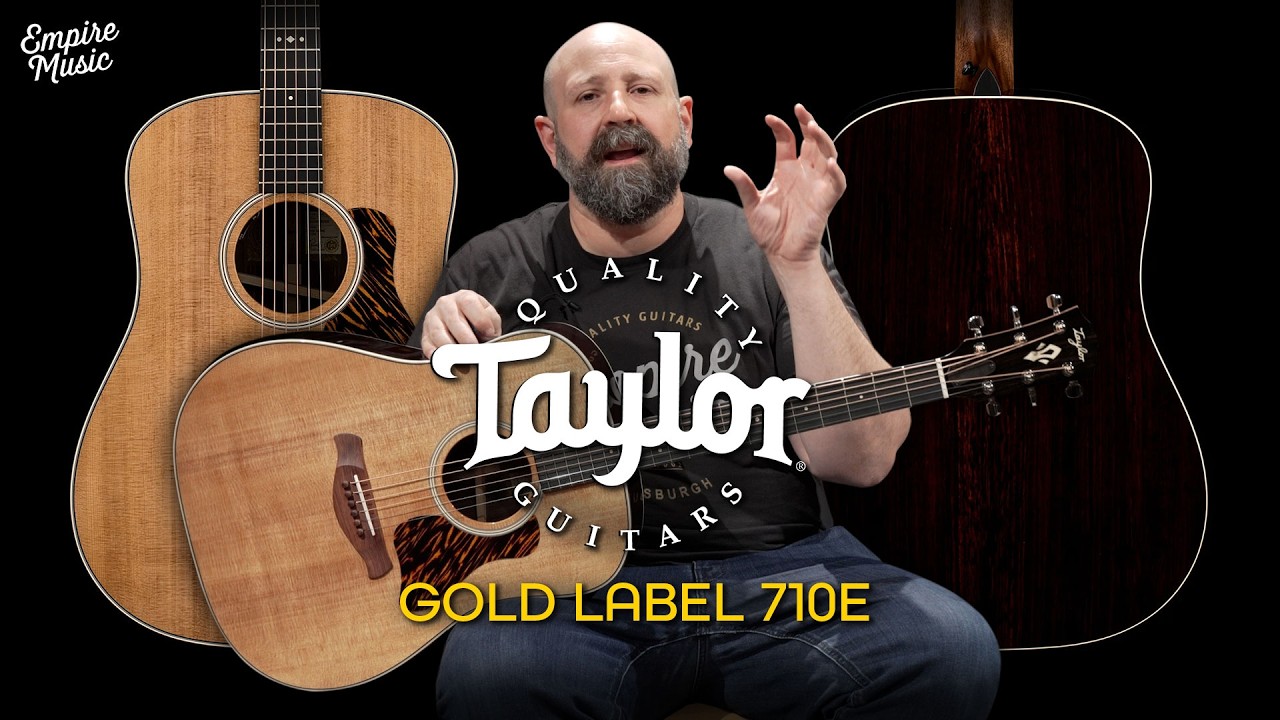
Empire Music
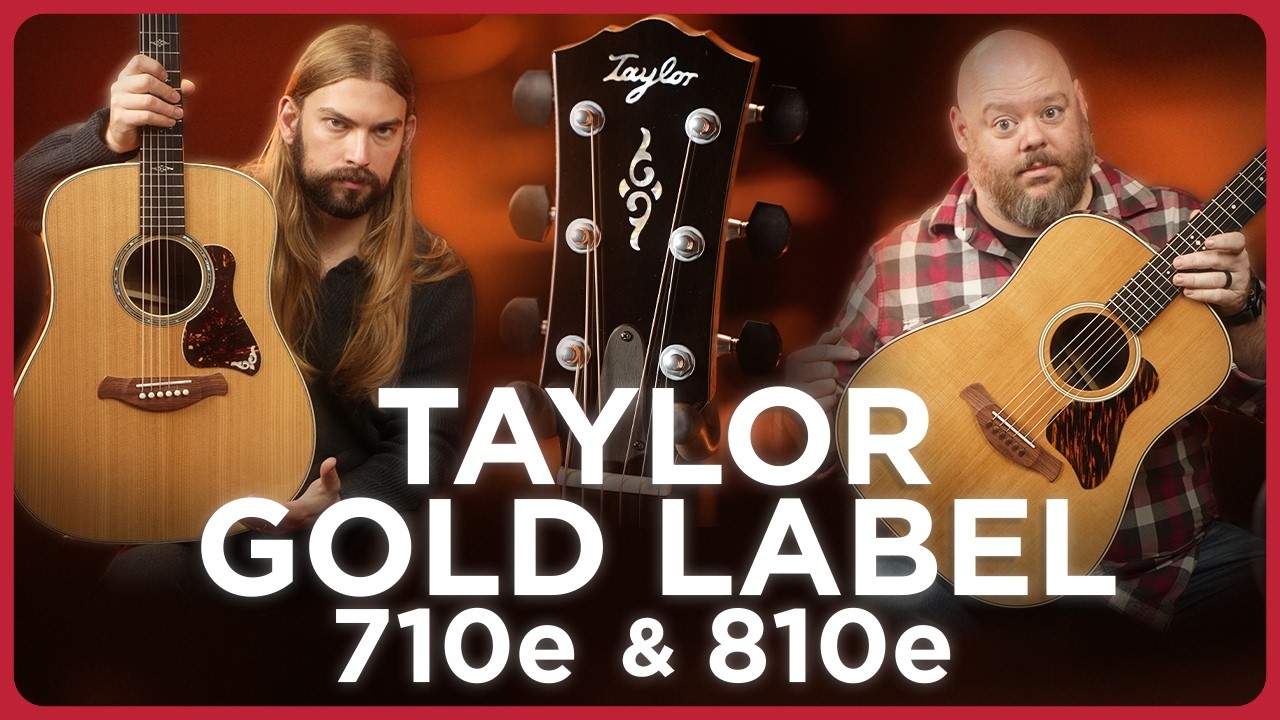
Alamo Music Center
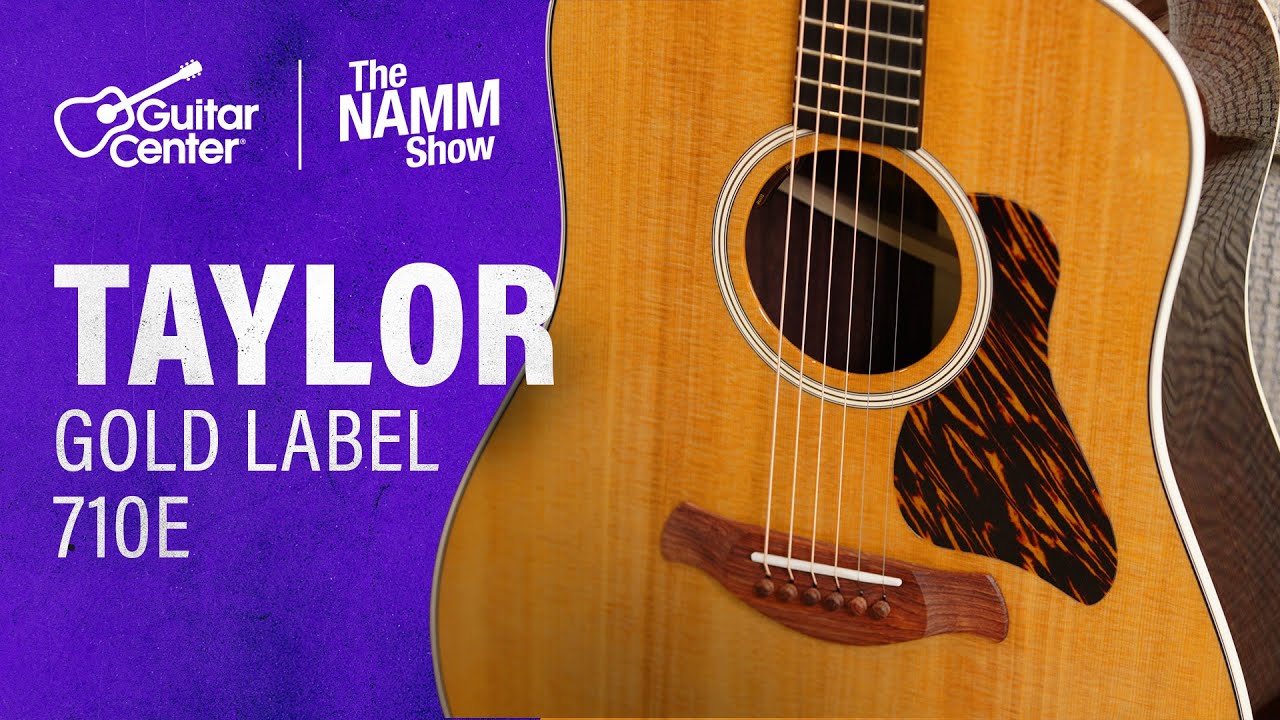
Guitar Center
- "Crisply built and shines like a gem on the live stage": Taylor 314ce Studio review
- This article first appeared in Guitarist. Subscribe and save.

