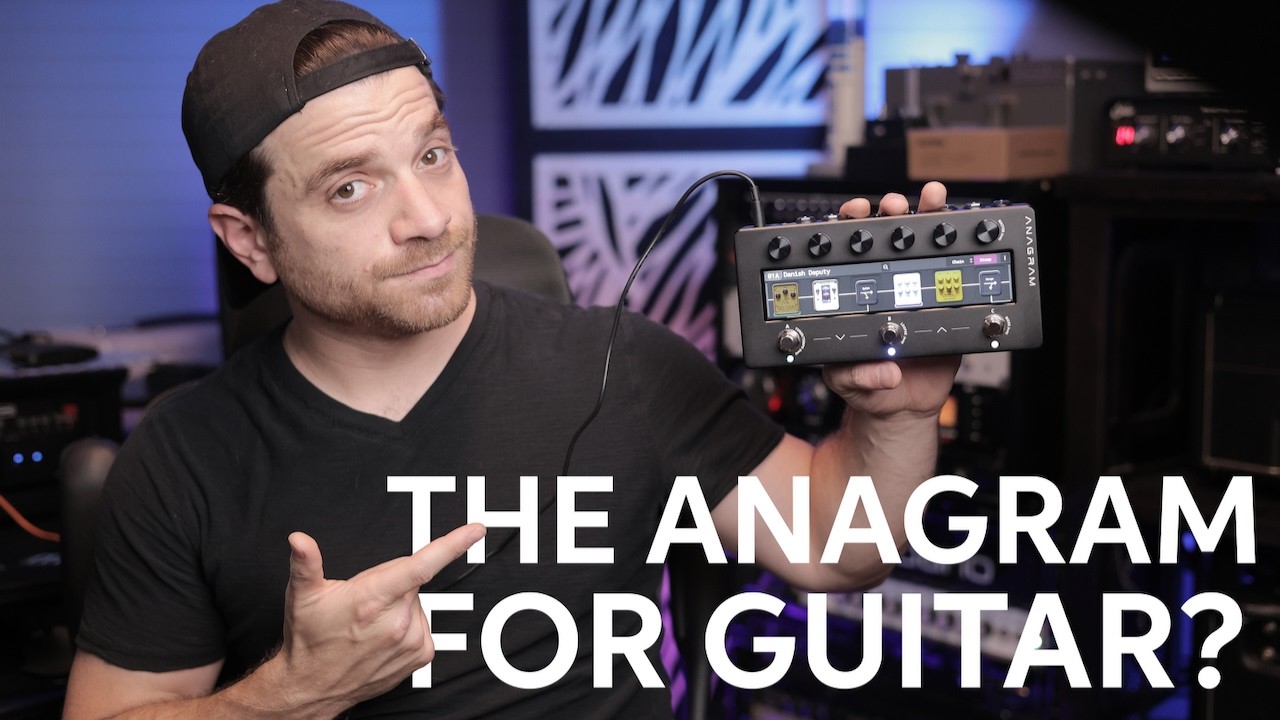
Guitar World Verdict
Having already made waves as a bass product, the Anagram is now fully capable of taking it to the established leaders in the guitar modeling and multi-effects world with Guitar Essentials. Relatively speaking, it is not the widest selection of sounds, but it does more than enough and does almost all of it brilliantly. It covers, as the name suggests, the essentials, and for many, that is all they will need.
Reasons to buy
- +
Fantastic amp models and effects.
- +
Compact.
- +
Handy Bindings view for parameter control.
- +
NAM A2 capture compatible.
Reasons to avoid
- -
Not as extensive as some other guitar first modelers.
- -
Icon labelling can be a little hard to read at times.
- -
Would prefer a more robust power supply.
You can trust Guitar World Our expert reviewers spend hours testing and comparing guitar products so you can choose the best for you. Find out more about how we test.
What is it?
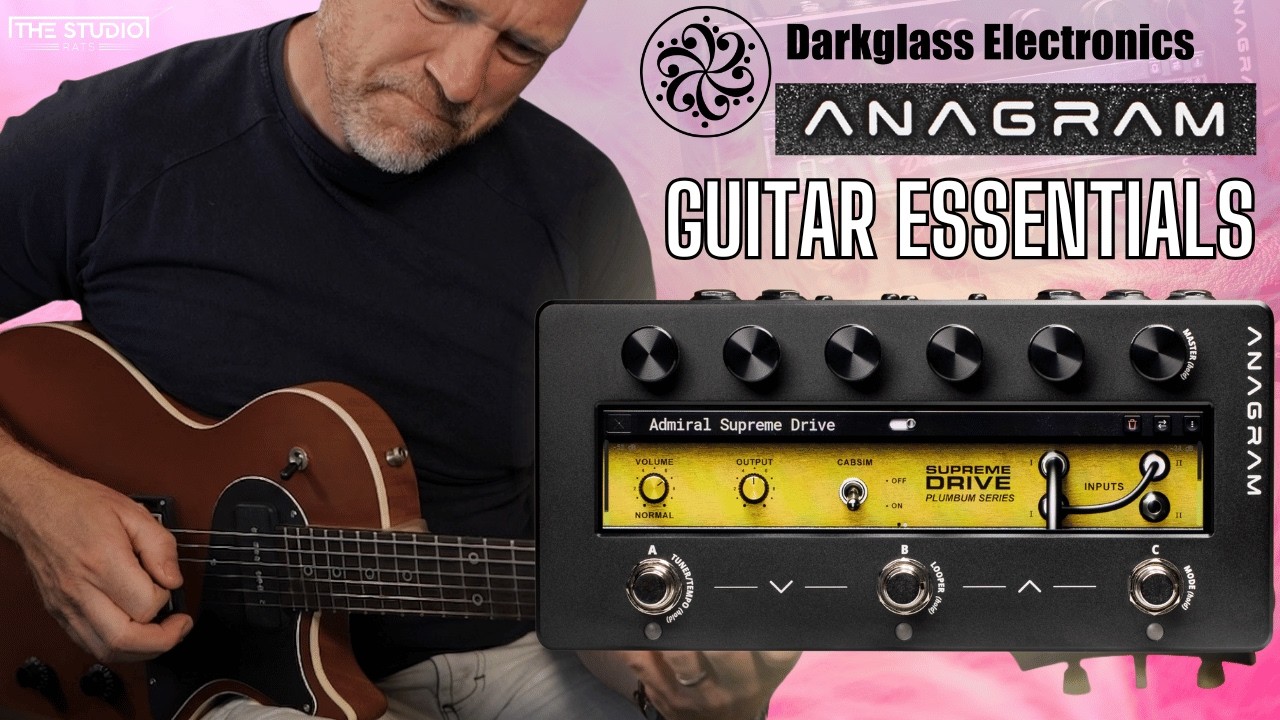
Surely we already have enough options when it comes to guitar amp modeling? Well, now we have one more in the form of the Darkglass Anagram and its Guitar Essentials package and limited edition hardware. The thing is, this isn’t just any addition to what is a fiercely competitive market, as there are some twists to this launch that make it an interesting proposition.
First, Darkglass is already a household name when it comes to bass processing and has proven pedigree in tone. Second, one of the founders of Darkglass was none other than Douglas Castro, who has since moved on to work on another project - Neural DSP. You may have heard of the brand and its market-leading guitar amp modeler, capture device, and multi-effects - the Quad Cortex.
Then, (and some will see this as the biggest news) there's the inclusion of NAM A2 capture tech courtesy of Tone 3000. This is an open-source form of capture software that is completely free to use, and has been making waves as a genuinely impressive bit of software, regardless of its free nature.

Lastly, the Anagram Guitar Essentials has been put together in collaboration with seasoned guitar retailers Sweetwater and Andertons and is available exclusively through their stores. So, with plenty of knowledgeable brains behind this launch, expectations are, quite rightly, high.
But, before we dive in, let’s clear up exactly what we have here. The Anagram was originally aimed at bass players as a multi-effects and amp modeler that can run as part of a pedalboard or as an entire rig in its own right.
This Guitar Essentials Limited Edition version is exactly the same device, and comes with all that bass goodness. The differences are in the black finish and the inclusion of the Guitar Essentials package, which is a selection of amplifiers and effects essential to every guitarist.
Once the limited run of the hardware (which costs $100 more to cover the pre-loaded Guitar Essentials package) is sold, the Guitar Essentials will be available for every user of the original Anagram to buy and add to their device.
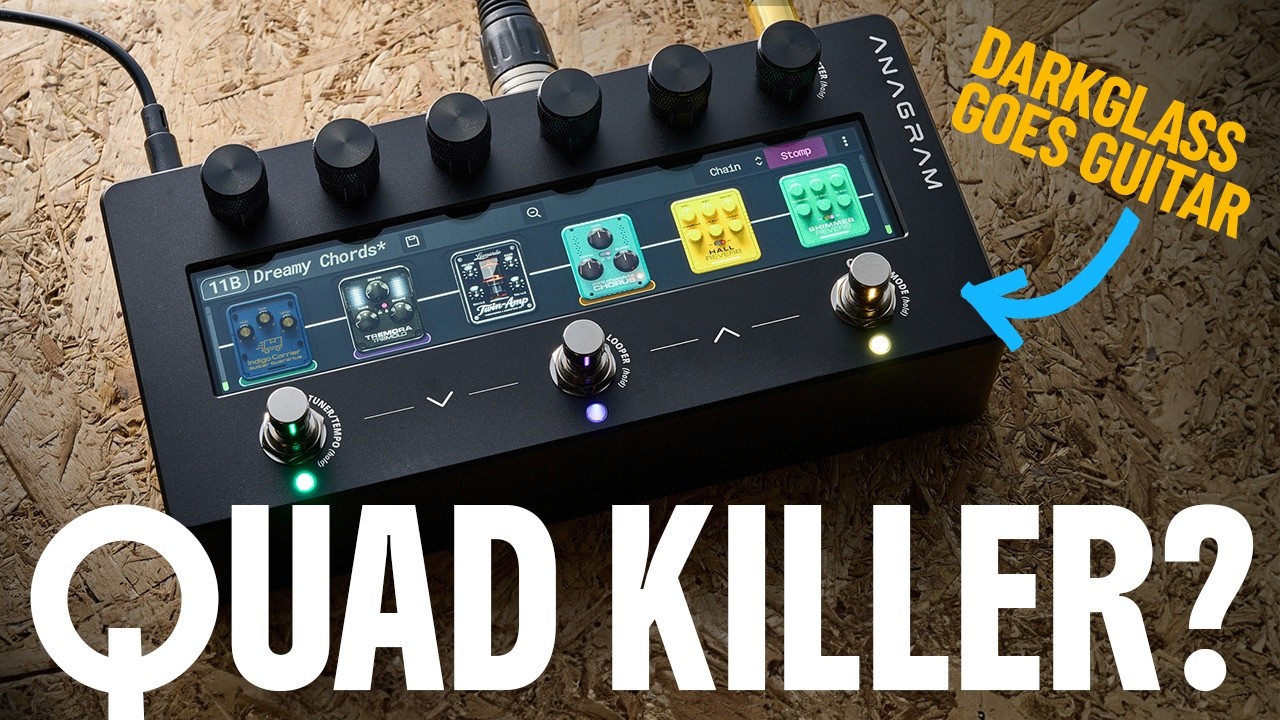
Specs

- Launch price: $1,299/£999
- Type: Bass amp modeler/multi-fx
- Controls: 6x rotary controls (assignable), 3x footswitches, 7-inch touch color screen
- Features: Amp modeler and multi effects, NAM captures, Darkglass Marketplace
- Connectivity: Input, outputs 1&2 (XLR), outputs 3&4 (1/4-inch jack), FX loop headphones (mini-jack) MIDI in/out (mini-jack), USB C
- Power: 9-12v DC, 2A
- Dimensions: 210mm x 105mm x 62mm/8.2" x 4.1" x 2.4"
- Weight: 815g/1.8lbs
- Contact: Darkglass
Build quality

Build quality rating: ★★★★½
In the hands, the Anagram’s premium feel is the first thing that jumps out. It’s an aluminum chassis in a classy black finish, a look which I prefer to the original.
That aluminum carries the robustness of a piece of gear that can easily live through the rough and tumble of constant gigs, and this is followed suit by the knobs that turn with a reassuring resistance and click without any unwanted horizontal movement.
The footswitches are also clearly built with a gigging life in mind, and I have no concerns about the lights getting drowned out on bright stages. The same can be said for the screen, which shows off its high resolution with some pretty impressive renderings of its imagery.

The I/O at the back of the unit is also free of any looseness that may indicate a poor build, but this is what you would expect at the price point, and from a company with the pedigree that Darkglass has.
The soft-shell-style case continues the premium feel and houses the hardware neatly. It's not the sort of case you would chuck in with the rest of a band's gear on its own, but it is about as sturdy as lightweight soft cases can be.
Additionally, competitors such as the Neural DSP Quad Cortex Mini do not come with a case at all, so this is an easy score for Darkglass.
The only minor complaint I have is that the mains adapter feels a little flimsy for a bit of gear that could potentially replace an entire rig. This is exacerbated by a 2A power draw, which, although not problematic on its own, will necessitate the use of the provided mains adapter as most pedalboard power supplies won't accommodate this demand even when combining outputs.
Usability and features
Usability and features rating: ★★★★½

A small but intuitive suite of physical controls
Ease of use is make-or-break for these units. With so many different functions to get the head around and parameters to adjust across the vast number of blocks, avoiding a steep learning curve is no mean feat.
As we noted in our previous review of the Anagram, the unit does well here thanks to a small but intuitive suite of physical controls (six encoders and three footswitches) and a useful touchscreen. The Guitar Essentials version of the Anagram is exactly the same setup, with the only difference being the inclusion of those guitar sounds.
So, in terms of usability, there is no change from the mostly positive points in that previous review; however, it is still worth reiterating the highlights.
It’s the familiar three modes of Presets, Stomps and Scenes through which the footswitches change the entire rig, turn individual effects on and off, or seamlessly switch active blocks and parameters within one scene respectively.

You can also edit the way you view the rig by selecting Chain, Bindings, or Name. The first shows your entire 24-block chain, which can be zoomed into a more palatable and scrollable five at a time.
Bindings view is the highlight for me. It allows us to view exactly what we have set each footswitch to in text form, whilst additionally assigning whatever we want to the six encoders, whether that is activating/de-activating a block or changing individual parameters within a block.
These assignments can be stacked too, and you can set limits on the minimum and maximum amount of adjustment made to save some blushes caused by hasty editing at a gig. Pretty handy.
Name clearly displays the preset in big, easily-readable text as well as the footswitch assignments, making it the view that will be most useful in a gigging circumstance.
The touchscreen is intuitive and makes things easy when it comes to the functional stuff like saving presets, routing, adding blocks, and dragging effects around. The only tripping point is that when I'm scrolling through the icons that represent the effects, it's sometimes reliant on the text within the imagery to discern what the effect is. This text is quite small and is not always easy to read.

There's also a pretty comprehensive I/O featuring stereo ¼” and XLR outputs (separate L and R), MIDI connectivity, Bluetooth audio connectivity, a ⅛” Headphone output, and a TRS stereo effects loop.
Herein lies a limitation, as the Anagram does sport an expression input; however, this takes up the return of the effects loop. This is mitigated by the option to instead use a MIDI controller if you need to use that effects loop for some external stomp boxes, but I’d still much rather see a dedicated expression pedal input given the number of guitarists who own expression pedals.
Back to the positive, and what is particularly exciting about the Anagram isn't just its stellar sounds (more about that soon) but the way in which it can be expanded through NAM and Darkglass Marketplace.

NAM stands for Neural Amp Modeling, which should be noted as a totally separate thing from the closely named Neural DSP. NAM is instead an open-source, capture-based tech that is completely free.
The captures can be browsed and downloaded via Tone 3000’s website, and doing so is straightforward, but does require the Darkglass Suite software and a USB-C connection to link your Anagram to a laptop in order to import the files.
Marketplace is similar and is where third parties can share blocks they have created for the Anagram, some paid, some free. It’s important to note that all core firmware updates and standard blocks developed for the Anagram by Darkglass will remain free.
While it has Bluetooth, there is no mobile app as of yet, and at the time of writing, I'm unaware of any plans to include one. So, at least for the moment, making use of Marketplace and NAM will necessitate a laptop, which feels a little old school at this point, with devices such as the Line 6 Helix Stadium not only sporting Bluetooth apps, but also WIFI to allow similar functions to take place natively within the hardware.
Finally, and helpfully for those of us like myself who are lost on anything with less than six strings, there's the option to hide the bass-aimed blocks from the menus (this is the default on the limited edition model), saving on brain space and scrolling time by displaying only the guitar-relevant stuff.
Sounds

Sounds rating: ★★★★½
Making some noise is where things get really exciting. I’m going to preface it all by saying that the range of guitar sounds here is not as expansive when compared to guitar-first modelers like the Helix Stadium and Quad Cortex.
The clue is in the name. It really is the essentials, so if you are looking for an all-encompassing range of wacky guitar sounds, you will not find that here. At least not yet.
What you do have at launch is a range of 12 models of classic amps, going from classy Fender Cleans to all-out 5150-style distortion. In addition to the NAM models, too, of which there are thousands.
Then there are seven drives, three delays, five reverbs, 10 modulations, and 13 more effects under the EQ, Filters and Dynamics category. Again, all choices that fit the “essentials” moniker. I’ll reiterate that this is not as many as on other modelers, but it’s still more than enough for most.

The amp models are almost universally brilliant. I particularly like the Leonardo Twin, which gives an accurate feeling, mid-scooped Fender Twin Reverb clean, and the Admiral JJM800 with its biting, mid-forward hi-gain Marshall JCM800 thing. The only one I’m not as much of a fan of is the 5150-inspired Phoebe SISO, which, while it is still a good high-gain sound, on its own it lacks the tight low end of the real thing.
I find the amps in general to be impressively touch-sensitive, cleaning up on the volume control and reacting to my picking dynamics in a way that makes them feel truly alive.

As I do with a lot of modelers, I feel the need to add a low-pass filter to help with some high-end that comes across just a little digital on some of the amps. Depending on the amp model, I find around 7K works well, eradicating the 'digitalness' and leaving me with truly inspiring guitar sounds that undeniably put the Anagram in the same league as the market-leading modelers.
The drives are impressive too, with models such as the aforementioned Valve Crier 808 adding the rewarding mid-humped sound associated with the famous Tube Screamer, if slightly lacking in that weighty compressed feel, and the Kentauri Firenze happily fulfilling the role of Klon clone.
A particular highlight is the Green Pie Rate Fuzz, which is a hugely rewarding, thick, mid-scooped Big Muff sound, which includes the option to remove the tone circuit to add in some of that mid frequency, as per the common mod on the real Big Muff pedal.

There is no direct Fuzz Face model, which I find to be a bit of an omission given it's an essentials package. But included is the Duality fuzz, which is a fantastic, meaty-sounding fuzz pedal, with a useful Filter control to adjust its spitti-ness.
There are 10 modulation models - Chorus, Flanger, Whammy, Phaser, Tremolo, Pitch Shifter, Vibrato and then three Octavers (tell me you were originally a bass pedal without telling me you were originally a bass pedal).
I start by kicking on the Flanger, and find it easy to imitate that sound from the intro of Stereophonics’ Dakota. The other modulations follow suit in their rewarding and easy-to-use nature, with the only exception being the Pitch Shifter, which manages to impressively mitigate the odd artifacts these types of effects often add when moving things too far one way or another, but it loses a bit of high end at even small shifts.
We all like a bit of space around our sounds, but we are a little limited when it comes to delays here, with only three to choose from. These are named Analog, Digital, and Mod and expertly do as you would expect.
I am a sucker for an analog delay and the way the repeats darken as they go, keeping themselves out of the way of the mix. The Anagram nails this with buckets (pun absolutely intended) of analog tone and degredation.
The five reverbs are of similarly high quality, featuring Room, Plate, Hall, Shimmer and Spring. I particularly like the authentic drop of the Spring, but the Shimmer feels a little bit separate from the dry signal, resulting in a sound that comes across as unnatural. Useful for some things, but not to my taste.
Also included in the EQ’s, Filters and Dynamics section is a collection of envelope filters, compressors, limiters, EQ’s and autowahs.
The Luminal FET compressor is fantastic for funky compressed cleans, and the amusingly named 'Mo**erf***er' provides a Moog Moogerfooger-style envelope filter for those times when we want things to get a little outlandish.
Everyone likes a bit of space around their sounds, but it's a little limited when it comes to delays here
Verdict

As I referred to earlier, compared to other guitar multi-effects, the Guitar Essentials package does not have a vast amount of options. But this is relative talk. It certainly has enough to cover all the essential sonic bases (and indeed, basses) a guitarist might need.
With the Anagram already established in the bass world, we six-stringers are getting the benefit of a pre-developed platform that has been up and running since April 2025. And it’s worth remembering that if you happen to play bass too (let’s face it, the world is already saturated with guitarists), this limited edition Guitar Essentials version contains all the same bass tones and effects that the already-available Anagram does.
The Anagram Guitar Essentials gives Fractal, Neural, and Line 6 some real competition
When it comes to pro-level compact, pedalboard-friendly guitar modelers and multi-effects, Fractal, Neural, and Line 6 have some real competition here. For a lot of people, the Anagram’s stellar sounds, NAM compatibility, and ease of use will make it the best choice.
Guitar World verdict: Having already made waves as a bass product, the Anagram is now fully capable of taking it to the established leaders in the guitar modeling and multi-effects world with Guitar Essentials. Relatively speaking, it is not the widest selection of sounds, but what it does do is almost universally brilliant. It covers, as the name suggests, the essentials, and for many, that is all they will need.
Test |
Results |
Score |
|---|---|---|
Build quality |
A solid aluminum chassis and high quality components that will last. |
★★★★½ |
Usability and features |
Mostly well-thought-out and intuitive to use, with only a few issues such as small text on the icons. |
★★★★½ |
Sounds |
A great array of the essential guitar tones, as the name would suggest |
★★★★½ |
Overall |
A modeling unit that offers real compeition to the market leaders. |
★★★★½ |
Also try
Hands-on videos
The Studio Rats
Guitar World
Steve Sterlacci