


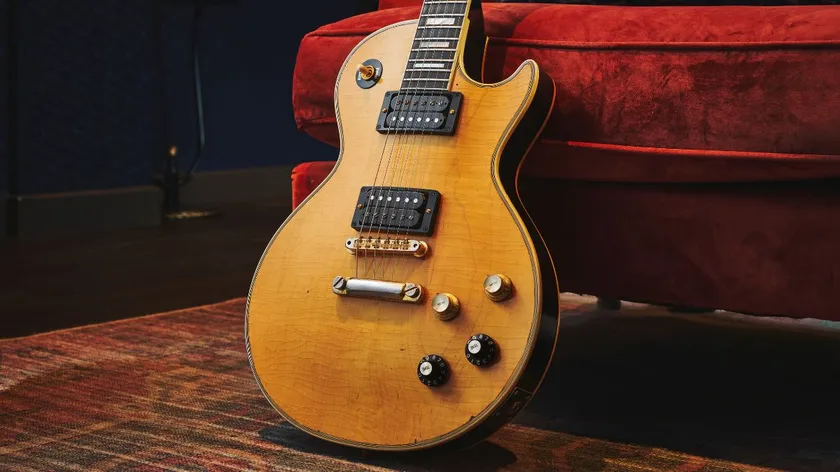


Even if he had achieved nothing else as an amp builder, Lyndon Laney’s legend status was cast in stone on 13 February 1970.
That was the day that Black Sabbath released their self-titled debut album, driven by a tone so heavy, crushing and malevolent that it seemed to capture the doomy clank of Birmingham’s sheet-metal factories (an industry that had already cost Sabbath guitarist Tony Iommi two of his fingertips).
Of course, that call-to-arms for heavy metal couldn’t have happened without Iommi’s vision and riffs. Equally, there’s a case it wouldn’t have landed so hard without the guitarist’s custom Laney LA 100 BL: among the first of many fabled amplifiers created by the Midlands-based company following its formation in 1967.
“You used to be in there night and day, dedicated to it,” reflected Iommi in a recent head-to-head interview with his great friend Laney, who died in April at the age of 77. “I’m not going to use anything else and, without you, we wouldn’t be here.”
In fact, Laney achieved plenty more, both before and after his association with Sabbath. Born in 1948, by the mid-’60s he was playing bass with The Band of Joy – familiar to Led Zeppelin scholars as the proving ground for vocalist Robert Plant and drummer John Bonham.
But it was the art of valve-amp tone that held the greatest fascination, and so Laney began working on early designs in his father’s garage, fine-tuning the punch and character of his circuitry to stand out in a market already dominated by Vox, Marshall and Fender.
What seemed like a huge gamble – “Two days before I was due to go to university to study electronic engineering,” Laney recalled, “I decided to carry on for a couple of years making amplifiers, see how it went” – soon paid off. One of the young engineer’s first commissions was building the PA for Zeppelin’s first US tour of 1968, while word-of-mouth saw his powerful, affordable amps proliferate on home turf.
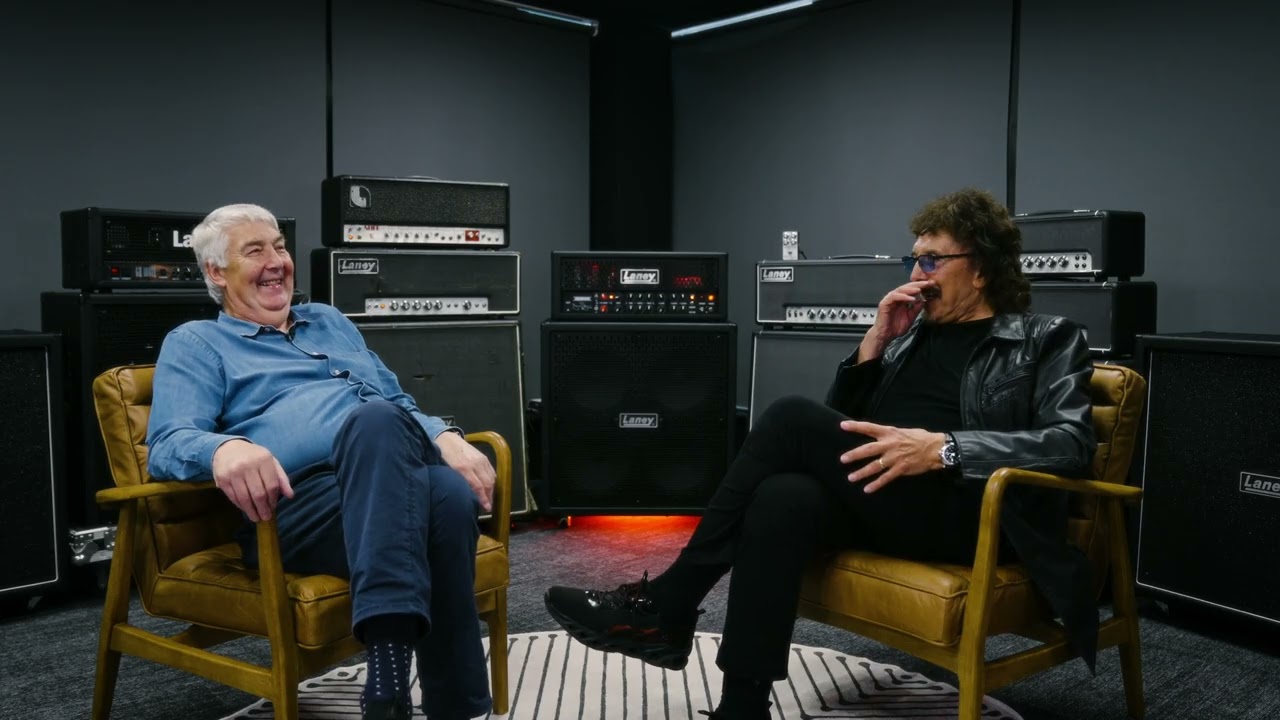
The quality of Laney’s tone was such that it even drew Iommi away from his original Marshall backline, the Sabbath man settling on six 4x12 cabinets fed by four 100-watt heads. Perhaps there was also an element of Black Country solidarity.
“I switched to Laney because they started up around the same time as us and they’re a Birmingham company,” the guitarist told MusicRadar. “To be honest, they offered to give us all this gear when nobody else did. What do you say to that? ‘Okay!’ So I used them.”
It was typical of a canny operator who went on to prove both his innovative spirit and head for business. With Laney’s finger on the pulse, 1973’s KLIPP amp range was the first of its kind to feature a boost channel, while the early ’80s saw the firm develop the AOR series whose extra stage of pre-gain was a favourite among the Sunset Strip set.
In the ’90s, the British builder scored again with the VC range of retro-styled Class A valve combos, while developing hybrid amplification with the Tube Fusion series. By that decade’s end, Laney counted Joe Satriani, Nuno Bettencourt, Frank Gambale and more among its A-list endorsers (today the roster includes Billy Corgan, Vernon Reid and Guthrie Govan).

Post-millennium, Laney added the Class D bass amps to its remit, later joined by further guitar-sector successes including the Lionheart, Ironheart and A acoustic ranges. Moving with the times, 2015’s T-USB-equipped L5-Studio interfaced directly with DAW, before the Bluetooth-compatible MINI series shrank signature Laney tones into an ultra-compact, desktop-ready, battery-powered chassis.
None of these career milestones, it seemed, went to Laney’s head, with the founder remaining a warm, hands-on presence on the MI scene
Most recently, the brand diversified again with its Black Country Customs pedal range, while the Laney Sound System series tapped into the lucrative Bluetooth speaker market, snapped up by many non-musicians for partying, not playing.
None of these career milestones, it seemed, went to Laney’s head, with the founder remaining a warm, hands-on presence on the MI scene while passing more responsibilities to his talented son, James (who took control of the company several years ago).
His loss is profound but his legacy undeniable – and while Iommi declared himself “devastated” in a farewell post, during their shared interview, Laney had nothing but happy memories of his life less ordinary: “We’ve had some fun along the way…”
- This article first appeared in Guitarist. Subscribe and save.

