


Unless you’ve been hiding under a rock for the last 10 years or so, the rise in popularity of amp modelers is impossible to deny. Technology has advanced so much that it’s nearly impossible to distinguish a modeler from the thing it’s emulating. Now, modelers haven’t completely wiped out the need or desire for good old-fashioned tube amps, but it’s fair to say that in the current guitar-gear climate, modelers are giving them a run for their money.
After all, why wouldn’t they? The likes of Quad Cortex, Line 6 Helix Stadium, Kemper Profiler, and more are replicating tube-amp sound more closely than ever, and professional musicians are using them on the biggest stages in the world. They can also offer better consistency and easier transportation than tube amps, too. So, why am I here to sing the praises of valves?
As a gear reviewer, I’m lucky enough to have played loads of amps. As such, I’ve rigorously tested many different modelers and used a ton of tube amps across various scenarios. And, before we go too far, I own and use both tube amps and modelers myself. So I think I'm in a unique position to give my thoughts on the matter.
Below you'll find my reasons for choosing a tube amp over a digital modeler. Let's dive in.
1. Dynamics and feel

For some genres, this doesn’t matter too much, but if you rely on a deep level of touch sensitivity, then modelers can only get you so far. I’ve tried all the main players, and they’re incredible. When set right, they’re dynamic and super responsive, but for a lot of players, there’s something about the pure honesty of a tube amp that can’t be topped.
If you’re someone who relies on the interplay between your guitar’s volume knob and the thing that’s actually making the noise, then a tube amp is the way to go. There’s a more physical relationship between the pickups of your guitar and the components of a tube amp.
Things heat up, air moves, and wood vibrates. With a modeler, your tone is essentially represented by zeroes and ones. You’ll likely notice the improved dynamics of a tube amp when turned up. The old claim that tube amps come alive the more you increase the volume is somewhat true.
Depending on the guitar amp, there will be a point on the volume knob where you start to get more natural compression, and things start to feel a little different; it reacts instantly to your playing.
Some amps will ‘sag’ a little as you turn them up too; this is when you hit a chord or a note, and there’s a very quick dip in volume, shortly followed by the sound then blooming back up. Whilst it isn’t inherently a good thing, many players find it softens their sound and makes an amp more enjoyable to play through.
Now again, good modelers do get really close to this compression and sag, but it just isn’t quite the same.
2. Sound

Generally, I’d argue that in most instances, the sounds you can get from the modern, high-end modelers do stand up to those you get from a tube amp. Clean tones and distorted and high-gain tones are incredible, and I would happily use a modeler in any studio or live session if I’m after these sounds.
However, that middle ground, hovering somewhere in between clean and crunchy, is still won by tube amps. There’s a lot going on harmonically around the edge of breakup, and with a tube amp, the gradual shift from clean into dirty is more fluid.
There are lots of modelers that do this sound well, but if I’m using my guitar’s volume knob, turning up from clean to gradually more overdriven, that transition just sounds a little more stepped when utilizing digital technology.
It relates to my point above about feel and dynamics, too. Around that hallowed edge-of-breakup zone, you want every nuance of your picking hand – whether that be big or small – to come through your amp, which I would argue is a lot more prevalent with a tube amp.
There’s also a level of interaction happening within a tube amp setup that you don’t get with modelers. The amp pushes the speaker, which in turn affects how the cabinet resonates.
Impulse responses in modelers do capture a lot of this, and the choice of different IRs you can get now is staggering, but they’re only really a snapshot of a certain point in time. A real amp moves air; wood resonates, and that changes slightly with every chord stroke, so it’s constantly reacting to your playing.
3. Power

Now, I’m saying power here as opposed to volume because standing in front of a tube amp blasting one or more 4x12s is a powerful feeling – something that any rock or metal guitarist should try at some point in their life.
You can, of course, run a modeler through cabs or a PA system to reach whatever volume you want, but a tube amp feels more alive. You feel like you’re more in control of what that power does – again, it largely boils down to having a greater dynamic range.
Many players opt for a modeler in a live scenario because they’ve incorporated in-ear monitors into their rig and they want portability and consistency. On paper, a modeler is the perfect choice in this scenario, but I’d argue that you’ll probably have more fun flapping the legs of your 501s by pushing some serious air out of a battered old cab (boomer take over).
4. Less choice

This might sound counterintuitive, but bear with me here. Most modelers have tons of presets alongside options for amps, cabs, effects, virtual mics, and more. As a result, you’ll spend just as much time, if not more, browsing and tweaking digital menus than playing your instrument.
Even a tube amp with a number of different channels will have fewer options than most modelers, and you’ll still be able to get an incredibly wide range of tone. Does anyone really need hundreds of different amp emulations in one unit? After all, every guitarist managed before modelers with an amp or two and a selection of pedals.
You also have to commit to an amp and a sound, which, in turn, can help you become more inventive in your playing to achieve the results you desire. With a modeler, you’ve got the convenience of trying out another style of amp or effect. This is great for some players, but for others, the endless options can be overwhelming and can ultimately kill their creativity.
5. Aesthetic

One of the main modelers is known as a toaster – that’s not a great starting point. They’re pretty inherently uncool in terms of pure aesthetic. There are a great many benefits to using a modeler, but how they look on a stage is not one of them.
Orange amps are orange and emblazoned with a big ‘ORANGE’ logo. It’s a statement; granted, it’s not for everyone, but it’s bold, and it’s instantly recognizable. They look just as good on a stage today as they ever did. Also, is there anything more iconic and closely related to guitar music than a Marshall stack standing proudly on stage?
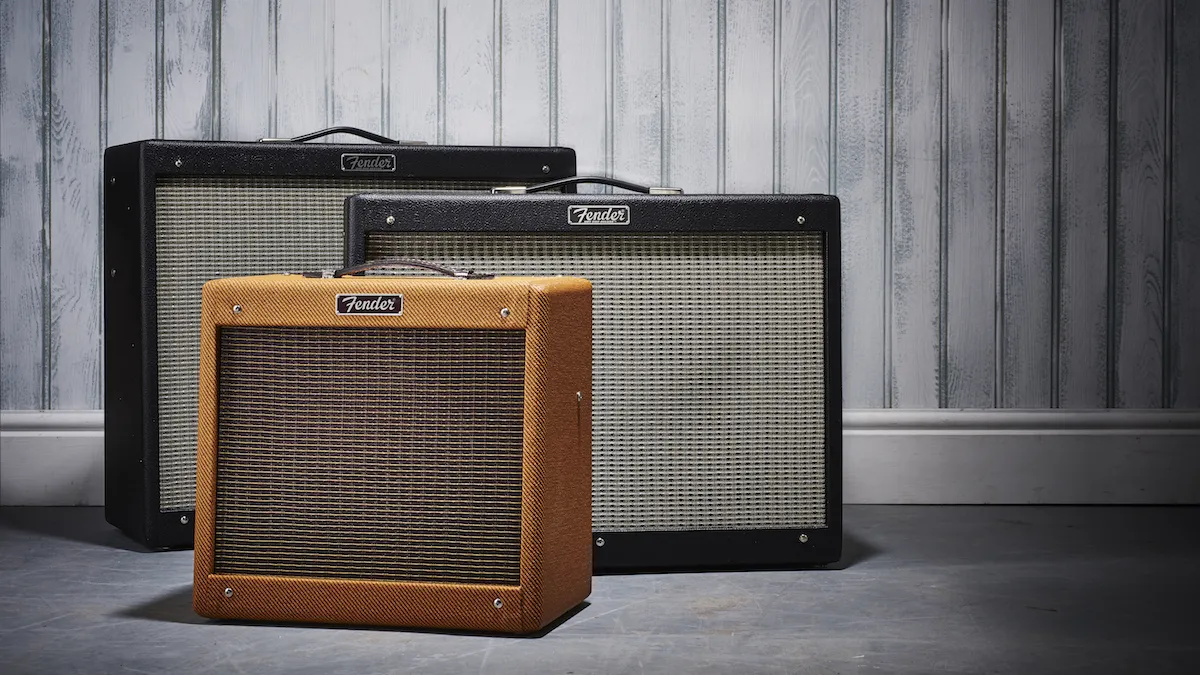
Even a small but mighty Fender tube amp can wear many suits – tweed, black panel, silver panel, etc. See one of these in the backline, and you know the players mean business.
We know that the look of an amp shouldn’t be the be-all and end-all, but in many instances, many people listen with their ears first.
What about you? Are you team tubes or team modeler? Vote below!

