




Whether you’re looking for your entry into the world of six-strings or simply after a reliable instrument that doesn’t break the bank, the best cheap acoustic guitars cover a range of bases and cater to everyone. There’s no denying that costs have gone up everywhere, including in the world of musical instruments, but in some sort of role reversal, it’s actually never been easier to get hold of a good, cheap acoustic.
Generally, we’re talking about instruments between $/£150-500. Anything under that runs the risk of being more of a toy than a real instrument, and spending more than $/£500 defeats the point of a cheap guitar. The best cheap acoustic guitars come in all shapes and sizes, too. From compact 3/4 models for kids to concert guitars perfect for smaller players, and big, bold dreadnoughts, there’s something here for everyone.
Now, if you want my number one choice right off the bat, then I've given the top spot to the Yamaha Storia III. This model, thanks to its excellent build quality, ease of play, and staggeringly good price make it a seriously good guitar no matter your skill level. New to acoustic guitars? Well, at the bottom of this page, you’ll find some handy buying advice, some FAQs, and even a glossary of terms to help you better understand the jargon surrounding these instruments.

Before writing full-time for Guitar World, I was a music retail manager, and I’ve helped pair countless players with their dream guitar, no matter their budget. For me, it’s not just about a guitar being affordable, it needs to also deliver on playability, sound, and build – and I believe every guitar on this list meets this criteria.
How I tested: Each guitar was thoroughly tested by either me or another member of the Guitar World team, paying careful attention to everything from build quality and tone to playing action, finishing, and lastly, value. Read more on how we tested the products for this guide.
Best overall

✅ Buy if you want an excellent, no-fuss acoustic: With its excellent build quality, price, and comfort, the Yamaha Storia III is hard to beat. Simply an excellent guitar.
❌ Avoid if you want a larger guitar: If you are looking for the full-bodied tone of a dreadnought, you may want to consider the F310.
What is it? If you’re bored with run-of-the-mill cheap acoustics, the Yamaha Storia III might be right up your alley. Part of Yamaha’s Storia series, which is all about blending eye-catching design with everyday playability, the Storia III is a guitar that genuinely sounds and plays as good as it looks.
With its chocolate brown top and glossy finish, the Storia III is basically the stylish, artsy friend in Yamaha’s acoustic lineup. But don’t let its good looks fool you, this guitar is definitely built to be played, whether you’re a fresh beginner or a seasoned strummer looking for something with a bit more flair.
Build: Yamaha didn’t cut corners on materials. The Storia III sports a solid mahogany top, backed up by mahogany sides and back for a rich, warm sound that’s hard to get from cheaper laminates. The walnut fingerboard and bridge feel smooth and look great, while the nato neck keeps things comfortable and durable. Hardware-wise, you’ve got reliable die-cast tuners and brass bridge pins, which help keep things in tune and running smoothly.
Performance: From the first strum, the Storia III feels different, in a good way. Its lightweight, concert-sized body makes it super comfortable to hold and play for hours, with enough projection to fill a room without too much low-end. The neck is comfy and easy to navigate, and the sound is balanced, warm, and full. Plugged in, the under-saddle pickup gets the job done, though we’d prefer onboard controls. All in all, the Storia III nails the sweet spot between great looks, reliable build, and genuinely enjoyable playability.

"The Yamaha Storia III looks and feels different to your standard beginner models. But its lightweight build and distinctive looks come together to offer a well-thought-out, hugely rewarding package to play."
Read our full Yamaha Storia III review
Best for beginners

✅ Buy if you're just setting out on your acoustic journey: The CD-60 is a fantastic place to start if you're just getting to grips with acoustics - and it's a great price.
❌ Avoid if you're a more experienced player: The CD-60 is a neat option, but guitar veterans will be better suited with something more upmarket.
What is it? Looking for your first real acoustic guitar? Well, this is our top choice for the best acoustic guitar for beginners. The Fender CD-60S is a classic dreadnought from one of the biggest names in the business, and it’s designed to give newbies a solid start. With a price tag well under $200, this guitar offers way more than you’d expect, especially from a brand like Fender. If you’re an adult or an older kid ready for a full-sized instrument, the CD-60S is a fantastic, confidence-building choice.
Build: The CD-60S stands out for its sturdy build and attention to detail, something that unfortunately you don’t always find at this price point. Its solid top construction gives it a premium feel and helps produce a full, rounded sound. The tuners are smooth and reliable, which is a huge win for beginners who don’t want to spend all day tuning.
Performance: Playability is where the CD-60S really shines. The neck profile is slim and inviting, perfect for new players who want something comfortable to navigate. Chords ring out full and wide, supported by a warm, mellow tone and a vibrant top-end that adds a bit of sparkle. It’s got plenty of volume and a confident midrange punch, making it sound more expensive than it is.


"The CD-60S is one very playable dreadnought with a wide, well-balanced tone that belies its modest price. Ideal for beginners – fun for all."
Read our full Fender CD-60S review
Best 3/4

✅ Buy if you're after a nice acoustic for younger players: The Earth GO's size makes it a top choice for younger players, and the added features mean it will inspire them to play.
❌ Avoid if you're looking for something bigger: This is a tiny guitar, so we’d recommend a larger model if you’re an adult not looking for a travel guitar.
What is it? The Cort Earth GO is not your average travel guitar. At first glance, it’s a compact 3/4-size dreadnought, perfect for tossing in the back seat or taking to open mic nights. But look a little closer, and you’ll find a wild set of built-in features. This thing is packed with eight different onboard effects, including reverb, delay, and chorus, a looper, Bluetooth audio streaming, and even a tuner, all powered by the impressive HyVibe H2 system. If you’ve ever wished your acoustic could double as a jam partner, effects processor, and portable speaker, this is about as close as it gets, especially at its price.
Build: Cort’s reputation for reliable, no-nonsense construction holds up here. The Earth GO sports a solid Sitka spruce top for great resonance, with laminate mahogany back and sides for durability and a touch of warmth. The open-pore brown burst finish is inviting, and the overall build feels tidy and well-executed. The neck is a comfy C-shape, and the laurel fingerboard is smooth, though the scarf joint’s contrasting shades might not be everyone’s style. The only downside we experienced is that out of the box, the action was on the high side. Swapping to lighter strings or getting a tech to adjust the saddle helps, but it’s worth noting.
Performance: Here’s where the Earth GO really stands out. The built-in effects and looper open up a ton of creative possibilities, whether you’re practicing, busking, or playing along with backing tracks via Bluetooth. Some effects sound better than others, but the sheer range is impressive for a guitar at this price. For us, this is a fun, inspiring instrument, regardless of the low price tag.

"The Cort Earth GO is a little guitar packing a surprisingly expansive set of features with effects, looper, audio streaming, and a tuner. Some of the effects are more effective and musically inspiring than others, but the combination of Cort value and HyVibe H2 technology is undeniable here."
Read our full Cort Earth Go Mini review
Best for playability

✅ Buy if you want to add a splash of color to your playing: Yes, the Monterey is a solid performer, but I particularly like the Surf Green option that’s available.
❌ Avoid if you're looking for a more traditional design: The funky headstock design won't be for everyone, so perhaps something a little more traditional will suit you better.
What is it? The Fender California Standard Monterey E is a beginner-friendly acoustic-electric that stands out in a crowded field thanks to its unique style, as it’s included in this guide, and wallet-friendly price. With its mid-sized orchestra/auditorium body, this guitar is made for comfort. It’s perfect for strumming on the sofa, jamming with friends, or jumping into your first open mic night. The iconic Fender headstock might turn a few heads, and even spark a debate or two, but there’s no denying it gives this model a distinctive vibe. If you’re after great playability, a bit of Fender flair, and reliable basics, the Monterey E deserves a spot on your shortlist.
Build: We’d say Fender has kept things practical but interesting here. The Monterey E features a laminated sapele top, back, and sides, a slim ‘C’ profile okoume neck, and a walnut fingerboard that’s smooth under your fingers. The Modern Viking bridge, die-cast sealed tuners, and Micarta nut add to the reliable hardware lineup. While there are a few minor cosmetic flaws if you look closely at our review model, the guitar’s overall build quality is impressive for the price. The headstock design is divisive, but undeniably Fender, and the built-in preamp and tuner are handy for new players. It comes in Natural, Sunburst, or Surf Green, so you get a splash of style too.
Performance: Playability is where the Monterey E really wins points. The familiar Fender ‘C’ neck profile is comfy and easy to handle, making chords and picking feel natural, even for rookie players. The mid-sized body is comfortable to hold and suits both fingerstyle and strumming, with a nice midrange focus and decent balance. There’s not a ton of low-end, and the upper frets may buzz a bit on some models, but the sound holds up well for practice and casual performance. Plus, with the built-in preamp, you can plug in and be stage-ready anytime.

"For beginner guitar players, or those who want an affordable acoustic to play on the sofa, the Fender California Standard Monterey E delivers fantastic playability and rugged build quality. It’s not going to challenge pricier acoustics in the sound department, and some will still find that headstock a little weird to look at on an acoustic, but there’s a lot to love here – especially considering the cost."
Read our full Fender California Standard Monterey
Best classical
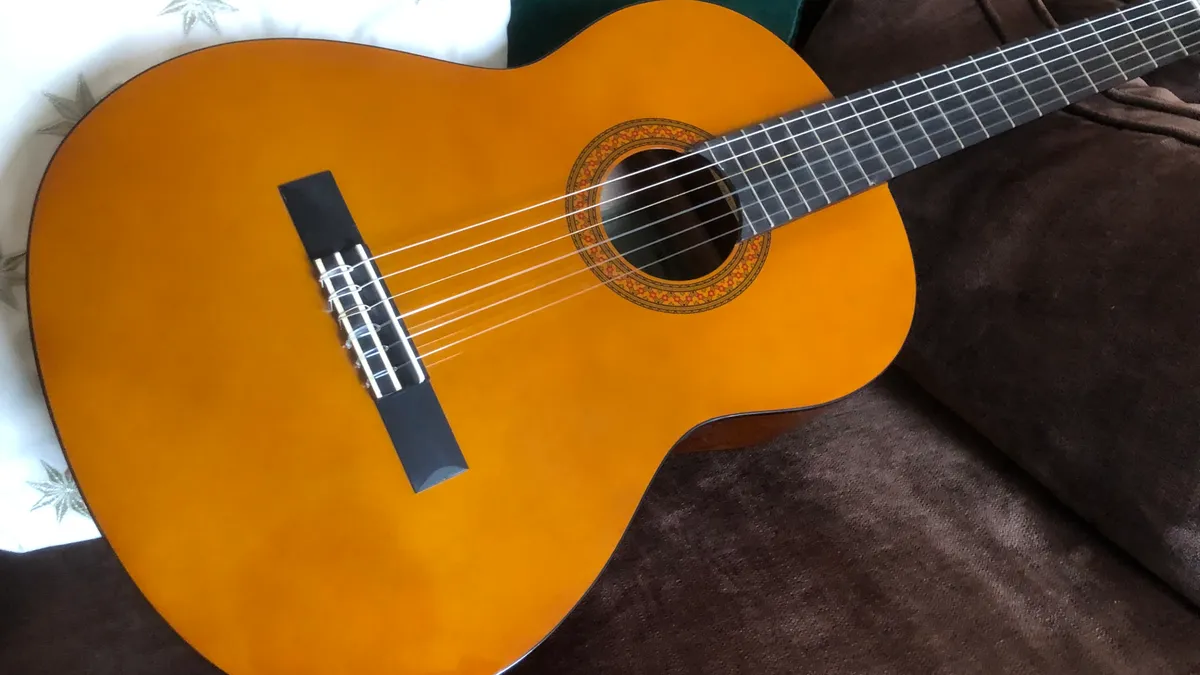
✅ Buy if you want an affordable classical guitar: Perfect for beginners or those on a lower budget, the Yamaha C40II is excellent value for money.
❌ Avoid if you're an advanced player: If you already have a few classical guitars, this is unlikely to add anything to your existing collection.
What is it? The Yamaha C40II is a full-size, classical guitar that’s become a go-to for beginners everywhere, and for good reason. For decades, teachers have recommended the C40 series to students because it’s reliable, consistent, and incredibly affordable. Whether you’re a kid just starting out, an adult looking to learn classical, or someone looking for a different tone to your standard six-string flatops, this guitar is for you. If you want to play flamenco, classical, or just want an easy first guitar, the C40II is a classic choice.
Build: Now, don’t expect fancy woods at this price. The C40II uses a laminated spruce top and “locally sourced tonewood” for the back and sides, most likely meranti. The fingerboard and bridge are rosewood. The body shape is that traditional, comfortable Yamaha CG profile, with a full 4/4 scale that feels substantial. The only real downsides are some unfinished fret ends and a lack of fret markers, but neither is a dealbreaker at this price.
Performance: Moving on to playability, the low action and soft nylon strings make it easy on the fingers, and the wide string spacing is perfect for fingerpicking. The sound is surprisingly resonant and warm, with a pleasant brightness from the spruce top. It’s not the loudest guitar, but the clear note separation helps new players hear their progress. All in all, the C40II is a forgiving, inspiring instrument for anyone starting their guitar journey.

"If you’re after a beginner classical guitar, there truly is no better option than the C40II. With its excellent setup, durability, affordability, and consistent tone, the C40II has been the starting point for many guitarists over the past 30 years and shows no signs of losing its appeal. While there are minor overlooked touches such as scratchy frets and slightly sharp fret ends, these issues are not unexpected at this price point."
Read our full Yamaha C40II review
Best electric-acoustic

✅ Buy if you're looking for an acoustic for open mic nights: The inclusion of a great preamp makes this ideal for playing in front of a crowd.
❌ Avoid if you're after more low-end: Yes, this guitar sounds great, but it doesn’thave the depth of dreadnought or jumbo.
What is it? The D’Angelico Premier Gramercy is an affordable, intermediate-level acoustic-electric guitar that combines striking looks with plenty of practical features. It’s designed for players who want a little more flair than your average cheap guitar. Thanks to its comfy Grand Auditorium body shape and a slick single cutaway, it’s equally at home for strummers, fingerpickers, and anyone looking to plug in for a gig. If you want a guitar that stands out both visually and sonically, you know, without diving deep into your savings, the Gramercy is a strong contender.
Build: For the price, the Premier Gramercy is impressively put together. You get a spruce top with sapele back and sides, a mahogany neck with a slim C-profile, and a smooth rosewood fingerboard and bridge. The satin finish feels great in your hands, and the lightweight build means you won’t get fatigued during longer sessions. Thoughtful touches like the deep cutaway offer easy access to the upper frets, and the Fishman preamp system is neatly tucked away for a clean look. Overall, it’s a guitar that looks and feels pricier than it is.
Performance: The ergonomic neck and well-set action make it easy for players of all levels. Tonally, it’s got a warm, resonant base with a bit of high-end sparkle, great for everything from big open chords to fingerpicked runs. Plugged in, the onboard preamp does a solid job capturing the guitar’s natural sound for live shows or recording. Whether you’re jamming at home or stepping onto a stage, the Premier Gramercy delivers reliable performance.

"The D’Angelico Premier Gramercy is, undoubtedly, a fine guitar for the money. It is well-made, sounds decent, and looks interesting. Some players may the tone on the bright side, but it can't be denied that the Premier Gramercy offers outstanding value for players of all levels."
Read our full D’Angelico Premier Gramercy review
How to choose

One of the most important things to consider when shopping for a cheap acoustic is the tone of your new guitar, and with acoustics, this comes from the shape of the body and the materials used.
Let's start with the shape of the guitar. The general rule of thumb is that the bigger the body, the bigger the sound. Jumbos and dreadnoughts will produce a deeper, more bass-heavy tone, while the grand auditorium, folk, or parlor guitars will benefit from a tighter low-end, and more focused mid-range.
The wood used to construct the guitar also plays a massive role in the instrument's overall tone, with different wood types bringing their unique sonic characteristics to the table. Mahogany, for example, is favored for its mellow, smooth tone, while maple produces a brighter, snappier sound. Tried and true combinations such as a spruce top and rosewood back and sides offer a well-balanced tone that the majority of players enjoy. As to which is suitable for you? Our advice is to try a few out and see what speaks to you the most.
Glossary of terms

- Action: The height of the strings above the fretboard; low action makes it easier to play, while high action can give a louder sound.
- Auditorium: A mid-sized body that’s a bit smaller than a dreadnought. Great balance between bass and treble, comfortable to hold, and versatile enough for most playing styles. Sometimes called “orchestra” style.
- Back & sides: Again, like the top, the back and sides of an acoustic guitar can be made from a variety of different woods. At this price point, you’ll mostly see laminate construction, as all solid guitars are generally a lot more expensive.
- Classical: The OG acoustic guitar with a wide, flat neck and nylon strings instead of steel. Softer, mellower sound that’s perfect for classical music, flamenco, and bossa nova. Easier on the fingers, too.
- Concert: Smaller than an auditorium, bigger than a parlor. Nice and balanced with a focused sound that works well for fingerpicking. Comfortable for smaller players.
- Cutaway: Not really a body shape, but a feature where part of the body is “cut away” near the neck so you can reach the higher frets more easily. Can be single (one side) or double (both sides).
- Dreadnought: Large, boxy body with a powerful, boomy sound and lots of volume. Named after a battleship, which tells you everything you need to know. Great for strumming.
- Electronics: When we talk about electronics in the context of acoustic guitars, we refer to the pickup system, preamp, or even an onboard tuner. Of course, at this early stage of your playing, you don’t necessarily need a pickup, but if you have aspirations of playing live, you’ll want to consider a model with electronics.
- Fingerboard: The fingerboard is the playing surface of the neck of the guitar. This can be made from everything from rosewood to walnut, Richlite, and pau ferro. Each brings their own characteristics to the table, and which you like most comes down to personal preference.
- Grand Auditorium: A modern take on the auditorium shape, usually with a more pronounced waist. Super versatile and comfortable, it works for pretty much any style.
- Jumbo: Even bigger than a dreadnought, with rounded shoulders and a huge sound. Maximum volume and bass response. It can be a bit unwieldy, but sounds massive.
- Parlor: Old-school small-bodied guitar from the 1800s-early 1900s. Intimate, focused sound that’s great for blues, folk, and fingerpicking. Comfortable for couch playing.
- Saddle: A small piece of material (often bone or plastic) positioned on the bridge that supports the strings and helps with intonation.
- Scale length: Simply put, the scale length refers to the distance between the top nut and the saddle on the bridge – and is used to measure the total playable length of the instrument.
- Soundhole: The circular opening on the top of the guitar that allows sound to project out.
- Top: The top of the guitar refers to the wood on the face of the instrument. This can be solid wood or a combination of woods, which we call a laminate top. The type of wood used for the top significantly impacts the tone of the guitar.
- Tonewoods: Specific types of wood used in the construction of a guitar, chosen for their acoustic properties and contributions to sound quality.
FAQs

Which brands make the best cheap acoustic guitars?
As with many of our buyer’s guides here on Guitar World, some of the biggest names in the industry make some great budget-friendly options. The likes of Fender, Yamaha and Epiphone offer excellent guitars in exchange for not a lot of money.
There are also some lesser known but still well established brands including Takamine and Alvarez knocking it out of the park when it comes to bang-for-buck. These give you incredible value for money and a solid, reliable but affordable instrument.
What wood is best for a budget acoustic guitar?
When looking for the best cheap acoustic guitar, the type of wood used for the body is a great way of identifying whether or not it’s right for you.
Solid wood is generally preferred to laminated wood with acoustics as it vibrates more freely, creating a better sound. The downside to that is the cost. All solid wood guitars – i.e. the top, back and sides are all made using solid wood – are probably not an option on a budget. You might however find some great instruments featuring a solid top and laminate back and sides – a nice compromise!
The actual type of wood has a huge impact on the tone you hear too. Spruce is a very popular choice for the top of an acoustic guitar as it has a great, even, natural tone – it’s neither too bright nor too mellow and it projects nicely. Woods like mahogany and sapele will yield a warmer, woodier sound.
Does the shape of the guitar matter?
The shape of the body affects not only how it feels physically but how it sounds too. Generally speaking, larger bodied acoustics like jumbos and dreadnoughts will offer more volume and more low end.
Conversely, smaller guitars such as concert and parlor guitars might not be able to reach the same volumes, but will respond really nicely to players with a lighter touch. They’ll also have fewer bass frequencies and more going on in the mids and trebles.
How we test

It's not good enough for a guitar just to be cheap, it must also meet our exceedingly high standards before we feel comfortable recommending it to our readers. So, for us at Guitar World, we are looking for a guitar that is enjoyable to play, looks the part, and, of course, sounds as good as other guitars in a higher price bracket.
We strongly believe that just because you are looking at guitars at the bottom end of the price spectrum, it doesn't mean you should miss out on a quality instrument. The best cheap acoustic guitars feature comfortable necks, well-dressed frets, impeccable finishes, and valuable extras such as an onboard preamp and acoustic pickup.
When testing cheap acoustic guitars we'll do all the same tests as we would on one costing thousands of pounds, ensuring they're the right tool for the job at hand. We examine each guitar in detail beforehand, looking at the overall construction, making sure that everything is joined nicely together.
Next, we'll try a wide variety of playstyles to see how it holds up to strumming, fingerpicking, and other acoustic techniques. We'll look at the profile of the neck to determine how comfortable it is, playing for an extended amount of time before we make a judgment.
Then it's on to the sound quality. Using our years of experience playing acoustic guitars, we'll try a wide variety of music on it to see how it reacts in the low end, the mids, and the highs. Obviously, with a cheap acoustic we're not expecting Martin or Taylor levels of harmonic complexity, but it should have enough quality that it's inspiring to play nonetheless.
Read more about how we test products and services and how we make our recommendations.
Why you can trust us

☑️ A global audience of 3.8 million guitarists monthly
☑️ 1,200+ reviews on GuitarWorld.com
☑️ 30+ years of product testing at Guitar World
Guitar World boasts more than 44 years of expertise and stands as the ultimate authority on all things related to guitars. The magazine and website feature expertly written gear round-ups and top-quality, authoritative reviews penned by a team of highly experienced industry professionals.
Guitar World's inaugural print issue hit the shelves in July 1980, and ever since, it has been captivating players and enthusiasts with engaging lessons, insightful interviews with the biggest guitar heroes, and priceless buying advice for newbie players.
Furthermore, GuitarWorld.com continues this legacy online and serves as the hub of the world's foremost authorities on guitar playing. The site not only hosts content from Guitar World but also showcases articles from respected publications such as Guitarist, Total Guitar, Guitar Techniques, and Bass Player.
With a reach extending to 3.8 million players each month, GuitarWorld.com is a go-to destination for guitar fanatics globally.

Daryl is a Senior Deals Writer at Guitar World, where he creates and maintains our 200+ buyer's guides, finds the best deals on guitar products, and tests the latest gear. His reviews have been featured in prominent publications like Total Guitar, Guitarist, Future Music magazine, and MusicRadar.com.
During his career, he has been lucky enough to talk to many of his musical heroes, having interviewed Slash and members of Sum 41, Foo Fighters, The Offspring, Feeder, Thrice, and more. In a past life, he worked in music retail. For a little under a decade, he advised everyone from absolute beginners to seasoned pros on the right gear for their needs.
Daryl's world doesn't just revolve around guitars either; he also has a passion for live sound. Daryl is a fully qualified sound engineer who holds a first-class Bachelor's degree in Creative Sound Production from the University of Abertay and has plenty of experience working in various venues around Scotland.
Latest updates
25/08/26: We made some navigational changes to the guide, including a new tabletop widget that displays at the top of the page.
02/03/26: We have completely revised the product selection in this guide to better reflect what we believe are the best cheap acoustics on the market right now. We have based this on recent reviews. We've also added more buying advice and a glossary of terms, and some demo videos.
07/05/25: The guide has been updated to include three new acoustic guitars: Yamaha F310, Alvarez AD30CE, and Harley Benton Custom Line King-CE. Each product entry now includes "At a glance" information boxes and star ratings.
Read more
You can trust Guitar World Our expert reviewers spend hours testing and comparing guitar products so you can choose the best for you. Find out more about how we test.
- Make sure your tuning is on point with the best clip-on guitar tuners
- Downsize to one of the best 3/4 acoustic guitars
- The best classical guitars: nylon-string guitars for every budget
- Unplug and play with the best acoustic bass guitars
- Just starting out? Check out the best beginner classical guitars
- Guitar accessories for beginners and beginner guitar gear essentials
