Guitar World Verdict
For anyone who knows their chocolate starfish from their hot dog flavored water, there aren’t all that many surprises with the Jackson Pro Series Signature Wes Borland King V. It can handle the heavy stuff just as well as clean tones, and it’s capable of plenty of guitar acrobatics via the locking tremolo. Putting aside the maladroit nature of V-shaped guitars, this is a riffing machine that can be used equally well for metal guitar playing or the more experimental tones Borland is famous for.
Reasons to buy
- +
Surprisingly versatile despite just a single humbucker.
- +
Neck is ultra-playable and adept at any style.
- +
It’s a very well put-together instrument.
- +
Comes with a gig bag and strap locks.
Reasons to avoid
- -
Body shape is naturally ungainly when played sitting down.
- -
Some small aesthetic flaws with our review model.
You can trust Guitar World Our expert reviewers spend hours testing and comparing guitar products so you can choose the best for you. Find out more about how we test.
What is it?
Jackson Guitars has been on a bit of a spree of signature models over the past year or so, with a bunch of guitars from some very big names in the metal guitar game. The Lee Malia Jackson released last year was huge, and in 2026 we’ve Brandon Ellis’ crazy 27-fret Kelly, the recently reviewed Jackson Pro Plus Christian Andreu Rhoads, and the guitar we’re looking at today, the Jackson Pro Series Signature Wes Borland King V.

Wes Borland first discovered Jackson V guitars while recording The Unquestionable Truth in 2004. He was given a 1981 Jackson Rhoads from producer Ross Robinson, which kick-started a love affair with this sort of instrument. We can trace the roots of his signature model back to 2013, when he came across a faulty, left-handed King V, which he converted to play right-handed and became one of his most played guitars on tour.

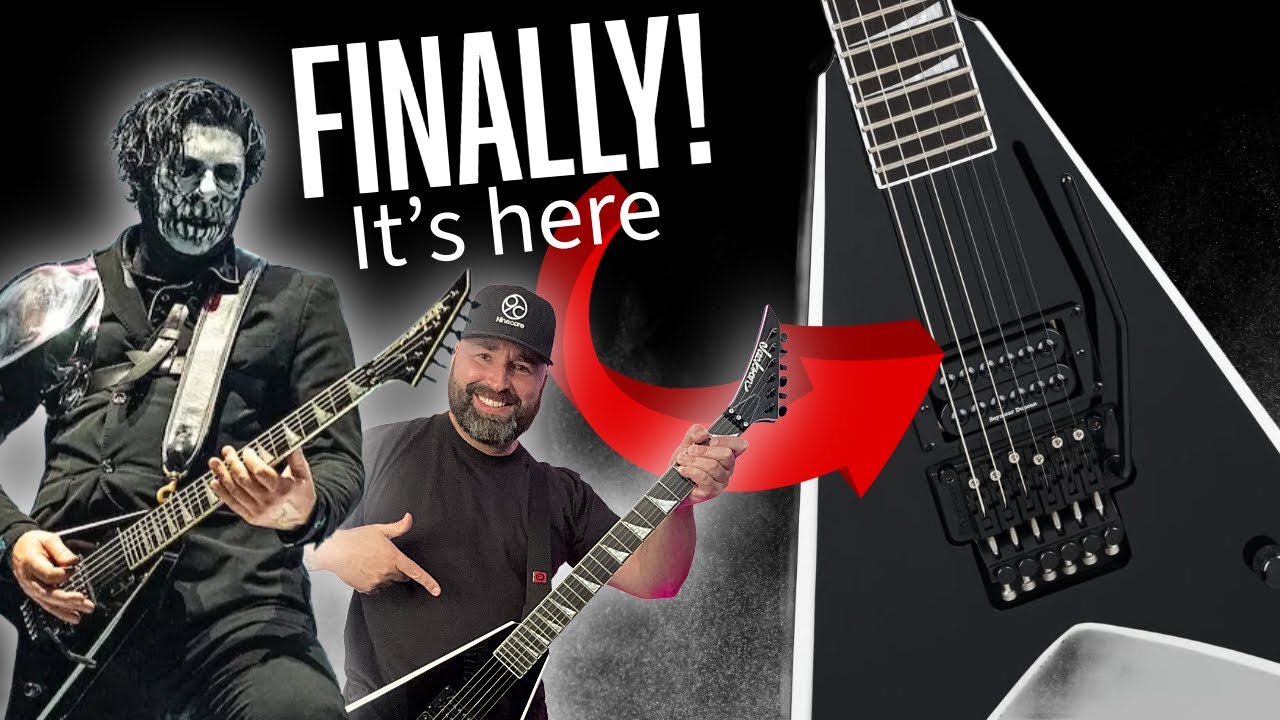
For an artist who wears some of the most elaborate on-stage outfits I’ve ever seen, his signature model is a decidedly Spartan affair. That’s by design, though. Borland said himself that “live, it just needs to be as bulletproof as possible.” That means a through-body maple neck with graphite reinforcement, and a nyatoh body painted gloss black with white bevels.
The reverse headstock, with an upside-down Jackson logo just like Wes’ original guitar, is attached via a scarf joint. The neck features an ebony fretboard with 24 jumbo frets and a compound radius that moves from 12 to 16 inches. A white binding goes all the way around, on which Luminlay side dots are placed.
It’s got a single Seymour Duncan Invader humbucker, with just a single volume control, which continues that theme of simplicity. The Floyd Rose 1500 Series locking tremolo is recessed into the body, with a matching locking nut at the top of the neck. Locking strap pins are included in the Jackson gig bag, which completes the breakdown of this fairly simple instrument.
Specs

- Launch price: $1,299.99 | £1,099 | €1,299
- Made: Indonesia
- Type: Six-string electric guitar
- Body: Nyatoh
- Neck: Maple / Modern C
- Fingerboard: Ebony
- Scale length: 25.5" (648 mm)
- Nut/width: Floyd Rose 1500 Series Locking, 1.6875" (42.86 mm)
- Frets: 24, jumbo
- Hardware: Jackson sealed die-cast tuners, Floyd Rose® 1500 Series double-locking tremolo
- String spacing at bridge: 54mm
- Electrics: 1x Seymour Duncan Invader SH8, master volume
- Weight: 7.27 lbs / 3.3kg
- Left-handed options: N/A
- Finishes: Black with white bevels
- Cases: Jackson gig bag
- Contact: Jackson
Build quality

Build quality rating: ★★★★☆
The Wes Borland King V comes in a generously proportioned soft-shell gig bag, and pulling it out, it feels pretty heavy, but a trip to the scales reveals a weight of just 3.3kg. It’s a long guitar, though, and the weight is distributed weirdly due to the shape, which makes it feel a lot more hefty than the kilograms show on the scale.
Performing a close inspection of the guitar, the paint is very nicely applied for the most part. I spot a few minuscule wobbles where the gloss black meets the white bevel, and there’s a slight detour for the white binding near the Floyd Rose locking nut. These are only really visible with my nose against the guitar, and certainly don’t detract from the overall look of it.

These aren’t huge flaws, but with the price of the guitar, I’d expect a little better
A bit more noticeable are the upside-down pearloid shark fin inlays, some of which look distinctly more yellow than the others. This isn’t so visible looking at the guitar head-on, but I certainly notice it when sitting with the guitar in my lap. There’s also a fleck of black caught in the inlay of the one marking the third fret. Again, these aren’t huge flaws, but with the price of the guitar, I’d expect a little better.
Playability

Playability rating: ★★★★☆
It’s a necessary evil of locking tremolos
Sitting down to play the Wes Borland V, it’s well out of tune, so I have to unlock the nut and play a bit of see-saw, getting the guitar close to perfect tuning while keeping the bridge flat. It’s not ideal, but it’s a necessary evil of locking tremolos. The bridge ends up ever so slightly unparallel to the body, but I’ll have to make do with the time allotted. As a natural aside to the guitar’s shape and aforementioned weight distribution, playing sitting down isn’t really an option, even with a guitar strap on it, so I decide to stand instead.
With these hurdles jumped, my initial play reveals that the neck is really nicely done, with a smooth feel across the bound edges and jumbo frets. Jackson doesn’t list the profile of the neck, but it feels ‘D’-shaped to my hand and more in line with the guitar acrobatics of shred guitars than the more experimental nature of Borland’s own playing.
The large size of the frets offers an excellent playing platform, whether I’m churning power chords with a slight bend a la Break Stuff, nailing the chorus riff from Stuck, or laying into the locking tremolo with the main motif from Hot Dog. Wes’ own playing might not be the most technically demanding in terms of pure chops, but his guitar certainly holds up to the less usual demands he makes of his instruments.

Naturally, there’s a bit of a shift in the tuning when I do things like pushing the bar to the body of the guitar or trying some Dimebag harmonic screams. Still, it puts up with extreme use very well, with only cursory retuning via the mini tuners of the Floyd Rose necessary. For your day-to-day flutters and smaller dives, the tremolo holds without having to retune any more than I usually would with a locking system.
Getting into some more traditional playing, it’s easy to fly around the fretboard with some legato licks, and it’s definitely got plenty of that Jackson shred DNA. Bending against the jumbo frets feels lovely; there’s no scratchiness here, and alternate-picked scale runs and three-note-per-string legato licks are easily achieved. It could be better, though. The factory setup is a pretty high at 2mm clearance from the low E string on the 12th fret when I press down at the 1st. That said, it’s already lightning quick as it is, so things can only get faster with a good setup.
Sounds

Sounds rating: ★★★★☆
Interestingly, this guitar comes tuned in standard, presumably to make it more accessible. Wes himself uses C# standard on a lot of his songs, drop-B on others, and, of course, his weird intervals on that unique four-string guitar. Thankfully, I have an excellent pitch shifter available via my Neural DSP plugin collection, so I can play the songs as they should be.
The Seymour Duncan Invader is, as expected, a perfect match for high gain. Playing through the Gojira plugin with the amp sim based on the blue channel of the 5150 engaged, it’s incredibly articulate when I chug powerchords. The low end is controlled, the midrange punchy, and there’a lovely smooth sound to the high end. It’s an awesome-sounding pickup. Adding in a helping of reverb and delay, leads hit with plenty of cut and bags of sustain, although it’s not quite as compressed and never-ending as what you’d get from an active humbucker.

It’s interesting because I initially thought I’d find it limiting
It’s interesting because I initially thought I’d find it limiting, but the organic nature of a passive pickup makes it much more versatile than an active equivalent, as I found with the Jackson Christian Andreu model I reviewed recently. Changing to a Fender-inspired amp model, it’s surprising how nice the cleans can get once I roll back the volume knob significantly to stop it hitting the front of the amp so hard. I do lose a bit of high-end due to the lack of a treble bleed circuit, but with the cutting nature of the high-output humbucker, it ends up being a net positive.
To try and keep some of the high end, I trim the input of my audio interface so that I can utilize the humbucker with the volume knob fully turned. Wes himself uses a Roland JC-120 for his cleans, a guitar amp which is known for its very high clean headroom. With the right gain staging, it means this guitar can deliver ambient and experimental cleans just as well as the heavy riffs.
This isn’t that surprising considering that moving from a heavily effected clean tone to a chunky riffing sound is a signature of Wes’ own playing. Trying some more measured stuff like arpeggiated chords and triads higher up the neck, I'm surprised at how organic the humbucker sounds despite the high output, with a lovely clarity and great note separation.
Verdict

Jackson is really on a roll with their signature guitars at the moment, and the Jackson Wes Borland King V is another success in my opinion. It’s well put together, can handle pretty much any playing style, and despite its simple layout, it’s deceptively versatile. I can see it finding fans beyond just those who worship at the temple of Wes.
I prefer the more organic feel and tone of a passive pickup here
I prefer the more organic feel and tone of a passive pickup here, so if you like that super controlled metal tone you get with an active pickup, this might not be the guitar for you. There were also a couple of occasions where I found myself wishing for a neck pickup, but for the most part, the single Seymour Duncan offers plenty of versatility for a variety of guitar tones.
Make no mistake, though, this is a guitar for live playing. V-shaped guitars are, at best, inconvenient for playing sat down at home, and this one is no different. The awkward weight distribution and shape make it cumbersome to wield in tight spaces, but there’s no denying that it feels and looks great when played standing up on a guitar strap.
Guitar World verdict: For anyone who knows their chocolate starfish from their hot dog flavored water, there aren’t all that many surprises with the Jackson Pro Series Signature Wes Borland King V. It can handle the heavy stuff just as well as clean tones, and it’s capable of plenty of guitar acrobatics via the locking tremolo. Putting aside the maladroit nature of V-shaped guitars, this is a riffing machine that can be used equally well for metal guitar playing or the more experimental tones Borland is famous for.
Test |
Results |
Score |
|---|---|---|
Build quality |
A very well put together instrument with a couple of small aesthetic flaws. |
★★★★☆ |
Playability |
Capable of pretty much anything, but natural limitations with the body shape. |
★★★★☆ |
Sounds |
Surprisingly versatile considering the simple layout, and capable of much more than you’d think. |
★★★★☆ |
Overall |
A great guitar for live performances, equally adept at heavy and clean tones. |
★★★★☆ |
Also try
Hands-on videos
Jackson

Dagan Wilkin

Ninecore Neil