


Brackley-based effects maker ThorpyFX has been in business for well over a decade now and its distinctive high-sided pedals have deservedly won a slew of awards.
Until now, the pedals have typically had military styling (founder Adrian Thorpe was in the British Army for many years), and though not all players will grasp the Cold War symbolism of, say, the Peacekeeper or the ER-2, to use but two examples, there was no mistaking the etched-crosshair motif of the company’s debut overdrive, the Marshall-like Gunshot.
More recently, however, as world events have taken a darker turn, ThorpyFX has broadened its visual and sonic identity with two pedals that depart from the bellicose script. The Hanami fuzz, launched last year, took its inspiration from Japanese cherry blossom season.
Now the Kudu, named after a large South African antelope, continues the nature‑derived theme. The pedal took shape after a chance gift from a fellow designer Dan Coggins, inspiring Adrian to create a highly versatile overdrive. We sit down with the company’s namesake and founder to find out more…

The new Hanami and now Kudu pedals are a bit of a departure from what’s gone before, at least visually.
Yes, it’s been a bit of a wholesale change, really. We like to listen to customers generally, and whenever we’ve felt that the swell of brown noise reached a certain crescendo, we’ve always made changes.
So when people were saying the first petals we ever brought out were a little bit too big, we shrunk them down. And when people were saying they couldn’t see the controls because the metal was too shiny, we moved it to black anodised aluminium.
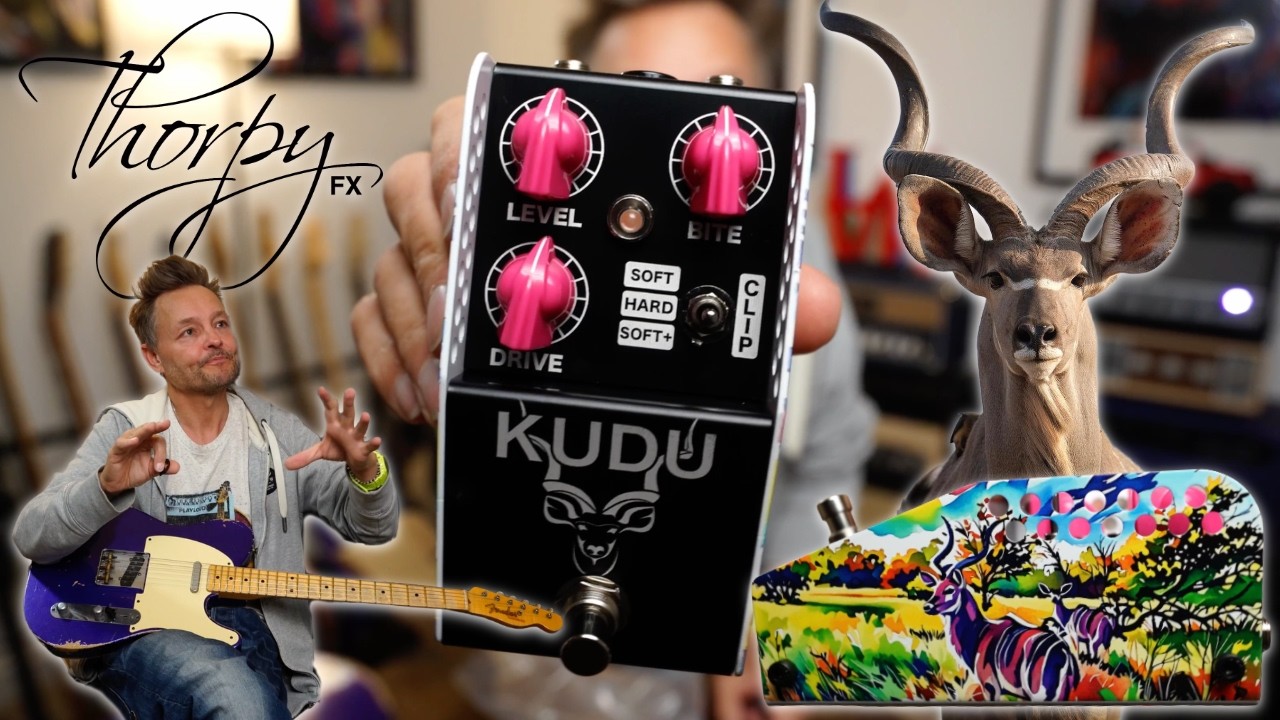
And as a small company, these are big changes and it costs lots of money and it takes time to try to mitigate the sheer cost of doing these things. We then looked at our range and went, ‘Well, we could invest in several bits of equipment, and we could utilise our tools to essentially allow us to buy product that’s blank and then customise it for this specific pedal.’
So we invested 100 grand in lasers, UV printers and 3D printers and jigs and stuff like that. What that’s enabled us to do is almost go back to my roots, so I can do custom one-offs, I can do small runs, I can do full main runs, and the base enclosure stays the same – but we just apply custom artwork and we have full control over that process.

So it’s a bit of a business decision but also a creative decision as well. It took a bit of time, but it’s panned out quite nicely and it’s also allowed us to, not branch away from the military thing, but tone it down a little bit – and that’s a personal choice as well. I have a background in the military. I’m not a warmonger, as I have been called by some, and I believe I operate for peace and have good moral compass.
But I wanted to change things up a bit and so we’ve done a few things that have stepped away from the military aesthetic. Hanami was the first one, then The J, and now the Kudu. And as we move forward, we’re just sort of toning things down a little bit, art-wise, to appeal to a broader audience.
And you know what? At some point we’ll do full on Custom Shop stuff. We have it in the glide path that we’re working towards, and I’ve done many things already for people, which was fun. I’m glad we can do it because creative freedom brings quite a lot of joy.

How did this new Kudu overdrive pedal come into being?
Even though the Distortion+ does work well with Marshall‑style amps, this works so much better
I feel a bit guilty about the Kudu in some ways [laughs]. Dan [Coggins], my erstwhile analogue designer, gifted me a present [of a pedal he had made] at Christmas of 2024 because I was a bit down – I’d just lost my parents and [everything] was shit, if I’m honest. But he cheered me right up. Because as much I design pedals, I really like them – I like everyone else’s pedals.
Dan said, ‘I’d been asked to do this for someone and when I’d finished I liked it so much I thought I’d make you one because you like Marshall amps.’ Essentially, it was an MXR Distortion+ with quite a few modifications to it.
Even though the Distortion+ does work well with Marshall‑style amps, this works so much better. And so I use it with a Soldano and I use it with a Cornford, and [you could] use it with all these different style amps.

I was thinking, ‘This is amazing, it just works with everything’ – it’s a bit simple because it’s just got Level and Drive. So we had this back and forth together and a few months later, Dan said, ‘I was thinking about your comment about simplicity.’ Dan knows what I want with stuff and he turned around and said, ‘So I’ve sketched this out and it takes that concept of making things better and working well with everything and enhancing the thing that you’re playing into.’
He explained that this would need to come from a wider field – so it’s got more EQ, it’s got more clipping options, the gain control is more flexible, and the tone control is not a true tone control; it adds presence and treble, so it’s more of a ‘bite’.
And the control’s actually called Bite because, depending on your amp, it cuts through a certain way. He just drew this schematic out from me and I was like, ‘Oh, wow. Now I’ve definitely got to lay this out and see how it comes out.’ And everything I plugged into, it made it sound better.

My dream amp has long been the Cornford MK50 II, which won Guitarist awards when it came out. I bought one then and later sold it, then ended up buying it back because it’s my favourite amp. It doesn’t need anything, truthfully – it’s such a great amp from the off.
But then I plug this thing that we designed into it and it makes it sound better. It’s one of those moments where my go-to amp that I could just plug into now has been ruined: I now have to have this thing sat in front of it because it sounds better.
So I’m like’ ‘Great!’ [laughs]. But a shared misery is better than suffering in silence, so we’ve decided to release the thing so everyone else can have this pedal where they have to keep it on all the time…

Why did you choose to name it after an antelope specifically?
We went to release it and, I have to say, it was [co-director and Adrian’s wife] Georgia’s idea. She was like, ‘This needs to get out there because you know people don’t always have control over their backline – people don’t even necessarily have control over what amps they can use at home – but they want a sound that’s like the thing’s rocking at high volume when this kicks in.’
And so I actually turned around to Georgia and said, ‘Well, you design it, then.’ She did all the art and the layout and everything – Georgia is doing a lot more sort of the creative side, which has been really good.
We ended up calling it the Kudu because I spent a bit of time in South Africa and I’ve seen quite a lot of animals out there like the springbok, and then I saw these kudus and the one I saw was called a greater kudo, and that just seemed to fit: because it makes everything greater.
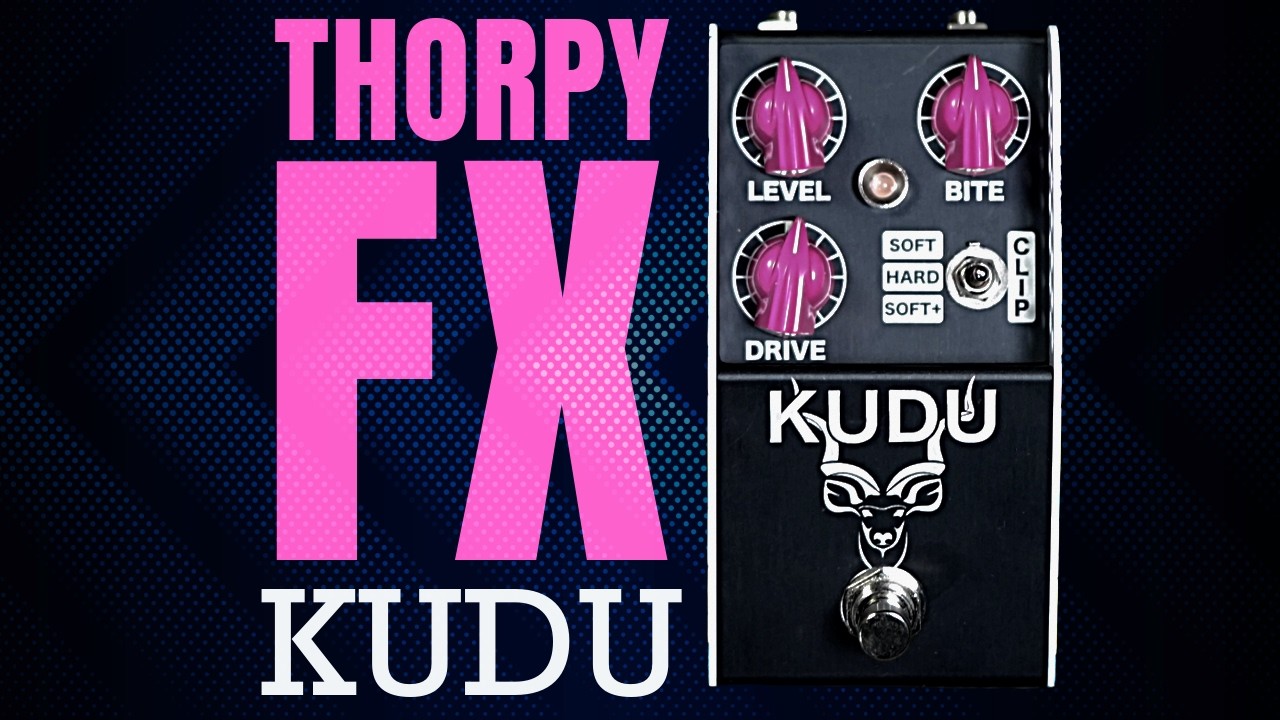
What are the core tones it generates and how can you use them?
Well, I hate to use this word, but it’s fairly transparent at low-gain settings because we have an ethos of having low noise and high clarity, generally, and lots of string separation, so that’s baked in as a must, right?
Then you wind the gain up and I would say the mid focus of it sits perfectly for a standard tuning guitar. Across the strings, it is absolutely perfect. So that’s where we centered everything.
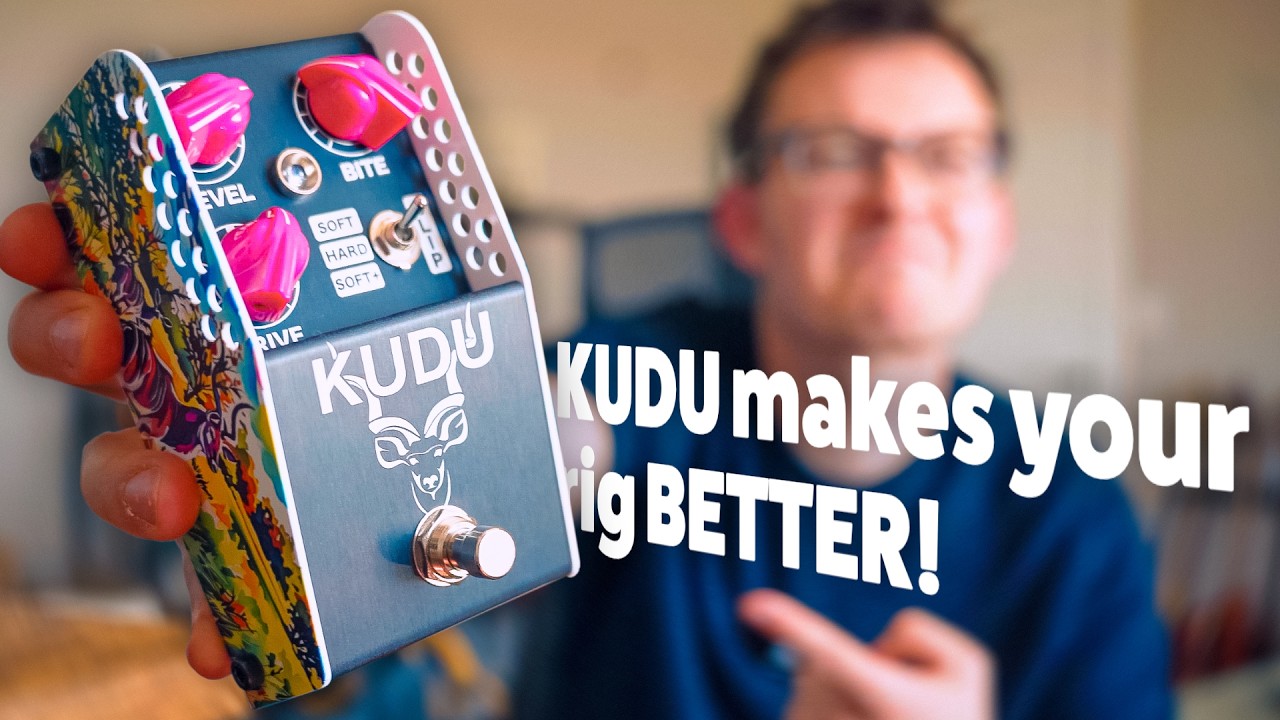
Then as you wind the gain up more, it overdrives itself in just a perfect way, but it does have three clipping options: Hard clipping, which is LED; Soft clipping, which is silicon; and then Soft+ clipping – they’re Schottky diodes and they have a response and feel exactly the same as germanium.
If you’ve got a Tweed combo, you really need harder clipping because you’ve already got the compression from the amp and so you don’t want to be compressing and compressing
They have a soft ‘knee’ and a flubbiness that is identical to germanium. But we haven’t put germanium in there because if we did germanium, we could only do a certain amount and it would make the pedal more expensive.
The reason the three [clipping styles] are available is because you may have, say, a Fender ‘Drip Tray’ Princeton, that’s fairly clean and clear, so you can get away with something that’s a little bit softer on the clipping, something with a bit more sag and flubbiness.
But if you’ve got a Tweed combo, you really need harder clipping because you’ve already got the compression from the amp and so you don’t want to be compressing and compressing.
So the clipping types were very specifically chosen with certain types of amp in mind: Soft is great for Marshall‑style amps; Hard is great for something with more sag; and then Soft+ is really if your amp is more present and with less negative feedback, so something like a Two-Rock.
- Find out more at ThorpyFX
- This article first appeared in Guitarist. Subscribe and save.

