


Guitar World Verdict
Complementing your standard delay and reverb, and stacking nicely with dirt pedals, the Lüm offers a great way to build some textural ambience into a standard guitar chain, either as subtle ear candy or the main event.
Reasons to buy
- +
Compact size.
- +
Three modes.
- +
Onboard presets.
- +
Built-in momentary expression.
Reasons to avoid
- -
The fact that it is mono only may be disappointing to players who wish to have a full stereo rig.
You can trust Guitar World Our expert reviewers spend hours testing and comparing guitar products so you can choose the best for you. Find out more about how we test.
What is it?
Walrus Audio is well versed in the creation of textural ambient soundscapes.
We’ve previously looked at its Slö Reverb, Lore Reverse Reverb and Fable Granular Generator pedals, and the latest in the genre, the Lüm Texture Engine, draws on elements of all three of these precursors.
The general idea here is to transform your signal to create atmospheric textures by ‘fracturing’ it into tiny grains wrapped in different washes of reverb.
Specs
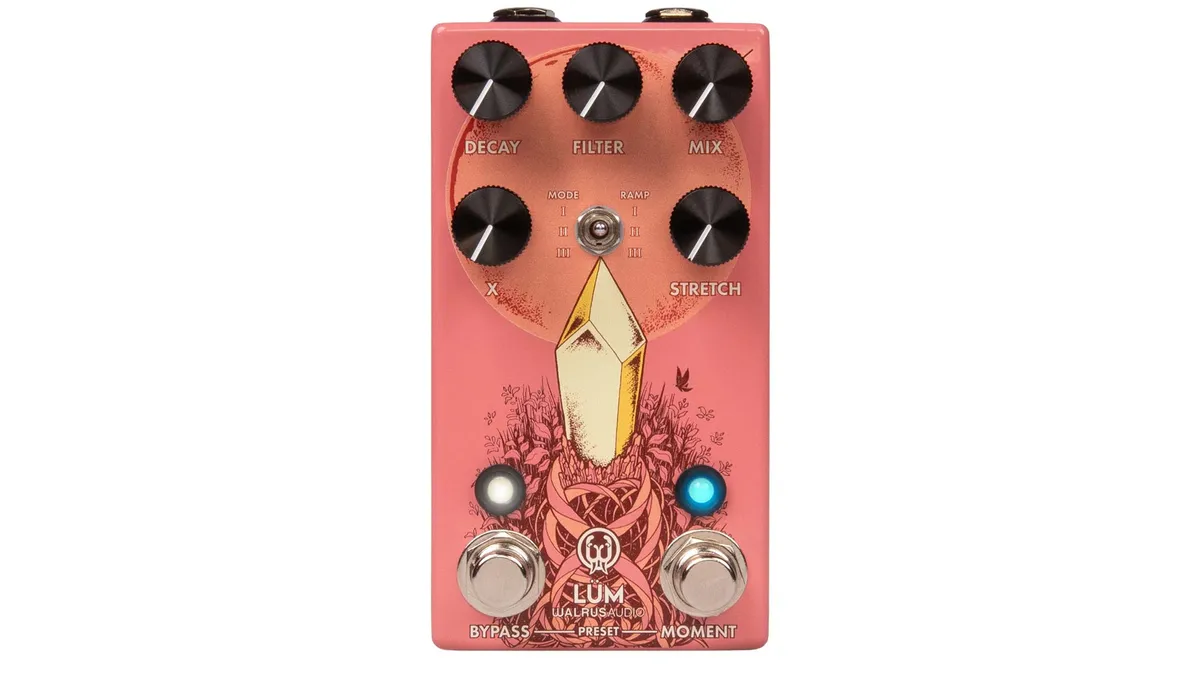
- PRICE: $279 | £259 | €299
- ORIGIN: USA
- TYPE: Textural ambience pedal
- FEATURES: Buffered bypass, Trails or Instant Cut bypass modes, 3x onboard presets
- CONTROLS: Decay, Filter, Mix, X, Stretch, Mode/Ramp switch, Bypass footswitch, Moment footswitch
- CONNECTIONS: Standard Input, standard output
- POWER: 9V adaptor (not supplied) 100mA minimum
- DIMENSIONS: 66 (w) x 125 (d) x 60mm (h)
- CONTACT: Walrus Audio
Build quality, usability and sounds
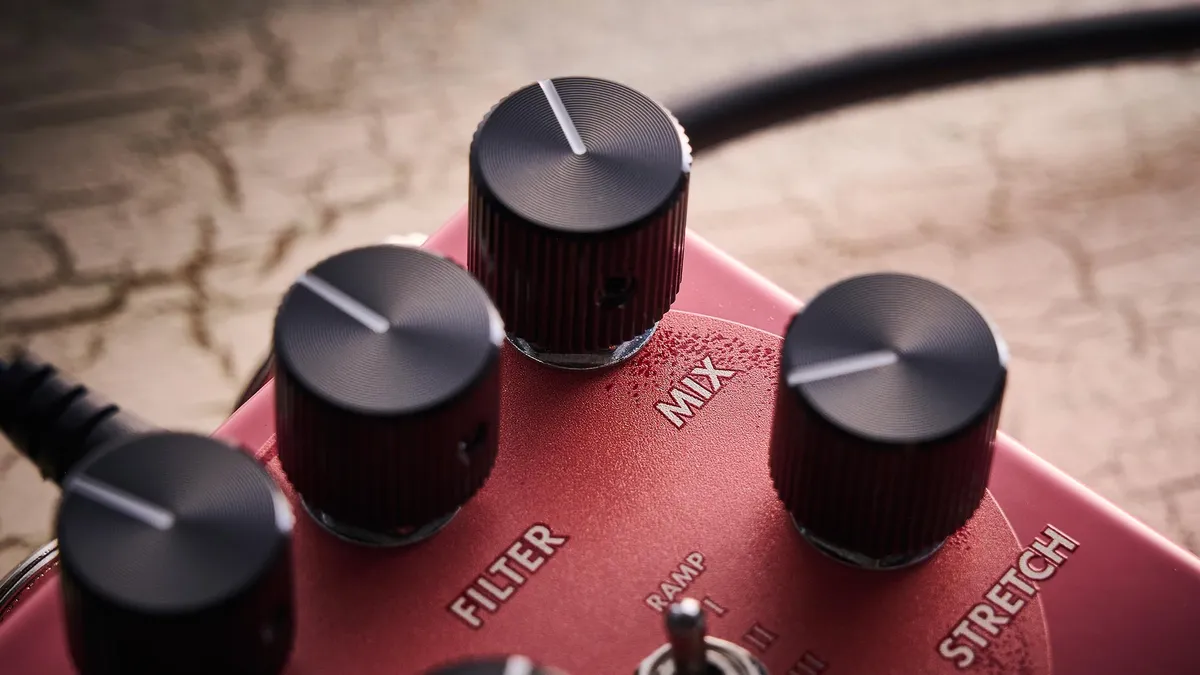
The pedal centres around three different modes and has knobs to adjust Decay time, a low-pass Filter (effectively EQ), and Mix, which adds a proportion of the effected sound to your dry sound up to fully wet.
There’s also an X knob that has a different function for each mode, and a Stretch knob for time-stretching the effects from half- to double-speed with consequent pitch shifts.
Grain Cloud (Mode I) mode offers a granular texture built from dual taps reading from a feedback delay line. It’s an ambience fractured by glitches that are not unlike unsynchronised delay repeats or wayward tremolo pulses, with the X knob controlling the grain size – basically, the speed of the glitching.
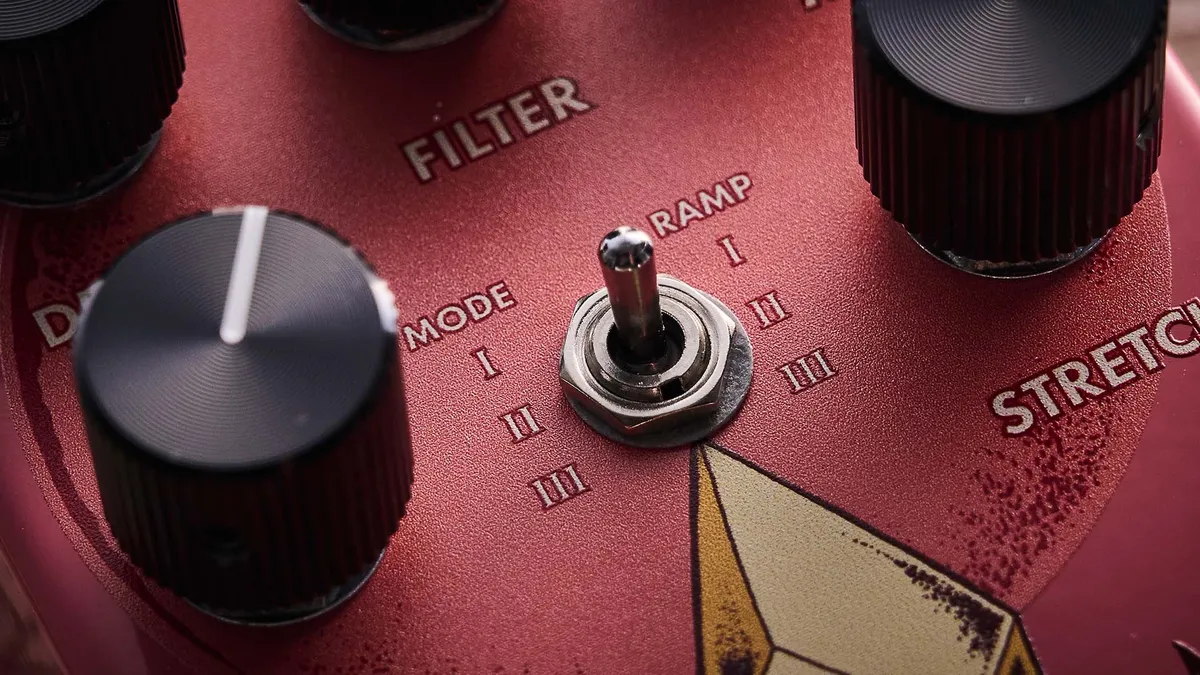
Grain Verb (Mode II) is more of the same but delivers an increase in spacey ambience as it incorporates reverb built from dual taps reading from the delay memory of a reverb algorithm tank.
Forward/Reverse Verb (Mode III) is perhaps the most conventional of the three, with a forward reverb algorithm running into a reverse reverb algorithm whose decay is adjusted by the X knob, producing deep pulsing reverb.
Whether you’re carrying out measured juxtaposition of the knobs or tweaking them randomly looking for happy sonic accidents, the pedal is ripe for creative exploration, and there are three easily switchable presets to store and recall favourite sounds for onstage variation without resorting to knob twiddling.
Verdict
Verdict: ★★★★½
There’s no provision for an expression pedal here, but the Moment footswitch allows you to automate any one of the five knobs. You hold the footswitch to glide to a defined target with a choice of 10ms, 1,000ms and 5,000ms glide times.
It’s highly effective in injecting a sense of movement or as instant drama. Moment settings can be saved with each preset.
Guitar World verdict: Complementing your standard delay and reverb, and stacking nicely with dirt pedals, the Lüm offers a great way to build some textural ambience into a standard guitar chain, either as subtle ear candy or the main event.
Hands-on videos
Walrus Audio

Ambient Endeavours